





The Impact of Nursing Leadership
on Patient Safety outcomes:
A Systematic Review.
Lisa Abraham
The aim of this
systematic review
was to describe the
findings of a
systematic review
of studies that
examine the
relationship
between nursing
leadership
practices and
patient safety
outcomes.
Aim
Methods: Systematic Review
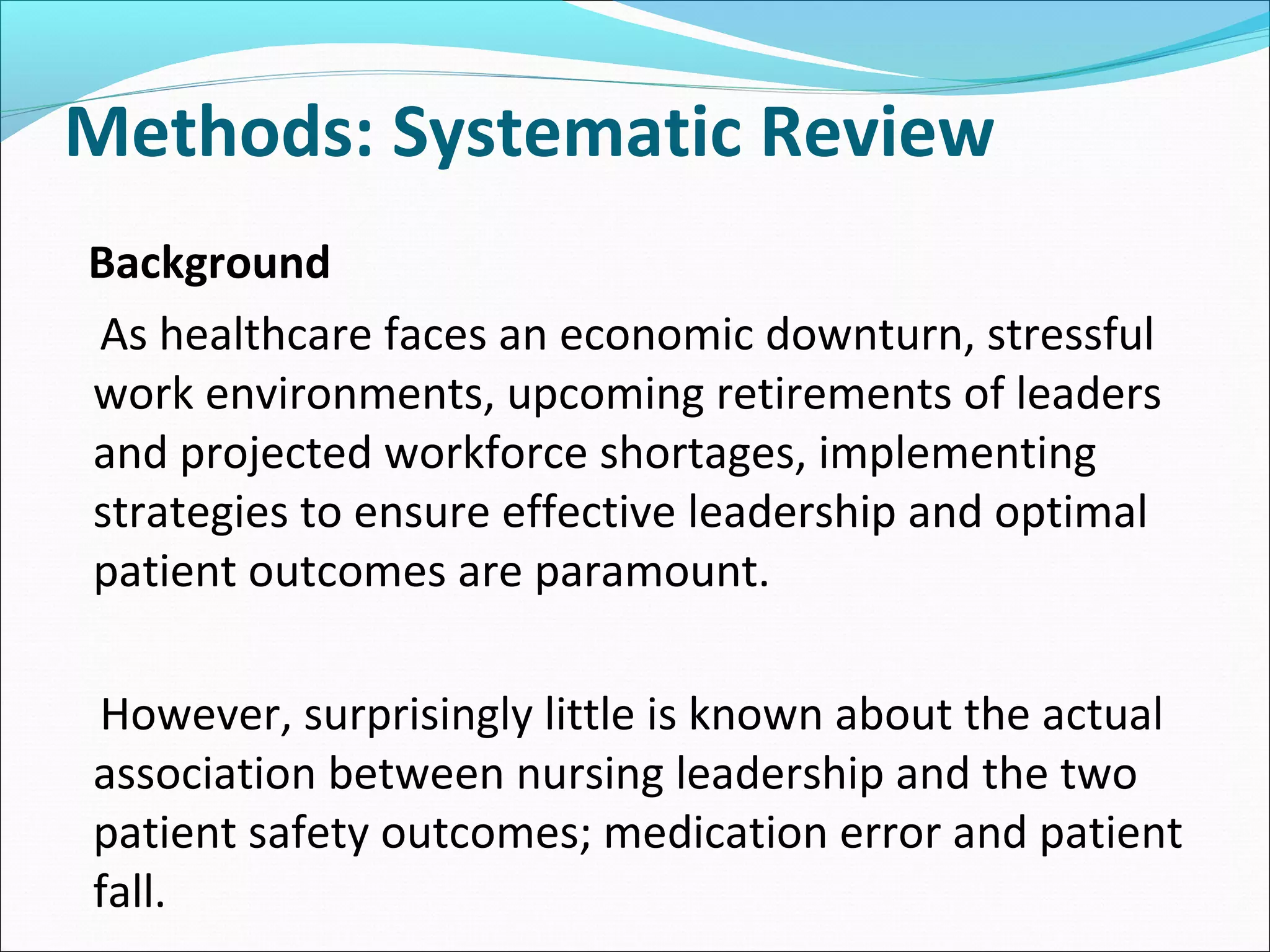
Background
As healthcare faces an economic downturn, stressful
work environments, upcoming retirements of leaders
and projected workforce shortages, implementing
strategies to ensure effective leadership and optimal
patient outcomes are paramount.
However, surprisingly little is known about the actual
association between nursing leadership and the two
patient safety outcomes; medication error and patient
fall.
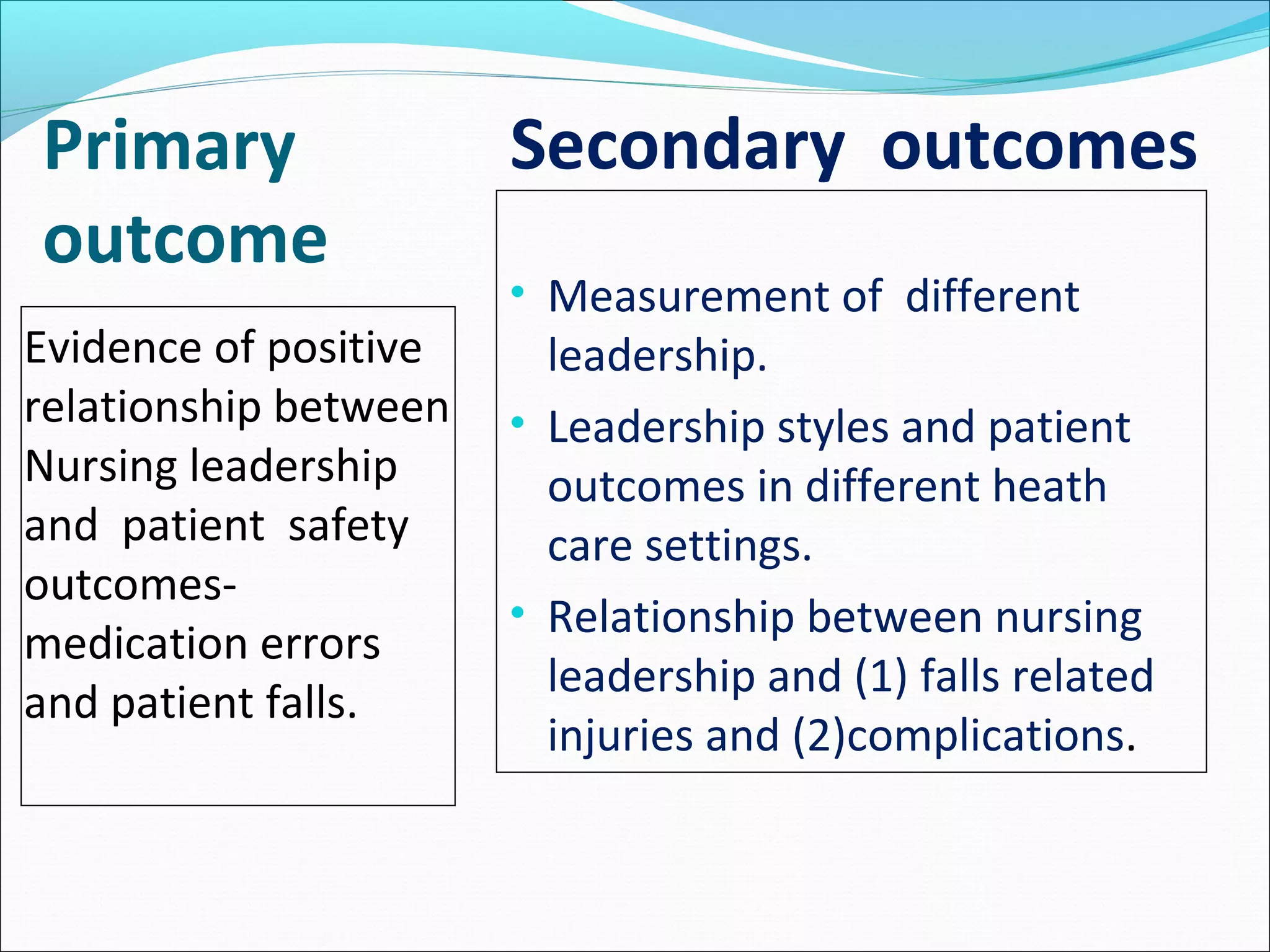
Primary
outcome
Evidence of positive
relationship between
Nursing leadership
and patient safety
outcomes-
medication errors
and patient falls.
• Measurement of different
leadership.
• Leadership styles and patient
outcomes in different heath
care settings.
• Relationship between nursing
leadership and (1) falls related
injuries and (2)complications.
Secondary outcomes
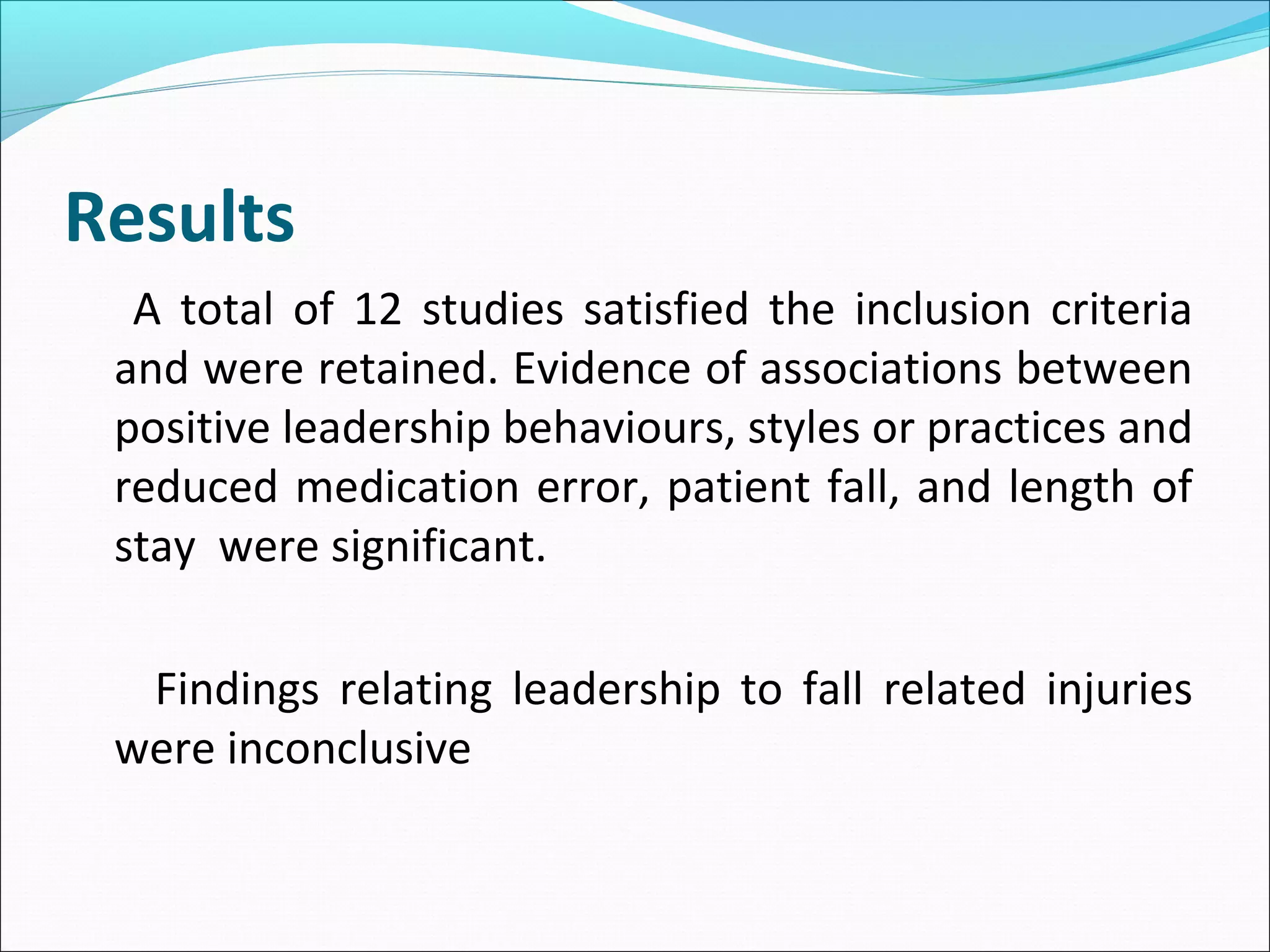
Results
A total of 12 studies satisfied the inclusion criteria
and were retained. Evidence of associations between
positive leadership behaviours, styles or practices and
reduced medication error, patient fall, and length of
stay were significant.
Findings relating leadership to fall related injuries
were inconclusive
Conclusion The findings highlighted a
key relationship between
nursing leadership and
the reduction of
medication errors and
patient fall, possibly
through processes such
as making changes in the
work context or
influencing staff
attitudes, behaviour or
performance that may
facilitate patient care.
Leadership and Compassionate Care
CARING
The impact of nursing leadership on patient safety outcomes: a systematic review

The impact of nursing leadership on patient safety outcomes: a systematic review

  • 1.
    The Impact ofNursing Leadership on Patient Safety outcomes: A Systematic Review. Lisa Abraham
  • 2.
    The aim ofthis systematic review was to describe the findings of a systematic review of studies that examine the relationship between nursing leadership practices and patient safety outcomes. Aim
  • 3.
    Methods: Systematic Review Background Ashealthcare faces an economic downturn, stressful work environments, upcoming retirements of leaders and projected workforce shortages, implementing strategies to ensure effective leadership and optimal patient outcomes are paramount. However, surprisingly little is known about the actual association between nursing leadership and the two patient safety outcomes; medication error and patient fall.
  • 4.
    Primary outcome Evidence of positive relationshipbetween Nursing leadership and patient safety outcomes- medication errors and patient falls. • Measurement of different leadership. • Leadership styles and patient outcomes in different heath care settings. • Relationship between nursing leadership and (1) falls related injuries and (2)complications. Secondary outcomes
  • 5.
    Results A total of12 studies satisfied the inclusion criteria and were retained. Evidence of associations between positive leadership behaviours, styles or practices and reduced medication error, patient fall, and length of stay were significant. Findings relating leadership to fall related injuries were inconclusive
  • 6.
    Conclusion The findingshighlighted a key relationship between nursing leadership and the reduction of medication errors and patient fall, possibly through processes such as making changes in the work context or influencing staff attitudes, behaviour or performance that may facilitate patient care.
  • 7.
  • 8.