MAXIME PETAZZONI — PALO ALTO DOCKER MEETUP — SEPT. 1ST, 2015
DOCKER {AT,WITH} SIGNALFX
MAXIME PETAZZONI — PALO ALTO DOCKER MEETUP — SEPT. 1ST, 2015
Me?
github.com/mpetazzoni
@mpetazzoni
MAXIME PETAZZONI — PALO ALTO DOCKER MEETUP — SEPT. 1ST, 2015
What is SignalFx?
The pitch
• Real-time monitoring system for modern applications
• User-defined, streaming and interactive analytics
• Alerting and anomaly detection
• Easy to deploy, to use and to integrate
• Scales; from small deployments to large, complex infrastructures
MAXIME PETAZZONI — PALO ALTO DOCKER MEETUP — SEPT. 1ST, 2015
Docker at SignalFx
Docker at SignalFx
• Started using Docker in November 2013
• Running Docker in prod ever since we’ve had a “prod”
• Back when Docker’s README said “DO NOT RUN IN PRODUCTION”
Objectives
• Separate infrastructure concerns
• Stronger independence from hosting provider
• Development lifecycle
• Application packaging and delivery
• Higher-level orchestration
Infrastructure vs application
• Separation of concerns
• Infrastructure provides appropriately spec-ed hosts and network
• Abstracts from cloud provider
• Currently on AWS
• Amazon Linux AMIs + Salt to setup a few things, up to Docker
Infrastructure vs application (cont.)
• “Application” stack takes it up from there
• Everything is containerized, including 3rd party components
• No dependence on Amazon specifics
• We can spin up the stack anywhere (laptop, GCE, DO, …)
SDLC
• Run locally, in tests and in prod environments
• Same bits, same tools, same arguments, etc.
• Crucial for software validation
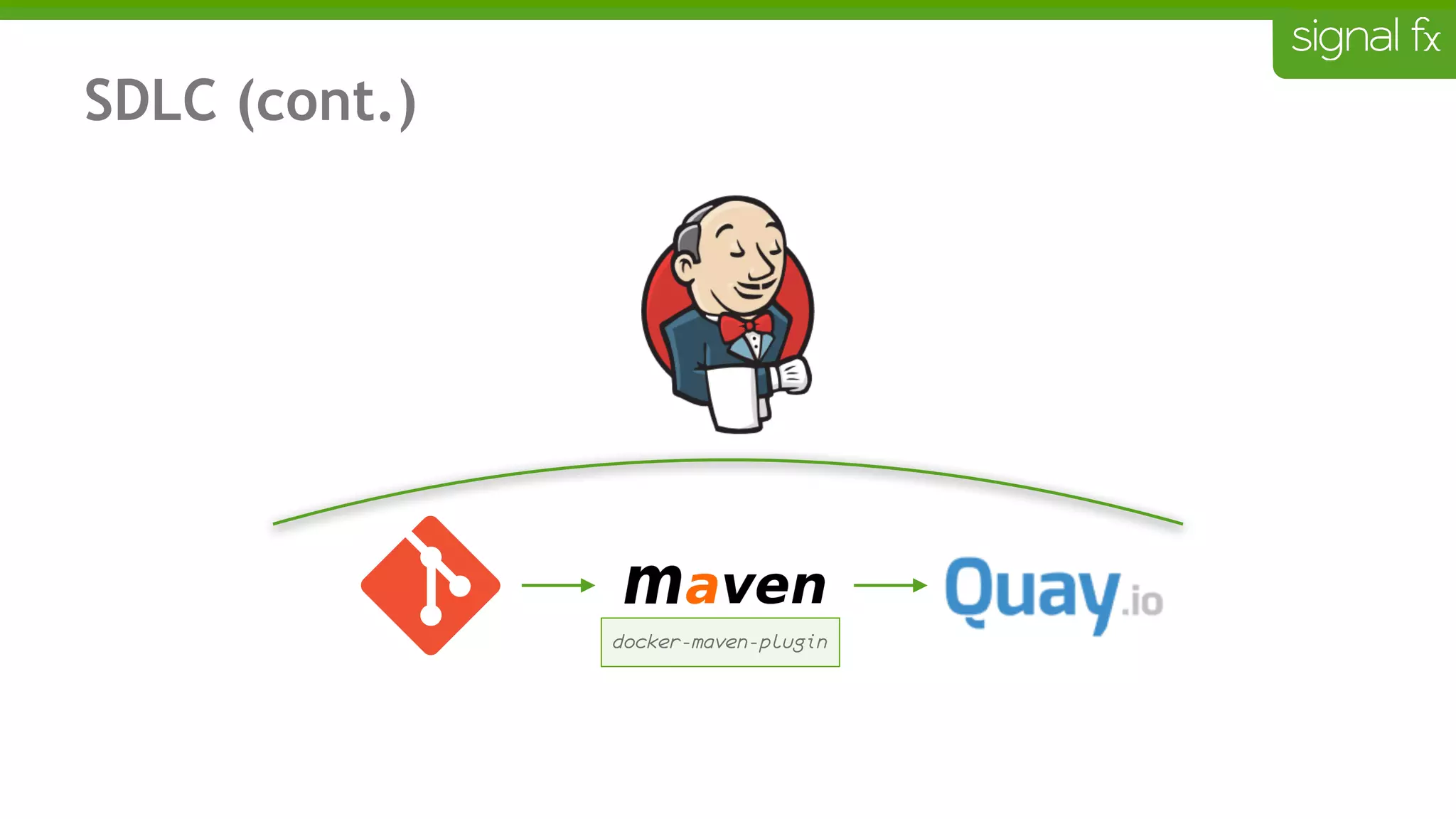
• Maven, Jenkins, Quay.io, MaestroNG
• maestro start
SDLC (cont.)
docker-maven-plugin
SDLC (cont.)
• Continuous build of the release branch
• Builds and pushes :latest tagged Docker images
• Promotion track through :lab, :prod and :mon
• One-click promote + upgrade, orchestrated by MaestroNG
• Automated integration tests environment
Application packaging and delivery
• All components of the stack are packaged as Docker images
• 3rd-party component packaging was figured out once (Dockerfile)
• SignalFx components all have their Dockerfile too
• Built by docker-maven-plugin
• All components have a run.py init script
Discovery
• ZooKeeper / Curator service discovery
• We built announcing wrappers for Cassandra and ElasticSearch
• Only need to know “realm” name and zkConnectString
• Everything else is discovered from ZooKeeper
• Need to make sure to announce host IP address/port
• Maestro gives us that via environment
Orchestration
• We built MaestroNG
• Orchestrator of multi-host Docker environments
• github.com/signalfuse/maestro-ng
• Jinja2/Yaml environment file
• Defines what runs where, and how
• Knows and respects service dependencies
MAXIME PETAZZONI — PALO ALTO DOCKER MEETUP — SEPT. 1ST, 2015
Monitoring containers
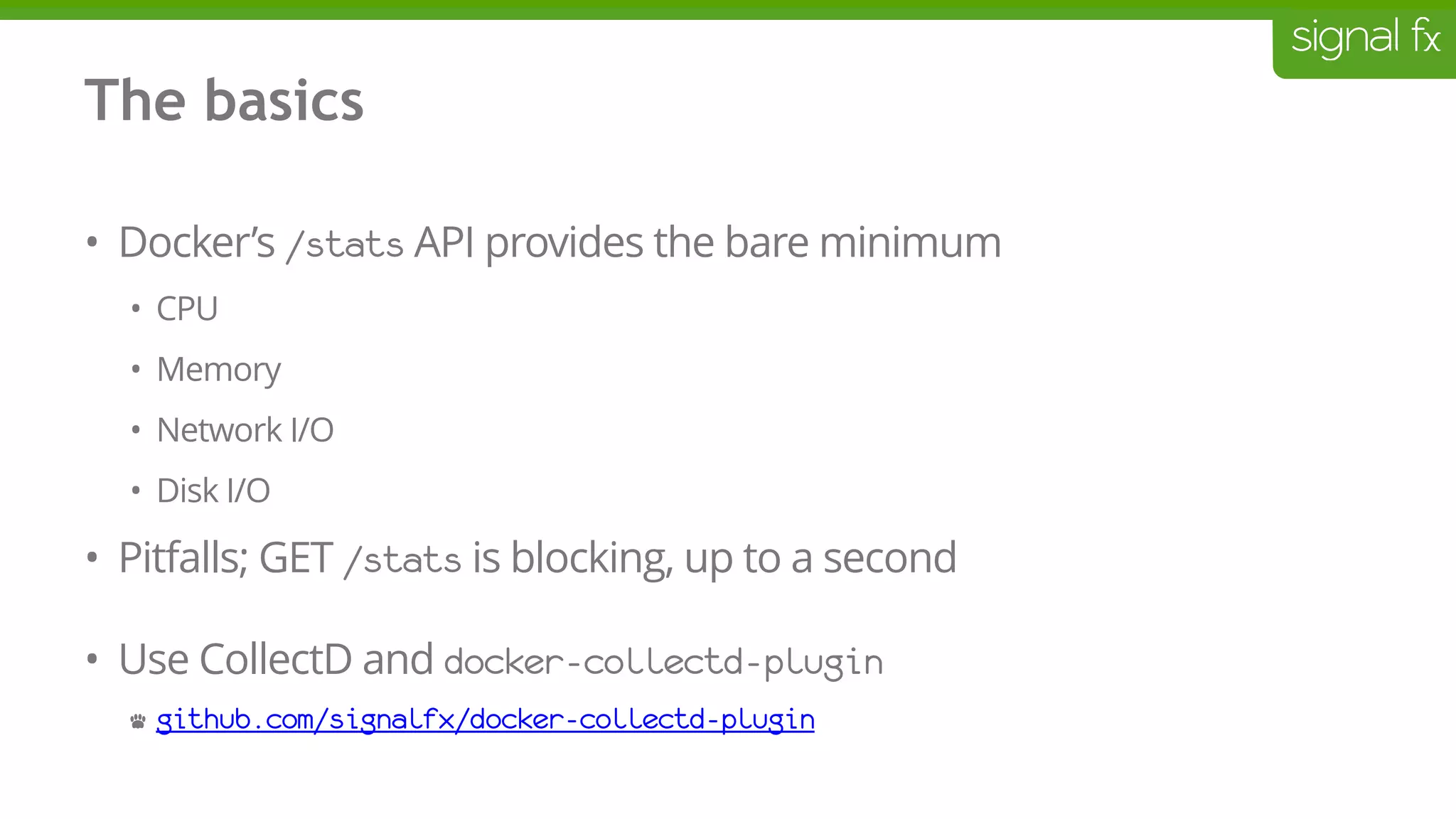
The basics
• Docker’s /stats API provides the bare minimum
• CPU
• Memory
• Network I/O
• Disk I/O
• Pitfalls; GET /stats is blocking, up to a second
• Use CollectD and docker-collectd-plugin
• github.com/signalfx/docker-collectd-plugin
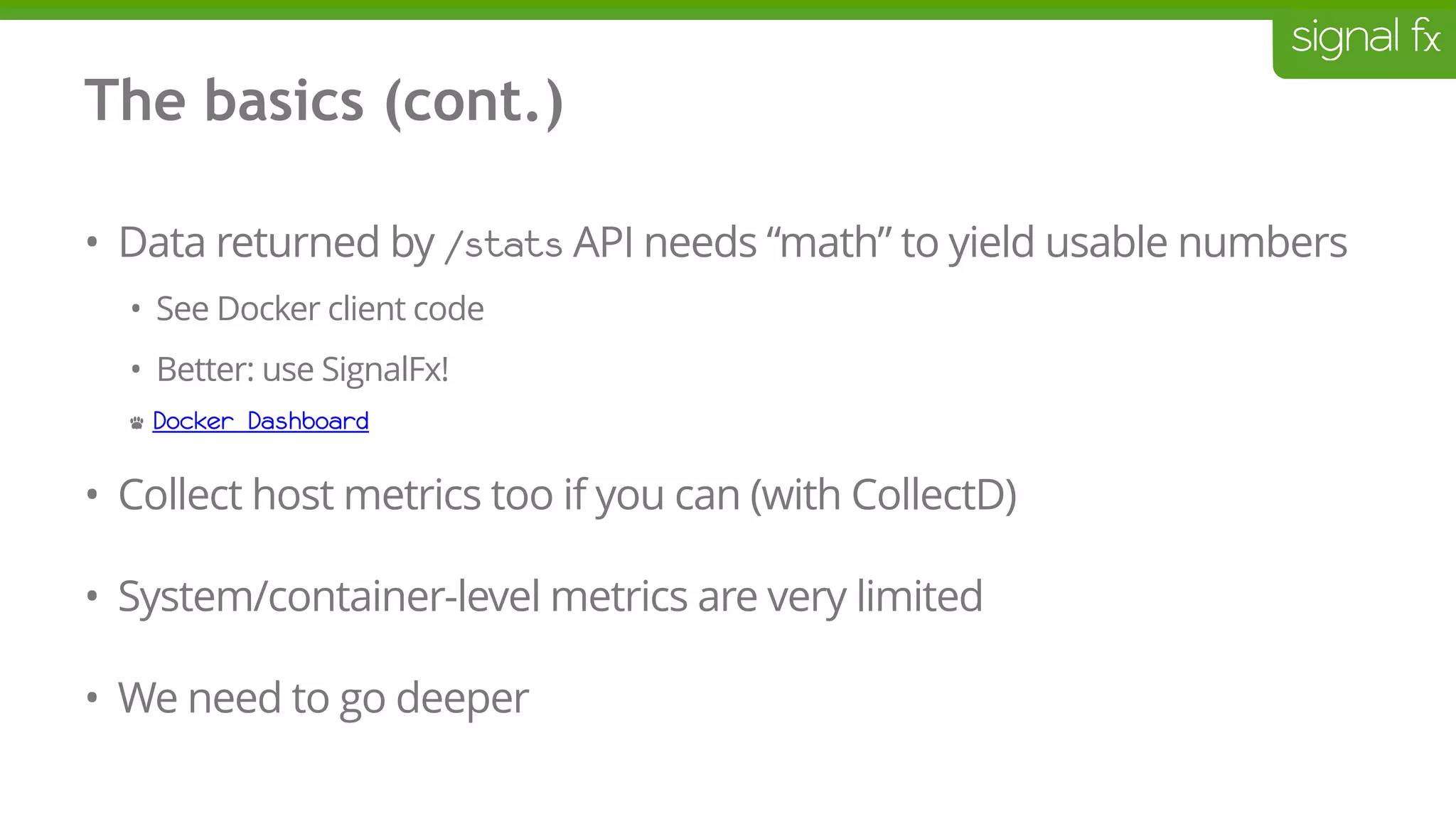
The basics (cont.)
• Data returned by /stats API needs “math” to yield usable numbers
• See Docker client code
• Better: use SignalFx!
• Docker Dashboard
• Collect host metrics too if you can (with CollectD)
• System/container-level metrics are very limited
• We need to go deeper
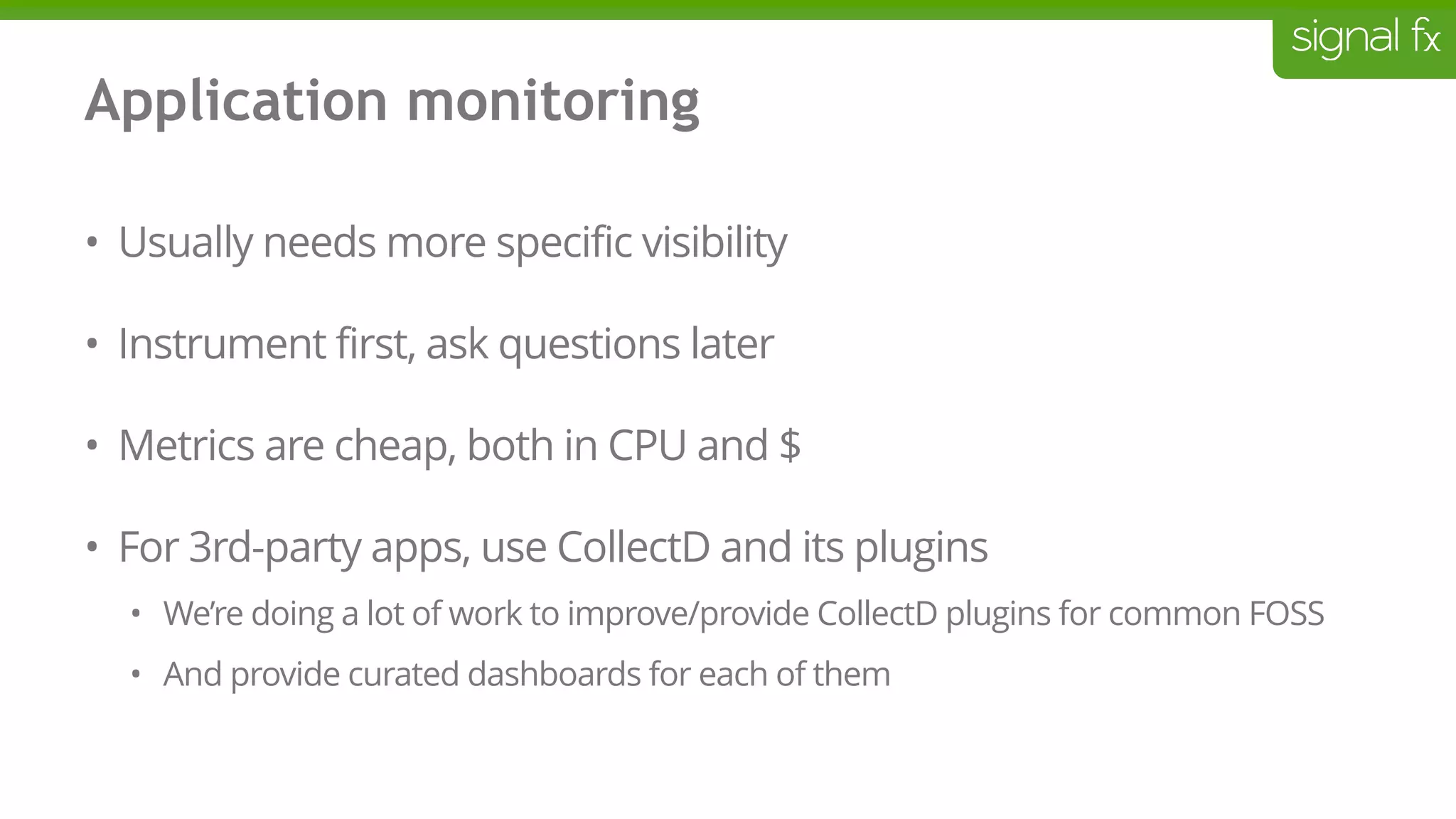
Application monitoring
• Usually needs more specific visibility
• Instrument first, ask questions later
• Metrics are cheap, both in CPU and $
• For 3rd-party apps, use CollectD and its plugins
• We’re doing a lot of work to improve/provide CollectD plugins for common FOSS
• And provide curated dashboards for each of them
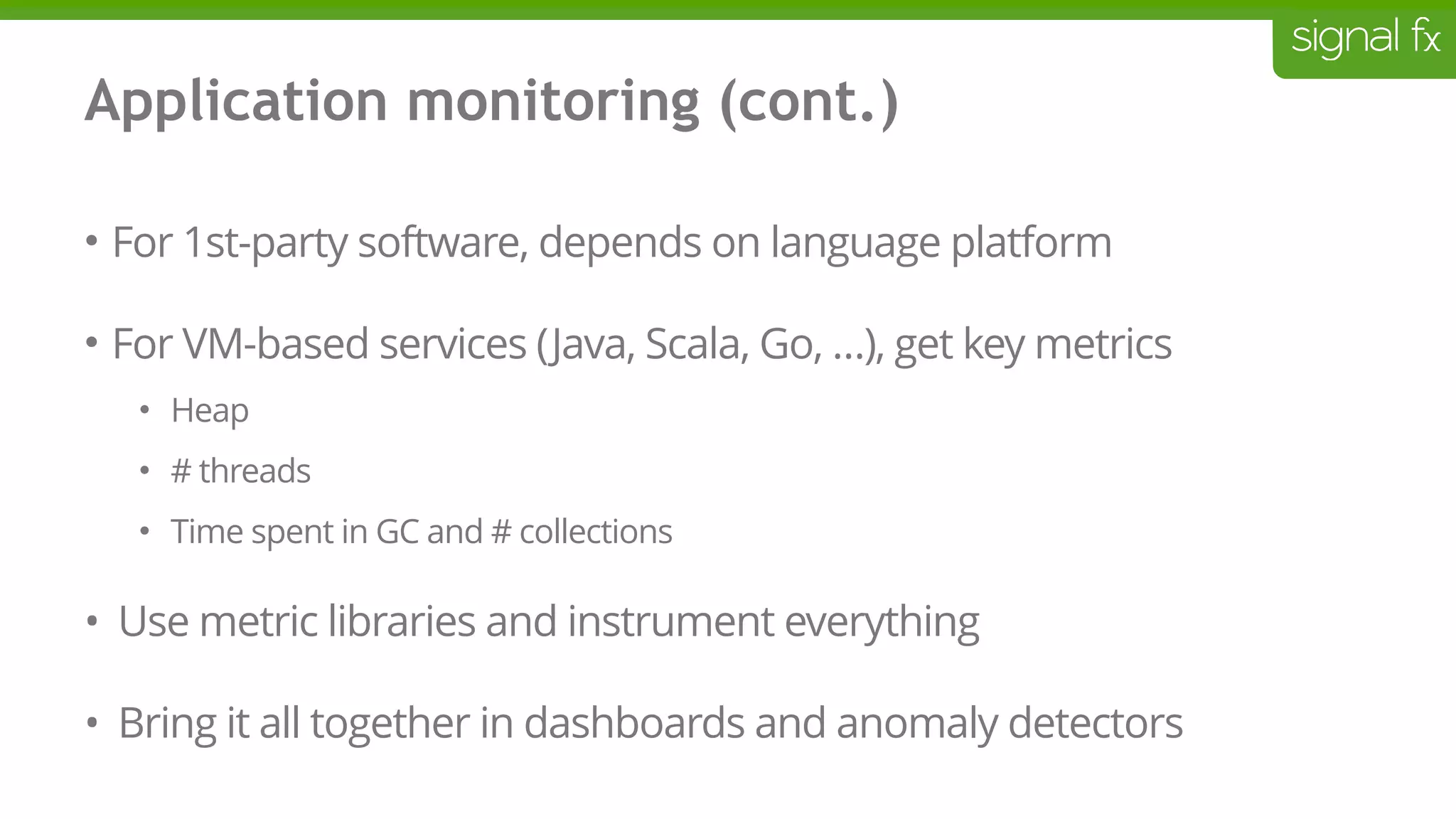
Application monitoring (cont.)
• For 1st-party software, depends on language platform
• For VM-based services (Java, Scala, Go, …), get key metrics
• Heap
• # threads
• Time spent in GC and # collections
• Use metric libraries and instrument everything
• Bring it all together in dashboards and anomaly detectors
Docker with SignalFx
• Objective: time-to-data as short as possible
• Easiest route: use our packaged CollectD
• Good default set of host metrics
• Install/enable plugins as needed; docker-collectd-plugin
• SignalFx automatically imports curated dashboards
• That’s it!
More monitoring with SignalFx
• Use our client libraries or API to send your monitoring data
• Or tee off your existing Graphite, StatsD, … pipeline towards SignalFx
• Leverage the power of the real-time, streaming analytics
• Correlate system, container and application metrics
• Build better dashboards and alerts from higher-level signals
Thanks!
github.com/signalfuse/maestro-ng
github.com/signalfx/docker-collectd-plugin
signalfx.com/free-trial.html
@signalfx — signalfx.com/careers.html
@mpetazzoni — github.com/mpetazzoni

Docker {at,with} SignalFx

  • 1.
    MAXIME PETAZZONI —PALO ALTO DOCKER MEETUP — SEPT. 1ST, 2015 DOCKER {AT,WITH} SIGNALFX
  • 2.
    MAXIME PETAZZONI —PALO ALTO DOCKER MEETUP — SEPT. 1ST, 2015 Me? github.com/mpetazzoni @mpetazzoni
  • 3.
    MAXIME PETAZZONI —PALO ALTO DOCKER MEETUP — SEPT. 1ST, 2015 What is SignalFx?
  • 4.
    The pitch • Real-timemonitoring system for modern applications • User-defined, streaming and interactive analytics • Alerting and anomaly detection • Easy to deploy, to use and to integrate • Scales; from small deployments to large, complex infrastructures
  • 5.
    MAXIME PETAZZONI —PALO ALTO DOCKER MEETUP — SEPT. 1ST, 2015 Docker at SignalFx
  • 6.
    Docker at SignalFx •Started using Docker in November 2013 • Running Docker in prod ever since we’ve had a “prod” • Back when Docker’s README said “DO NOT RUN IN PRODUCTION”
  • 7.
    Objectives • Separate infrastructureconcerns • Stronger independence from hosting provider • Development lifecycle • Application packaging and delivery • Higher-level orchestration
  • 8.
    Infrastructure vs application •Separation of concerns • Infrastructure provides appropriately spec-ed hosts and network • Abstracts from cloud provider • Currently on AWS • Amazon Linux AMIs + Salt to setup a few things, up to Docker
  • 9.
    Infrastructure vs application(cont.) • “Application” stack takes it up from there • Everything is containerized, including 3rd party components • No dependence on Amazon specifics • We can spin up the stack anywhere (laptop, GCE, DO, …)
  • 10.
    SDLC • Run locally,in tests and in prod environments • Same bits, same tools, same arguments, etc. • Crucial for software validation • Maven, Jenkins, Quay.io, MaestroNG • maestro start
  • 11.
  • 12.
    SDLC (cont.) • Continuousbuild of the release branch • Builds and pushes :latest tagged Docker images • Promotion track through :lab, :prod and :mon • One-click promote + upgrade, orchestrated by MaestroNG • Automated integration tests environment
  • 13.
    Application packaging anddelivery • All components of the stack are packaged as Docker images • 3rd-party component packaging was figured out once (Dockerfile) • SignalFx components all have their Dockerfile too • Built by docker-maven-plugin • All components have a run.py init script
  • 14.
    Discovery • ZooKeeper /Curator service discovery • We built announcing wrappers for Cassandra and ElasticSearch • Only need to know “realm” name and zkConnectString • Everything else is discovered from ZooKeeper • Need to make sure to announce host IP address/port • Maestro gives us that via environment
  • 15.
    Orchestration • We builtMaestroNG • Orchestrator of multi-host Docker environments • github.com/signalfuse/maestro-ng • Jinja2/Yaml environment file • Defines what runs where, and how • Knows and respects service dependencies
  • 16.
    MAXIME PETAZZONI —PALO ALTO DOCKER MEETUP — SEPT. 1ST, 2015 Monitoring containers
  • 17.
    The basics • Docker’s/stats API provides the bare minimum • CPU • Memory • Network I/O • Disk I/O • Pitfalls; GET /stats is blocking, up to a second • Use CollectD and docker-collectd-plugin • github.com/signalfx/docker-collectd-plugin
  • 18.
    The basics (cont.) •Data returned by /stats API needs “math” to yield usable numbers • See Docker client code • Better: use SignalFx! • Docker Dashboard • Collect host metrics too if you can (with CollectD) • System/container-level metrics are very limited • We need to go deeper
  • 19.
    Application monitoring • Usuallyneeds more specific visibility • Instrument first, ask questions later • Metrics are cheap, both in CPU and $ • For 3rd-party apps, use CollectD and its plugins • We’re doing a lot of work to improve/provide CollectD plugins for common FOSS • And provide curated dashboards for each of them
  • 20.
    Application monitoring (cont.) •For 1st-party software, depends on language platform • For VM-based services (Java, Scala, Go, …), get key metrics • Heap • # threads • Time spent in GC and # collections • Use metric libraries and instrument everything • Bring it all together in dashboards and anomaly detectors
  • 21.
    Docker with SignalFx •Objective: time-to-data as short as possible • Easiest route: use our packaged CollectD • Good default set of host metrics • Install/enable plugins as needed; docker-collectd-plugin • SignalFx automatically imports curated dashboards • That’s it!
  • 22.
    More monitoring withSignalFx • Use our client libraries or API to send your monitoring data • Or tee off your existing Graphite, StatsD, … pipeline towards SignalFx • Leverage the power of the real-time, streaming analytics • Correlate system, container and application metrics • Build better dashboards and alerts from higher-level signals
  • 23.