Reduyan Hasan
Lecturer
DyNC
Introduction
 During mid 19th Century, Gregor Mendel observed that
certain
 features pass from parents to their children/offspring.
 A child usually looks like their parents and is due to
inheritance of
 certain characteristics from parents to children .
 This transmission of characteristics from parents to
children is
 known as heredity.
 The basic unit of heredity is gene, which consist of portion
of DNA
 molecules.
 The term gene was coined by Johannsen in 1909.
Genetics
 Genetics is the study which
deals with the science of genes,
 heredity and its variations in
living organism.
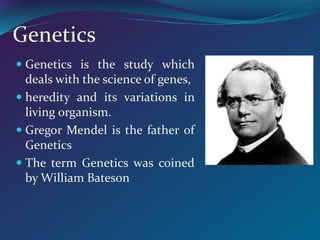
 Gregor Mendel is the father of
Genetics
 The term Genetics was coined
by William Bateson
Gene
 Gene is defined as a segment of DNA
(Deoxyribonucleic Acid)
 which carries the genetic information.
 Gene is the basic physical and functional unit of
heredity
 DNA has also segment which do not contain
gene.
 The human genome contains about 30000 —
40000 genes and each
 gene varies in size,
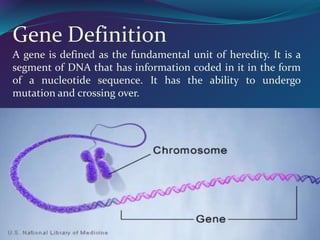
Gene Definition
A gene is defined as the fundamental unit of heredity. It is a
segment of DNA that has information coded in it in the form
of a nucleotide sequence. It has the ability to undergo
mutation and crossing over.
Chromosomes
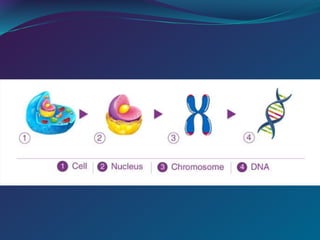
 Chromosomes are thread-like structures located inside the
nucleus
 of animal and plant cells. Each chromosome is made of protein
and
 a single molecule of deoxyribonucleic acid (DNA).
 Passed from parents to offspring, DNA contains the specific
 instructions that make each type of living creature unique.
 The term chromosome comes from the Greek words for color
 (chroma) and body (soma). Scientists gave this name to
 chromosomes because they are cell structures, or bodies, that are
 strongly stained by some colorful dyes used in research.
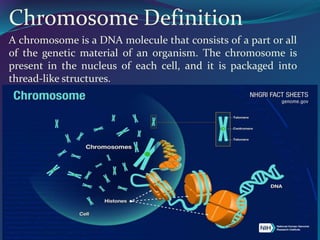
Chromosome Definition
A chromosome is a DNA molecule that consists of a part or all
of the genetic material of an organism. The chromosome is
present in the nucleus of each cell, and it is packaged into
thread-like structures.
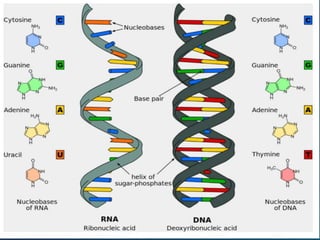
Nucleic acids
 Nucleic acids are the macromolecules present
in all living cell.
 Nucleic Acids are of two types —
 DNA (Deoxyribonucleic Acid)
 RNA (Ribonucleic Acid)
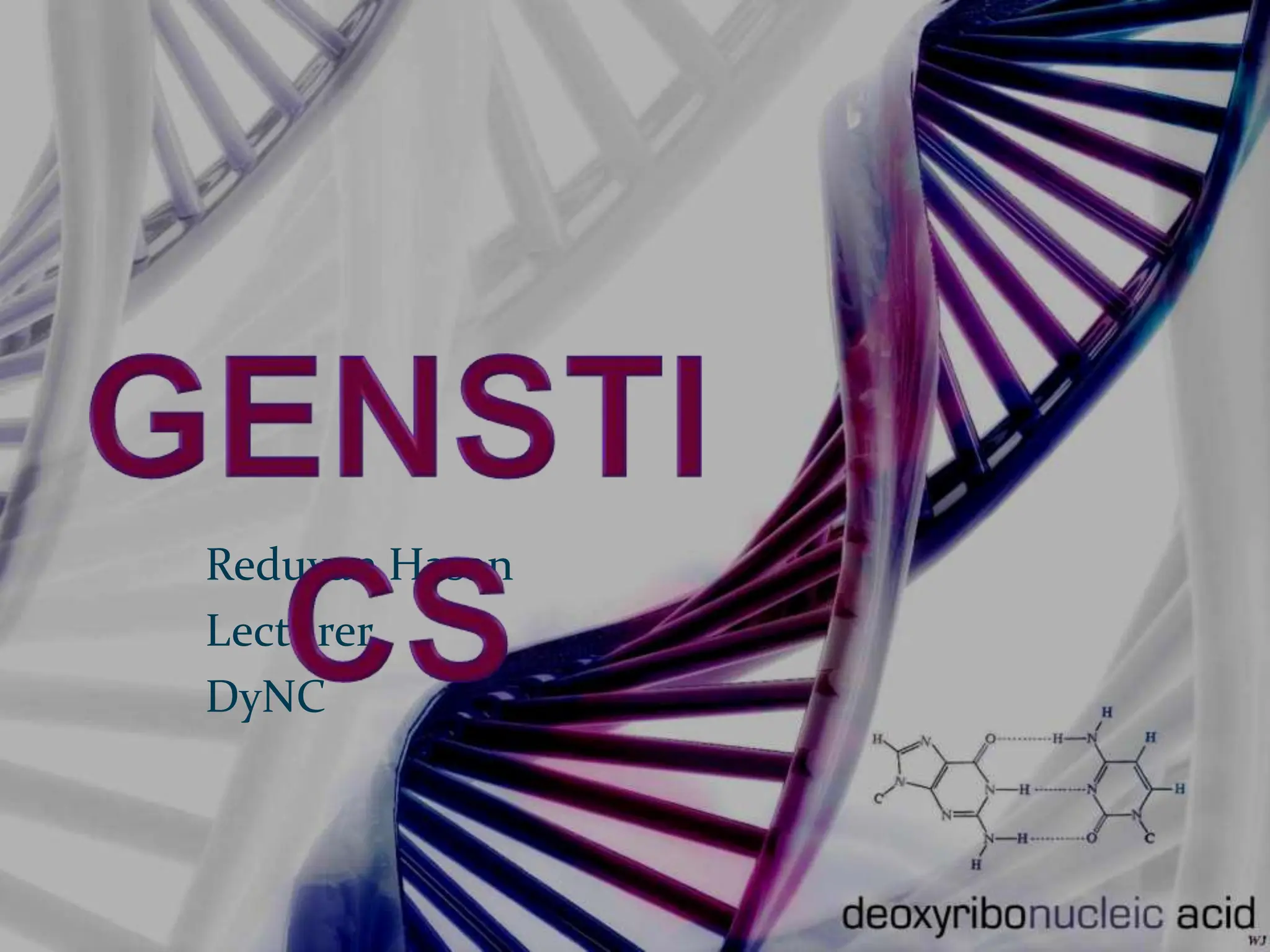
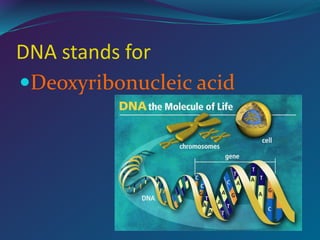
DNA stands for
Deoxyribonucleic acid
DNA Structure
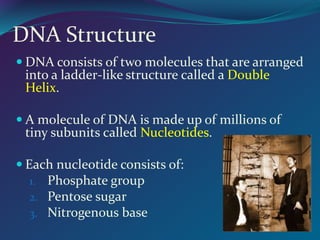
 DNA consists of two molecules that are arranged
into a ladder-like structure called a Double
Helix.
 A molecule of DNA is made up of millions of
tiny subunits called Nucleotides.
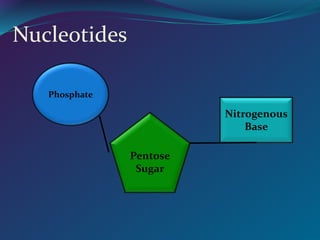
 Each nucleotide consists of:
1. Phosphate group
2. Pentose sugar
3. Nitrogenous base
Nucleotides
Phosphate
Pentose
Sugar
Nitrogenous
Base
Nucleotides
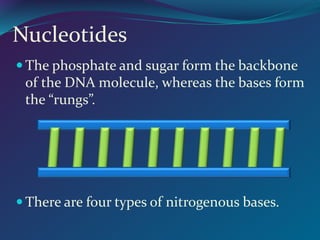
 The phosphate and sugar form the backbone
of the DNA molecule, whereas the bases form
the “rungs”.
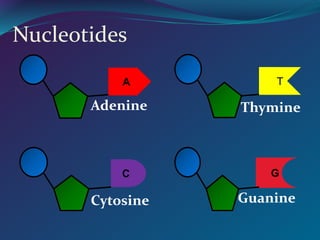
 There are four types of nitrogenous bases.
Nucleotides
A
Adenine
T
Thymine
G
Guanine
C
Cytosine
Nucleotides
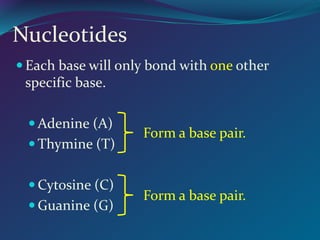
 Each base will only bond with one other
specific base.
 Adenine (A)
 Thymine (T)
 Cytosine (C)
 Guanine (G)
Form a base pair.
Form a base pair.
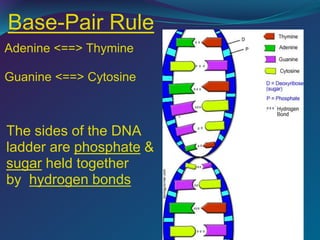
Base-Pair Rule
Adenine <==> Thymine
Guanine <==> Cytosine
The sides of the DNA
ladder are phosphate &
sugar held together
by hydrogen bonds
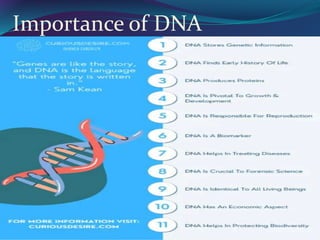
Importance of DNA
DNA Structure
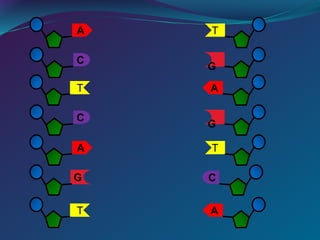
 Because of this complementary base pairing,
the order of the bases in one strand
determines the order of the bases in the other
strand.
G
G
A
T
T
A
A
C
T
G
C
A
T
C
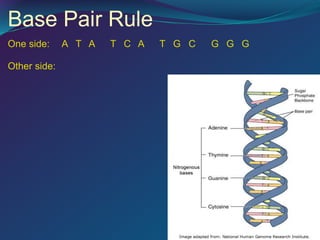
Base Pair Rule
One side: A T A T C A T G C G G G
Other side:
DNA Structure
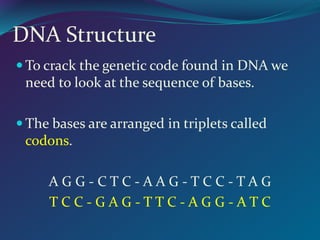
 To crack the genetic code found in DNA we
need to look at the sequence of bases.
 The bases are arranged in triplets called
codons.
A G G - C T C - A A G - T C C - T A G
T C C - G A G - T T C - A G G - A T C
DNA Structure
 A gene is a section of DNA that codes for a
protein.
 Each unique gene has a unique sequence of
bases.
 This unique sequence of bases will code for the
production of a unique protein.
 It is these proteins and combination of proteins
that give us a unique phenotype.
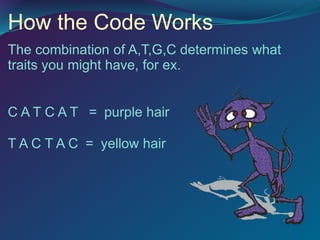
How the Code Works
The combination of A,T,G,C determines what
traits you might have, for ex.
C A T C A T = purple hair
T A C T A C = yellow hair
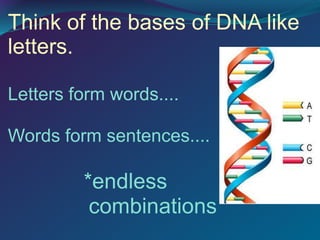
Think of the bases of DNA like
letters.
Letters form words....
Words form sentences....
*endless
combinations
DNA structure and its basic functions .ppt

DNA structure and its basic functions .ppt

  • 1.
  • 2.
    Introduction  During mid19th Century, Gregor Mendel observed that certain  features pass from parents to their children/offspring.  A child usually looks like their parents and is due to inheritance of  certain characteristics from parents to children .  This transmission of characteristics from parents to children is  known as heredity.  The basic unit of heredity is gene, which consist of portion of DNA  molecules.  The term gene was coined by Johannsen in 1909.
  • 3.
    Genetics  Genetics isthe study which deals with the science of genes,  heredity and its variations in living organism.  Gregor Mendel is the father of Genetics  The term Genetics was coined by William Bateson
  • 4.
    Gene  Gene isdefined as a segment of DNA (Deoxyribonucleic Acid)  which carries the genetic information.  Gene is the basic physical and functional unit of heredity  DNA has also segment which do not contain gene.  The human genome contains about 30000 — 40000 genes and each  gene varies in size,
  • 5.
    Gene Definition A geneis defined as the fundamental unit of heredity. It is a segment of DNA that has information coded in it in the form of a nucleotide sequence. It has the ability to undergo mutation and crossing over.
  • 6.
    Chromosomes  Chromosomes arethread-like structures located inside the nucleus  of animal and plant cells. Each chromosome is made of protein and  a single molecule of deoxyribonucleic acid (DNA).  Passed from parents to offspring, DNA contains the specific  instructions that make each type of living creature unique.  The term chromosome comes from the Greek words for color  (chroma) and body (soma). Scientists gave this name to  chromosomes because they are cell structures, or bodies, that are  strongly stained by some colorful dyes used in research.
  • 7.
    Chromosome Definition A chromosomeis a DNA molecule that consists of a part or all of the genetic material of an organism. The chromosome is present in the nucleus of each cell, and it is packaged into thread-like structures.
  • 8.
    Nucleic acids  Nucleicacids are the macromolecules present in all living cell.  Nucleic Acids are of two types —  DNA (Deoxyribonucleic Acid)  RNA (Ribonucleic Acid)
  • 10.
  • 12.
    DNA Structure  DNAconsists of two molecules that are arranged into a ladder-like structure called a Double Helix.  A molecule of DNA is made up of millions of tiny subunits called Nucleotides.  Each nucleotide consists of: 1. Phosphate group 2. Pentose sugar 3. Nitrogenous base
  • 13.
  • 14.
    Nucleotides  The phosphateand sugar form the backbone of the DNA molecule, whereas the bases form the “rungs”.  There are four types of nitrogenous bases.
  • 15.
  • 16.
    Nucleotides  Each basewill only bond with one other specific base.  Adenine (A)  Thymine (T)  Cytosine (C)  Guanine (G) Form a base pair. Form a base pair.
  • 17.
    Base-Pair Rule Adenine <==>Thymine Guanine <==> Cytosine The sides of the DNA ladder are phosphate & sugar held together by hydrogen bonds
  • 18.
  • 19.
    DNA Structure  Becauseof this complementary base pairing, the order of the bases in one strand determines the order of the bases in the other strand.
  • 20.
  • 21.
    Base Pair Rule Oneside: A T A T C A T G C G G G Other side:
  • 22.
    DNA Structure  Tocrack the genetic code found in DNA we need to look at the sequence of bases.  The bases are arranged in triplets called codons. A G G - C T C - A A G - T C C - T A G T C C - G A G - T T C - A G G - A T C
  • 23.
    DNA Structure  Agene is a section of DNA that codes for a protein.  Each unique gene has a unique sequence of bases.  This unique sequence of bases will code for the production of a unique protein.  It is these proteins and combination of proteins that give us a unique phenotype.
  • 24.
    How the CodeWorks The combination of A,T,G,C determines what traits you might have, for ex. C A T C A T = purple hair T A C T A C = yellow hair
  • 25.
    Think of thebases of DNA like letters. Letters form words.... Words form sentences.... *endless combinations