UNIVERSITY INSTITUTE OFBIOTECHNOLOGY
BIOTECHNOLOGY
Bachelor's of Science
B.Sc. Biotechnology/ III Sem
Genetic Engineering
(24BTT-216)
Unit No. 1 Chapter No. 1 Lecture No. 1.2.1
Topic : DNA modifying enzymes
Dr. Anil Kumar (E8226) Designation: Associate Professor
Academic Session 2025-26
ODD Semester Jul-Dec 2025
2.
Learning Objectives
1. Aftercompletion of the course the students will be
acquainted with the basics of Genetic engineering and
cloning vectors
2. After completion student will learn about the role of
restriction endonucleases in genetic engineering
3. After completion student will learn about the role and
function of end modifying enzymes.
1
3.
Recap of PreviousLecture
2
Last lecture we have studied about
History of genetic engineering
Different discoveries related to the rise of
genetic engineering
Role and importance of enzyme that cut DNA
at specific sites
4.
Applications of theTopic
• Insight about the cutting of
DNA with restriction
endonucleases
• Mechanism of action of
endonucleases
• Why Host DNA is unaffected
• How DNA can be modified at
ends
Figure-2 : Supportive image / video / chart /
graphics with source reference (as applicable)
5
5.
Summary of theLecture
1. Genetic engineering refers to the direct manipulation of
an organism’s genome using advanced DNA technology.
2. It involves the introduction, deletion or modification of
genes within an organism’s DNA to produce desirable
traits.
3. Genetic engineering has revolutionised fields like
agriculture, medicine and biotechnology enabling
innovations like disease-resistant crops, synthetic insulin
production and gene therapy....
6
6.
Introduction
• To producerecombinant molecule:
the vector
the DNA to be cloned
cut at specific points and then joined
together in a controlled manner.
7.
DNA manipulative enzymes
•Nucleases are enzymes that cut, shorten, or degrade nucleic acid
molecules.
• Ligases join nucleic acid molecules together.
• Polymerases make copies of molecules.
• Modifying enzymes remove or add chemical groups.
9.
Nucleases
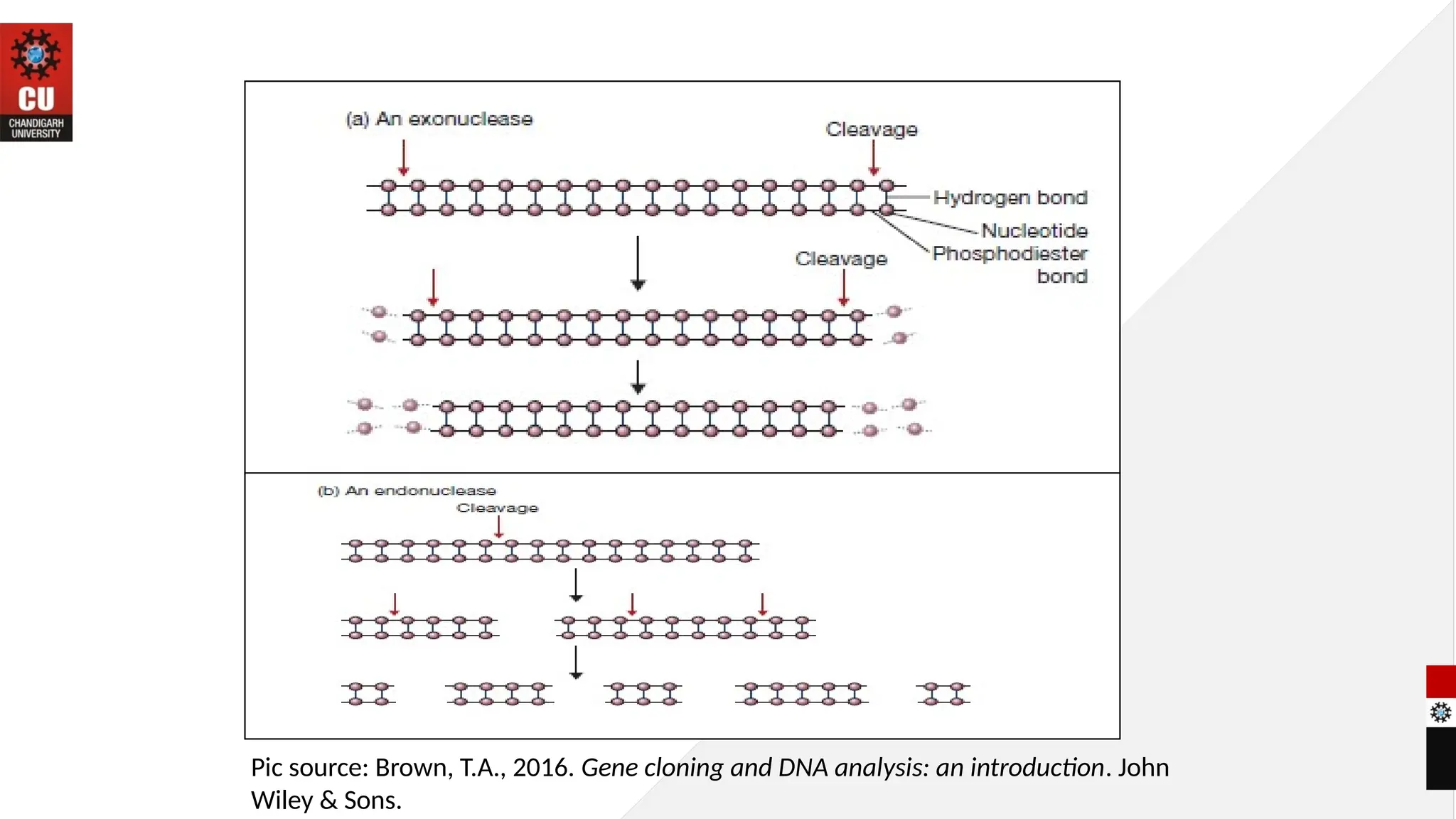
• Nucleases degradeDNA molecules by breaking the phosphodiester
bonds that link one nucleotide to the next in a DNA strand. There are
two different kinds of nuclease
• Exonucleases remove nucleotides one at a time from the end of a
DNA molecule.
• Endonucleases are able to break internal phosphodiester bonds
within a DNA molecule
10.
Pic source: Brown,T.A., 2016. Gene cloning and DNA analysis: an introduction. John
Wiley & Sons.
11.
Ligase
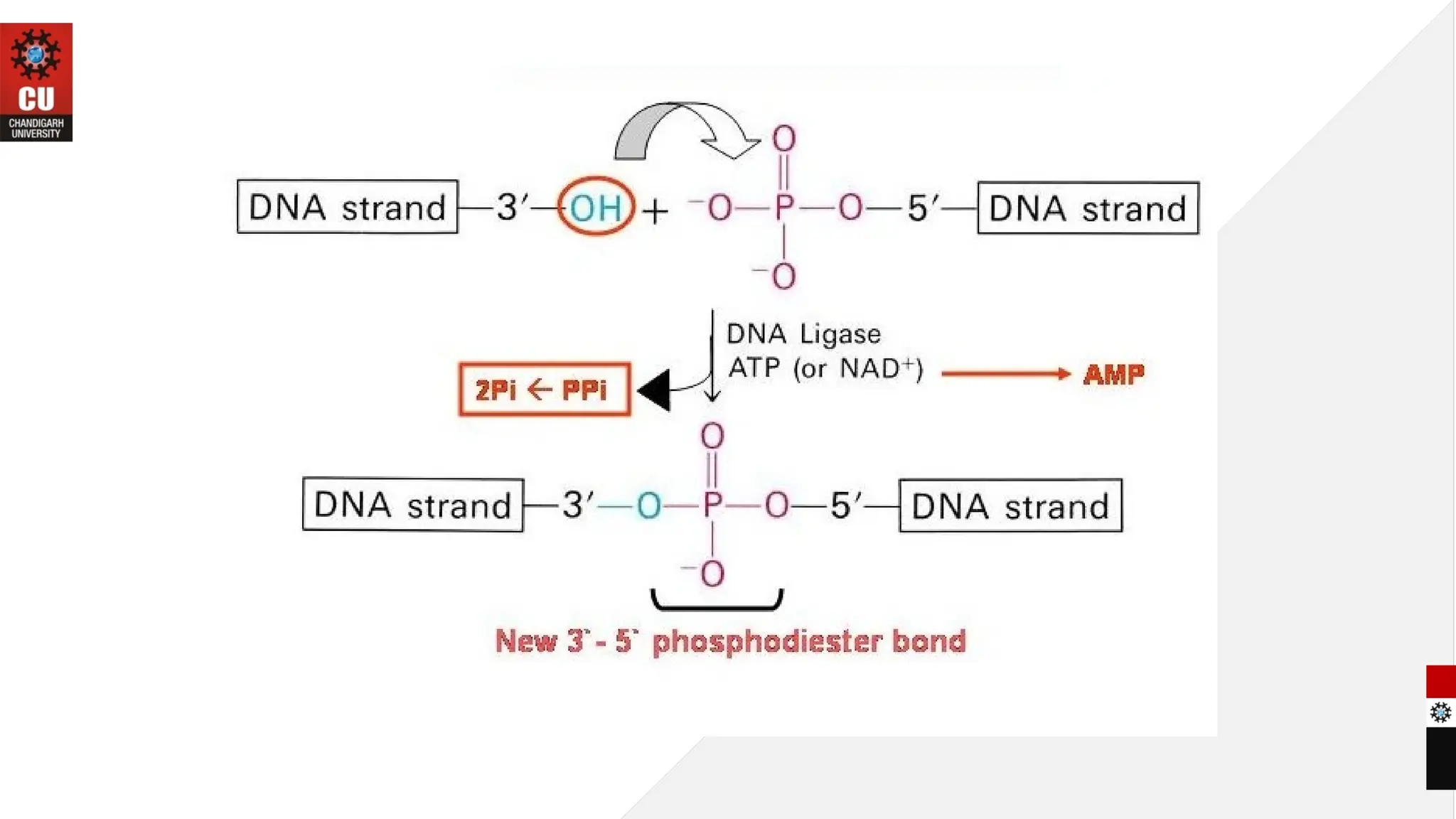
• In thecell the function of DNA ligase is to repair
single-stranded breaks.
• DNA ligases from most organisms can also join
together two individual fragments of DNA.
Pic source: Brown, T.A., 2016. Gene cloning and DNA analysis: an introduction. John
Wiley & Sons.
13.
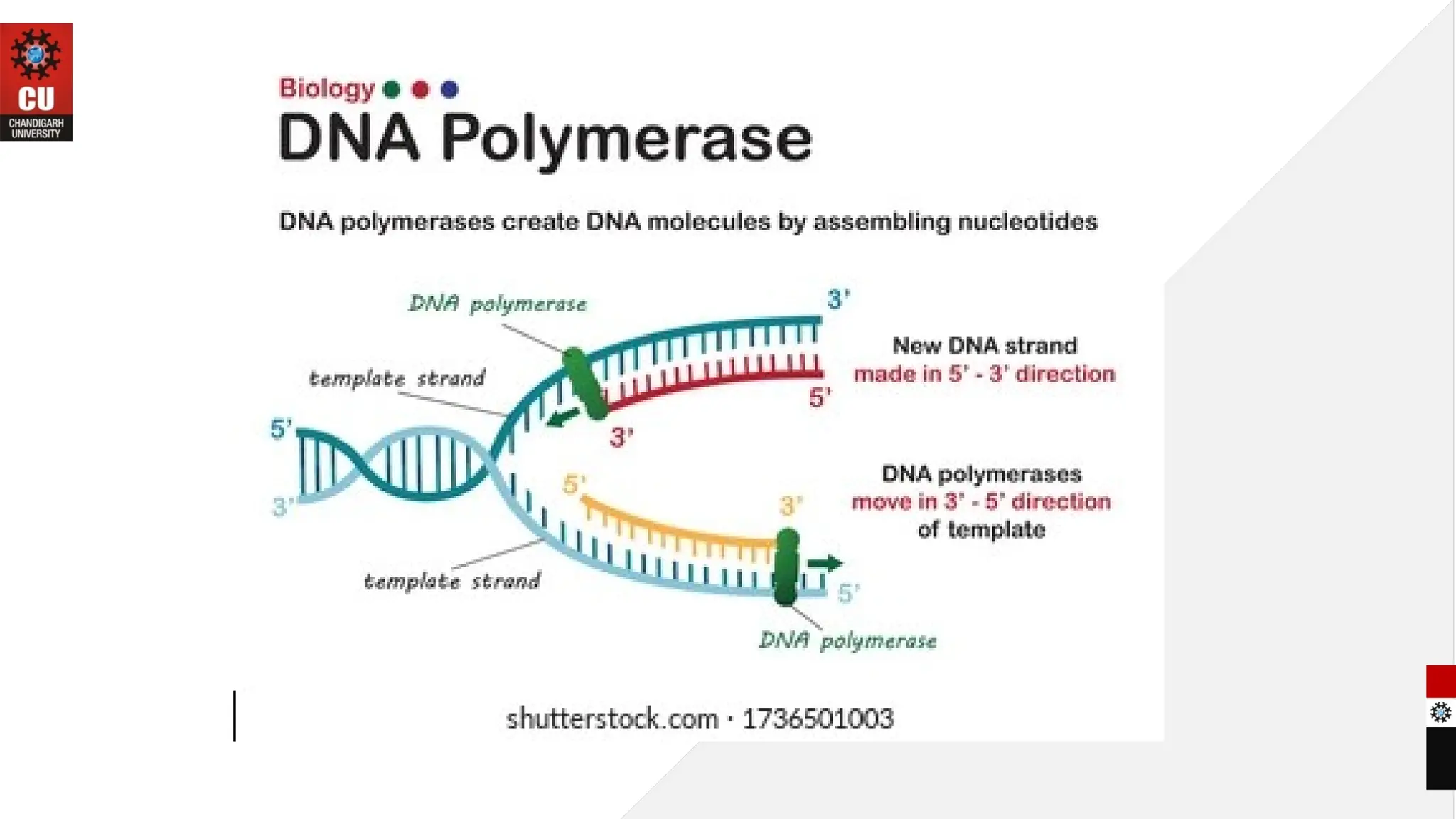
DNA polymerases
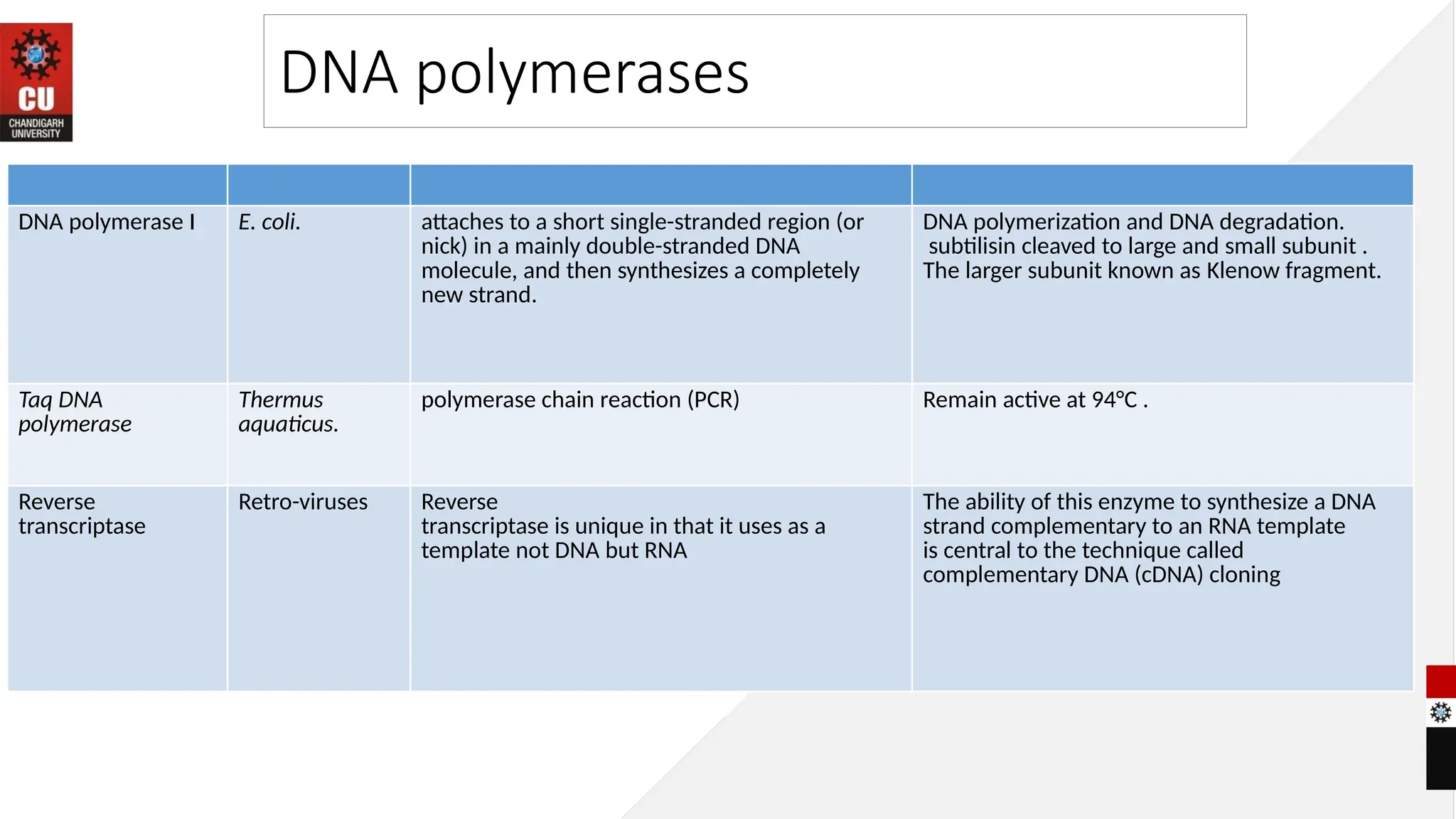
DNA polymeraseI E. coli. attaches to a short single-stranded region (or
nick) in a mainly double-stranded DNA
molecule, and then synthesizes a completely
new strand.
DNA polymerization and DNA degradation.
subtilisin cleaved to large and small subunit .
The larger subunit known as Klenow fragment.
Taq DNA
polymerase
Thermus
aquaticus.
polymerase chain reaction (PCR) Remain active at 94°C .
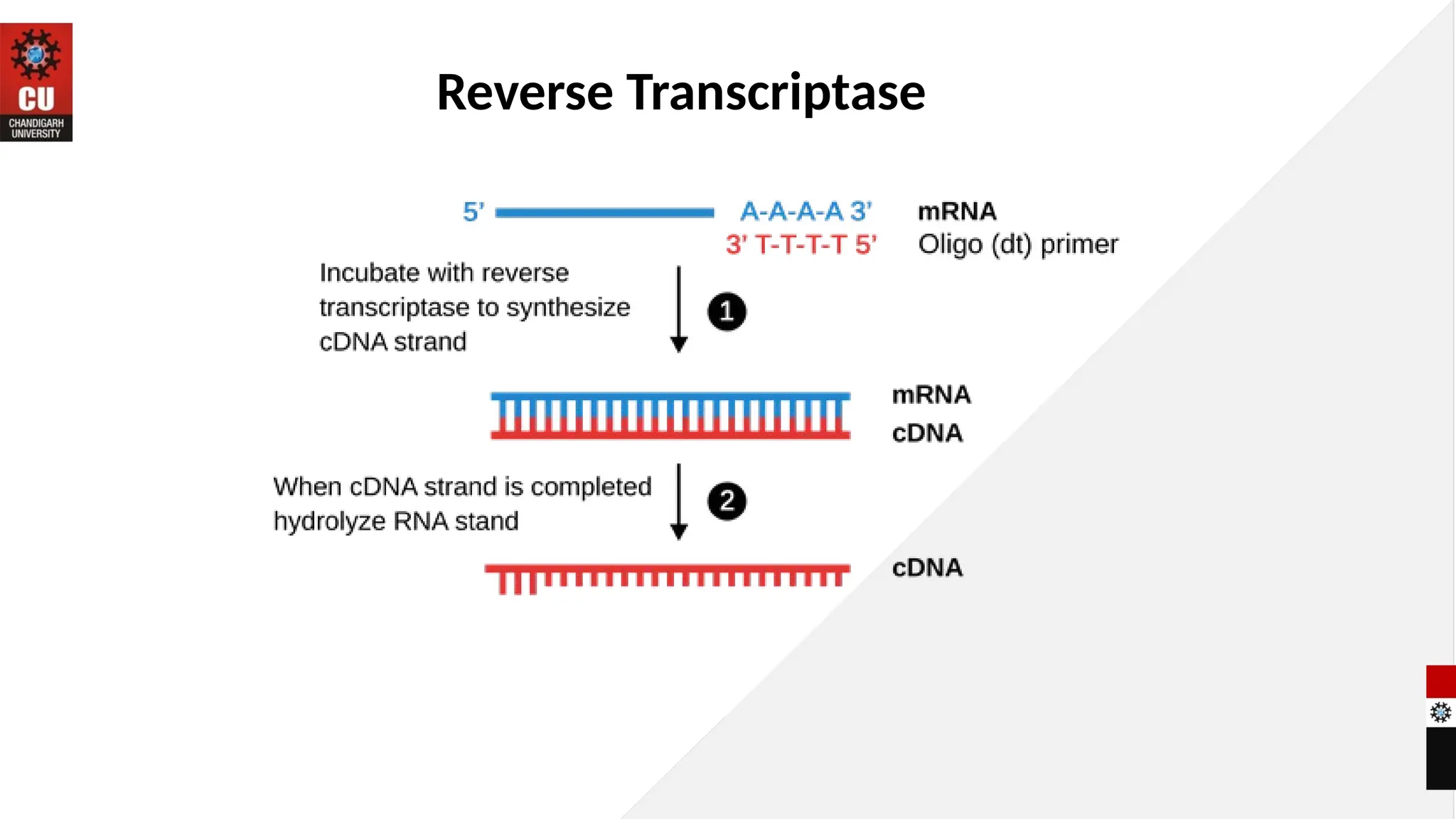
Reverse
transcriptase
Retro-viruses Reverse
transcriptase is unique in that it uses as a
template not DNA but RNA
The ability of this enzyme to synthesize a DNA
strand complementary to an RNA template
is central to the technique called
complementary DNA (cDNA) cloning
14.
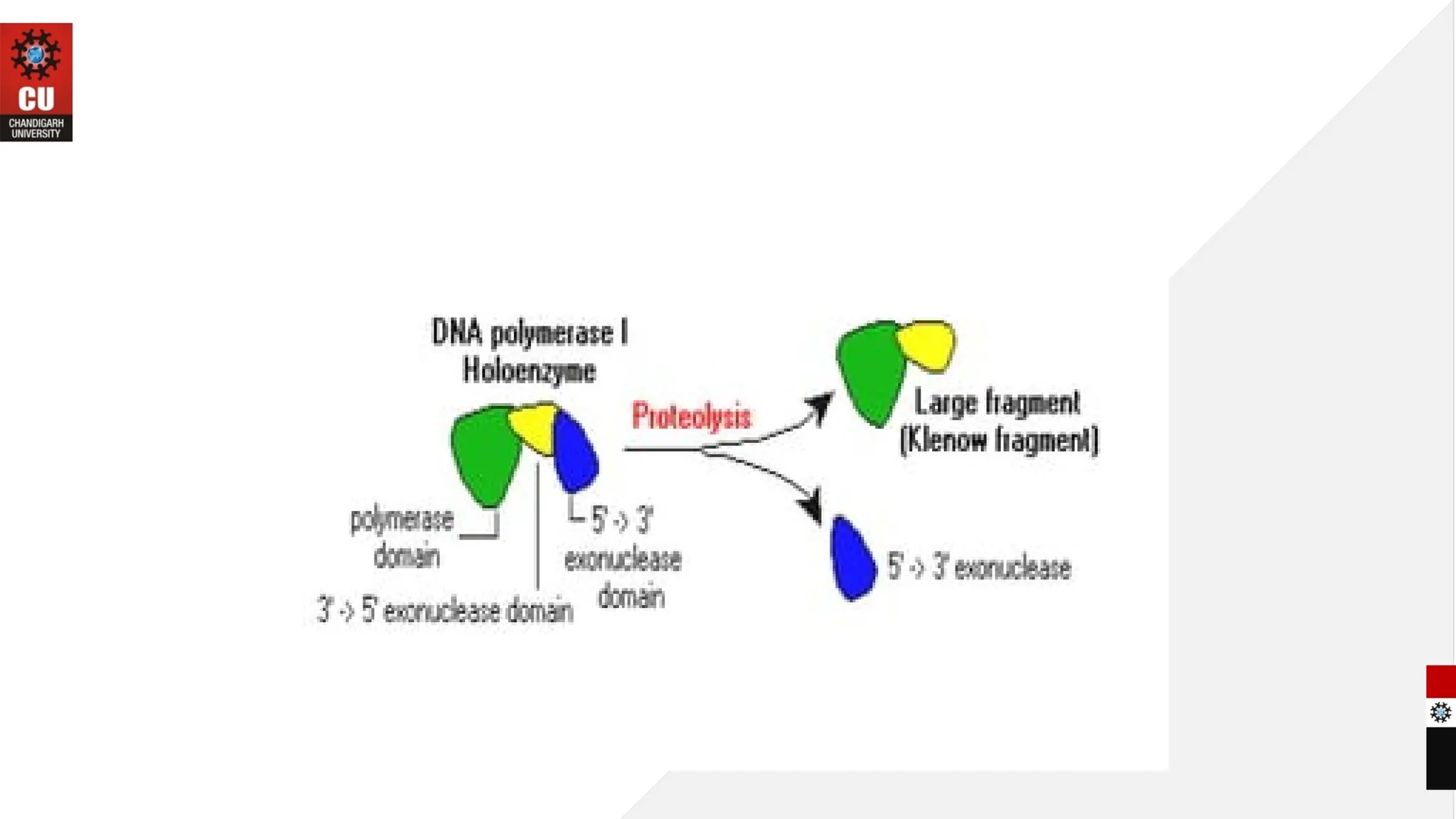
• When E.coli DNA polymerase 1 is proteolytically digested by the bacterial
protease subtilisin, it produces two fragments – a large fragment and a small
fragment.
• The Klenow fragment is the largest fragment that contains 5 to 3 polymerase
′ ′
and 3 to 5 exonuclease (proofreading) activity domains of the DNA
′ ′
polymerase .
Ⅰ
• The Klenow fragment’s 3 to 5 exonuclease activity aids in the elimination of
′ ′
improperly inserted bases while polymerisation proceeds.
• It lacks the 5 to 3 exonuclease activity, which is shown by full-length or entire
′ ′
E. coli DNA polymerase .
Ⅰ
Klenow Fragment
17.
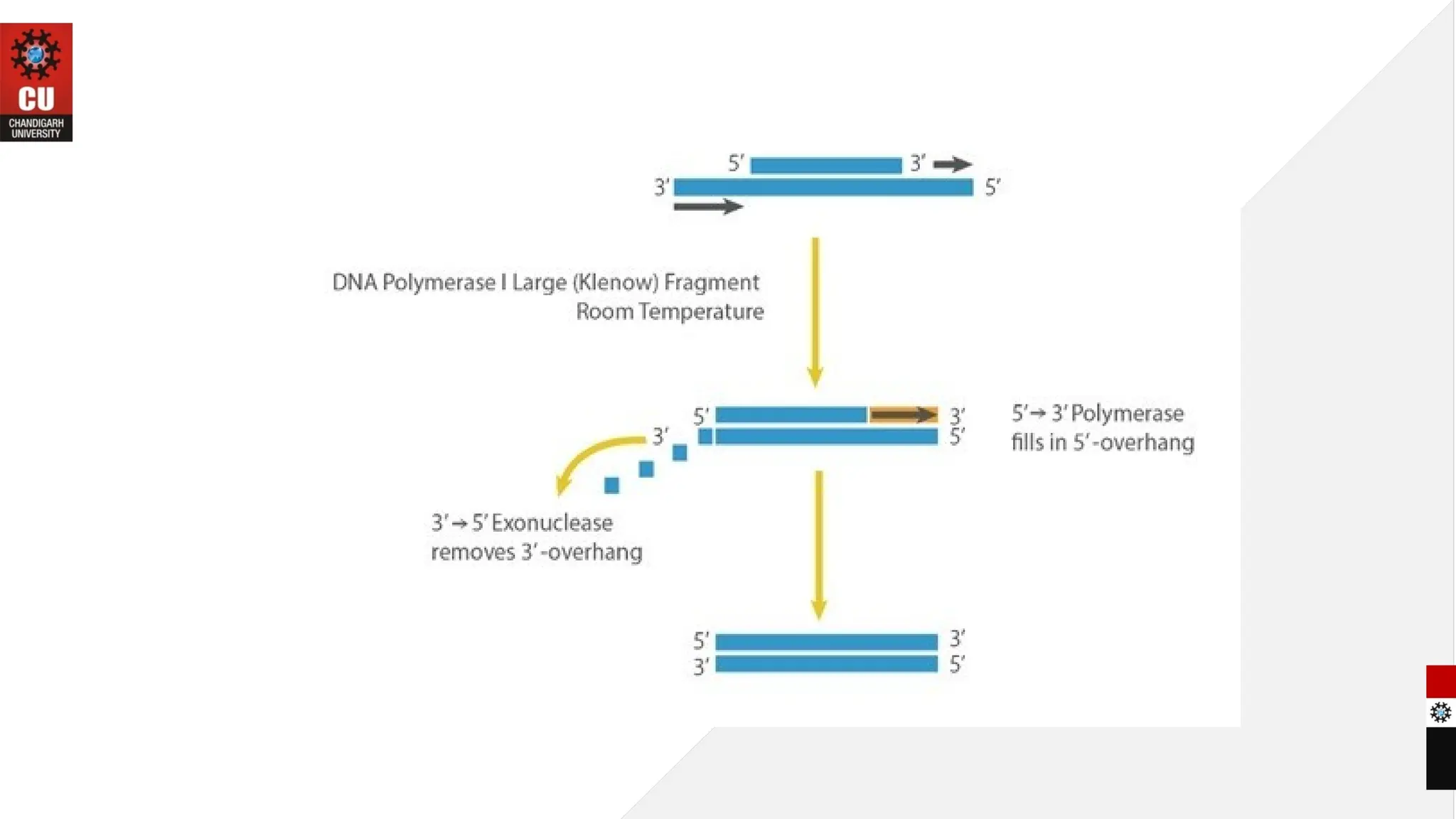
The Klenow fragmentis extremely useful for research-based tasks such
as: Synthesis of double-stranded DNA from single-stranded templates.
Filling in receded 3' ends of DNA fragments to make 5' overhang blunt.
Digesting away protruding 3' overhangs.
DNA modifying enzymes
•There are numerous enzymes that modify DNA molecules
by addition or removal of specific chemical groups.
• The most important are as follows:
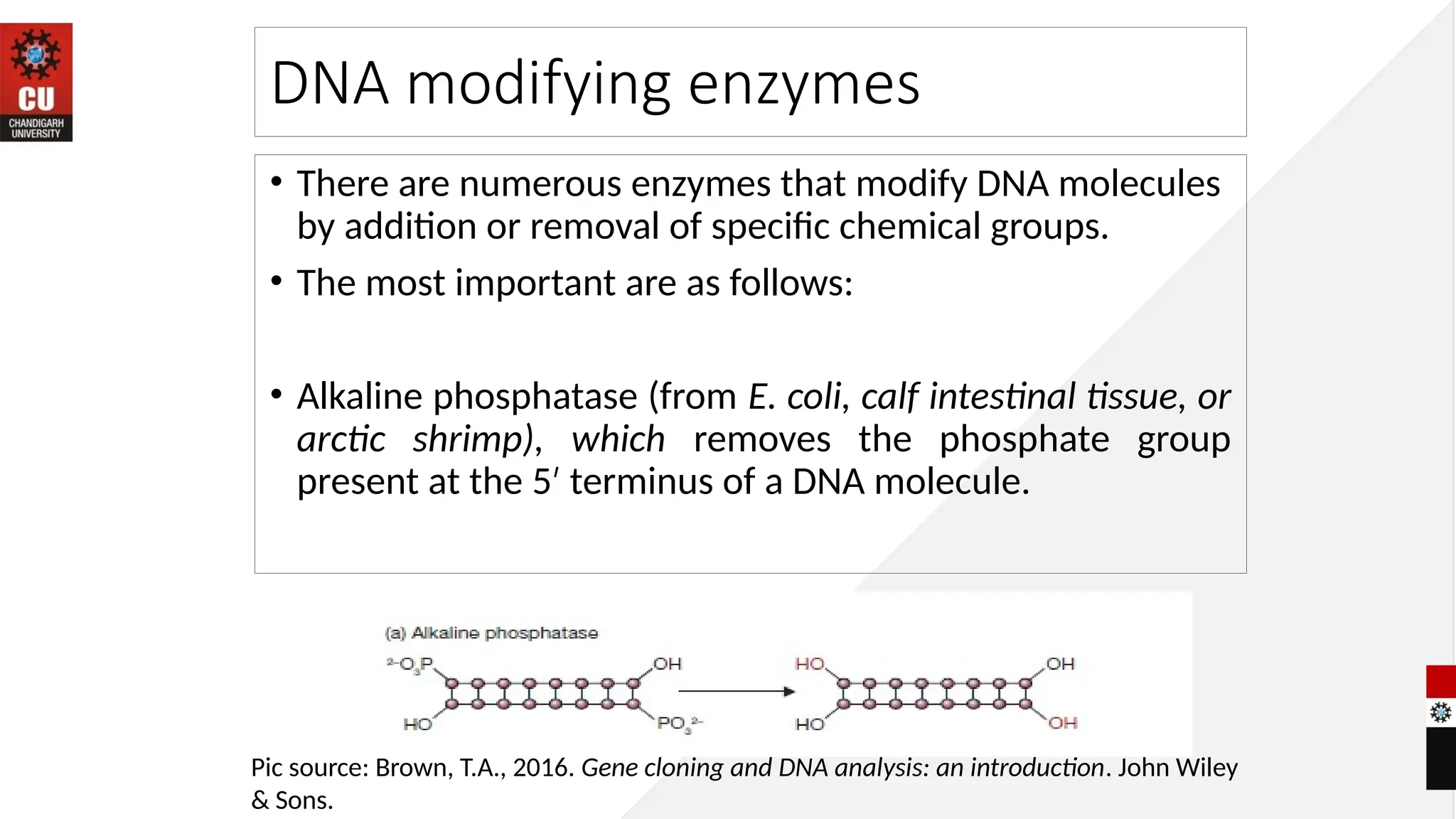
• Alkaline phosphatase (from E. coli, calf intestinal tissue, or
arctic shrimp), which removes the phosphate group
present at the 5 terminus of a DNA molecule.
′
Pic source: Brown, T.A., 2016. Gene cloning and DNA analysis: an introduction. John Wiley
& Sons.
20.
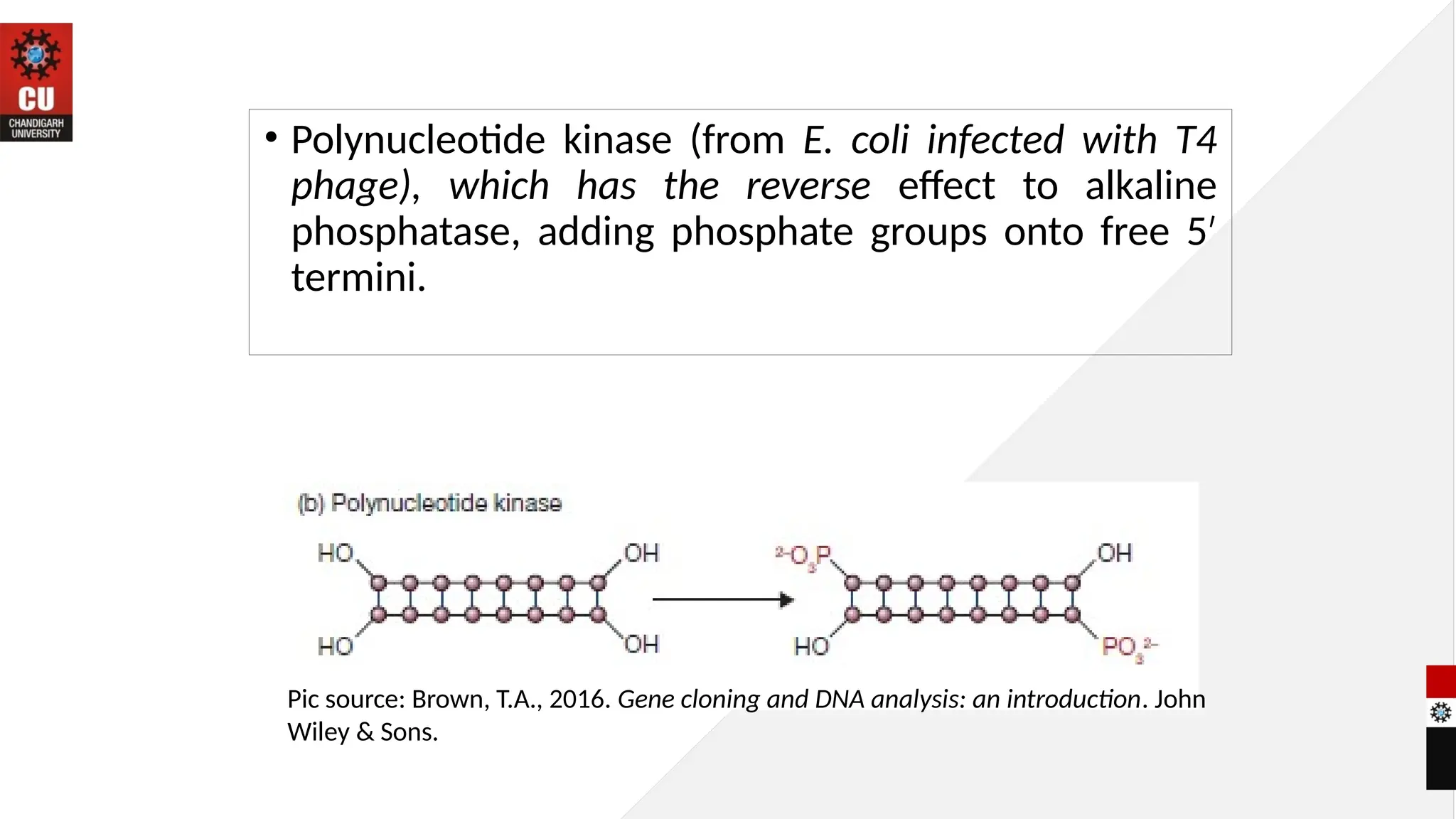
• Polynucleotide kinase(from E. coli infected with T4
phage), which has the reverse effect to alkaline
phosphatase, adding phosphate groups onto free 5′
termini.
Pic source: Brown, T.A., 2016. Gene cloning and DNA analysis: an introduction. John
Wiley & Sons.
21.
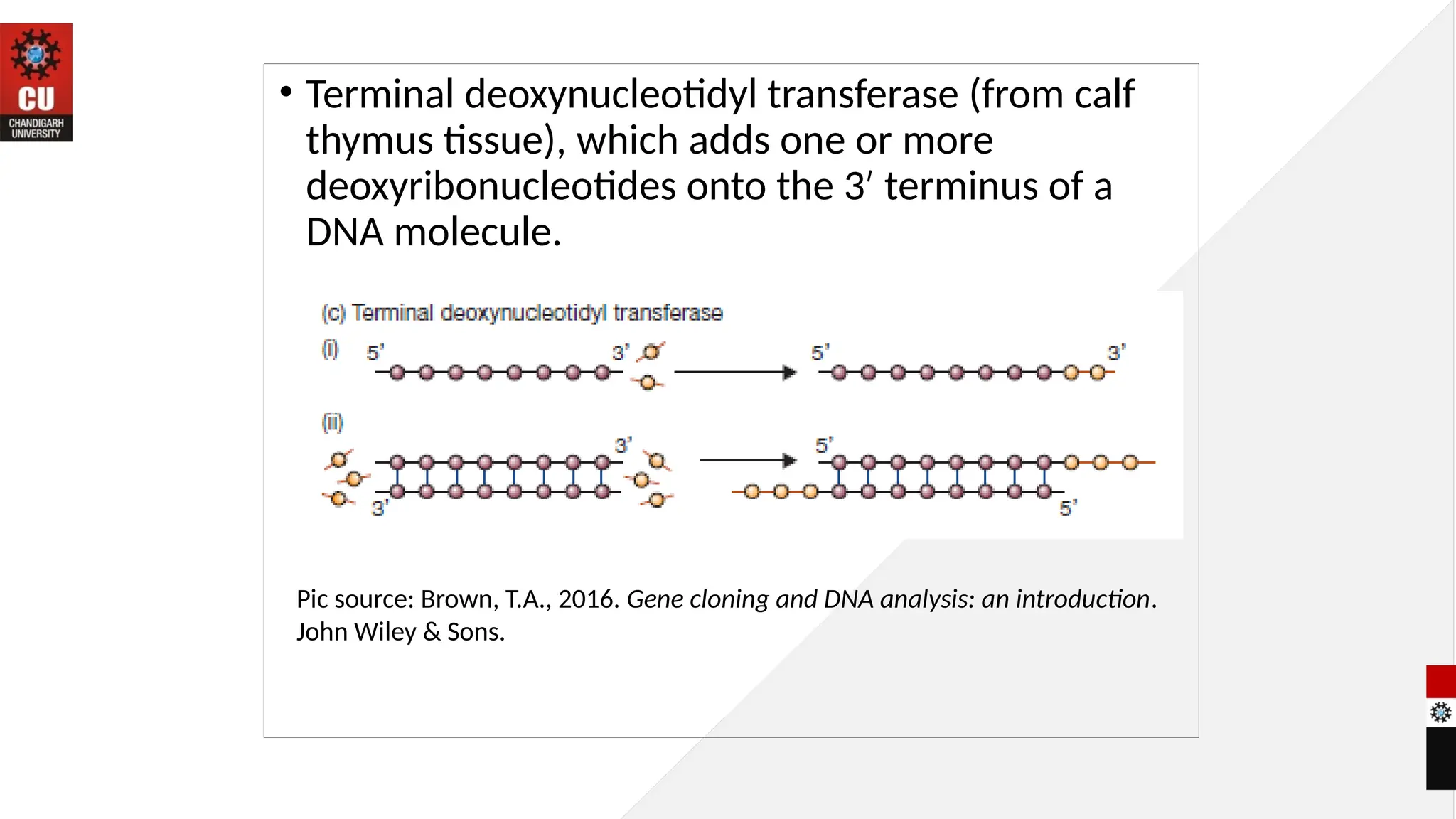
• Terminal deoxynucleotidyltransferase (from calf
thymus tissue), which adds one or more
deoxyribonucleotides onto the 3 terminus of a
′
DNA molecule.
Pic source: Brown, T.A., 2016. Gene cloning and DNA analysis: an introduction.
John Wiley & Sons.
22.
Next Lecture
Topic(s)
Discussabout the role of restriction endonucleases in
cutting of DNA at specific sites
What are recognition sites
Different enzymes used in modification of DNA at specific
sites
7
23.
Quiz/ FAQ’s
8
1. Cuttingand joining of the DNA are which techniques?
a) DNA degradation
b) DNA replication
c) DNA manipulation
d) DNA synthesis
View Answer
2. What type of DNA enzymes is made use of in most of the DNA manipulative
techniques?
a) Partially degraded
b) Purified
c) Degraded or denatured
d) Enclosed in a parent cell
View Answer
3. Enzymes that remove nucleotides one at a time from the end of a DNA molecule are
called
a) Ligases
b) Exonucleases
c) Endonucleases
d) Modifying enzymes
24.
References/ Articles/ Videos
9
GENECLONING AND DNA ANALYSIS: AN INTRODUCTION,
8TH EDITION Paperback – 1
0 December 2020, T. A. Brown
GENE CLONING AND DNA ANALYSIS: AN INTRODUCTION, 8TH EDITION Paperback – 10 December 2020,
T. A. Brown
References
1. Buckley, G. (15 Janurary 2021). Nucleic Acid. Retrieved 07 May, 2023,
from https://biologydictionary.net/nucleic-acid/
2. Verma, P. S., & Agrawal, V. K. (2006). Cell Biology, Genetics, Molecular Biology, Evolution &
Ecology (1 ed.). S .Chand and company Ltd.
3. Klug, W. S., & Cummings, M. R. (2003). Concepts of genetics. Upper Saddle River, N.J: Prentice
Hall.
4. https://www.britannica.com/science/restriction-enzyme
5. https://international.neb.com/products/restriction-endonucleases/restriction-endonucleases
6. https://en.wikipedia.org/wiki/Restriction_enzyme
7. http://www.bio.miami.edu/dana/dox/restrictionenzymes.html
8. Chen, K., Zhao, B. S., & He, C. (2016). Nucleic acid modifications in regulation of gene expression.
Cell chemical biology, 23(1), 74-85.
25.
References
• Brown, T.A.,2016. Gene cloning and DNA analysis:
an introduction. John Wiley & Sons.
• An Introduction to Genetic Engineering- Desmond
S. T Nicholl
• Gene Manipulation: Old and Primrose, 2000.
26.
Faculty-curated videos, NPTEL,
Coursera,LinkedIn, or other relevant
learning resources
https://youtu.be/4OGAz1j5yF8?si=Vy_q4ZFFjbKB3xyc
https://youtu.be/ixnVL-m0-QA?si=02PnVG9kHbBmjpwA
https://archive.nptel.ac.in/courses/105/104/105104183/
https://youtu.be/2pp17E4E-O8?si=t4H0uncCPc1xpHCp
10
#13 DNA Polymerase I, Large (Klenow) fragment was originally derived as a proteolytic product of E.coli DNA polymerase that retains polymerase and 3’ —> 5’ exonuclease activity
Removal of 3’ overhangs or fill-in of 5’ overhangs to form blunt ends
Lacks 5’ —> 3’ exonuclease activity
Generates probes using random primers
Second strand cDNA synthesis