Molecular cloning
• Toclone something is to make an identical copy, whether it is done by a
photocopy machine on a piece of paper, cloning Dolly the sheep, or
cloning DNA
• Cloning can also be considered an amplification process, in which we
currently have one copy and we want many identical copies
• Cloning DNA typically involves recombinant DNA. This also has a
simple definition: a DNA molecule from two (or more) different sources.
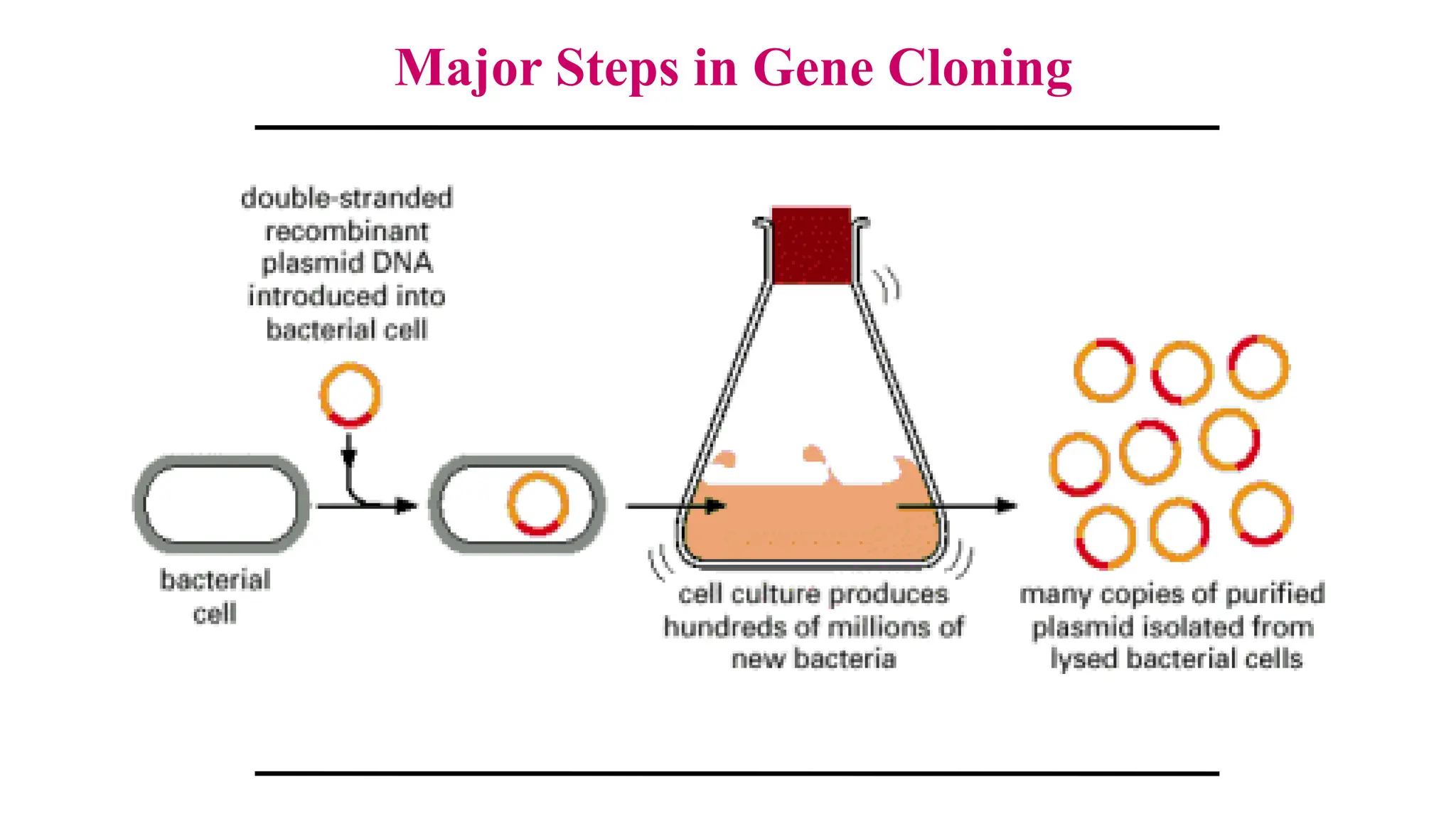
Major Steps inGene Cloning
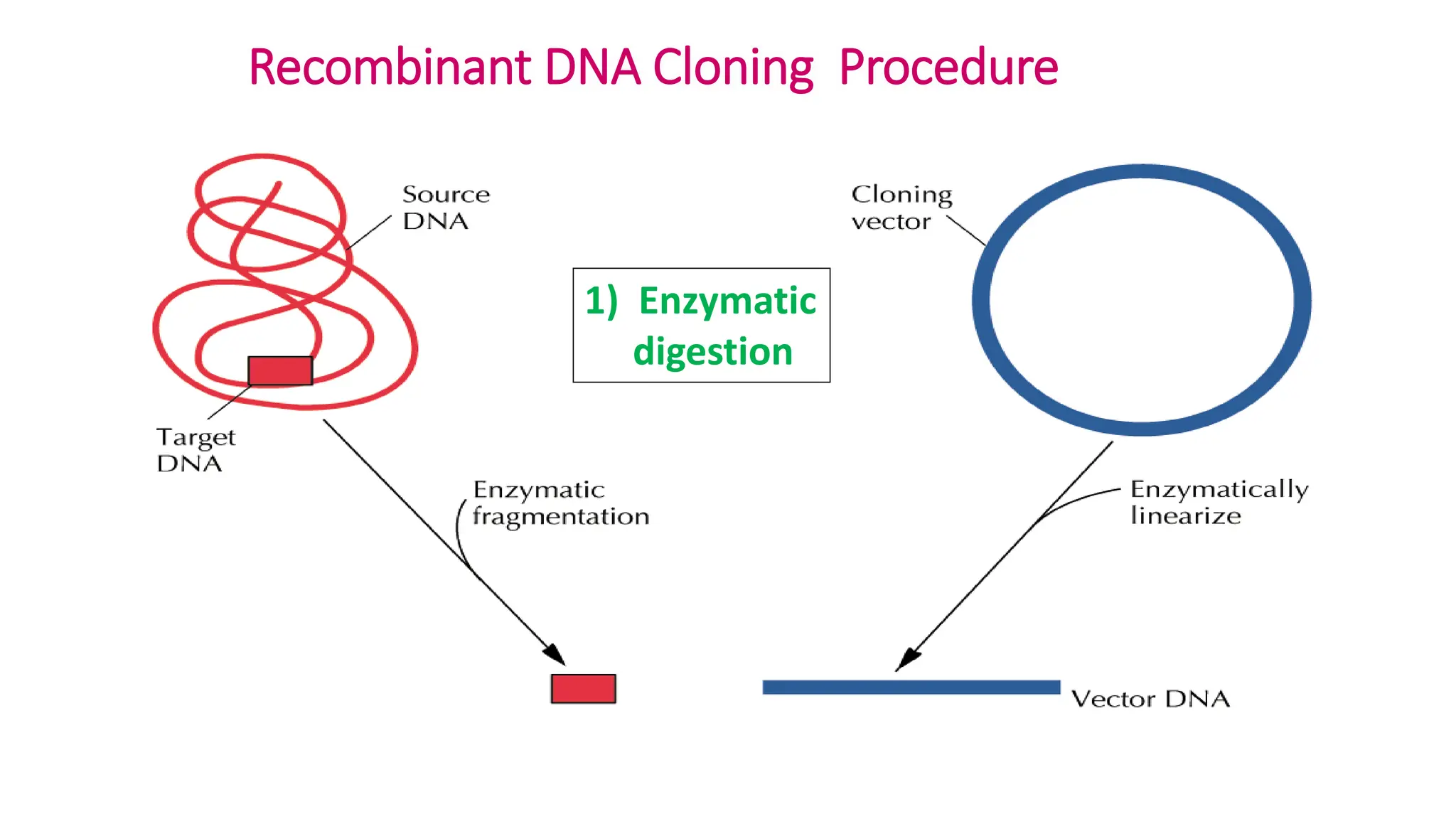
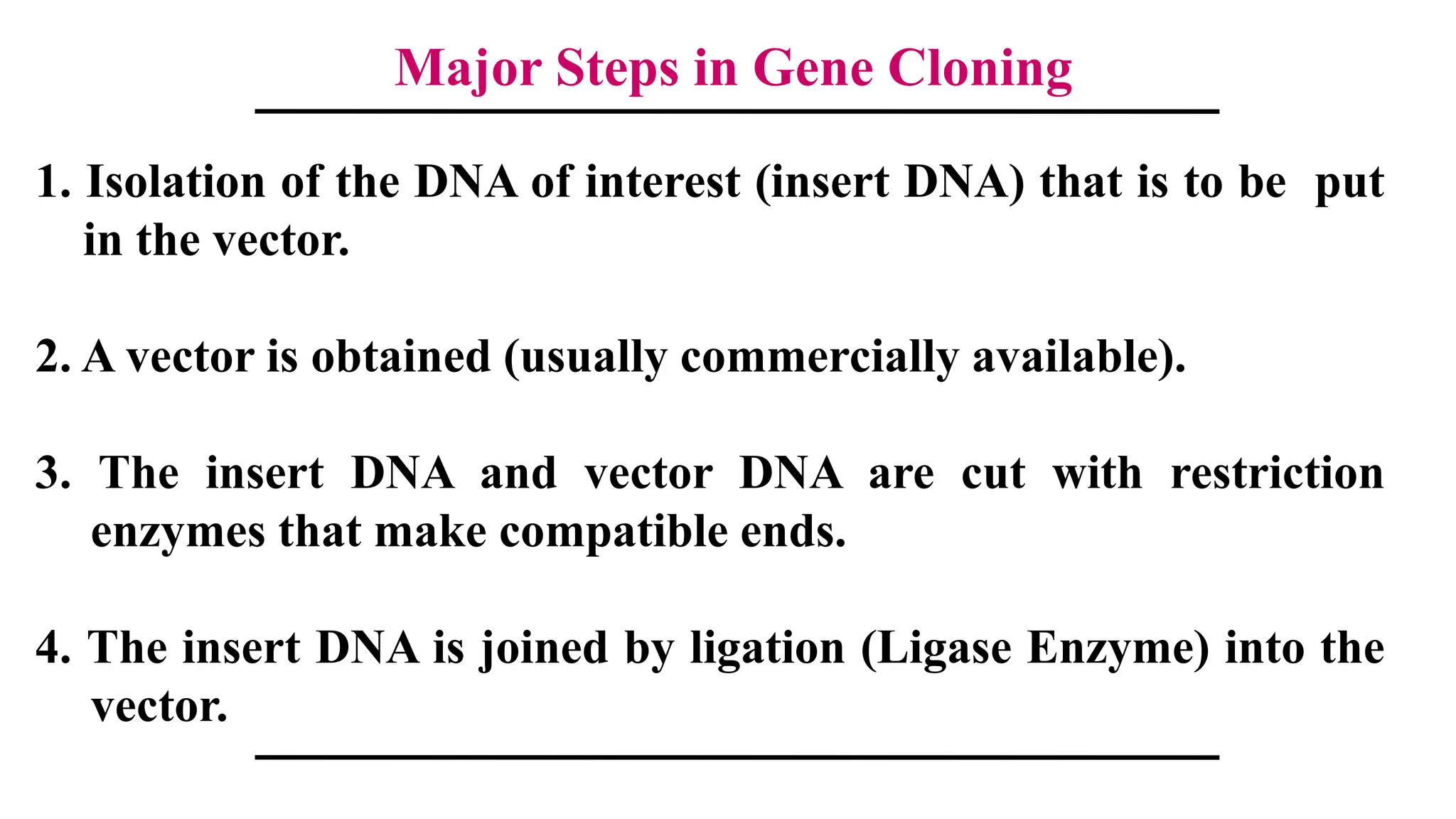
1. Isolation of the DNA of interest (insert DNA) that is to be put
in the vector.
2. A vector is obtained (usually commercially available).
3. The insert DNA and vector DNA are cut with restriction
enzymes that make compatible ends.
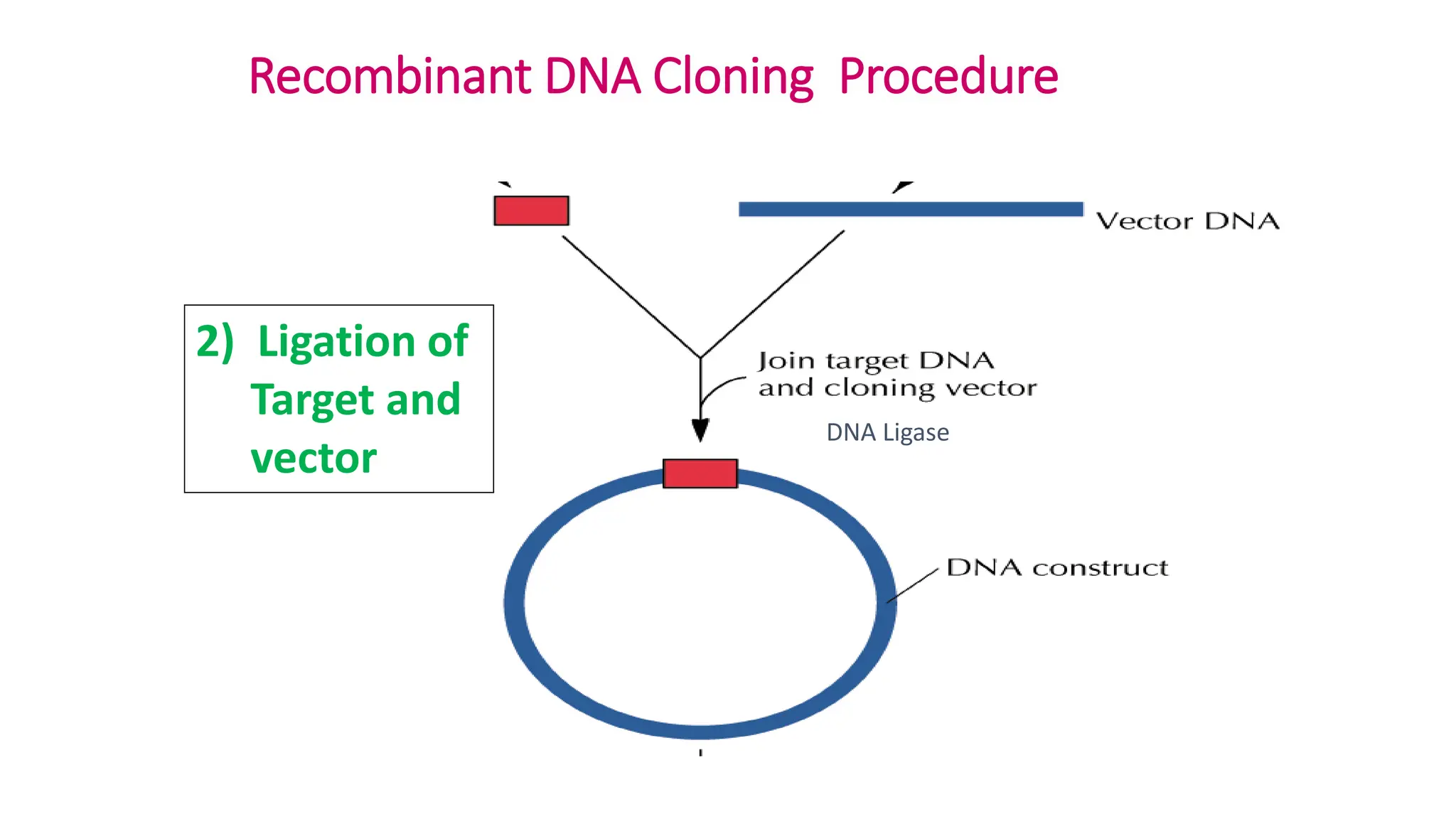
4. The insert DNA is joined by ligation (Ligase Enzyme) into the
vector.
7.
Major Steps inGene Cloning
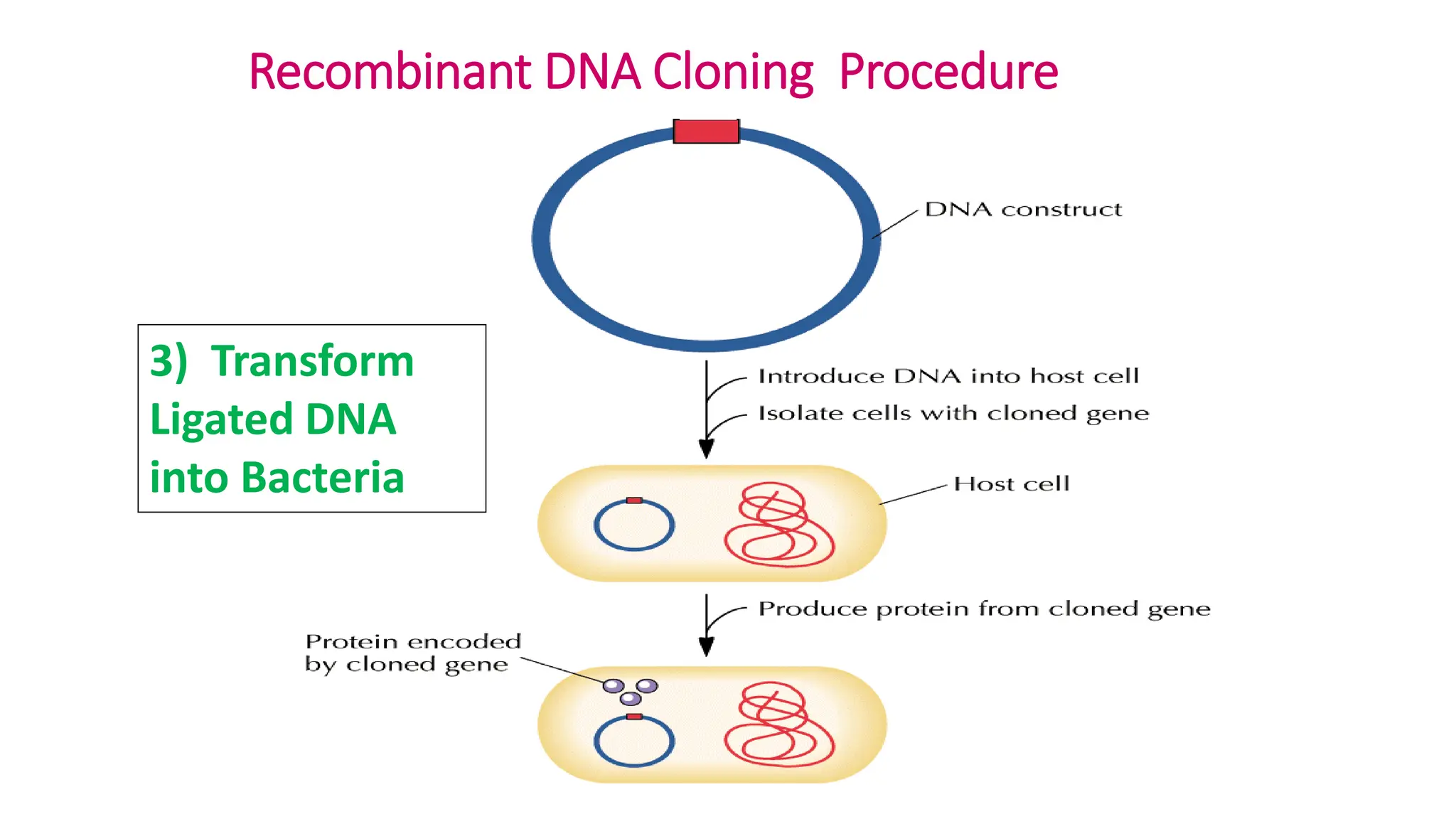
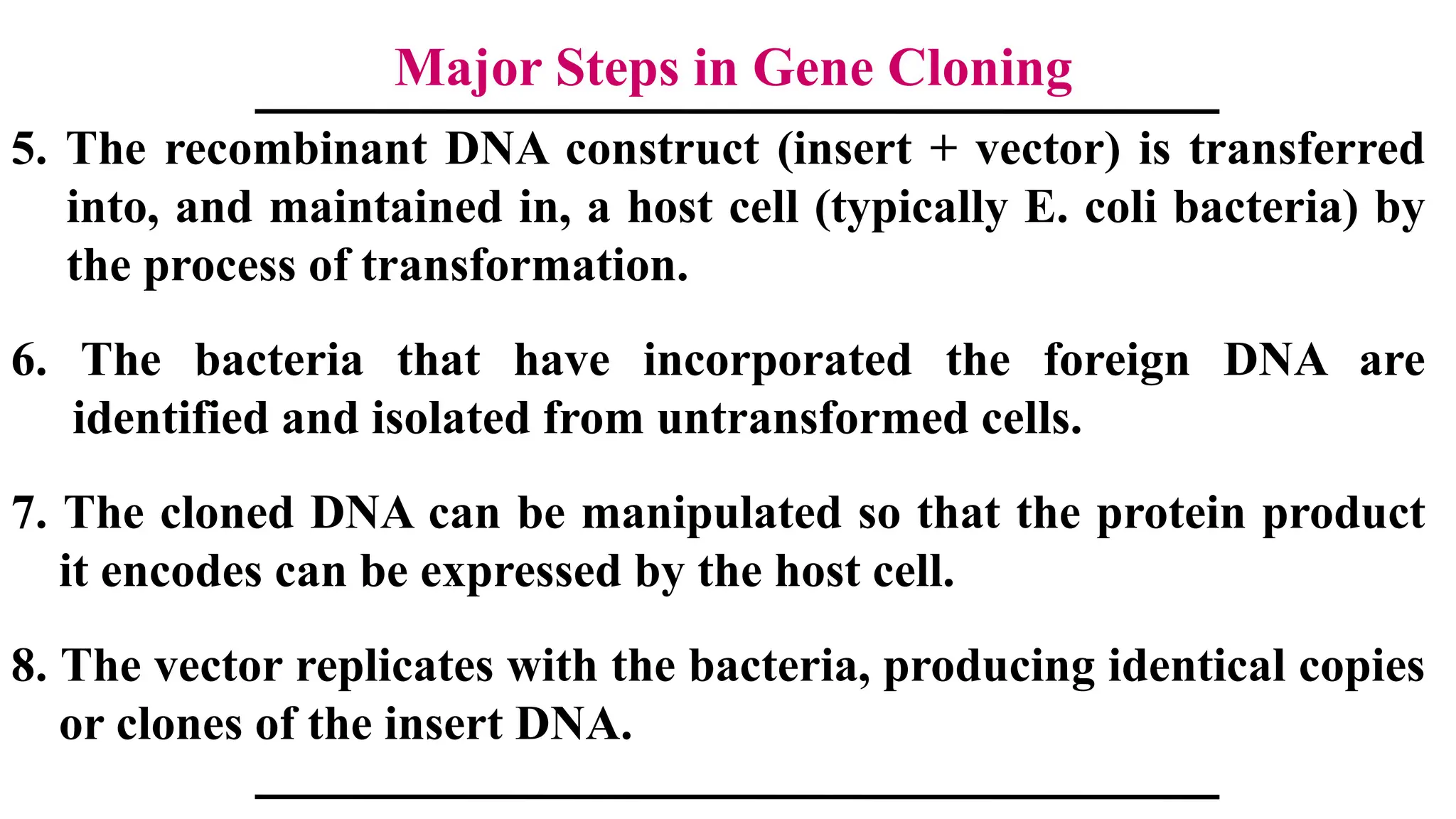
5. The recombinant DNA construct (insert + vector) is transferred
into, and maintained in, a host cell (typically E. coli bacteria) by
the process of transformation.
6. The bacteria that have incorporated the foreign DNA are
identified and isolated from untransformed cells.
7. The cloned DNA can be manipulated so that the protein product
it encodes can be expressed by the host cell.
8. The vector replicates with the bacteria, producing identical copies
or clones of the insert DNA.
8.
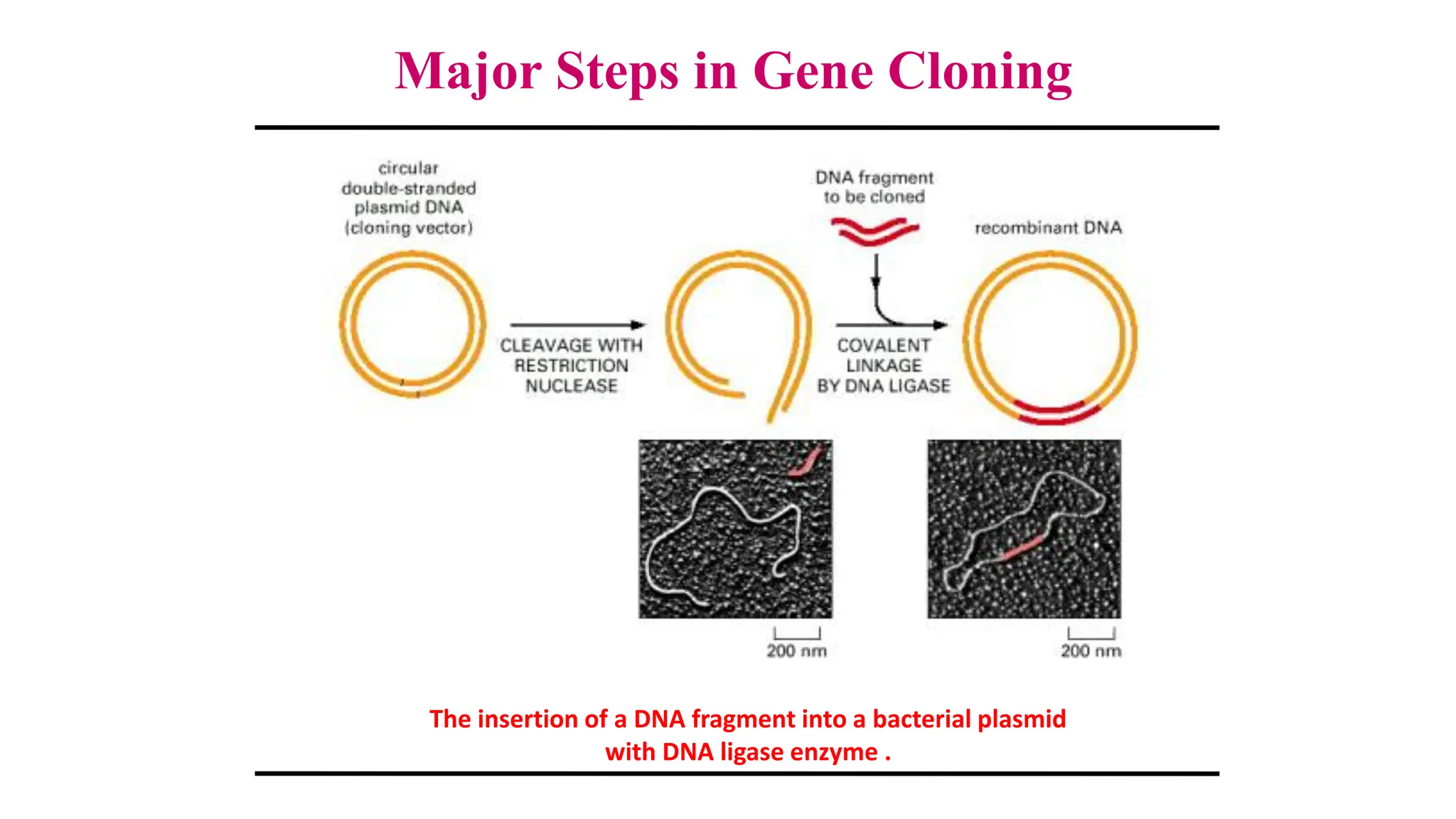
The insertion ofa DNA fragment into a bacterial plasmid
with DNA ligase enzyme .
Major Steps in Gene Cloning
9.
Purification and amplificationof a specific DNA sequence by
DNA cloning in suitable host cells.
Major Steps in Gene Cloning
What are restrictionenzymes?
1. Molecular scissors that cut double stranded DNA
molecules at specific points.
2. Found naturally in a wide variety of prokaryotes
3. An important tool for manipulating DNA.
12.
Biological role
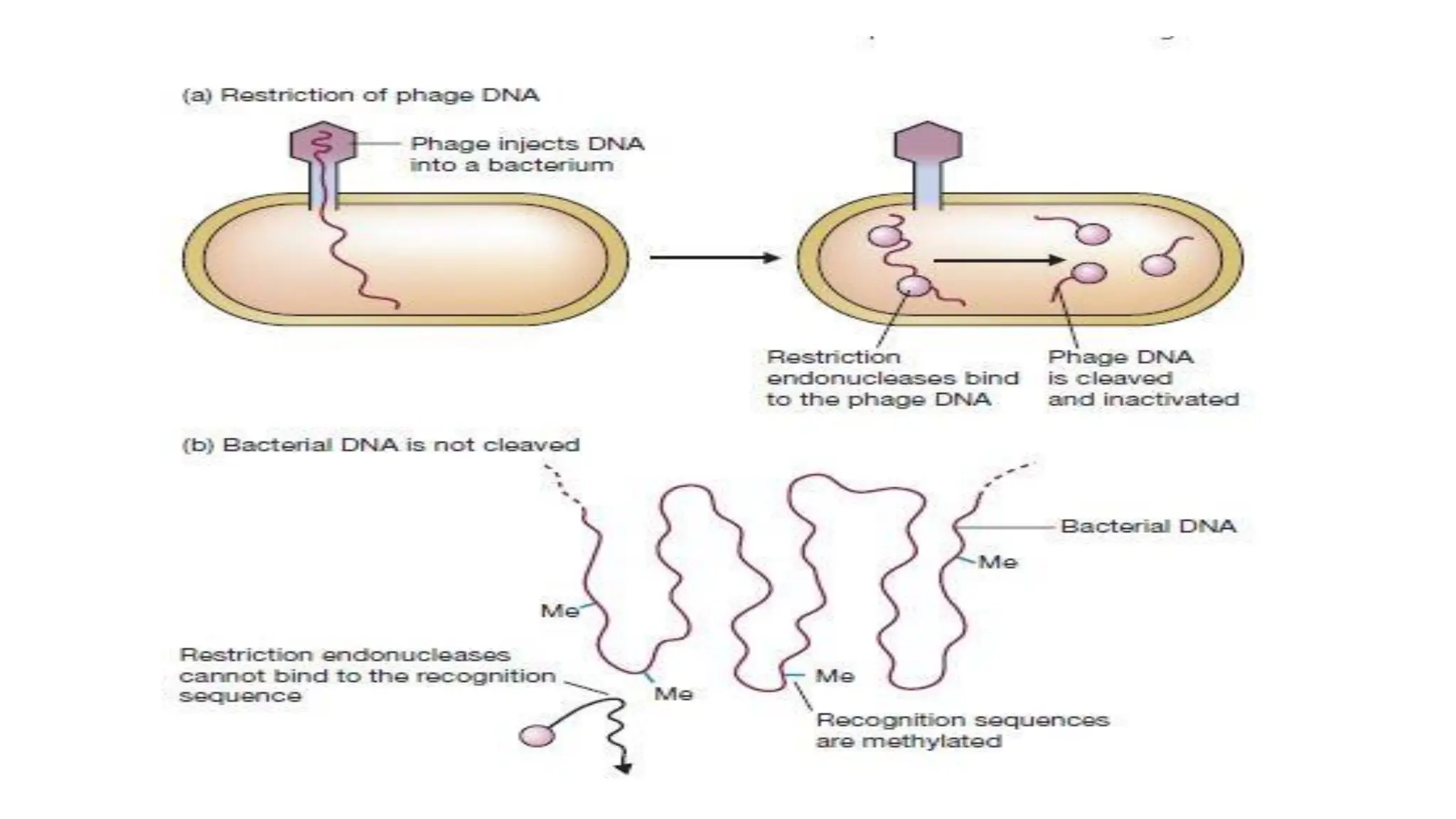
• Mostbacteria use Restriction Enzymes as a defense mechanism
against bacteriophages.
• Restriction enzymes prevent the replication of the phage by cleaving
its DNA at specific sites.
• The host DNA is protected by Methylases which add methyl groups
to adenine or cytosine bases within the recognition site thereby
modifying the site and protecting the DNA.
What are restriction enzymes?
13.
Restriction Enzymes
• Enzymethat cuts DNA at specific nucleotide sequences known
as restriction sites.
• Found in bacteria and have evolved to provide a defense
mechanism against invading viruses.
• In bacteria they selectively cut up foreign DNA in a process
called restriction
• To cut the DNA, restriction enzyme makes two incisions at each
strand of the DNA double helix.
15.
Nomenclature of restrictionenzymes
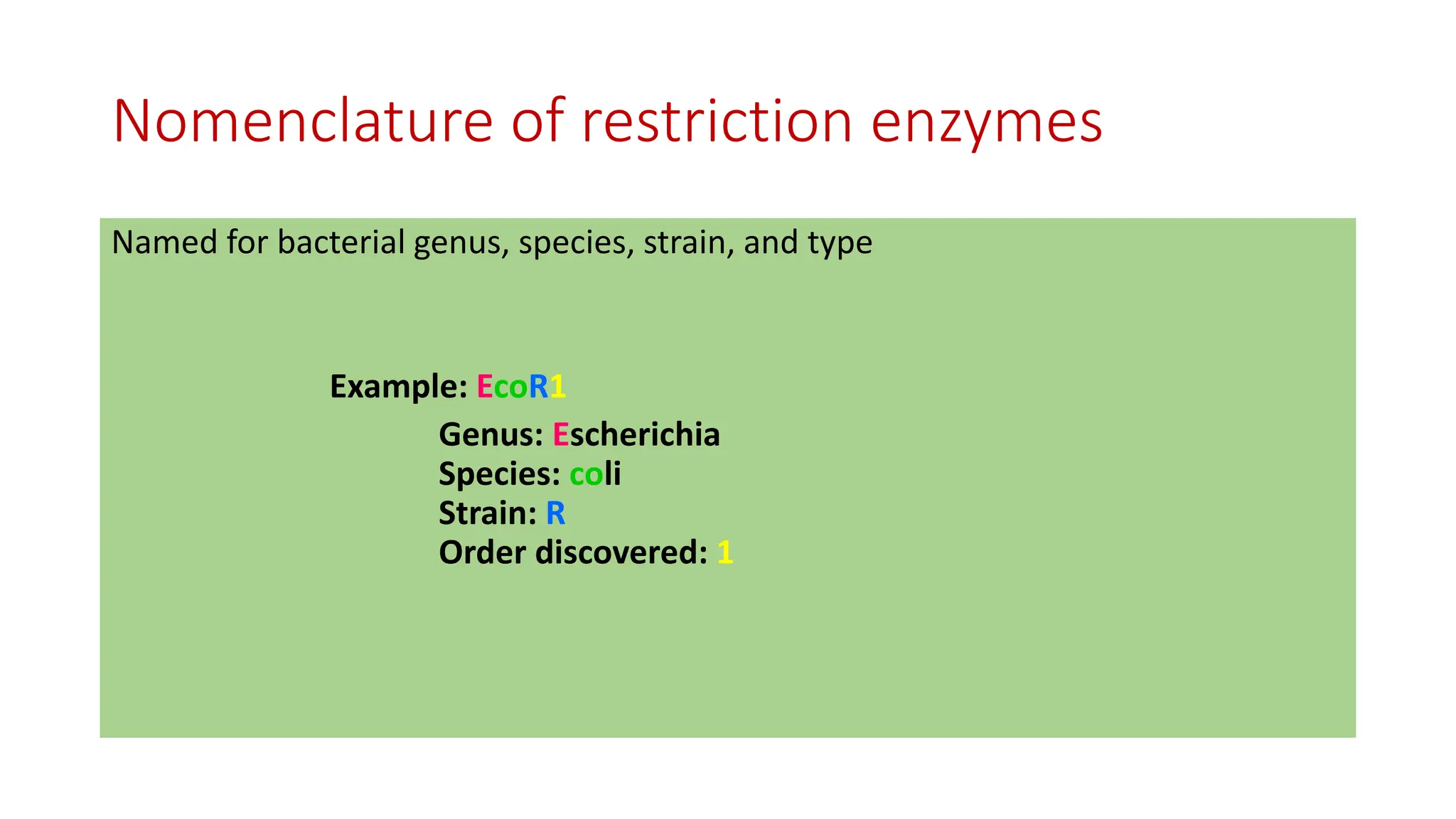
Named for bacterial genus, species, strain, and type
Example: EcoR1
Genus: Escherichia
Species: coli
Strain: R
Order discovered: 1
16.
• Three differentclasses of restriction endonuclease are
recognized, each distinguished by a slightly different
mode of action.
• Types I and III are rather complex and have only a
limited role in genetic engineering.
• Type II restriction endonucleases, on the other hand,
are the cutting enzymes that are so important in gene
cloning.
17.
Type II restrictionendonucleases cut DNA at
specific nucleotide sequences
• Each enzyme has a specific recognition sequence at
which it cuts a DNA molecule.
• A particular enzyme cleaves DNA at the recognition
sequence and nowhere else.
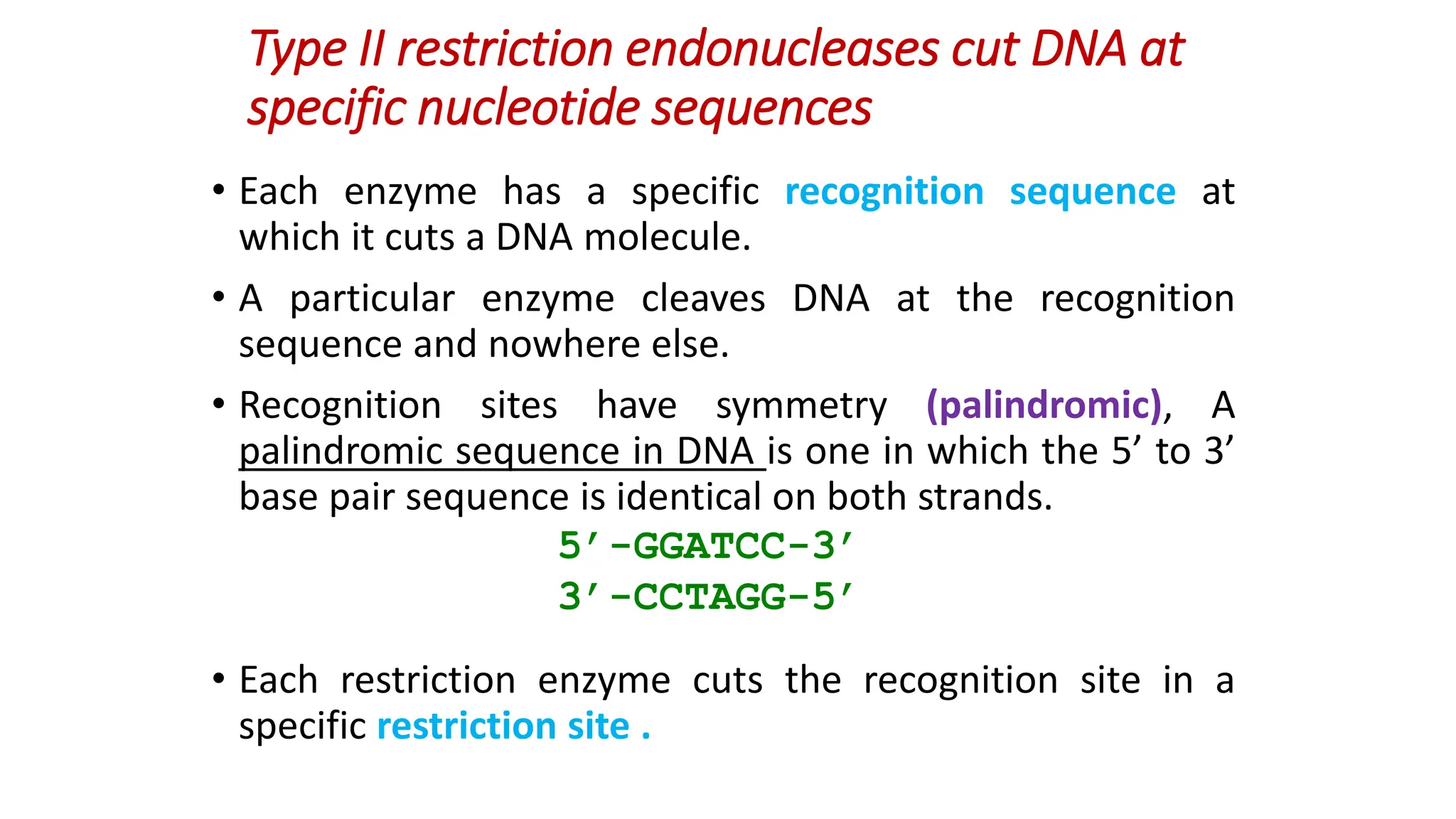
• Recognition sites have symmetry (palindromic), A
palindromic sequence in DNA is one in which the 5’ to 3’
base pair sequence is identical on both strands.
• Each restriction enzyme cuts the recognition site in a
specific restriction site .
5’-GGATCC-3’
3’-CCTAGG-5’
18.
• Restriction enzymesthat have the same recognition
sequence as well as the same cleavage site are
Isoschizomers.
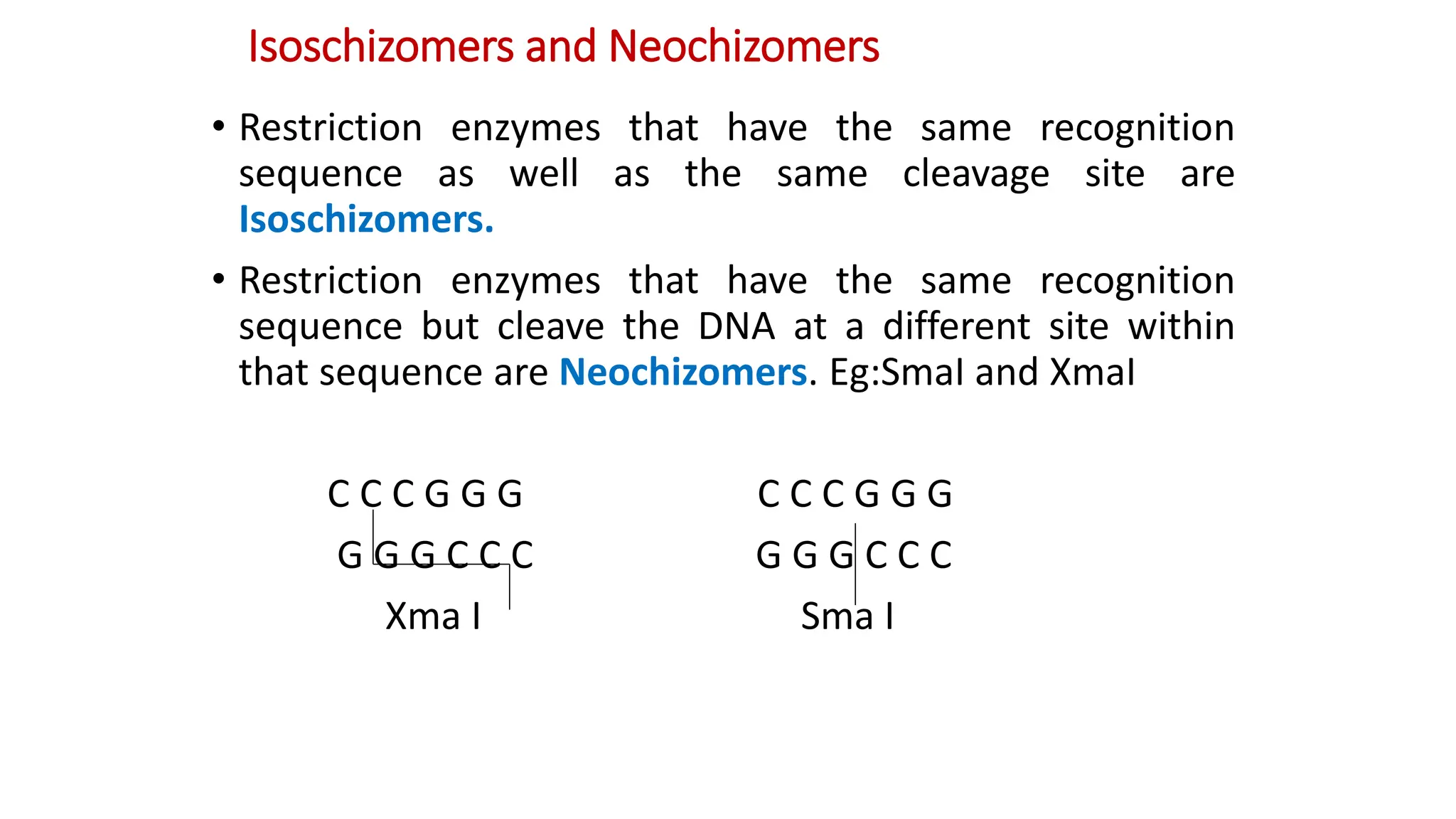
• Restriction enzymes that have the same recognition
sequence but cleave the DNA at a different site within
that sequence are Neochizomers. Eg:SmaI and XmaI
C C C G G G C C C G G G
G G G C C C G G G C C C
Xma I Sma I
Isoschizomers and Neochizomers
19.
Blunt and stickyends
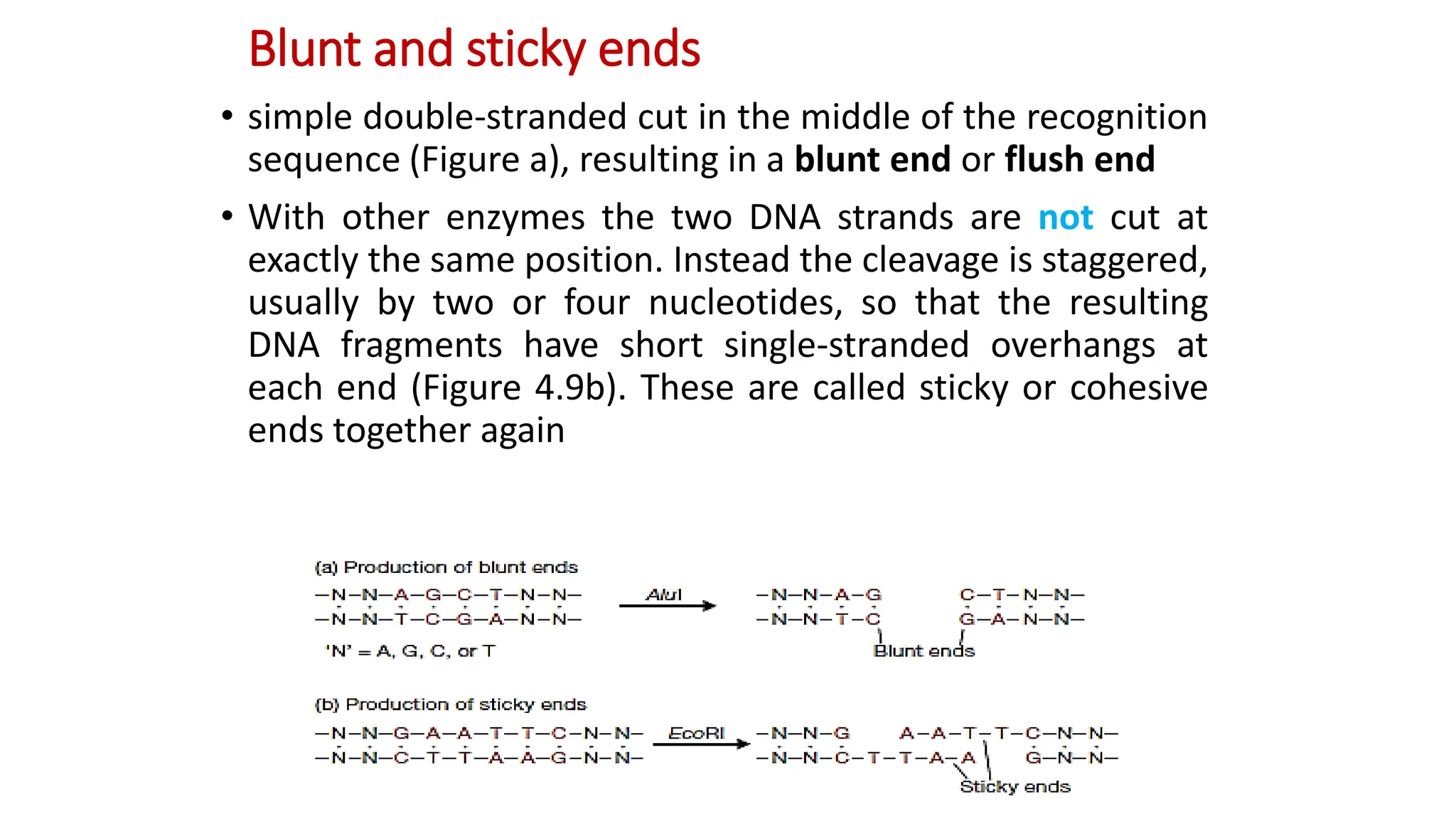
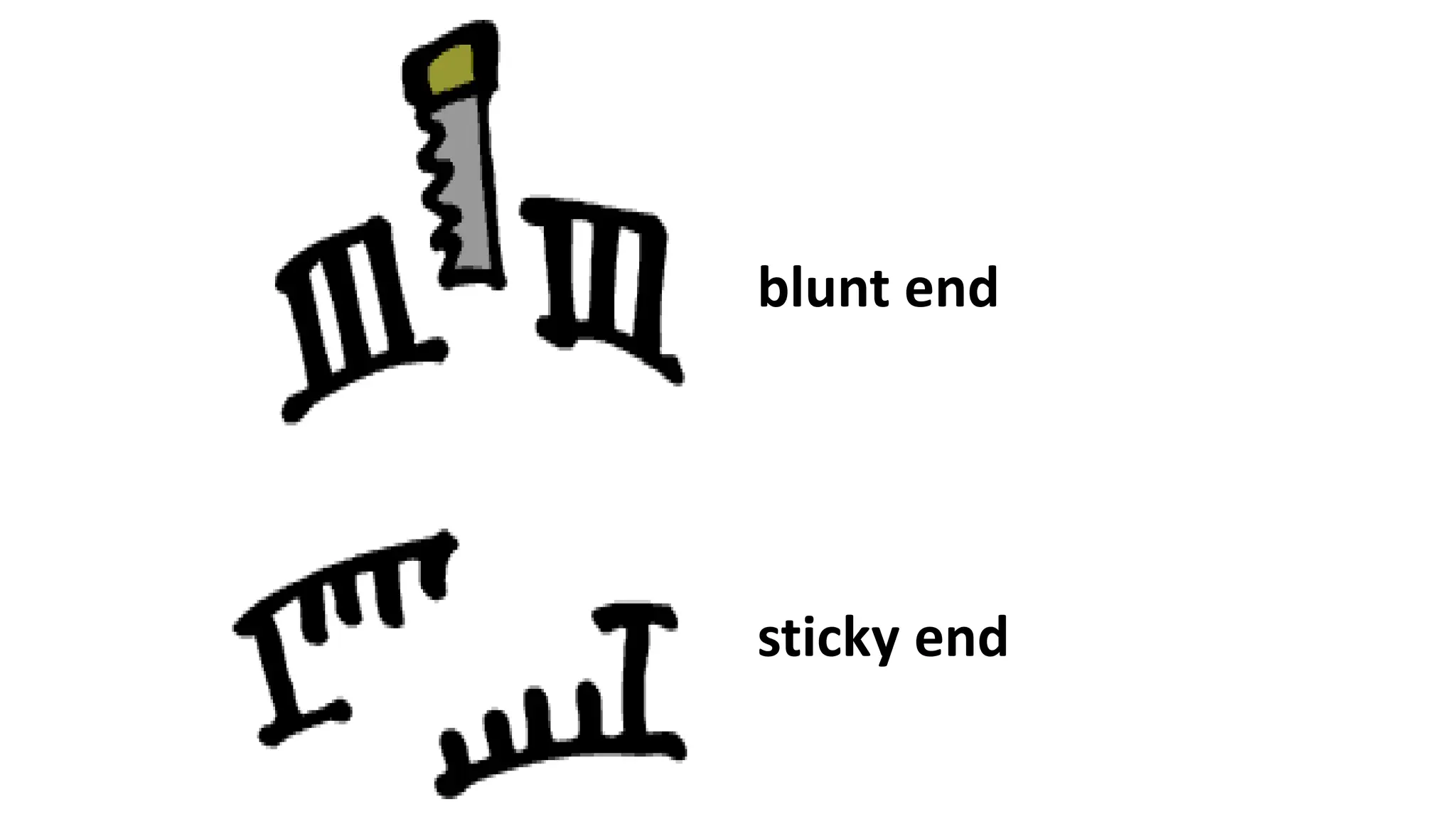
• simple double-stranded cut in the middle of the recognition
sequence (Figure a), resulting in a blunt end or flush end
• With other enzymes the two DNA strands are not cut at
exactly the same position. Instead the cleavage is staggered,
usually by two or four nucleotides, so that the resulting
DNA fragments have short single-stranded overhangs at
each end (Figure 4.9b). These are called sticky or cohesive
ends together again
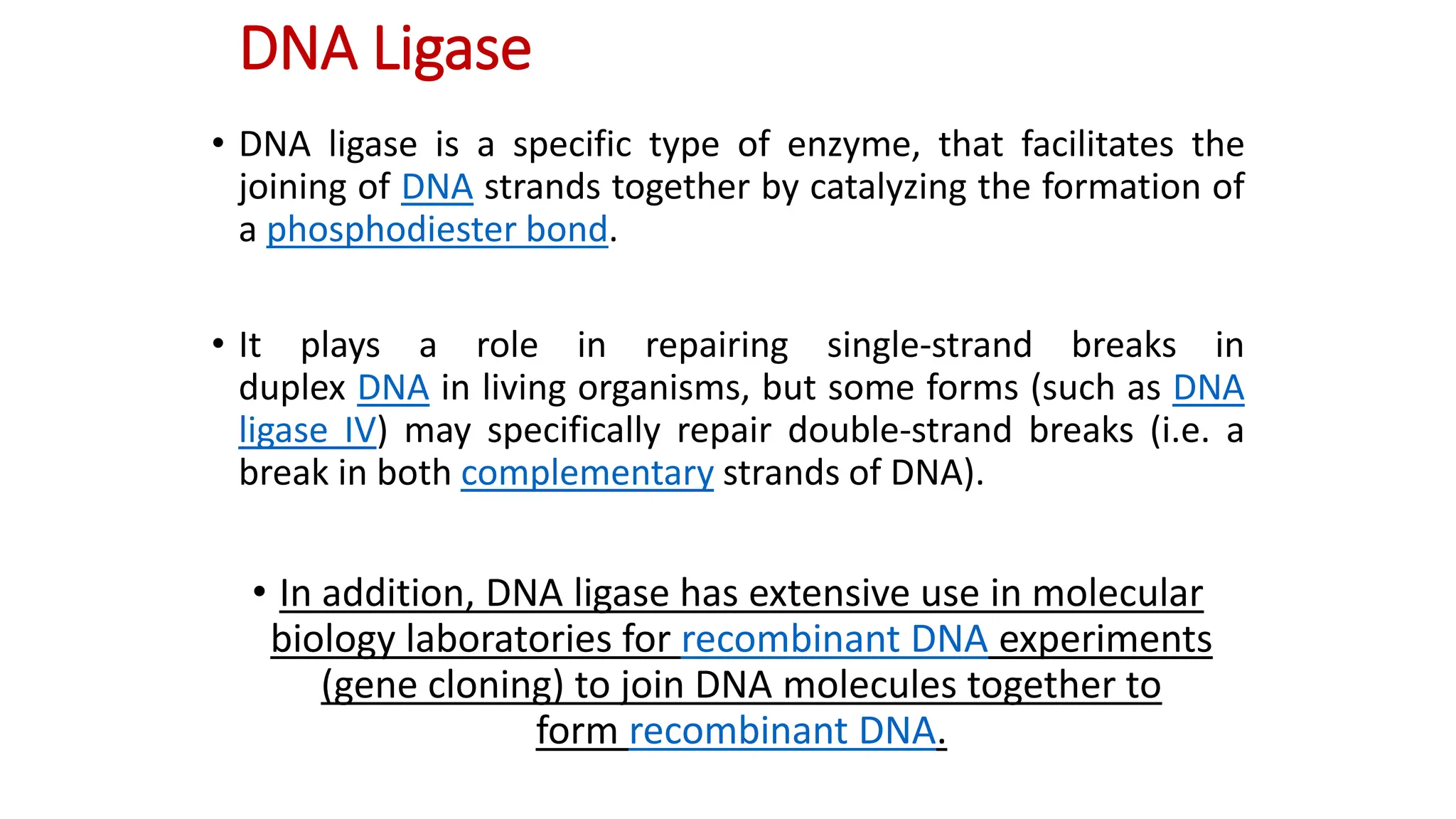
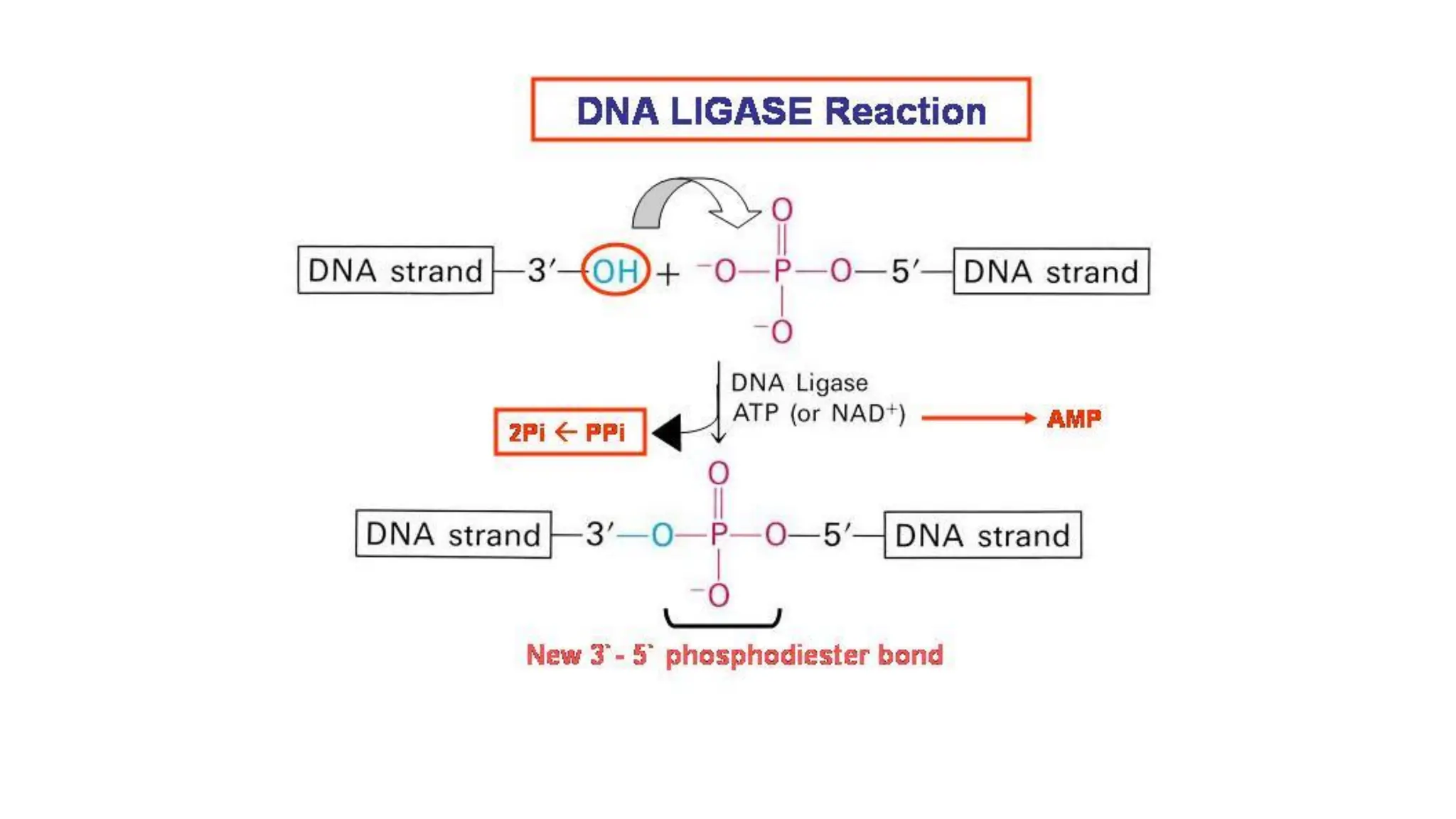
DNA Ligase
• DNAligase is a specific type of enzyme, that facilitates the
joining of DNA strands together by catalyzing the formation of
a phosphodiester bond.
• It plays a role in repairing single-strand breaks in
duplex DNA in living organisms, but some forms (such as DNA
ligase IV) may specifically repair double-strand breaks (i.e. a
break in both complementary strands of DNA).
• In addition, DNA ligase has extensive use in molecular
biology laboratories for recombinant DNA experiments
(gene cloning) to join DNA molecules together to
form recombinant DNA.
23.
Linkers and Adaptors
•Sticky ends are desirable for DNA cloning
experiments.
• Sticky ends are provided by treating the target
and vectors with the same R.E or with different
one producing the same sticky ends.
• But what if the target DNA is blunt ended
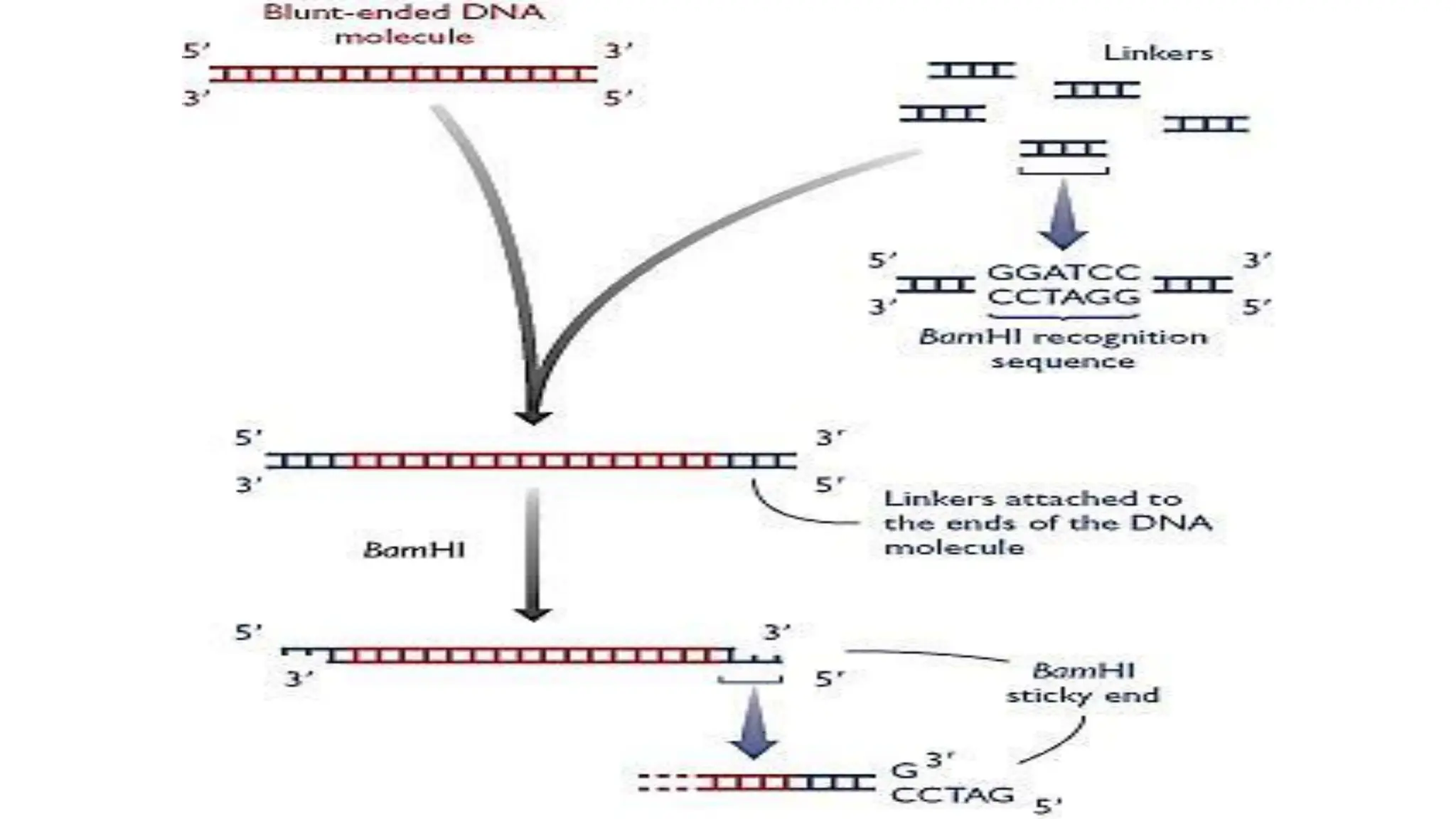
• So therefore we will have to use Linkers and
Adaptors.
24.
Linkers
• Synthetic ,Short and known double stranded
oligonucleotides sequence.
• Having blunted ends on both sides and R. Sites for
BamHI.
• Treatment with R.E produces sticky ends after ligation
with target DNA.
26.
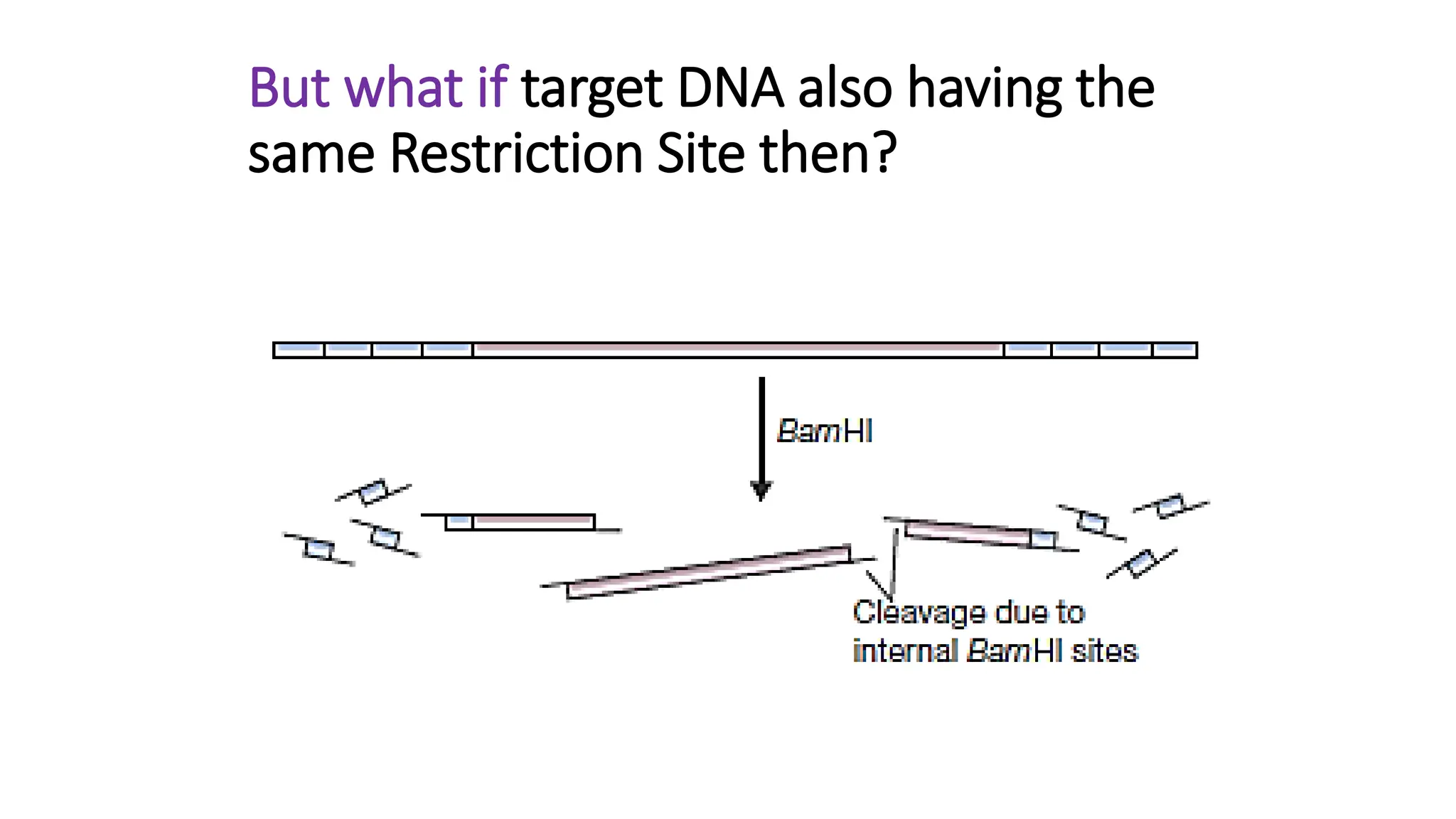
But what iftarget DNA also having the
same Restriction Site then?
27.
Adaptors
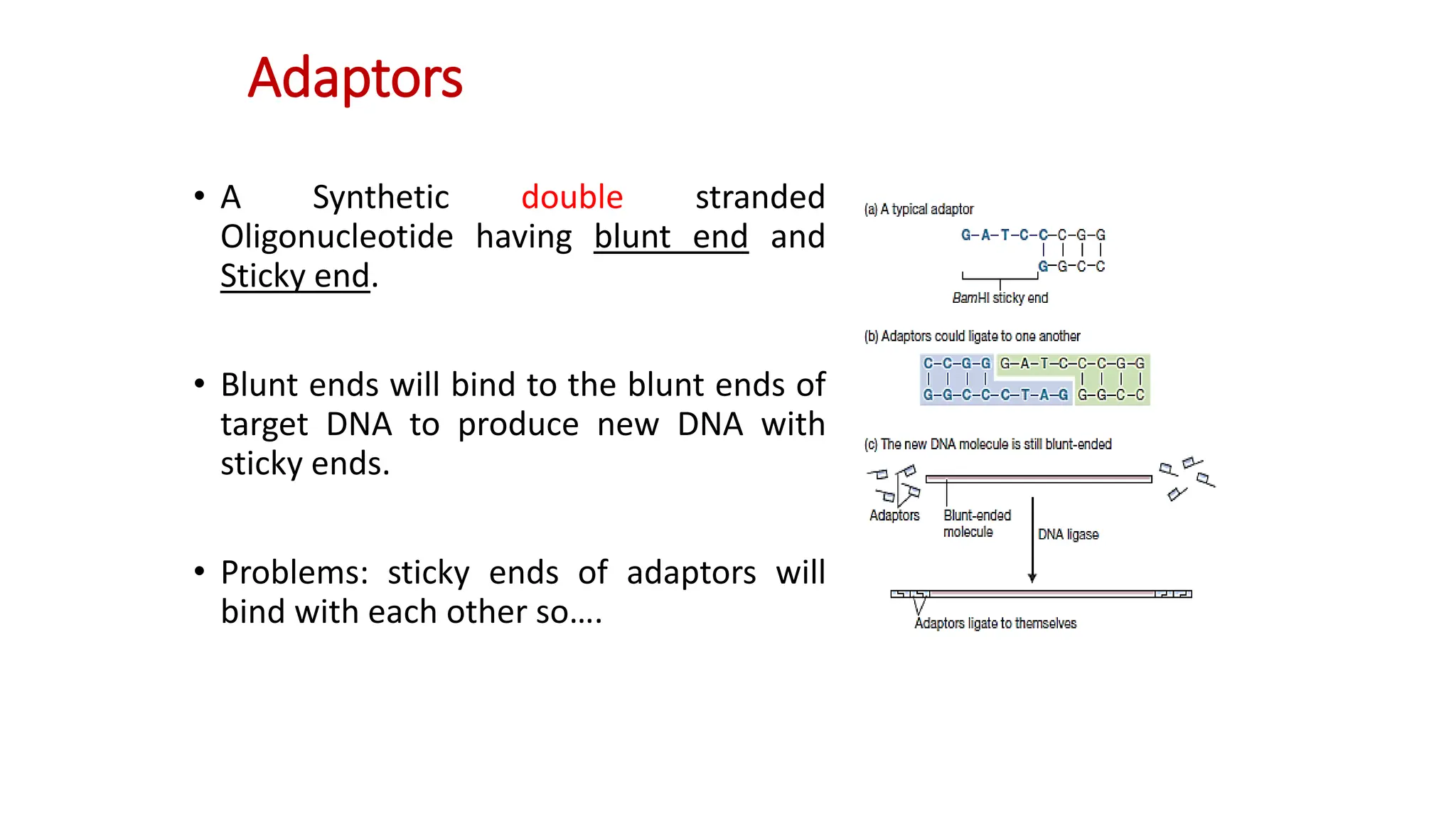
• A Syntheticdouble stranded
Oligonucleotide having blunt end and
Sticky end.
• Blunt ends will bind to the blunt ends of
target DNA to produce new DNA with
sticky ends.
• Problems: sticky ends of adaptors will
bind with each other so….
28.
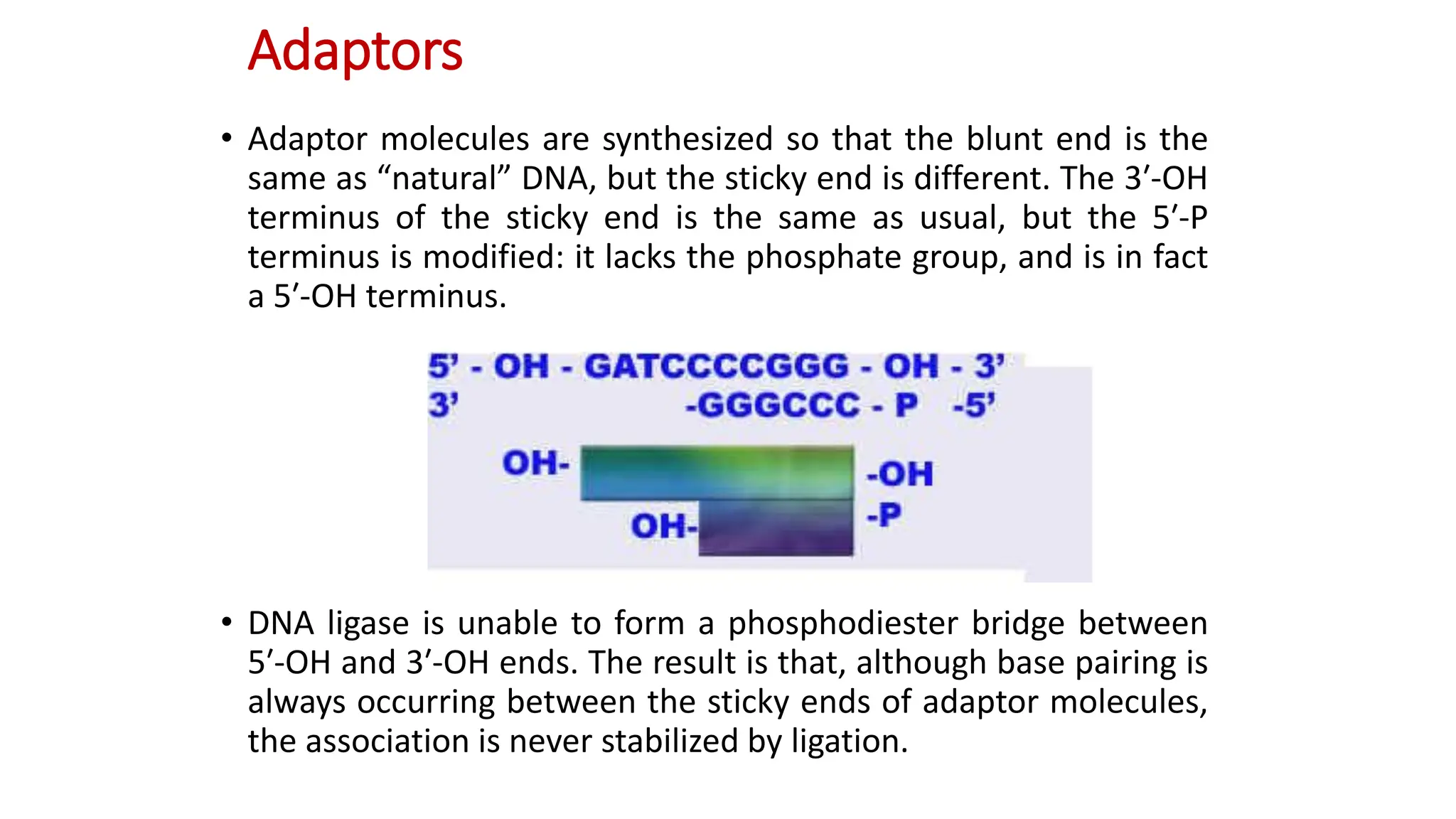
• Adaptor moleculesare synthesized so that the blunt end is the
same as “natural” DNA, but the sticky end is different. The 3′-OH
terminus of the sticky end is the same as usual, but the 5′-P
terminus is modified: it lacks the phosphate group, and is in fact
a 5′-OH terminus.
• DNA ligase is unable to form a phosphodiester bridge between
5′-OH and 3′-OH ends. The result is that, although base pairing is
always occurring between the sticky ends of adaptor molecules,
the association is never stabilized by ligation.
Adaptors
29.
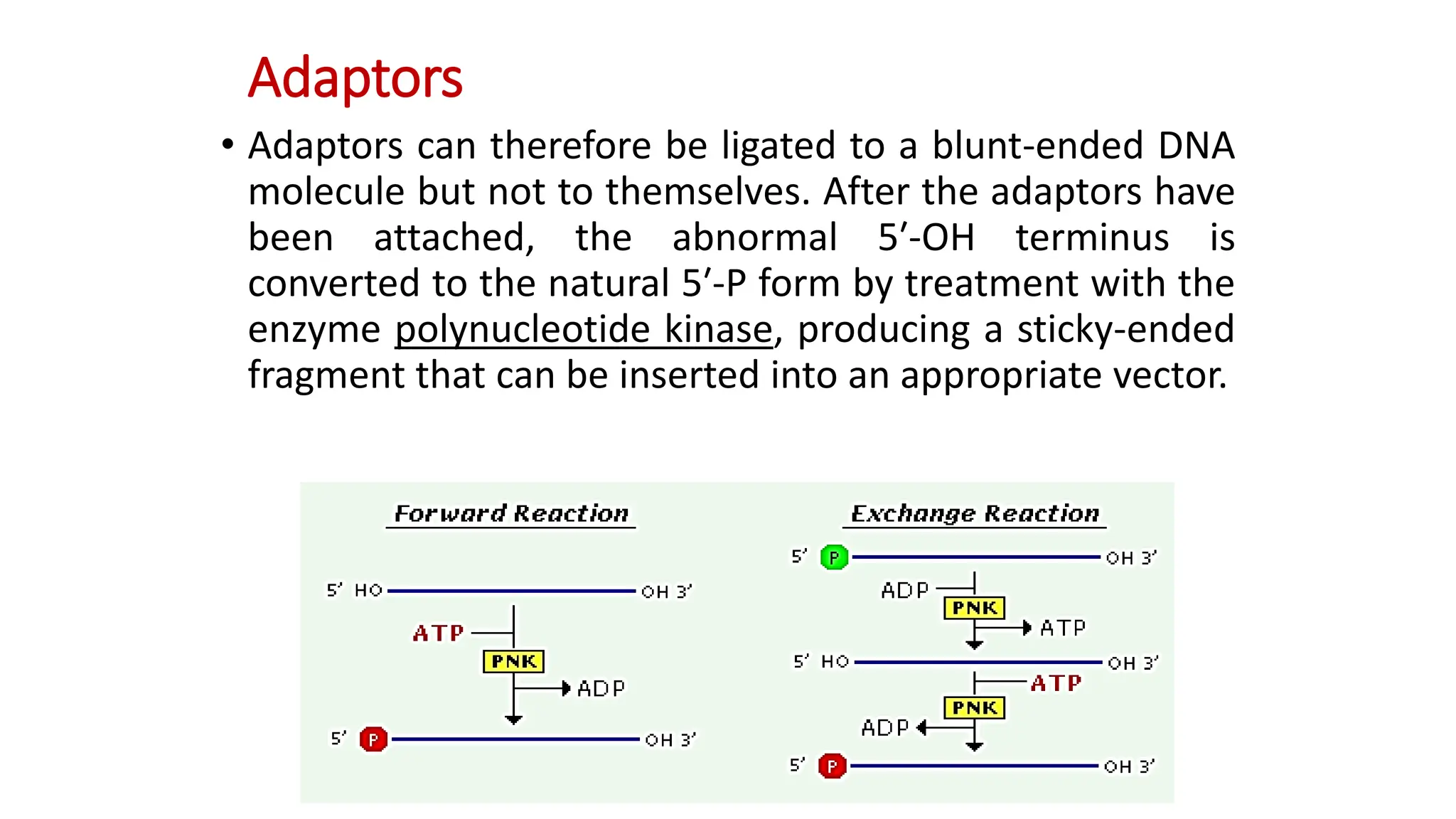
• Adaptors cantherefore be ligated to a blunt-ended DNA
molecule but not to themselves. After the adaptors have
been attached, the abnormal 5′-OH terminus is
converted to the natural 5′-P form by treatment with the
enzyme polynucleotide kinase, producing a sticky-ended
fragment that can be inserted into an appropriate vector.
Adaptors
30.
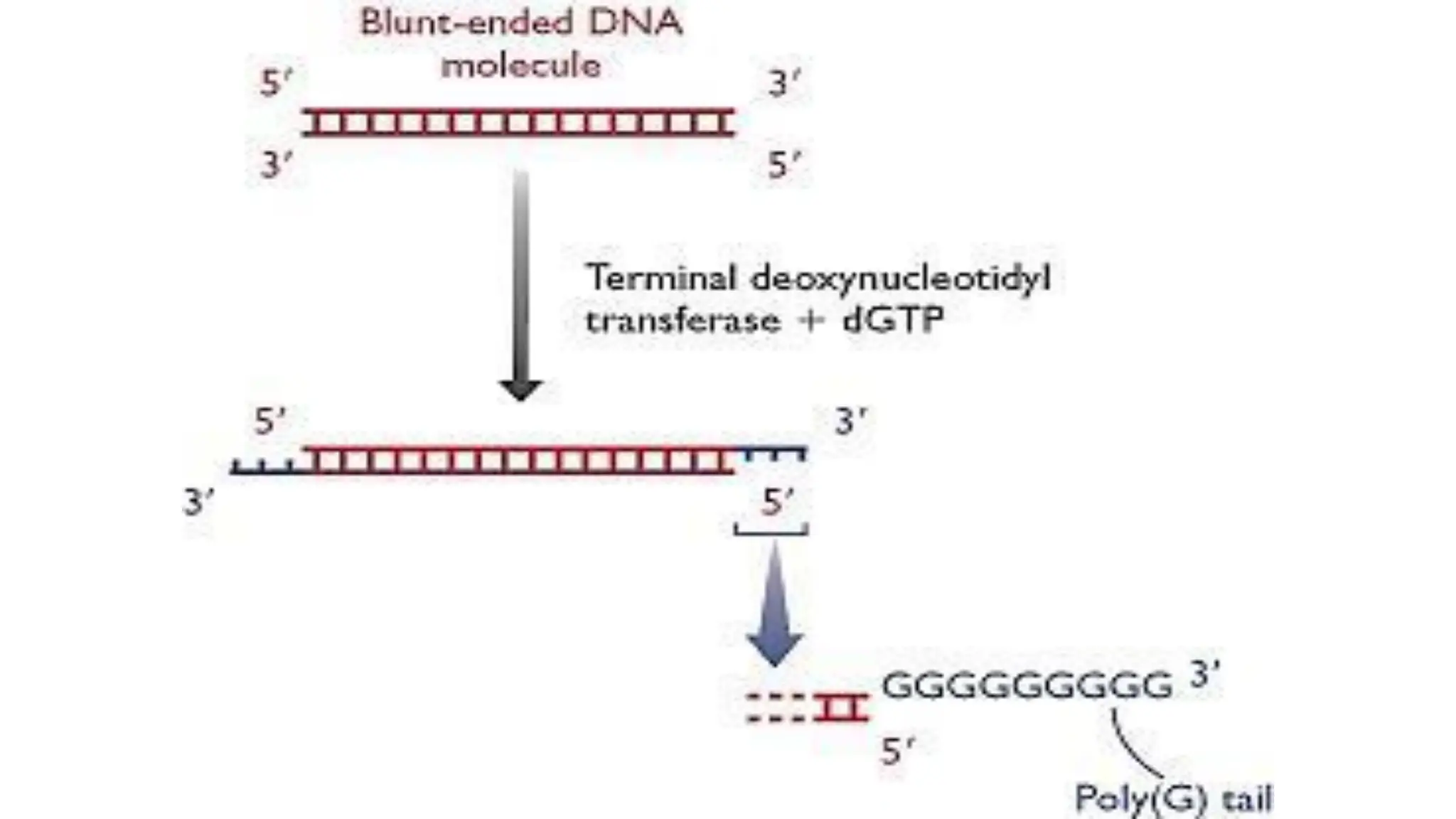
Homopolymer tailing (HT)
•Homopolymer: A strand composed of one type of
nucleotide.
• HT: the in-vitro addition of the same nucleotide by the
enzyme terminal deoxynucleotide transferase to 3’-OH
of a duplex DNA molecule. (calf thymus).
• e.g. Complimentary poly (C) and poly (G) for vector and
target DNA respectively.