DNA DAMAGE
DNA :-
● DNA stands for deoxyribonucleic acid.
● DNA contains our hereditary material and our genes, the things that make
us unique.
● DNA contains the instructions that are necessary for an organism to grow,
develop, and reproduce. These instructions exist within the sequence of
nucleotide base pairs.
DNA DAMAGE :-
DNA damage exists in all cellular organisms.
DNA damage is a form of cell stress and injury that has been implicated
in the pathogenesis of many disorders.
DNA damage is an alteration in the chemical structure of DNA, such as :-
❏ a break in a strand of DNA
❏ a nucleobase missing from the backbone of DNA
❏ or a chemically changed base
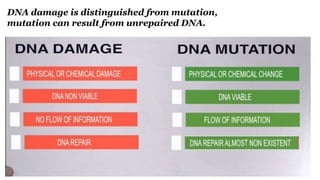
DNA damage is distinguished from mutation,
mutation can result from unrepaired DNA.
CAUSE OF DNA DAMAGE :-
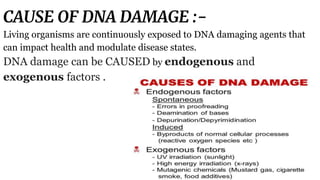
Living organisms are continuously exposed to DNA damaging agents that
can impact health and modulate disease states.
DNA damage can be CAUSED by endogenous and
exogenous factors .
Most DNA damage can be repaired, such repair systems are not 100%
efficient. Unrepaired DNA damage accumulates in non-replicating cells.
Types of DNA Damage: -
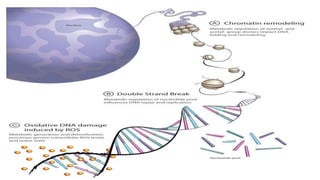
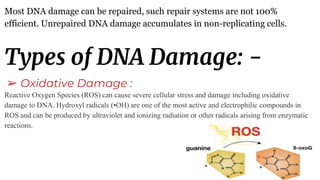
➢ Oxidative Damage :
Reactive Oxygen Species (ROS) can cause severe cellular stress and damage including oxidative
damage to DNA. Hydroxyl radicals (•OH) are one of the most active and electrophilic compounds in
ROS and can be produced by ultraviolet and ionizing radiation or other radicals arising from enzymatic
reactions.
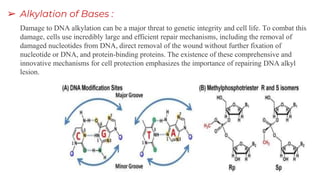
➢ Alkylation of Bases :
Damage to DNA alkylation can be a major threat to genetic integrity and cell life. To combat this
damage, cells use incredibly large and efficient repair mechanisms, including the removal of
damaged nucleotides from DNA, direct removal of the wound without further fixation of
nucleotide or DNA, and protein-binding proteins. The existence of these comprehensive and
innovative mechanisms for cell protection emphasizes the importance of repairing DNA alkyl
lesion.
➢ Base Loss :
The covalent structure of DNA is not stable in aqueous solution. It tends to hydrolyze in its
monomeric components, and they themselves are subject to various hydrolytic reactions.
These processes are slower, compared to normal chemical reactions.
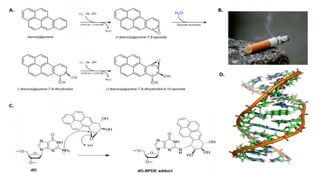
➢ Bulky Adduct Formation :
Bulk DNA adducts are signals of exposure to genotoxic aromatic compounds, which
indicate human ability to activate carcinogens and repair DNA damage. Polycyclic
Aromatic Hydrocarbons (PAH) represent a large group of carcinogens capable of producing
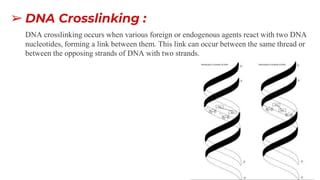
➢ DNA Crosslinking :
DNA crosslinking occurs when various foreign or endogenous agents react with two DNA
nucleotides, forming a link between them. This link can occur between the same thread or
between the opposing strands of DNA with two strands.
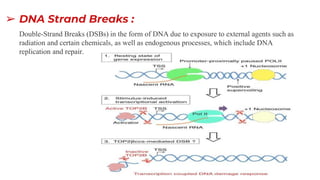
➢ DNA Strand Breaks :
Double-Strand Breaks (DSBs) in the form of DNA due to exposure to external agents such as
radiation and certain chemicals, as well as endogenous processes, which include DNA
replication and repair.
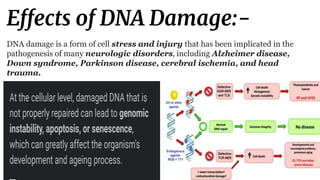
Effects of DNA Damage:-
DNA damage is a form of cell stress and injury that has been implicated in the
pathogenesis of many neurologic disorders, including Alzheimer disease,
Down syndrome, Parkinson disease, cerebral ischemia, and head
trauma.
DNA Damage .pptx

DNA Damage .pptx

  • 1.
  • 2.
    DNA :- ● DNAstands for deoxyribonucleic acid. ● DNA contains our hereditary material and our genes, the things that make us unique. ● DNA contains the instructions that are necessary for an organism to grow, develop, and reproduce. These instructions exist within the sequence of nucleotide base pairs.
  • 3.
    DNA DAMAGE :- DNAdamage exists in all cellular organisms. DNA damage is a form of cell stress and injury that has been implicated in the pathogenesis of many disorders. DNA damage is an alteration in the chemical structure of DNA, such as :- ❏ a break in a strand of DNA ❏ a nucleobase missing from the backbone of DNA ❏ or a chemically changed base
  • 5.
    DNA damage isdistinguished from mutation, mutation can result from unrepaired DNA.
  • 6.
    CAUSE OF DNADAMAGE :- Living organisms are continuously exposed to DNA damaging agents that can impact health and modulate disease states. DNA damage can be CAUSED by endogenous and exogenous factors .
  • 7.
    Most DNA damagecan be repaired, such repair systems are not 100% efficient. Unrepaired DNA damage accumulates in non-replicating cells. Types of DNA Damage: - ➢ Oxidative Damage : Reactive Oxygen Species (ROS) can cause severe cellular stress and damage including oxidative damage to DNA. Hydroxyl radicals (•OH) are one of the most active and electrophilic compounds in ROS and can be produced by ultraviolet and ionizing radiation or other radicals arising from enzymatic reactions.
  • 8.
    ➢ Alkylation ofBases : Damage to DNA alkylation can be a major threat to genetic integrity and cell life. To combat this damage, cells use incredibly large and efficient repair mechanisms, including the removal of damaged nucleotides from DNA, direct removal of the wound without further fixation of nucleotide or DNA, and protein-binding proteins. The existence of these comprehensive and innovative mechanisms for cell protection emphasizes the importance of repairing DNA alkyl lesion.
  • 9.
    ➢ Base Loss: The covalent structure of DNA is not stable in aqueous solution. It tends to hydrolyze in its monomeric components, and they themselves are subject to various hydrolytic reactions. These processes are slower, compared to normal chemical reactions. ➢ Bulky Adduct Formation : Bulk DNA adducts are signals of exposure to genotoxic aromatic compounds, which indicate human ability to activate carcinogens and repair DNA damage. Polycyclic Aromatic Hydrocarbons (PAH) represent a large group of carcinogens capable of producing
  • 11.
    ➢ DNA Crosslinking: DNA crosslinking occurs when various foreign or endogenous agents react with two DNA nucleotides, forming a link between them. This link can occur between the same thread or between the opposing strands of DNA with two strands.
  • 12.
    ➢ DNA StrandBreaks : Double-Strand Breaks (DSBs) in the form of DNA due to exposure to external agents such as radiation and certain chemicals, as well as endogenous processes, which include DNA replication and repair.
  • 13.
    Effects of DNADamage:- DNA damage is a form of cell stress and injury that has been implicated in the pathogenesis of many neurologic disorders, including Alzheimer disease, Down syndrome, Parkinson disease, cerebral ischemia, and head trauma.