Goodmorning ! ^_^
DNA
DNA, or deoxyribonucleic acid, is the hereditary material in
humans and almost all other organisms. Nearly every cell in
a person’s body has the same DNA. Most DNA is located in
the cell nucleus (where it is called nuclear DNA), but a small
amount of DNA can also be found in the mitochondria
(where it is called mitochondrial DNA or mtDNA).
Mitochondria are structures within cells that convert the
energy from food into a form that cells can use. DNA sugar
is deoxyribose.
Nitrogenous Bases of DNA
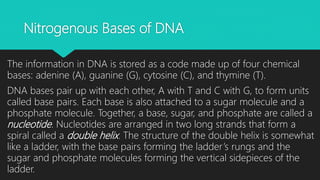
The information in DNA is stored as a code made up of four chemical
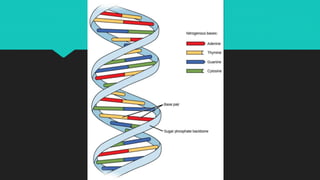
bases: adenine (A), guanine (G), cytosine (C), and thymine (T).
DNA bases pair up with each other, A with T and C with G, to form units
called base pairs. Each base is also attached to a sugar molecule and a
phosphate molecule. Together, a base, sugar, and phosphate are called a
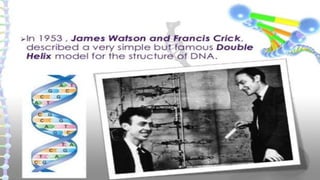
nucleotide. Nucleotides are arranged in two long strands that form a
spiral called a double helix. The structure of the double helix is somewhat
like a ladder, with the base pairs forming the ladder’s rungs and the
sugar and phosphate molecules forming the vertical sidepieces of the
ladder.
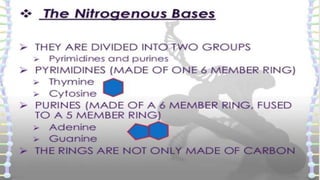
Purines make up two of the four nucleobases in DNA and RNA:
adenine and guanine. Pyrimidines make up the other bases in DNA
and RNA: cytosine, thymine (in DNA) and uracil (in RNA). Useful
mnemonics to remember these bases are:
"CUT the Py": CUT: Cytosine, Uracil, Thymine; Py (Pyrimidines)
"Pure As Gold (Pur AG)": Purines are Adenine, Guanine
Replication
Deoxyribonucleic acid is copied during interphase prior to
mitosis and meiosis. It is important that new copies are exactly
like the original molecule. The structure of the DNA provides a
mechanism for making accurate copies of the molecule. The
process of making copies of DNA is called Replication. When
DNA replicates, two identical copies of DNA molecules are
produced, which are exactly the same as the original.
The specificity of base pairing in DNA,
adenine with thymine, and cytosine with
guanine, allows DNA to replicate itself with
accuracy.
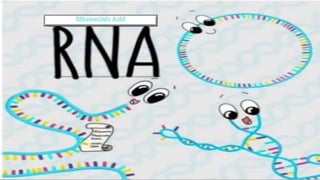
RNA
a nucleic acid that is an essential component of
all cells, composed of a long, usually single-
stranded chain of nucleotide units that contain
the sugar ribose
What do you think is the role of RNA in making proteins in the
cell?
Can you imagine a car being assembled in a car factory? By way of
analogy, different cars are being built in many simple steps. Engineers
tell workers how to make cars, and the workers follow directions to
build the cars. Suppliers bring parts to the factory so they can be
installed in the car. Protein production is similar to car production. It is
the role of the DNA to provide workers with the instructions for
making proteins, and the workers build the proteins. Other workers
known as amino acids, bring parts to the factory. RNA molecules or
the workers for protein synthesis get the instructions from the DNA on
how the protein should be assembled.
3 types of RNA
Messenger RNA (mRNA)
Ribosomal RNA (rRNA)
Transfer RNA (tRNA)
You can consider these RNA molecules to be the
workers in the production of protein.
Messenger RNA
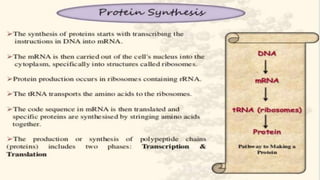
mRNA brings information from the DNA in the nucleus
to the protein manufacturing area, the cytoplasm. The
mRNA becomes the template of information to make
proteins.
Ribosomal RNA
makes up the ribosomes, the organelles that translate the
mRNA.
rRNA hold tightly into the mRNA using its information to
assemble the amino acids in correct order.
Transfer RNA
tRNA supplies amino acids to the ribosome
to be assembled as protein during
translation.
Translation
The process of converting the information in messenger
RNA into a sequence of amino acids that make a protein
is known as the translation
QUIZ TIME ! ^_^
Policy !
CORRECT MINUS WRONG
GoodLuck ! ^_^
1. What is the meaning of DNA and
RNA and give their number of
strands, Type of Sugar and their own
Nitrogenous BASE PAIR. (8pts)
(Modified True or False) underline the wrong
word and Put the right answer
2. Ribosomal RNA brings information
from the DNA in the nucleus to the
protein manufacturing area, the
cytoplasm. (2pts)
(Modified True or False) underline the wrong
word and Put the right answer.
3. The process of converting the
information in messenger RNA into a
sequence of amino acids that make a
protein is known as the transcription.
(2pts)
4. Give the 3 types of RNA.
- Whole word, No Shortcut. Wrong Spelling is
WRONG. NO CONSIDERATION. Madali lang
po yan.
Fill in the blanks.
5. Each base is also attached to a sugar molecule and a
phosphate molecule. Together, a base, sugar, and phosphate are
called a _____________. _____________are arranged in two long
strands that form a spiral called a ______________. (3pts)

Dna and rna

  • 1.
  • 5.
    DNA DNA, or deoxyribonucleicacid, is the hereditary material in humans and almost all other organisms. Nearly every cell in a person’s body has the same DNA. Most DNA is located in the cell nucleus (where it is called nuclear DNA), but a small amount of DNA can also be found in the mitochondria (where it is called mitochondrial DNA or mtDNA). Mitochondria are structures within cells that convert the energy from food into a form that cells can use. DNA sugar is deoxyribose.
  • 6.
    Nitrogenous Bases ofDNA The information in DNA is stored as a code made up of four chemical bases: adenine (A), guanine (G), cytosine (C), and thymine (T). DNA bases pair up with each other, A with T and C with G, to form units called base pairs. Each base is also attached to a sugar molecule and a phosphate molecule. Together, a base, sugar, and phosphate are called a nucleotide. Nucleotides are arranged in two long strands that form a spiral called a double helix. The structure of the double helix is somewhat like a ladder, with the base pairs forming the ladder’s rungs and the sugar and phosphate molecules forming the vertical sidepieces of the ladder.
  • 10.
    Purines make uptwo of the four nucleobases in DNA and RNA: adenine and guanine. Pyrimidines make up the other bases in DNA and RNA: cytosine, thymine (in DNA) and uracil (in RNA). Useful mnemonics to remember these bases are: "CUT the Py": CUT: Cytosine, Uracil, Thymine; Py (Pyrimidines) "Pure As Gold (Pur AG)": Purines are Adenine, Guanine
  • 15.
    Replication Deoxyribonucleic acid iscopied during interphase prior to mitosis and meiosis. It is important that new copies are exactly like the original molecule. The structure of the DNA provides a mechanism for making accurate copies of the molecule. The process of making copies of DNA is called Replication. When DNA replicates, two identical copies of DNA molecules are produced, which are exactly the same as the original.
  • 16.
    The specificity ofbase pairing in DNA, adenine with thymine, and cytosine with guanine, allows DNA to replicate itself with accuracy.
  • 18.
    RNA a nucleic acidthat is an essential component of all cells, composed of a long, usually single- stranded chain of nucleotide units that contain the sugar ribose
  • 20.
    What do youthink is the role of RNA in making proteins in the cell? Can you imagine a car being assembled in a car factory? By way of analogy, different cars are being built in many simple steps. Engineers tell workers how to make cars, and the workers follow directions to build the cars. Suppliers bring parts to the factory so they can be installed in the car. Protein production is similar to car production. It is the role of the DNA to provide workers with the instructions for making proteins, and the workers build the proteins. Other workers known as amino acids, bring parts to the factory. RNA molecules or the workers for protein synthesis get the instructions from the DNA on how the protein should be assembled.
  • 22.
    3 types ofRNA Messenger RNA (mRNA) Ribosomal RNA (rRNA) Transfer RNA (tRNA) You can consider these RNA molecules to be the workers in the production of protein.
  • 23.
    Messenger RNA mRNA bringsinformation from the DNA in the nucleus to the protein manufacturing area, the cytoplasm. The mRNA becomes the template of information to make proteins.
  • 24.
    Ribosomal RNA makes upthe ribosomes, the organelles that translate the mRNA. rRNA hold tightly into the mRNA using its information to assemble the amino acids in correct order.
  • 25.
    Transfer RNA tRNA suppliesamino acids to the ribosome to be assembled as protein during translation.
  • 27.
    Translation The process ofconverting the information in messenger RNA into a sequence of amino acids that make a protein is known as the translation
  • 28.
  • 29.
  • 30.
  • 31.
    1. What isthe meaning of DNA and RNA and give their number of strands, Type of Sugar and their own Nitrogenous BASE PAIR. (8pts)
  • 32.
    (Modified True orFalse) underline the wrong word and Put the right answer 2. Ribosomal RNA brings information from the DNA in the nucleus to the protein manufacturing area, the cytoplasm. (2pts)
  • 33.
    (Modified True orFalse) underline the wrong word and Put the right answer. 3. The process of converting the information in messenger RNA into a sequence of amino acids that make a protein is known as the transcription. (2pts)
  • 34.
    4. Give the3 types of RNA. - Whole word, No Shortcut. Wrong Spelling is WRONG. NO CONSIDERATION. Madali lang po yan.
  • 35.
    Fill in theblanks. 5. Each base is also attached to a sugar molecule and a phosphate molecule. Together, a base, sugar, and phosphate are called a _____________. _____________are arranged in two long strands that form a spiral called a ______________. (3pts)