
Disaster ResponseDisaster Response
ManagementManagement
Objective of Training
1. What is disaster and hazard
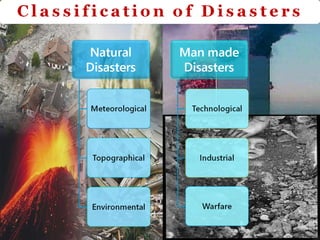
2. Classification of disaster
3. Disaster management
4. Disaster Response
5. Phases of Disaster
6. Details about the Incident Command System (ICS)
What is Disaster
Disaster -
Any occurrence that;
causes, damage, ecological disruption, loss of human life,
deterioration of health and health services on a scale,
sufficient to warrant an extraordinary response from outside
the affected community or area.
(WHO)
A disaster can be defined as an occurrence either nature
or man made that causes human suffering and creates
human needs that victim cannot alleviate without assistance.
(American Red Cross)
Hazard
Any phenomenon that has the potential to cause
disruption or damage to people and their environment.
When hazard involves elements of risks, vulnerabilities
and capacities, they can turn into disasters.
Hazards may be inevitable but disasters can be prevented.
6
Disaster Management
The body of policy and administrative decisions and
operational activities that pertain to various stages
of a disaster at all levels.
An applied science which seeks, by systemic
observation and analysis of disasters, to improve
measures relating to prevention, emergency
response, recovery and mitigation.
Encompasses all aspects of planning for, and
responding to disasters, including both pre and
post disaster activities.
Disaster Response
A continuous and integrated process of planning,
organizing, coordinating and implementing measures
which are necessary or expedient for-
● Prevention of danger or threat of any disaster.
● Reduction of risk of any disaster or its severity or
consequences.
● Capacity-building.
● Preparedness to deal with any disaster.
● Prompt response to any threatening disaster situation
or disaster.
● Assessing the severity or magnitude of effects of any
disaster.
● Evacuation, rescue and relief.
● Rehabilitation and reconstruction.
Disaster Response
1. Transportation
2. Communications
3. Public Works and
Engineering
4. Firefighting
5. Emergency Management
6. Mass care, Housing and
Human Services
7. Resource Support
8. Public Health and Medical
Services
9. Urban Search and Rescue
10. Hazardous Materials
11. Agriculture and Natural
Resources
12. Energy
13. Public Safety and Security
14. Long-Term Recovery
15. Public Affairs
Emergency Support Functions
Phases of a Disaster
Preparation
Warning Phase
Impact
Emergency Response
Recovery
Rehabilitation
Disaster PreparednessDisaster Preparedness
Disaster preparedness - is ongoing multisectoral activity.
Integral part of the national system responsible for
developing plans and programmes for
disaster management,
prevention,
mitigation,
response,
rehabilitation and
reconstruction.
Prediction and warning
Tracking
Warning mechanisms
Organizational response
Public education
Communication
Evacuation planning
Response
Notification
Evacuation/extrication
Search and rescue
Coordination
Immediate needs assessment
Shelter/protection
Implementing existing disaster plans
Emergency Response
Phase
Search and rescue
Emergency medical services
Immediate health service mobilization
Preliminary needs assessment
Disaster Medical Response Phases
Notification (recognition)Notification (recognition)
Search and rescueSearch and rescue
TriageTriage
Medical care of disasterMedical care of disaster
victimsvictims
Disaster communicationsDisaster communications
Record keepingRecord keeping
Transportation andTransportation and
evacuationevacuation
DebriefingDebriefing
RecoveryRecovery
Recovery
Logistics
Distribution of resources
Warehousing
Tracking
Rehabilitation and Reconstruction
Housing
Water/sanitation
Infrastructure
Recovery
Material cleanup
Environmental and
structural safety measures (temporary)
Recovery of belongings
Rehabilitation and Reconstruction
Health service assessment
and reconstruction
Structural reconstruction
Resume development efforts
Transition from relief to development
Managing the Response:Managing the Response:
The Incident CommandThe Incident Command
SystemSystem
Introduction
ICS uses principles that have proven efficiency and
effectiveness in a business setting and applies
principles to emergency and disaster response
ICS structure is the standard for emergency and
disaster response
Effective Incident
Management
Establishing
command
Ensuring responder
safety
Assessing incident
priorities
Determining
operational
objectives
Developing an
organizational
structure
Maintaining a
manageable span of
control
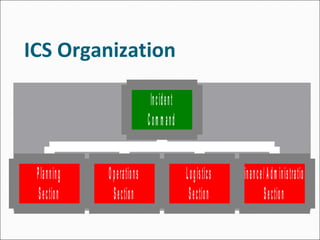
ICS Organization
The major management roles are always filled, no
matter how small the incident. They are:
Command
Operations
Planning
Logistics
Finance/Administration
ICS Organization
Planning
Section
Operations
Section
Logistics
Section
Finance/ Adm inistration
Section
Incident
Com m and
Any Question?
Disaster managment

Disaster managment

  • 2.
  • 3.
    Objective of Training 1.What is disaster and hazard 2. Classification of disaster 3. Disaster management 4. Disaster Response 5. Phases of Disaster 6. Details about the Incident Command System (ICS)
  • 4.
    What is Disaster Disaster- Any occurrence that; causes, damage, ecological disruption, loss of human life, deterioration of health and health services on a scale, sufficient to warrant an extraordinary response from outside the affected community or area. (WHO) A disaster can be defined as an occurrence either nature or man made that causes human suffering and creates human needs that victim cannot alleviate without assistance. (American Red Cross)
  • 5.
    Hazard Any phenomenon thathas the potential to cause disruption or damage to people and their environment. When hazard involves elements of risks, vulnerabilities and capacities, they can turn into disasters. Hazards may be inevitable but disasters can be prevented.
  • 6.
  • 9.
    Disaster Management The bodyof policy and administrative decisions and operational activities that pertain to various stages of a disaster at all levels. An applied science which seeks, by systemic observation and analysis of disasters, to improve measures relating to prevention, emergency response, recovery and mitigation. Encompasses all aspects of planning for, and responding to disasters, including both pre and post disaster activities.
  • 10.
    Disaster Response A continuousand integrated process of planning, organizing, coordinating and implementing measures which are necessary or expedient for- ● Prevention of danger or threat of any disaster. ● Reduction of risk of any disaster or its severity or consequences. ● Capacity-building. ● Preparedness to deal with any disaster. ● Prompt response to any threatening disaster situation or disaster. ● Assessing the severity or magnitude of effects of any disaster. ● Evacuation, rescue and relief. ● Rehabilitation and reconstruction.
  • 11.
    Disaster Response 1. Transportation 2.Communications 3. Public Works and Engineering 4. Firefighting 5. Emergency Management 6. Mass care, Housing and Human Services 7. Resource Support 8. Public Health and Medical Services 9. Urban Search and Rescue 10. Hazardous Materials 11. Agriculture and Natural Resources 12. Energy 13. Public Safety and Security 14. Long-Term Recovery 15. Public Affairs Emergency Support Functions
  • 12.
    Phases of aDisaster Preparation Warning Phase Impact Emergency Response Recovery Rehabilitation
  • 13.
    Disaster PreparednessDisaster Preparedness Disasterpreparedness - is ongoing multisectoral activity. Integral part of the national system responsible for developing plans and programmes for disaster management, prevention, mitigation, response, rehabilitation and reconstruction.
  • 14.
    Prediction and warning Tracking Warningmechanisms Organizational response Public education Communication Evacuation planning
  • 15.
    Response Notification Evacuation/extrication Search and rescue Coordination Immediateneeds assessment Shelter/protection Implementing existing disaster plans
  • 16.
    Emergency Response Phase Search andrescue Emergency medical services Immediate health service mobilization Preliminary needs assessment
  • 17.
    Disaster Medical ResponsePhases Notification (recognition)Notification (recognition) Search and rescueSearch and rescue TriageTriage Medical care of disasterMedical care of disaster victimsvictims Disaster communicationsDisaster communications Record keepingRecord keeping Transportation andTransportation and evacuationevacuation DebriefingDebriefing RecoveryRecovery
  • 18.
    Recovery Logistics Distribution of resources Warehousing Tracking Rehabilitationand Reconstruction Housing Water/sanitation Infrastructure
  • 19.
    Recovery Material cleanup Environmental and structuralsafety measures (temporary) Recovery of belongings
  • 20.
    Rehabilitation and Reconstruction Healthservice assessment and reconstruction Structural reconstruction Resume development efforts Transition from relief to development
  • 21.
    Managing the Response:Managingthe Response: The Incident CommandThe Incident Command SystemSystem
  • 22.
    Introduction ICS uses principlesthat have proven efficiency and effectiveness in a business setting and applies principles to emergency and disaster response ICS structure is the standard for emergency and disaster response
  • 23.
    Effective Incident Management Establishing command Ensuring responder safety Assessingincident priorities Determining operational objectives Developing an organizational structure Maintaining a manageable span of control
  • 24.
    ICS Organization The majormanagement roles are always filled, no matter how small the incident. They are: Command Operations Planning Logistics Finance/Administration
  • 25.
  • 26.