Presented by:
Madhur Sejwal(41)
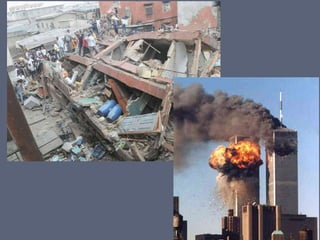
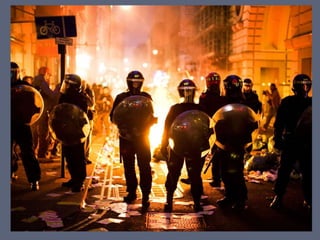
Disaster is an event of serious
magnitude, causing severe damage to
life and property. Casualties numbering
more than 10 (or 12) individuals at a
certain time and place is considered as
mass disaster.
• TheWHO has defined disaster as an occurrence
that causes damage, ecological disruption, loss of
human life and deterioration of health and health
services on a scale sufficient to warrant an
extraordinary response from outside the affected
community.
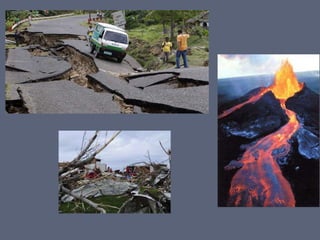
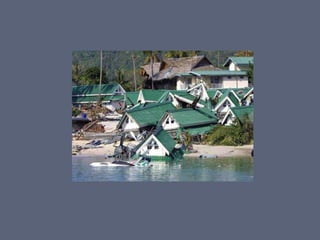
(1) NATURAL
Non biological
 Earthquake
 Cyclone
 Flood
 Drought
 Heat wave
 Volcanic eruption
Biological
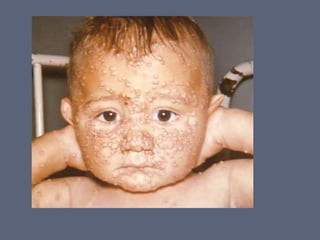
 Disease epidemics
 Disease pandemic
 Mass poisoning (eg. Food)
 Mass disaster management is a team work which
consists of police, army, civil authorities and medical
experts, like forensic pathologist/odonthologist, finger
print/ballistic experts.They are responsible for
investigations including the following:
• Identification of the site & preparation of sketch diagram
showing the geographical location
• Reaching the site, well equipped
• Immediate isolation, demarcation and protection of the
site
• Identification of bodies if possible.
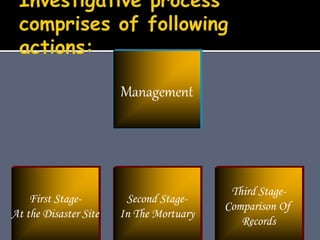
MANAGEMENT
Management
First Stage-
At the Disaster Site
Second Stage-
In The Mortuary
Third Stage-
Comparison Of
Records
 1) Reaching the disaster site as soon as
possible
 2) Isolation, demarcation and protection of
the site by a security cordon
 3) Photography of the site from all angles
 4) Identification of the precise site of
occurrence and preparation of a detailed
sketch
FIRST STAGE – AT THE
DISASTER SITE
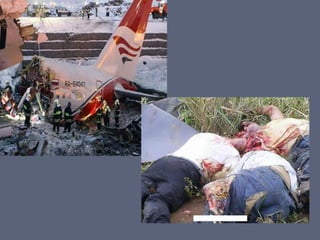
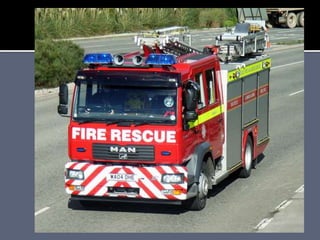
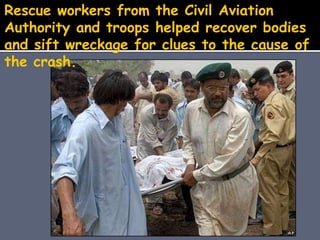
Rescue workers from the Civil Aviation
Authority and troops helped recover bodies
and sift wreckage for clues to the cause of
the crash.
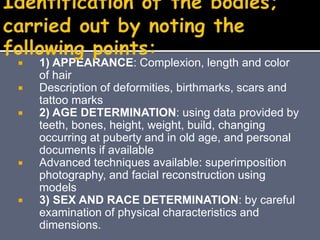
 1) APPEARANCE: Complexion, length and color
of hair
 Description of deformities, birthmarks, scars and
tattoo marks
 2) AGE DETERMINATION: using data provided by
teeth, bones, height, weight, build, changing
occurring at puberty and in old age, and personal
documents if available
 Advanced techniques available: superimposition
photography, and facial reconstruction using
models
 3) SEX AND RACE DETERMINATION: by careful
examination of physical characteristics and
dimensions.
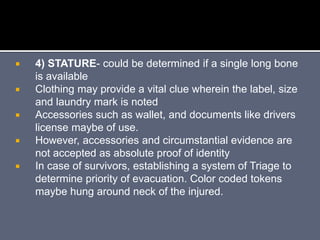
 4) STATURE- could be determined if a single long bone
is available
 Clothing may provide a vital clue wherein the label, size
and laundry mark is noted
 Accessories such as wallet, and documents like drivers
license maybe of use.
 However, accessories and circumstantial evidence are
not accepted as absolute proof of identity
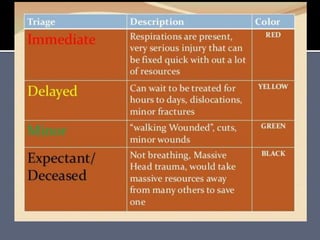
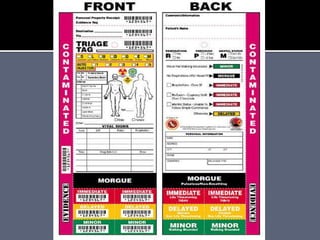
 In case of survivors, establishing a system of Triage to
determine priority of evacuation. Color coded tokens
maybe hung around neck of the injured.
 Information on composition of gathering maybe
used to establish identity by exclusion
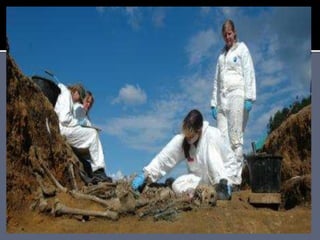
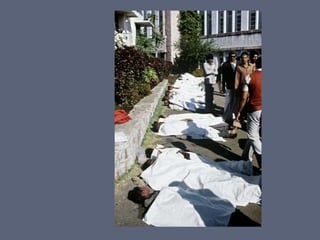
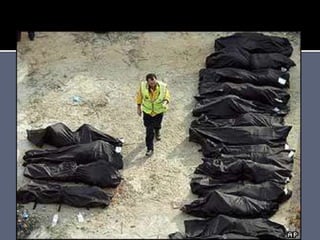
 Establishment of temporary mortuaries at a
suitable site
 Proper scientific documentation including
numbering and tagging of bodies or aiding
identification by next of kin
 Arranging transportation of bodies to a mortuary
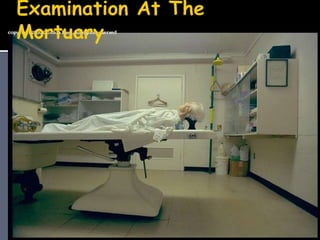
 1) Identification of body (repeat in case of
identified bodies also)
 2) Take photographs, finger prints, foot prints of
the body
 3) Arrange radiological examination of the entire
body- to identify foreign bodies. This is
particularly useful in mutilated bodies
SECOND STAGE – IN THE
MORTUARY
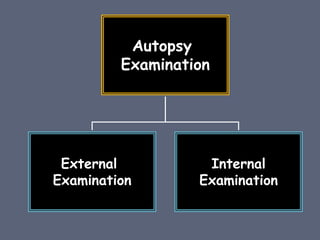
Autopsy
Examination
External
Examination
Internal
Examination
 1) STATE OF THE BODY
 Entire
 Mutilated
 Fragmentary remains
 Height and weight
 2) PRESENCE OR ABSENCE OF
POSTMORTEM CHANGES especially in
unidentified bodies
 3) DENTAL DATA
 4) GROSS EXAMINTAION OF INJURIES: size,
EXTERNAL EXAMINATION
FOLLOWING POINTS NEED SPECIAL
ATTENTION:
 1.Stage of putrefaction of internal organs
 Surgical removal of an organ carried out in life
 2.Evidence of pre-existing disease
 3.Nature, extent and degree of organ injury
 4.Evidence of organic disease causing sudden
death: coronary occlusion, cerebro-vascular
accident etc.
 5.Evidence of poisoning
 6.Presence of foreign bodies
INTERNAL
EXAMNINATION
 Specimens to be collected and preserved-exact
specimen would depend on nature of disaster.
They could be:
 1.Clothes, if charred or blood stained
 2.Foreign bodies
 3.Viscera, blood and urine for chemical
analysis
 4.Internal organs for histopathological
examination
SPECIMENS
COLLECTION
It should be given to cover 2
aspects:
1. The exact cause of death after analyzing all
information collected during post-mortem
examination and detailed study of viscera
and organs
2. The nature of force, fire, foreign body or
chemical agent which has produced injuries
that have resulted in death. This is
particularly true in care of air disasters.
OPINION
 1) Compare all evidence collected with
the information made available by
relatives and establish identification of
deceased
 2) A minimum of 7 to 8 points of
comparison must tally to confirm identity
 3) It is essential that record of all medical
and dental examination including X-ray
films be filed for future reference.
THIRD STAGE-COMPARISION
OF RECORDS
 Parikh CK. Identification in Mass
Disaster, Parikh's Textbook of Medical
Jurisprudence, Forensic Medicine and
Toxicology, 6th Edition 1999.
Disaster management

Disaster management

  • 1.
  • 2.
    Disaster is anevent of serious magnitude, causing severe damage to life and property. Casualties numbering more than 10 (or 12) individuals at a certain time and place is considered as mass disaster. • TheWHO has defined disaster as an occurrence that causes damage, ecological disruption, loss of human life and deterioration of health and health services on a scale sufficient to warrant an extraordinary response from outside the affected community.
  • 3.
    (1) NATURAL Non biological Earthquake  Cyclone  Flood  Drought  Heat wave  Volcanic eruption Biological  Disease epidemics  Disease pandemic  Mass poisoning (eg. Food)
  • 11.
     Mass disastermanagement is a team work which consists of police, army, civil authorities and medical experts, like forensic pathologist/odonthologist, finger print/ballistic experts.They are responsible for investigations including the following: • Identification of the site & preparation of sketch diagram showing the geographical location • Reaching the site, well equipped • Immediate isolation, demarcation and protection of the site • Identification of bodies if possible. MANAGEMENT
  • 13.
    Management First Stage- At theDisaster Site Second Stage- In The Mortuary Third Stage- Comparison Of Records
  • 14.
     1) Reachingthe disaster site as soon as possible  2) Isolation, demarcation and protection of the site by a security cordon  3) Photography of the site from all angles  4) Identification of the precise site of occurrence and preparation of a detailed sketch FIRST STAGE – AT THE DISASTER SITE
  • 15.
    Rescue workers fromthe Civil Aviation Authority and troops helped recover bodies and sift wreckage for clues to the cause of the crash.
  • 17.
     1) APPEARANCE:Complexion, length and color of hair  Description of deformities, birthmarks, scars and tattoo marks  2) AGE DETERMINATION: using data provided by teeth, bones, height, weight, build, changing occurring at puberty and in old age, and personal documents if available  Advanced techniques available: superimposition photography, and facial reconstruction using models  3) SEX AND RACE DETERMINATION: by careful examination of physical characteristics and dimensions.
  • 18.
     4) STATURE-could be determined if a single long bone is available  Clothing may provide a vital clue wherein the label, size and laundry mark is noted  Accessories such as wallet, and documents like drivers license maybe of use.  However, accessories and circumstantial evidence are not accepted as absolute proof of identity  In case of survivors, establishing a system of Triage to determine priority of evacuation. Color coded tokens maybe hung around neck of the injured.
  • 21.
     Information oncomposition of gathering maybe used to establish identity by exclusion  Establishment of temporary mortuaries at a suitable site  Proper scientific documentation including numbering and tagging of bodies or aiding identification by next of kin  Arranging transportation of bodies to a mortuary
  • 25.
     1) Identificationof body (repeat in case of identified bodies also)  2) Take photographs, finger prints, foot prints of the body  3) Arrange radiological examination of the entire body- to identify foreign bodies. This is particularly useful in mutilated bodies SECOND STAGE – IN THE MORTUARY
  • 27.
  • 28.
     1) STATEOF THE BODY  Entire  Mutilated  Fragmentary remains  Height and weight  2) PRESENCE OR ABSENCE OF POSTMORTEM CHANGES especially in unidentified bodies  3) DENTAL DATA  4) GROSS EXAMINTAION OF INJURIES: size, EXTERNAL EXAMINATION
  • 29.
    FOLLOWING POINTS NEEDSPECIAL ATTENTION:  1.Stage of putrefaction of internal organs  Surgical removal of an organ carried out in life  2.Evidence of pre-existing disease  3.Nature, extent and degree of organ injury  4.Evidence of organic disease causing sudden death: coronary occlusion, cerebro-vascular accident etc.  5.Evidence of poisoning  6.Presence of foreign bodies INTERNAL EXAMNINATION
  • 30.
     Specimens tobe collected and preserved-exact specimen would depend on nature of disaster. They could be:  1.Clothes, if charred or blood stained  2.Foreign bodies  3.Viscera, blood and urine for chemical analysis  4.Internal organs for histopathological examination SPECIMENS COLLECTION
  • 31.
    It should begiven to cover 2 aspects: 1. The exact cause of death after analyzing all information collected during post-mortem examination and detailed study of viscera and organs 2. The nature of force, fire, foreign body or chemical agent which has produced injuries that have resulted in death. This is particularly true in care of air disasters. OPINION
  • 32.
     1) Compareall evidence collected with the information made available by relatives and establish identification of deceased  2) A minimum of 7 to 8 points of comparison must tally to confirm identity  3) It is essential that record of all medical and dental examination including X-ray films be filed for future reference. THIRD STAGE-COMPARISION OF RECORDS
  • 33.
     Parikh CK.Identification in Mass Disaster, Parikh's Textbook of Medical Jurisprudence, Forensic Medicine and Toxicology, 6th Edition 1999.

Editor's Notes

  • #2 Presented by: Sneha Soogumbur(44) Madhur Sejwal(41)
  • #3 The WHO has defined disaster as an occurrence that causes damage, ecological disruption, loss of human life and deterioration of health and health services on a scale sufficient to warrant an extraordinary response from outside the affected community