Direct space-based observations
of anthropogenic CO2 emission
areas from OCO-2
Janne Hakkarainen, Iolanda Ialongo, and Johanna Tamminen
Finnish Meteorological Institute, Earth Observation, Helsinki, Finland
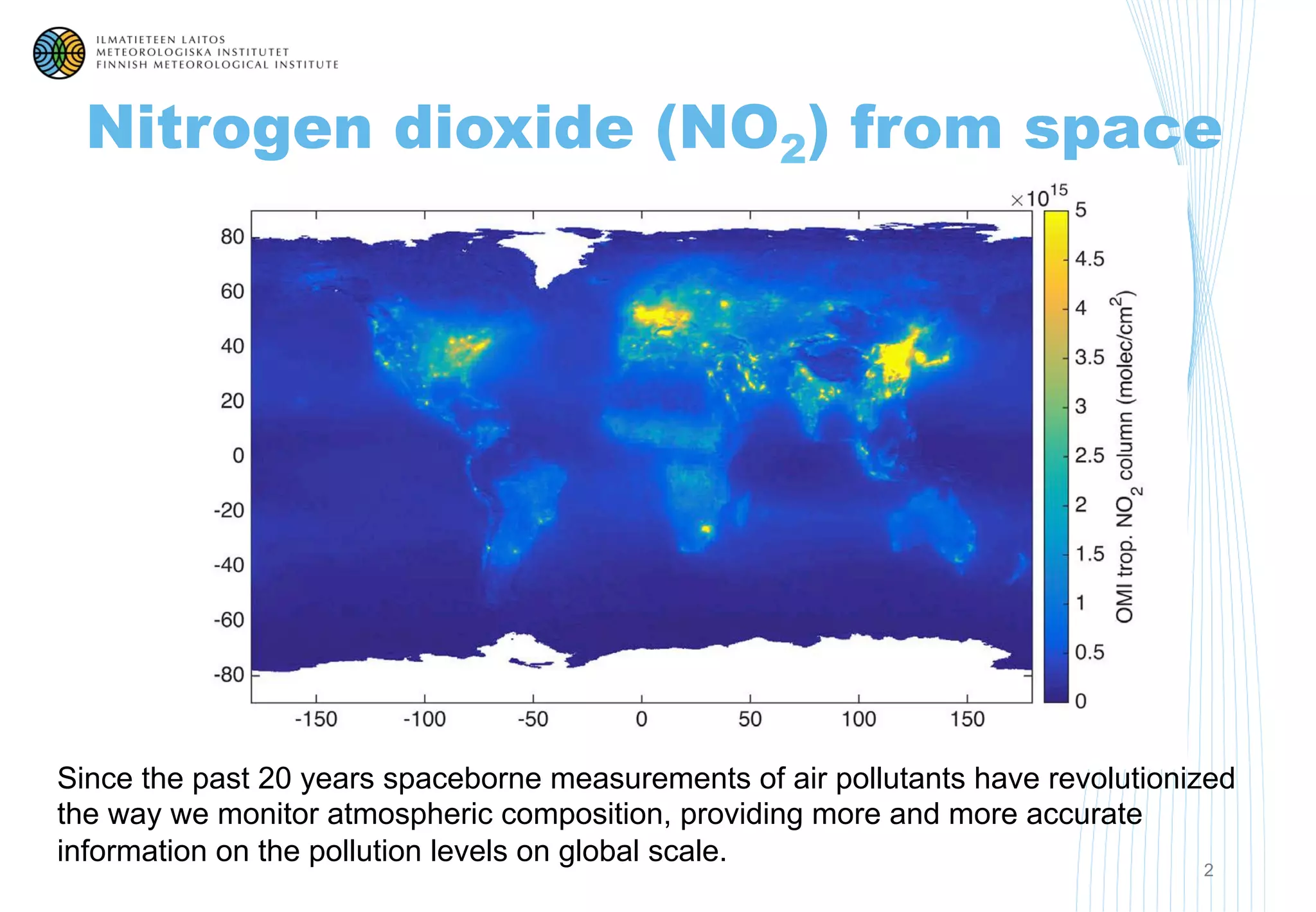
Nitrogen dioxide (NO2) from space
2
Since the past 20 years spaceborne measurements of air pollutants have revolutionized
the way we monitor atmospheric composition, providing more and more accurate
information on the pollution levels on global scale.
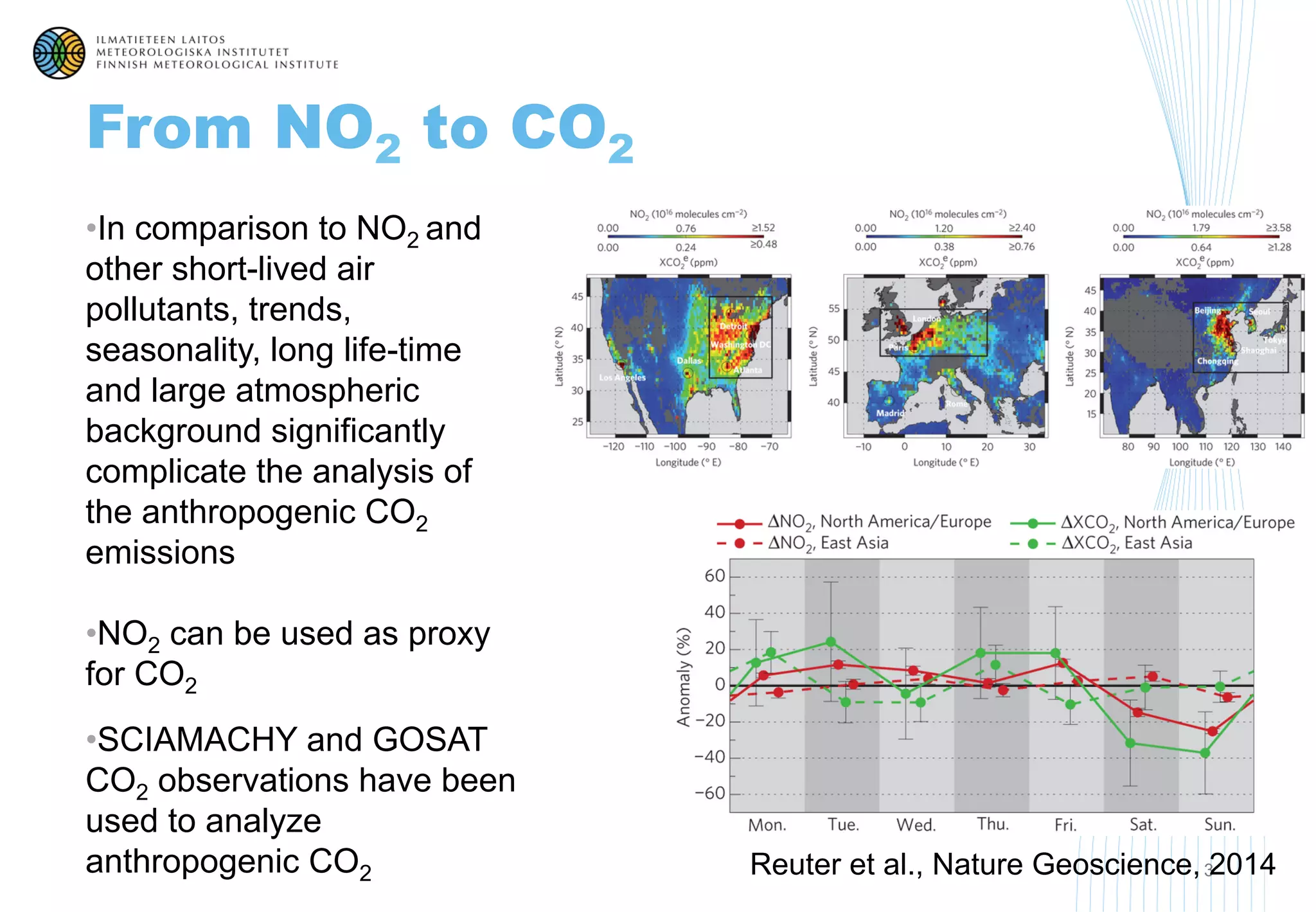
From NO2 to CO2
• In comparison to NO2 and
other short-lived air
pollutants, trends,
seasonality, long life-time
and large atmospheric
background significantly
complicate the analysis of
the anthropogenic CO2
emissions
• NO2 can be used as proxy
for CO2
• SCIAMACHY and GOSAT
CO2 observations have been
used to analyze
anthropogenic CO2 3Reuter et al., Nature Geoscience, 2014
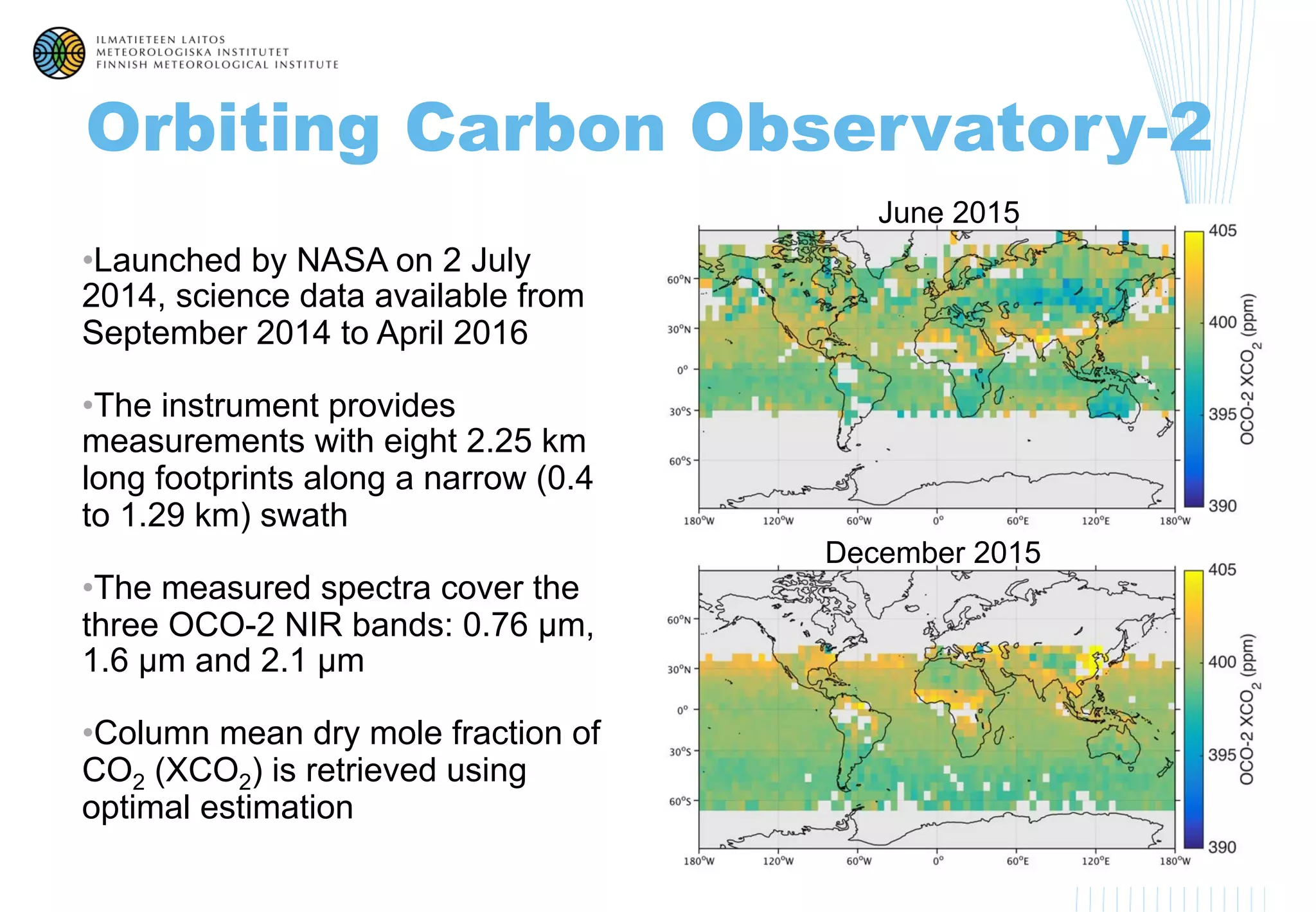
Orbiting Carbon Observatory-2
• Launched by NASA on 2 July
2014, science data available from
September 2014 to April 2016
• The instrument provides
measurements with eight 2.25 km
long footprints along a narrow (0.4
to 1.29 km) swath
• The measured spectra cover the
three OCO-2 NIR bands: 0.76 µm,
1.6 µm and 2.1 µm
• Column mean dry mole fraction of
CO2 (XCO2) is retrieved using
optimal estimation
4
June 2015
December 2015
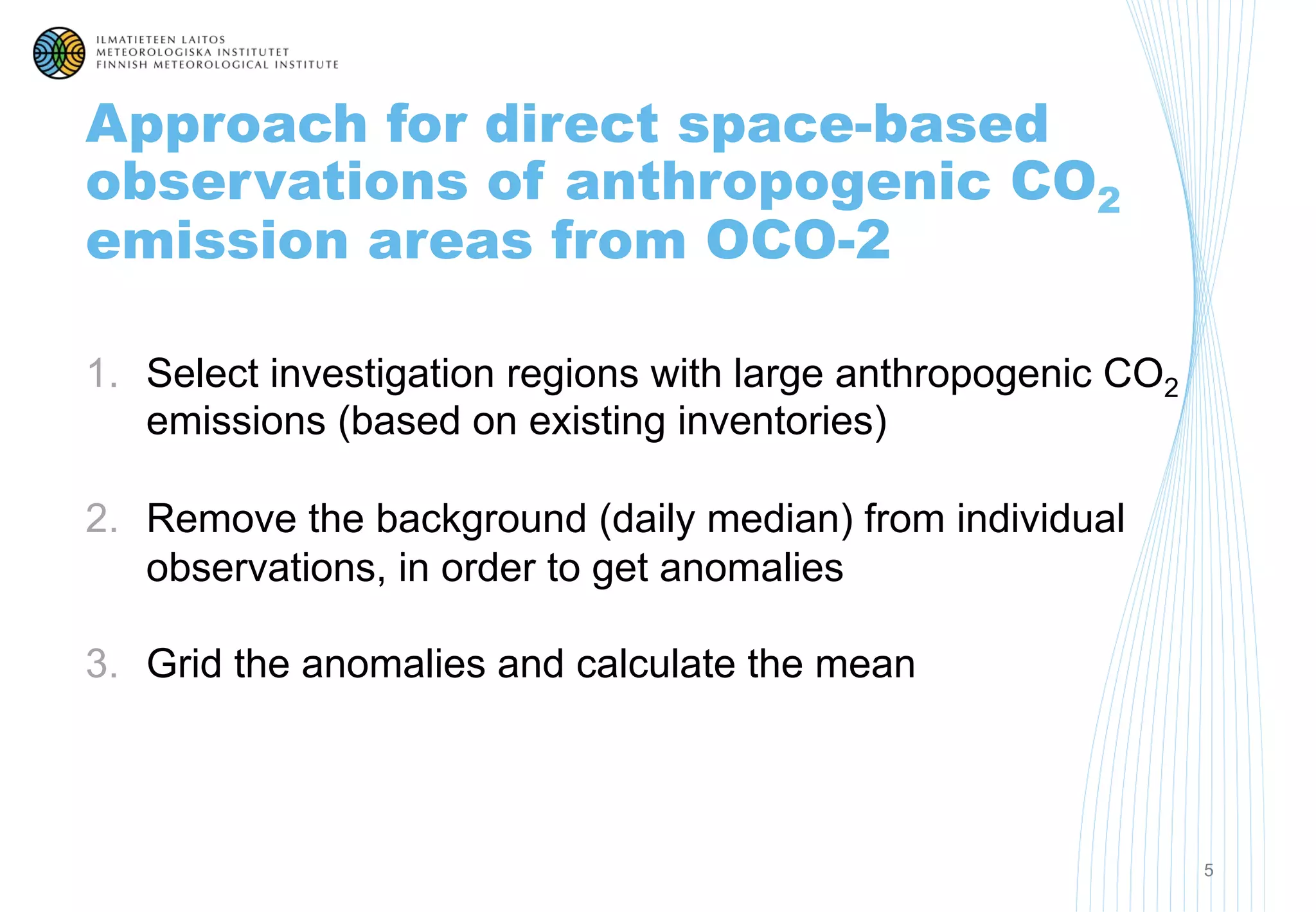
Approach for direct space-based
observations of anthropogenic CO2
emission areas from OCO-2
1.  Select investigation regions with large anthropogenic CO2
emissions (based on existing inventories)
2.  Remove the background (daily median) from individual
observations, in order to get anomalies
3.  Grid the anomalies and calculate the mean
5
Algorithm for anomalies
6
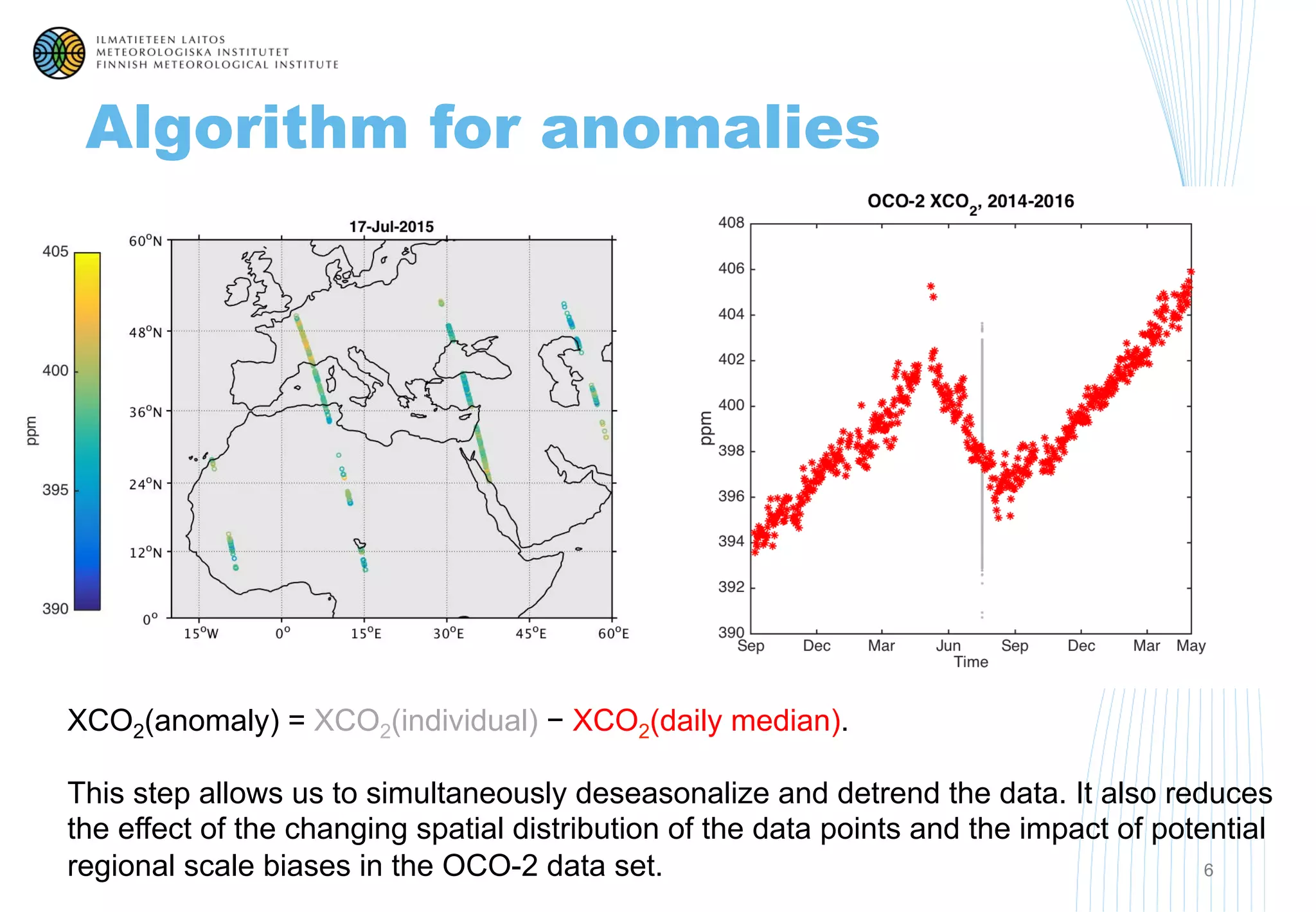
XCO2(anomaly) = XCO2(individual) − XCO2(daily median).
This step allows us to simultaneously deseasonalize and detrend the data. It also reduces
the effect of the changing spatial distribution of the data points and the impact of potential
regional scale biases in the OCO-2 data set.
Results
7
Results
8
9
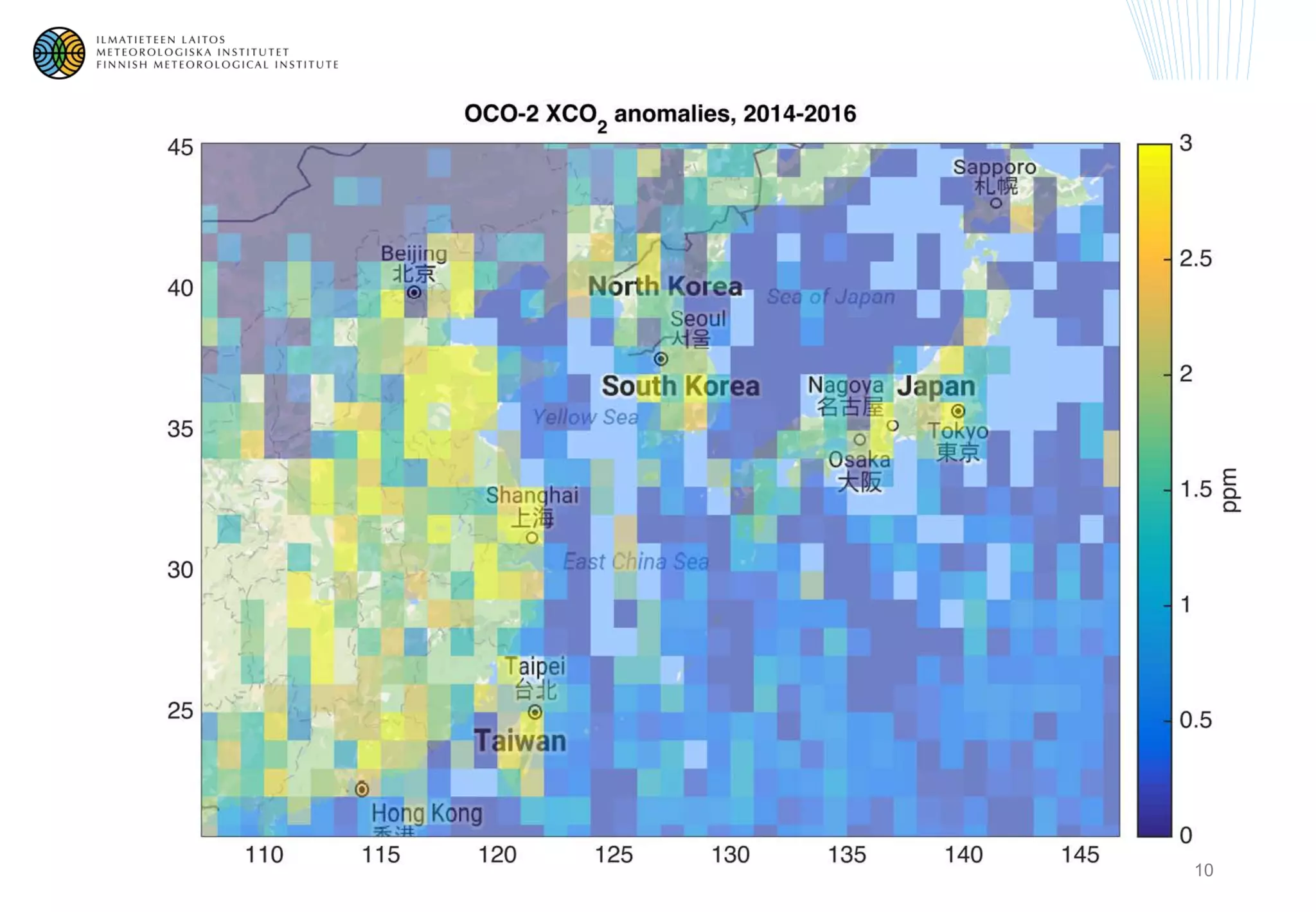
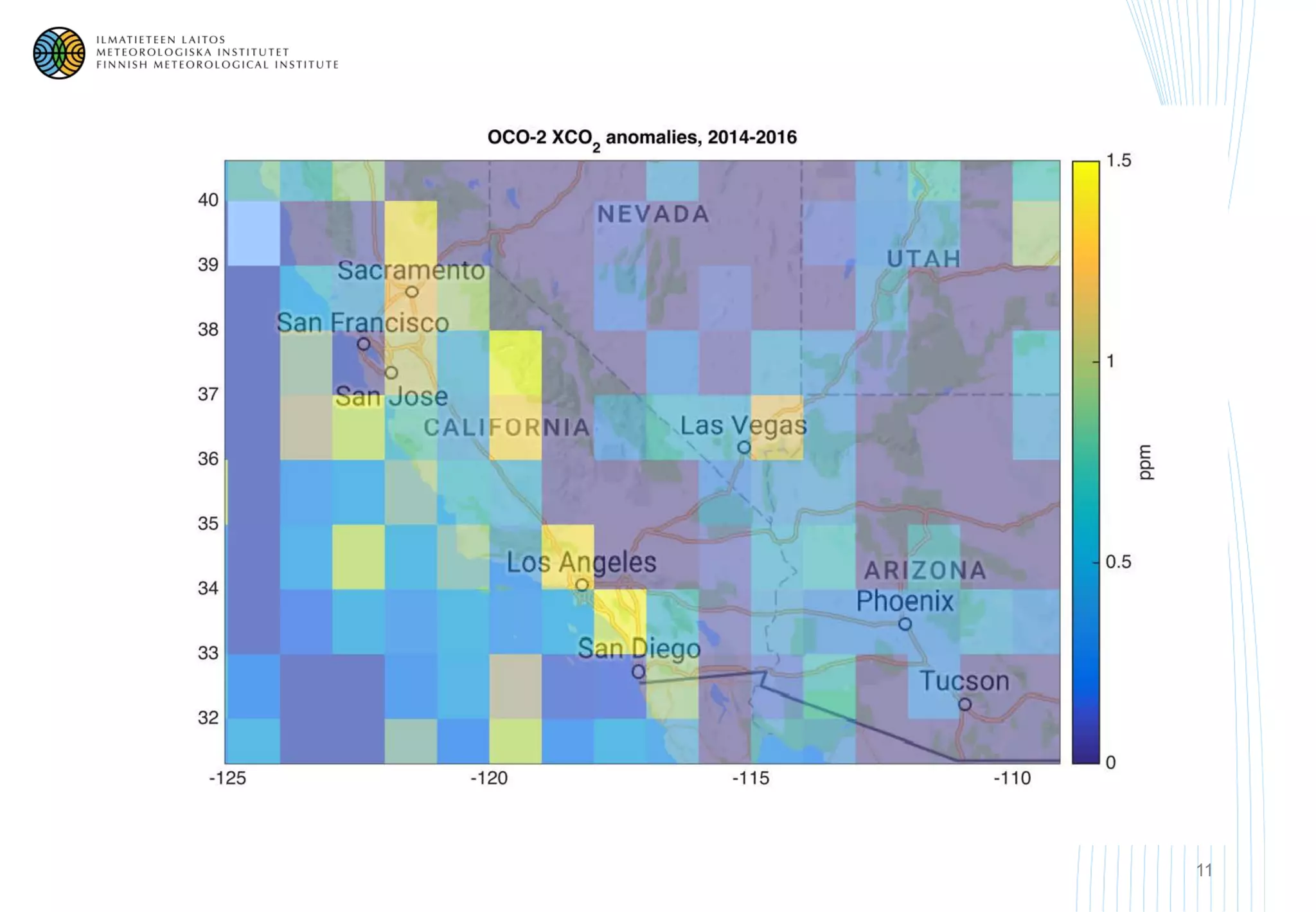
Case studies
10
11
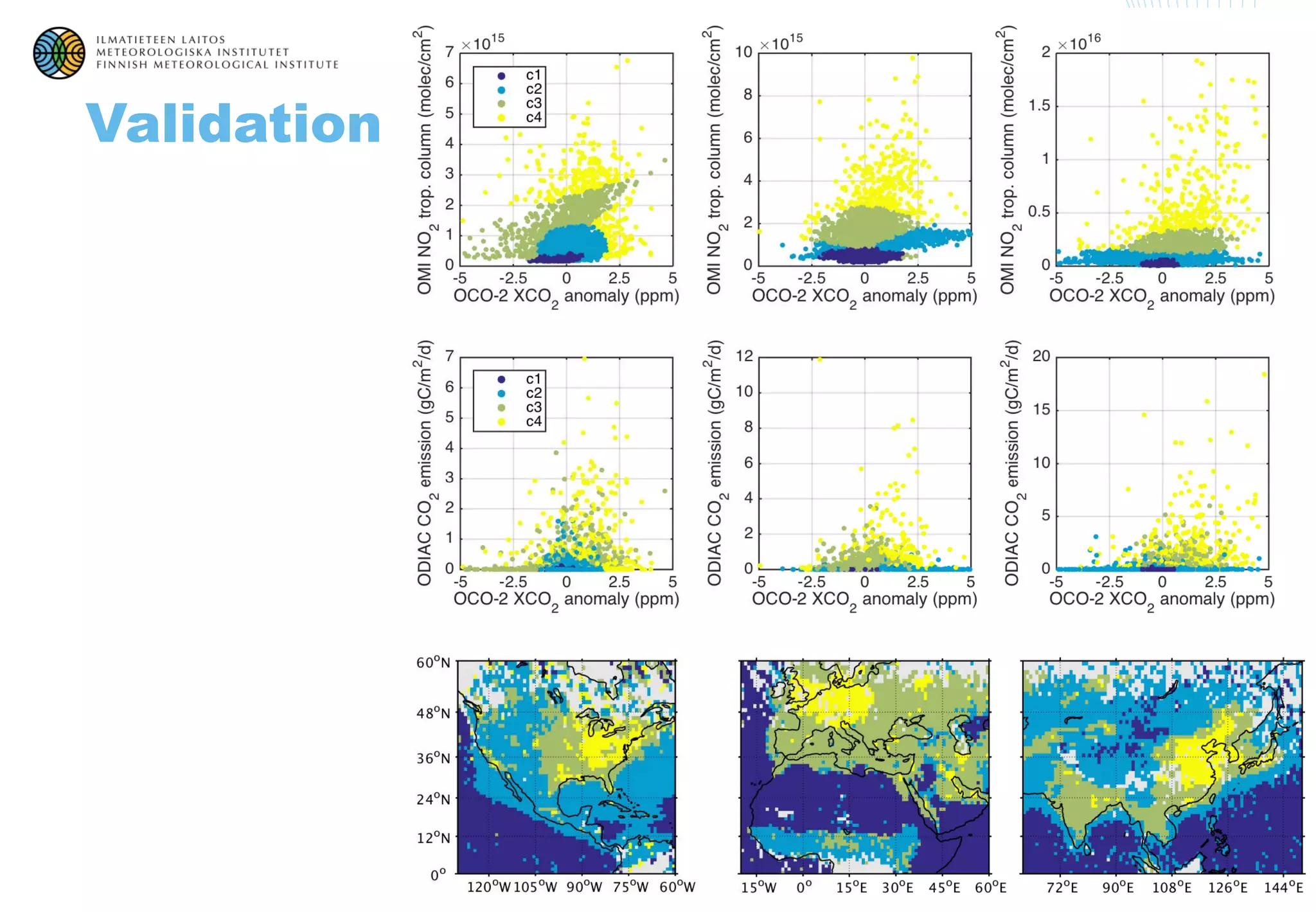
Validation
12
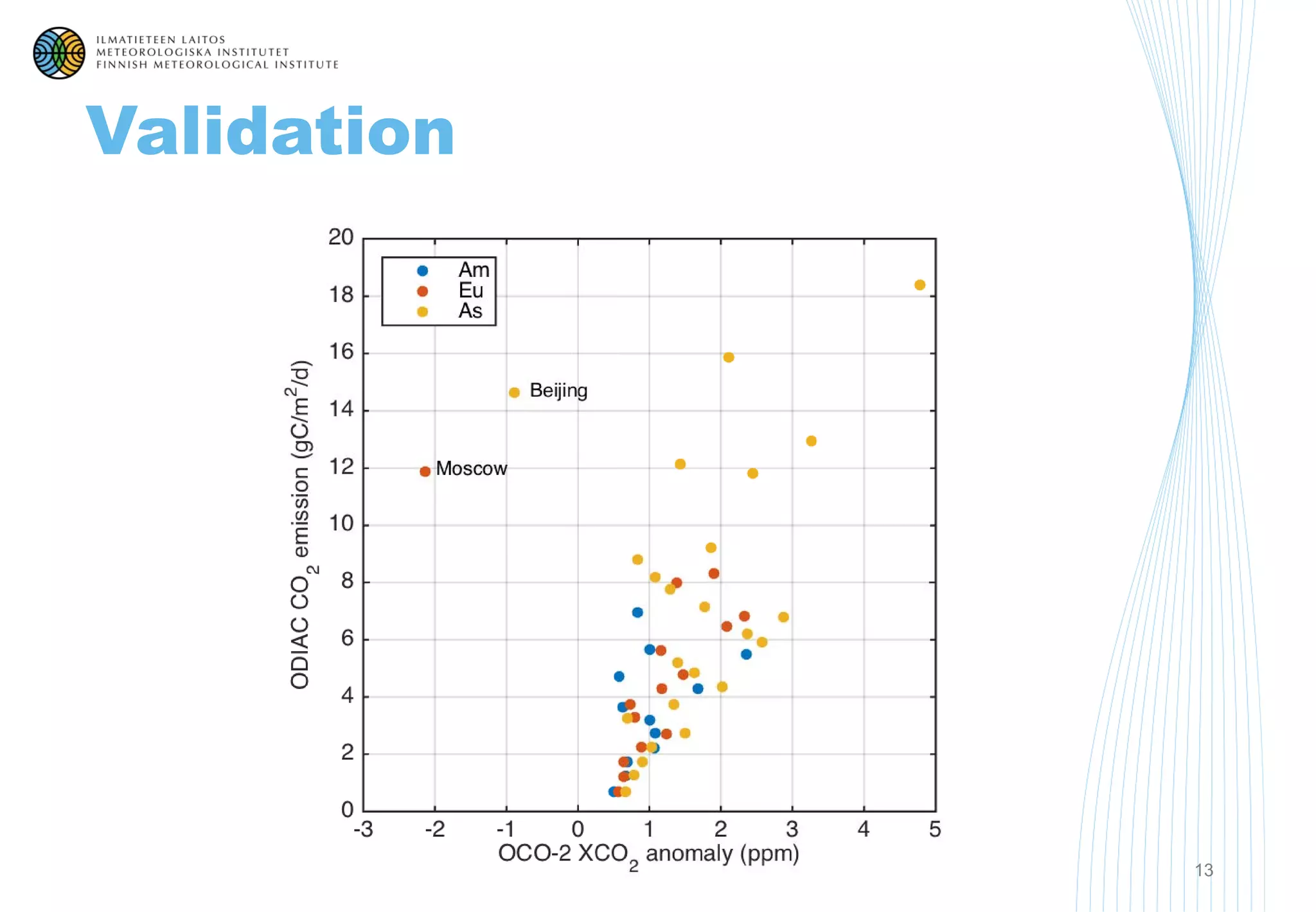
Validation
13
Conclusion
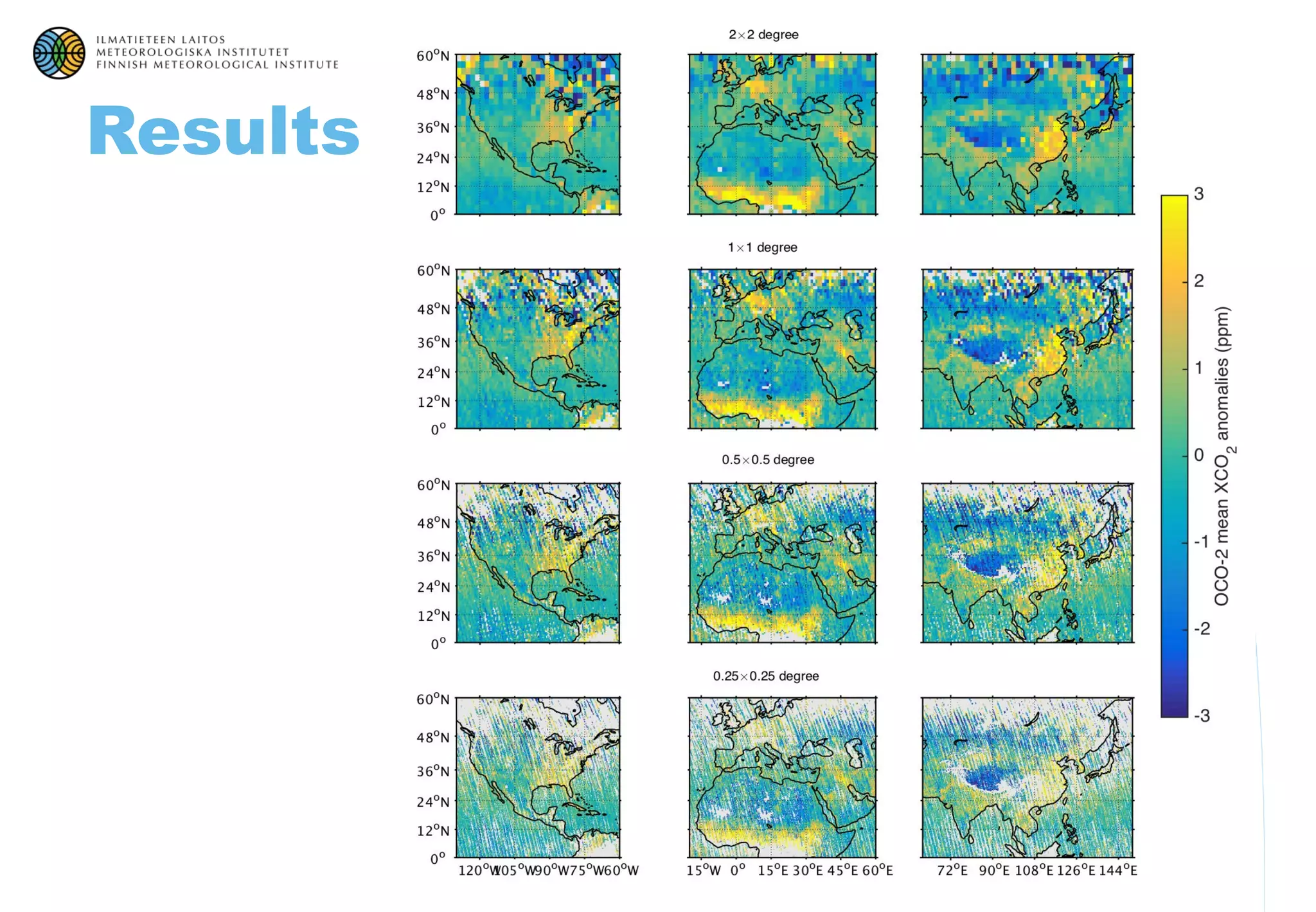
• First direct observation of anthropogenic CO2 emission areas from
space.
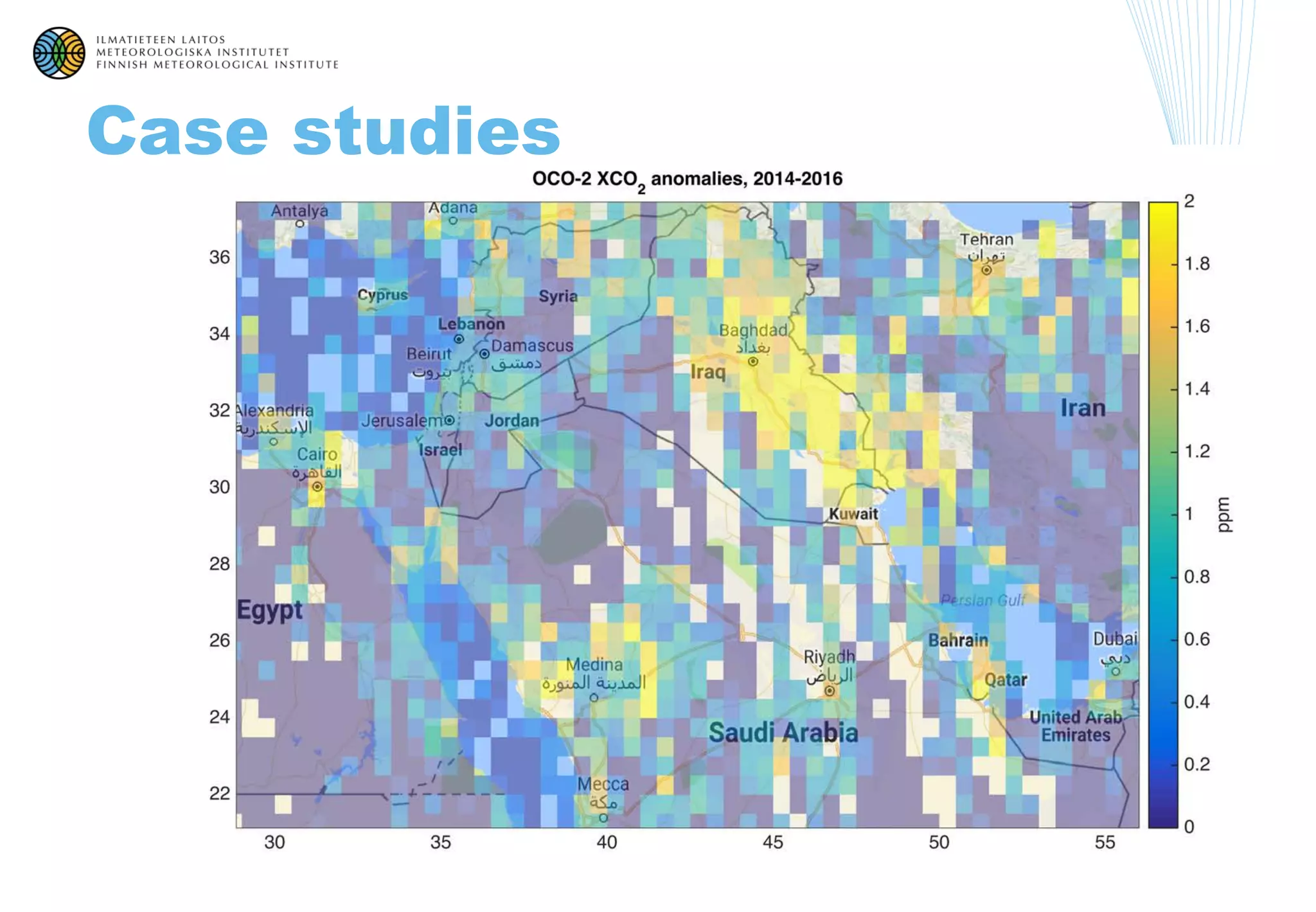
• Major anthropogenic CO2 emission areas, such as Europe, USA and
China, and several smaller isolated emitting areas, like individual cities,
are detectable.
• This was achieved developing a novel methodology to derive the mean
XCO2 anomalies, solely based on spaceborne OCO-2 data with
unprecedented spatial coverage and detail.
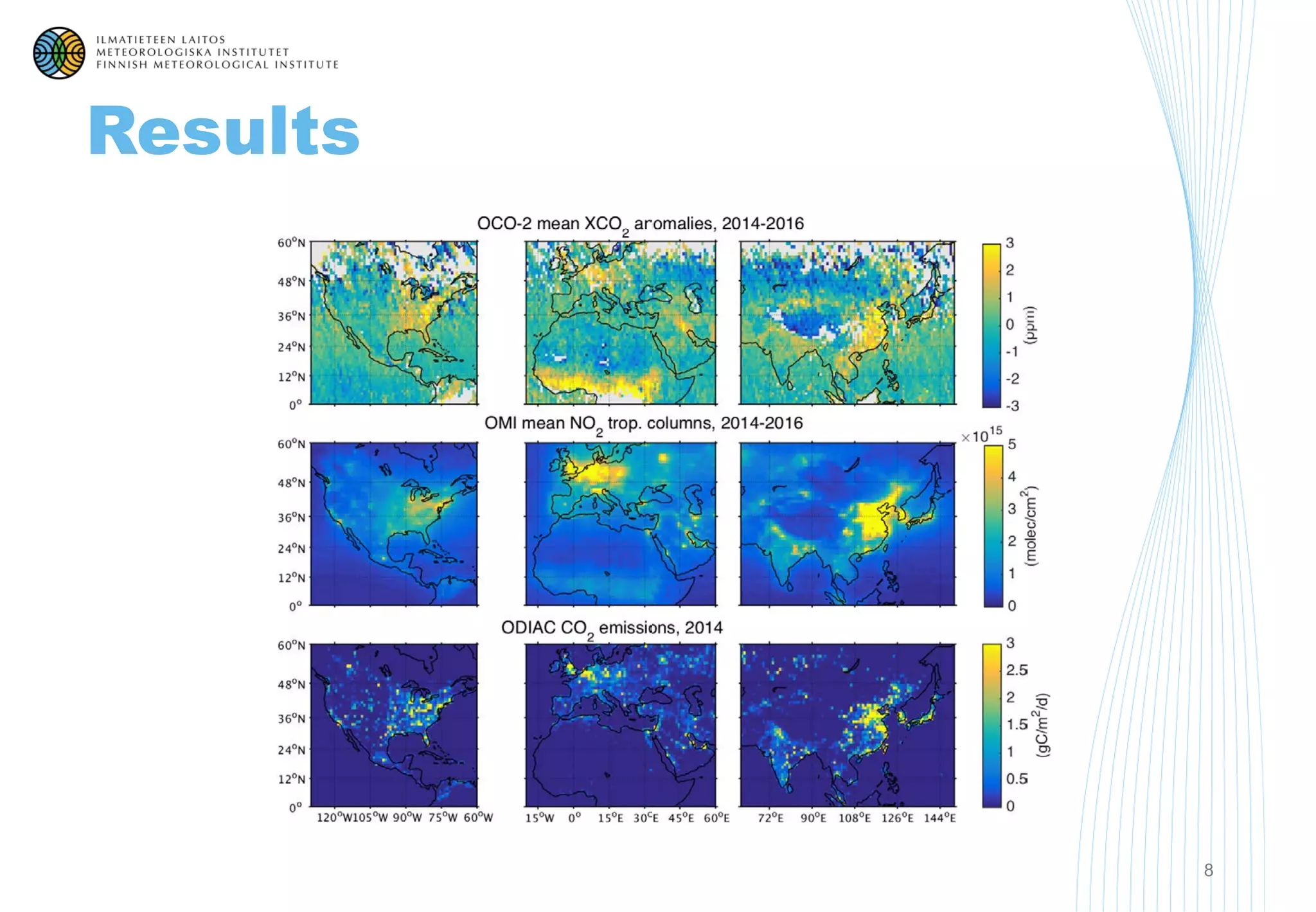
• The distribution of the pollution areas is in agreement with the existing
CO2 emission maps and the mean XCO2 anomalies showed positive
correlation with the CO2 emission values.
• This study was based on about a year-and-a-half of OCO-2 data. In the
future, as the OCO-2 dataset becomes larger, we aim at studying the CO2
emissions in more detail and the results are expected to become more
robust.
14

Direct space-based observations of anthropogenic CO2 emission areas from OCO-2

  • 1.
    Direct space-based observations ofanthropogenic CO2 emission areas from OCO-2 Janne Hakkarainen, Iolanda Ialongo, and Johanna Tamminen Finnish Meteorological Institute, Earth Observation, Helsinki, Finland
  • 2.
    Nitrogen dioxide (NO2)from space 2 Since the past 20 years spaceborne measurements of air pollutants have revolutionized the way we monitor atmospheric composition, providing more and more accurate information on the pollution levels on global scale.
  • 3.
    From NO2 toCO2 • In comparison to NO2 and other short-lived air pollutants, trends, seasonality, long life-time and large atmospheric background significantly complicate the analysis of the anthropogenic CO2 emissions • NO2 can be used as proxy for CO2 • SCIAMACHY and GOSAT CO2 observations have been used to analyze anthropogenic CO2 3Reuter et al., Nature Geoscience, 2014
  • 4.
    Orbiting Carbon Observatory-2 • Launchedby NASA on 2 July 2014, science data available from September 2014 to April 2016 • The instrument provides measurements with eight 2.25 km long footprints along a narrow (0.4 to 1.29 km) swath • The measured spectra cover the three OCO-2 NIR bands: 0.76 µm, 1.6 µm and 2.1 µm • Column mean dry mole fraction of CO2 (XCO2) is retrieved using optimal estimation 4 June 2015 December 2015
  • 5.
    Approach for directspace-based observations of anthropogenic CO2 emission areas from OCO-2 1.  Select investigation regions with large anthropogenic CO2 emissions (based on existing inventories) 2.  Remove the background (daily median) from individual observations, in order to get anomalies 3.  Grid the anomalies and calculate the mean 5
  • 6.
    Algorithm for anomalies 6 XCO2(anomaly)= XCO2(individual) − XCO2(daily median). This step allows us to simultaneously deseasonalize and detrend the data. It also reduces the effect of the changing spatial distribution of the data points and the impact of potential regional scale biases in the OCO-2 data set.
  • 7.
  • 8.
  • 9.
  • 10.
  • 11.
  • 12.
  • 13.
  • 14.
    Conclusion • First direct observationof anthropogenic CO2 emission areas from space. • Major anthropogenic CO2 emission areas, such as Europe, USA and China, and several smaller isolated emitting areas, like individual cities, are detectable. • This was achieved developing a novel methodology to derive the mean XCO2 anomalies, solely based on spaceborne OCO-2 data with unprecedented spatial coverage and detail. • The distribution of the pollution areas is in agreement with the existing CO2 emission maps and the mean XCO2 anomalies showed positive correlation with the CO2 emission values. • This study was based on about a year-and-a-half of OCO-2 data. In the future, as the OCO-2 dataset becomes larger, we aim at studying the CO2 emissions in more detail and the results are expected to become more robust. 14