BHARATH COLLEGE OF SCIENCE & ADMINISTRATION
THANJAVUR
Submitted by
Name :
Roll No. :
Signature of the candidate Signature of the HOD
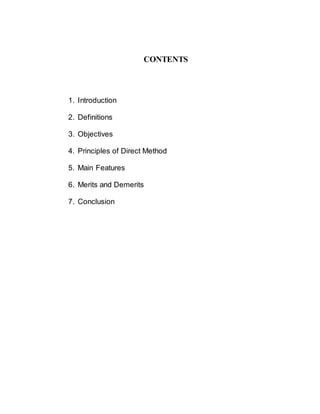
CONTENTS
1. Introduction
2. Definitions
3. Objectives
4. Principles of Direct Method
5. Main Features
6. Merits and Demerits
7. Conclusion
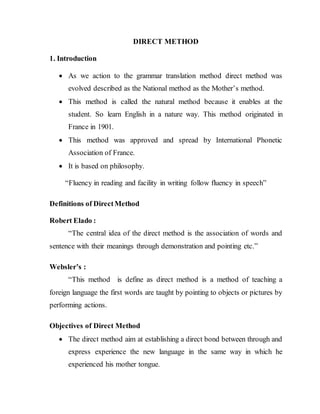
DIRECT METHOD
1. Introduction
 As we action to the grammar translation method direct method was
evolved described as the National method as the Mother’s method.
 This method is called the natural method because it enables at the
student. So learn English in a nature way. This method originated in
France in 1901.
 This method was approved and spread by International Phonetic
Association of France.
 It is based on philosophy.
“Fluency in reading and facility in writing follow fluency in speech”
Definitions of DirectMethod
Robert Elado :
“The central idea of the direct method is the association of words and
sentence with their meanings through demonstration and pointing etc.”
Websler’s :
“This method is define as direct method is a method of teaching a
foreign language the first words are taught by pointing to objects or pictures by
performing actions.
Objectives of Direct Method
 The direct method aim at establishing a direct bond between through and
express experience the new language in the same way in which he
experienced his mother tongue.
Aims of Direct Method
Champion :
 To make the pupil think in English language.
 To enable the pupil to express the taught and feelings directly by means
of English without the intervention of mother tongue.
Main Features of the Direct Method
 Direct contact between words and idea.
 The sentence as unit.
 Inductive teaching of Grammar.
 Teaching of vocabulary in a context.
Principles of Direct Method
 It is a Oral method.
 Sentence method is the unit speech of direct method.
 Minimum use in mother tongue.
1. Oral Method
Oral training in learning in English
2. Sentence Method
The teaching of English through direct method is started with the
teaching of sentence and not individual words.
3. Minimum use in Mother Tongue
Mother tongue is inhibited in direct method. Word and meaning in
ensured.
Merits of Direct Method
 The natural method to mother tongue
 To facilitates understanding of English
 English object and idea and the English word and meaning
understanding of English.
 To give fluency of speech, lays stress or oral work his finds self
confidence.
 Taste of English literature command over language.
 To make the use of Audio Visual Aids.
Demerits of Direct Methods
 Limitations of direct method of teaching.
 Direct principle not direct method.
 It is an incomplete method.
 Greater weakness in practice than theory.
 Misuse of other tongue
Conclusion
Most of the defects relate to organizational problems and other
difficulties and are not due to inherent weakness of the method where the
direct method falls short, it can be supplemented by other methods and
techniques are to overcome the short comings .
References
www.englishteacherwebsites.com/
Department of Education English Books

Direct method

  • 1.
    BHARATH COLLEGE OFSCIENCE & ADMINISTRATION THANJAVUR Submitted by Name : Roll No. : Signature of the candidate Signature of the HOD
  • 2.
    CONTENTS 1. Introduction 2. Definitions 3.Objectives 4. Principles of Direct Method 5. Main Features 6. Merits and Demerits 7. Conclusion
  • 3.
    DIRECT METHOD 1. Introduction As we action to the grammar translation method direct method was evolved described as the National method as the Mother’s method.  This method is called the natural method because it enables at the student. So learn English in a nature way. This method originated in France in 1901.  This method was approved and spread by International Phonetic Association of France.  It is based on philosophy. “Fluency in reading and facility in writing follow fluency in speech” Definitions of DirectMethod Robert Elado : “The central idea of the direct method is the association of words and sentence with their meanings through demonstration and pointing etc.” Websler’s : “This method is define as direct method is a method of teaching a foreign language the first words are taught by pointing to objects or pictures by performing actions. Objectives of Direct Method  The direct method aim at establishing a direct bond between through and express experience the new language in the same way in which he experienced his mother tongue.
  • 4.
    Aims of DirectMethod Champion :  To make the pupil think in English language.  To enable the pupil to express the taught and feelings directly by means of English without the intervention of mother tongue. Main Features of the Direct Method  Direct contact between words and idea.  The sentence as unit.  Inductive teaching of Grammar.  Teaching of vocabulary in a context. Principles of Direct Method  It is a Oral method.  Sentence method is the unit speech of direct method.  Minimum use in mother tongue. 1. Oral Method Oral training in learning in English 2. Sentence Method The teaching of English through direct method is started with the teaching of sentence and not individual words. 3. Minimum use in Mother Tongue Mother tongue is inhibited in direct method. Word and meaning in ensured.
  • 5.
    Merits of DirectMethod  The natural method to mother tongue  To facilitates understanding of English  English object and idea and the English word and meaning understanding of English.  To give fluency of speech, lays stress or oral work his finds self confidence.  Taste of English literature command over language.  To make the use of Audio Visual Aids. Demerits of Direct Methods  Limitations of direct method of teaching.  Direct principle not direct method.  It is an incomplete method.  Greater weakness in practice than theory.  Misuse of other tongue Conclusion Most of the defects relate to organizational problems and other difficulties and are not due to inherent weakness of the method where the direct method falls short, it can be supplemented by other methods and techniques are to overcome the short comings . References www.englishteacherwebsites.com/ Department of Education English Books