DIRECT AND
INDIRECT TEACHING
METHODOLOGY
JEPTE B. GALIGAO
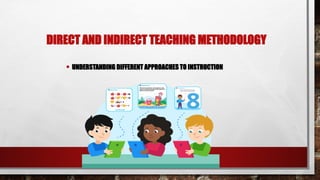
DIRECT AND INDIRECT TEACHING METHODOLOGY
• UNDERSTANDING DIFFERENT APPROACHES TO INSTRUCTION
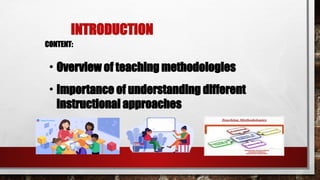
INTRODUCTION
CONTENT:
• Overview of teaching methodologies
• Importance of understanding different
instructional approaches
DIRECT TEACHING METHODOLOGY
Definition: Teacher-Centered Approach
Key Characteristics:
• Structured Lessons
• Clear Learning Objectives
• Frequent Assessment and Feedback
• Teacher Control of Learning Environment
The direct teaching methodology is a structured and teacher-led
approach where information is explicitly presented to students through lectures,
demonstrations, and guided practice. This method emphasizes clear, systematic
instruction and frequent assessment to ensure students understand and retain the
material.
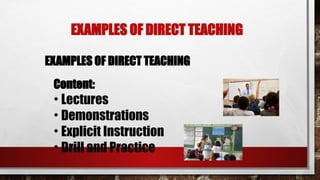
EXAMPLES OF DIRECT TEACHING
Content:
• Lectures
• Demonstrations
• Explicit Instruction
• Drill and Practice
ADVANTAGES OF DIRECT TEACHING
CONTENT:
•EFFICIENT FOR TEACHING SPECIFIC SKILLS AND
KNOWLEDGE
•PROVIDES CLEAR GUIDANCE AND EXPECTATIONS
•EFFECTIVE FOR LARGE GROUPS
•EASY TO MEASURE STUDENT PROGRESS
DISADVANTAGES OF DIRECT TEACHING
CONTENT:
• Can be less engaging for students
• Limited opportunities for critical thinking and
creativity
• May not address individual learning needs
INDIRECT TEACHING METHODOLOGY
Key Characteristics:
Encourages student exploration
Focus on process rather than product
Less structured, more flexible
Teacher as facilitator
Definition: Student-Centered Approach
The indirect teaching methodology involves facilitating learning by
guiding students to discover knowledge through activities, discussions, and
problem-solving rather than direct instruction. This approach encourages active
participation, critical thinking, and collaboration, making students more responsible
for their own learning.
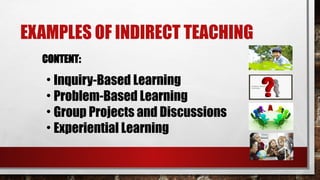
EXAMPLES OF INDIRECT TEACHING
CONTENT:
• Inquiry-Based Learning
• Problem-Based Learning
• Group Projects and Discussions
• Experiential Learning
ADVANTAGES OF INDIRECT TEACHING
CONTENT:
• Promotes critical thinking and problem-solving
• Encourages student engagement and
motivation
• Adapts to individual learning styles
• Fosters creativity and innovation
DISADVANTAGES OF INDIRECT TEACHING
CONTENT:
• Can be time-consuming
• Difficult to measure outcomes
• Requires well-trained teachers
• May be less effective for teaching
basic skills
COMPARING DIRECT AND INDIRECT TEACHING
CONTENT:
• Direct vs. Indirect: Key differences
• Situations where each method is most
effective
• Blended approaches: Combining both
methods for optimal learning
THANK YOU SO MUCH

Direct and Indirect Teaching Methodology.pptx

  • 1.
  • 2.
    DIRECT AND INDIRECTTEACHING METHODOLOGY • UNDERSTANDING DIFFERENT APPROACHES TO INSTRUCTION
  • 3.
    INTRODUCTION CONTENT: • Overview ofteaching methodologies • Importance of understanding different instructional approaches
  • 4.
    DIRECT TEACHING METHODOLOGY Definition:Teacher-Centered Approach Key Characteristics: • Structured Lessons • Clear Learning Objectives • Frequent Assessment and Feedback • Teacher Control of Learning Environment The direct teaching methodology is a structured and teacher-led approach where information is explicitly presented to students through lectures, demonstrations, and guided practice. This method emphasizes clear, systematic instruction and frequent assessment to ensure students understand and retain the material.
  • 5.
    EXAMPLES OF DIRECTTEACHING EXAMPLES OF DIRECT TEACHING Content: • Lectures • Demonstrations • Explicit Instruction • Drill and Practice
  • 6.
    ADVANTAGES OF DIRECTTEACHING CONTENT: •EFFICIENT FOR TEACHING SPECIFIC SKILLS AND KNOWLEDGE •PROVIDES CLEAR GUIDANCE AND EXPECTATIONS •EFFECTIVE FOR LARGE GROUPS •EASY TO MEASURE STUDENT PROGRESS
  • 7.
    DISADVANTAGES OF DIRECTTEACHING CONTENT: • Can be less engaging for students • Limited opportunities for critical thinking and creativity • May not address individual learning needs
  • 8.
    INDIRECT TEACHING METHODOLOGY KeyCharacteristics: Encourages student exploration Focus on process rather than product Less structured, more flexible Teacher as facilitator Definition: Student-Centered Approach The indirect teaching methodology involves facilitating learning by guiding students to discover knowledge through activities, discussions, and problem-solving rather than direct instruction. This approach encourages active participation, critical thinking, and collaboration, making students more responsible for their own learning.
  • 9.
    EXAMPLES OF INDIRECTTEACHING CONTENT: • Inquiry-Based Learning • Problem-Based Learning • Group Projects and Discussions • Experiential Learning
  • 10.
    ADVANTAGES OF INDIRECTTEACHING CONTENT: • Promotes critical thinking and problem-solving • Encourages student engagement and motivation • Adapts to individual learning styles • Fosters creativity and innovation
  • 11.
    DISADVANTAGES OF INDIRECTTEACHING CONTENT: • Can be time-consuming • Difficult to measure outcomes • Requires well-trained teachers • May be less effective for teaching basic skills
  • 12.
    COMPARING DIRECT ANDINDIRECT TEACHING CONTENT: • Direct vs. Indirect: Key differences • Situations where each method is most effective • Blended approaches: Combining both methods for optimal learning
  • 13.