DIR Model
Nurturing Emotional Interactions In
Special Students
What is the DIR Model?
■ The DIR model stands for Developmental, Individual Difference, and Relationship-
based model.
■ It is a framework for assessment and intervention for children with ASD (Autism
Spectrum Disorders).
■ First developed and popularized by Dr. Stanley Greenspan through his book
Intelligence and Adaptation (1979).
■ Schools utilize the DIR model to build a healthy foundation and promote all-round
development in special students.
Components of the DIR Model
■ Development- Defines the level of
emotional and intellectual functioning of
children with special needs.
■ Individual Difference- Describes the
unique, biological differences in children
that make them respond to touch,
sound and other sensations.
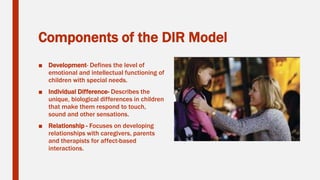
■ Relationship - Focuses on developing
relationships with caregivers, parents
and therapists for affect-based
interactions.
DIR Model
Schools
Some note-worthy functions of DIR model
schools are-
■ Exploiting the child’s interests and
emotions to create meaningful
interactions that help him/her master
communication and thinking.
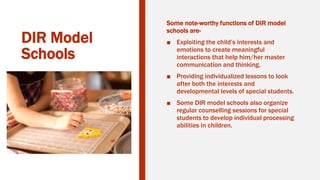
■ Providing individualized lessons to look
after both the interests and
developmental levels of special students.
■ Some DIR model schools also organize
regular counselling sessions for special
students to develop individual processing
abilities in children.
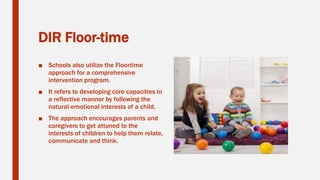
DIR Floor-time
■ Schools also utilize the Floortime
approach for a comprehensive
intervention program.
■ It refers to developing core capacities in
a reflective manner by following the
natural emotional interests of a child.
■ The approach encourages parents and
caregivers to get attuned to the
interests of children to help them relate,
communicate and think.
Thank You

DIR Model - Nurturing Emotional Interactions In Special Students

  • 1.
    DIR Model Nurturing EmotionalInteractions In Special Students
  • 2.
    What is theDIR Model? ■ The DIR model stands for Developmental, Individual Difference, and Relationship- based model. ■ It is a framework for assessment and intervention for children with ASD (Autism Spectrum Disorders). ■ First developed and popularized by Dr. Stanley Greenspan through his book Intelligence and Adaptation (1979). ■ Schools utilize the DIR model to build a healthy foundation and promote all-round development in special students.
  • 3.
    Components of theDIR Model ■ Development- Defines the level of emotional and intellectual functioning of children with special needs. ■ Individual Difference- Describes the unique, biological differences in children that make them respond to touch, sound and other sensations. ■ Relationship - Focuses on developing relationships with caregivers, parents and therapists for affect-based interactions.
  • 4.
    DIR Model Schools Some note-worthyfunctions of DIR model schools are- ■ Exploiting the child’s interests and emotions to create meaningful interactions that help him/her master communication and thinking. ■ Providing individualized lessons to look after both the interests and developmental levels of special students. ■ Some DIR model schools also organize regular counselling sessions for special students to develop individual processing abilities in children.
  • 5.
    DIR Floor-time ■ Schoolsalso utilize the Floortime approach for a comprehensive intervention program. ■ It refers to developing core capacities in a reflective manner by following the natural emotional interests of a child. ■ The approach encourages parents and caregivers to get attuned to the interests of children to help them relate, communicate and think.
  • 6.