AN EXPLORATION OF
BEST PRACTICES
SERVING PARENTS
AND CHILDREN 0-12
Kara DeCarlo
LIS 771
Best Practices for Identifying
Community Needs
1. Identify the culture/client group
2. Identify community stakeholders
3. Identify goals of client group
Determine Goals
Parents
 Face-to-face
interviews
 Focus Groups
 Paper Surveys
Children
 Paper Surveys
 Focus Groups
Community
Stakeholders
 Educators
 Pediatricians
 Social Workers
 Caregivers
 Parents
 Children
Community needs are fulfilled by
the programs, materials, services
that will help the group achieve
their goals.
“We need to model
existing behaviors,
attitudes and values and
then apply what we know
about future trends to
create experiences that
surprise and delight
consumers”
STEVE MCCALLION
Future trends for
Parents and Children
0-12
 Newest Curriculum
Standards
 Kindergarten
Readiness
Expectations
 Newest Child
Development
Findings
Needs of Parents and Children ages 0-
12
Access to materials and services
Information on community resources
Support of literacy (functional, informational, media)
Curriculum Support
Development of parenting skills
International Federation of Library
Associations and Institutions (IFLA)
Goals of children's services
• To facilitate the right of every child to
- information
- functional, visual, digital and media literacy
- cultural development
- lifelong learning
- creative programs in leisure time
• To provide children with open access to all resources and media
• To provide various activities for children, parents and caregivers
• To facilitate families' entry into the community
• To empower children and to advocate for their freedom and safety
• To encourage children to become confident and competent people
• To strive for a peaceful world.
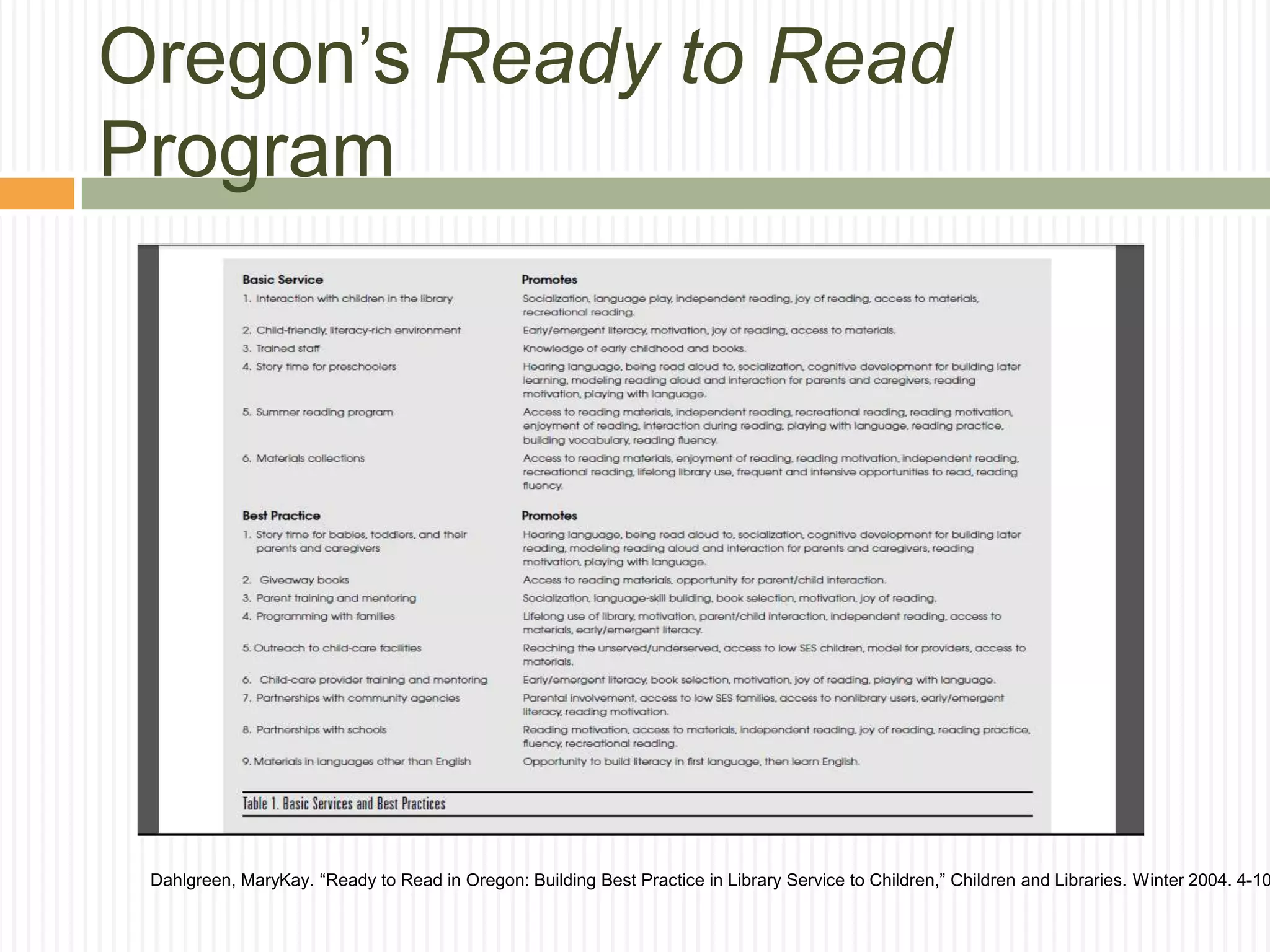
Oregon’s Ready to Read
Program
Dahlgreen, MaryKay. “Ready to Read in Oregon: Building Best Practice in Library Service to Children,” Children and Libraries. Winter 2004. 4-10
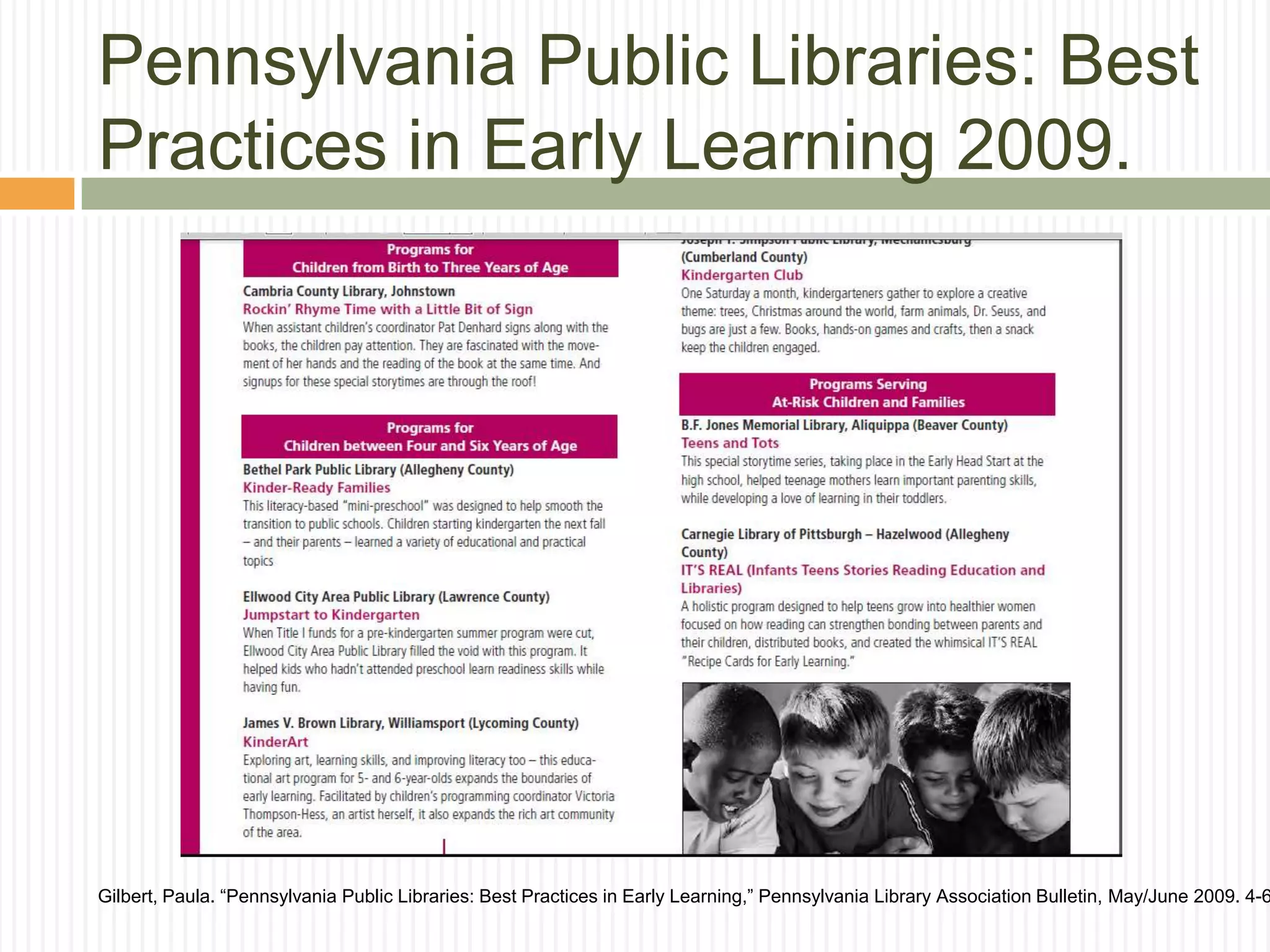
Pennsylvania Public Libraries: Best
Practices in Early Learning 2009.
Gilbert, Paula. “Pennsylvania Public Libraries: Best Practices in Early Learning,” Pennsylvania Library Association Bulletin, May/June 2009. 4-6
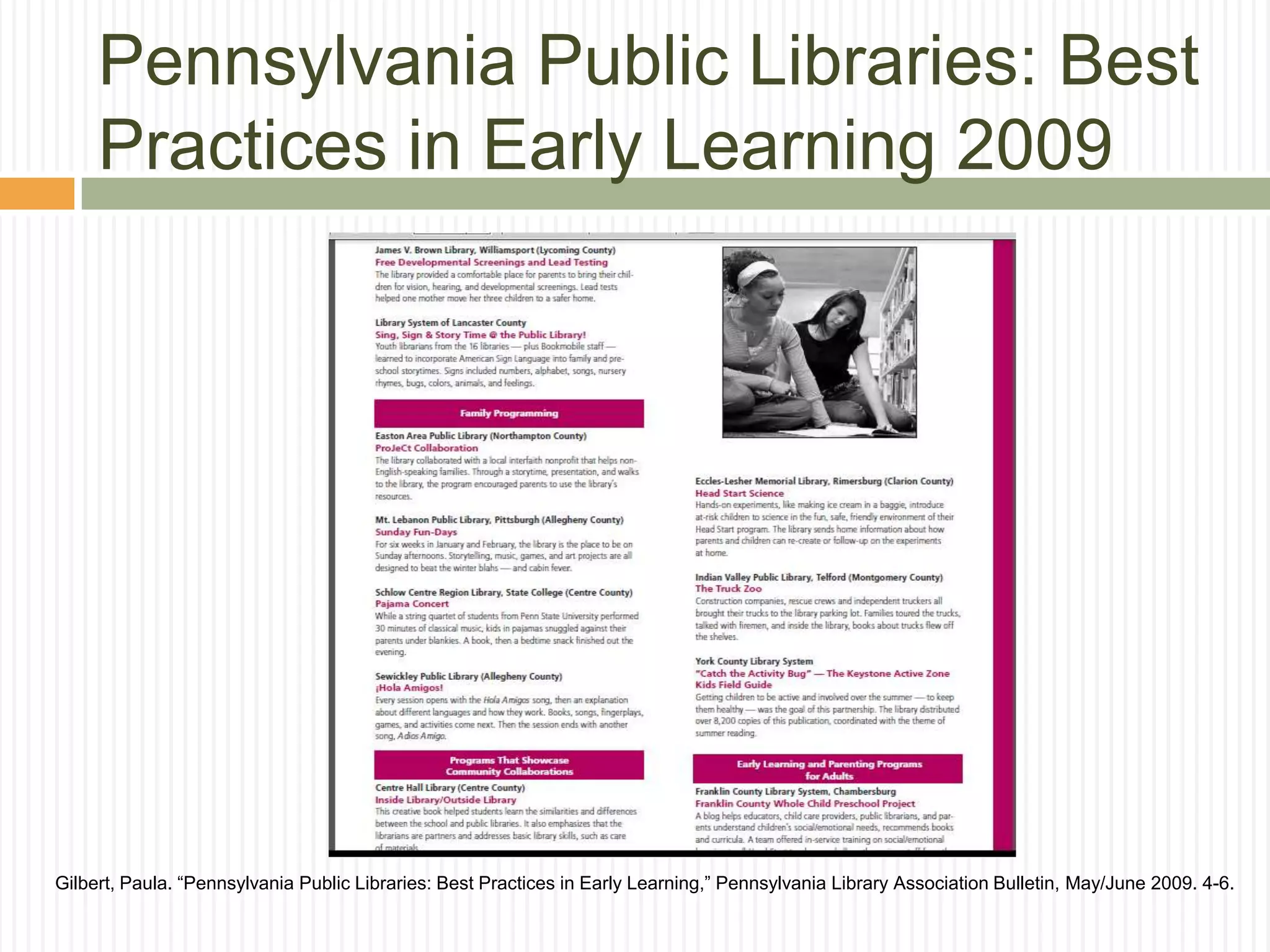
Pennsylvania Public Libraries: Best
Practices in Early Learning 2009
Gilbert, Paula. “Pennsylvania Public Libraries: Best Practices in Early Learning,” Pennsylvania Library Association Bulletin, May/June 2009. 4-6.
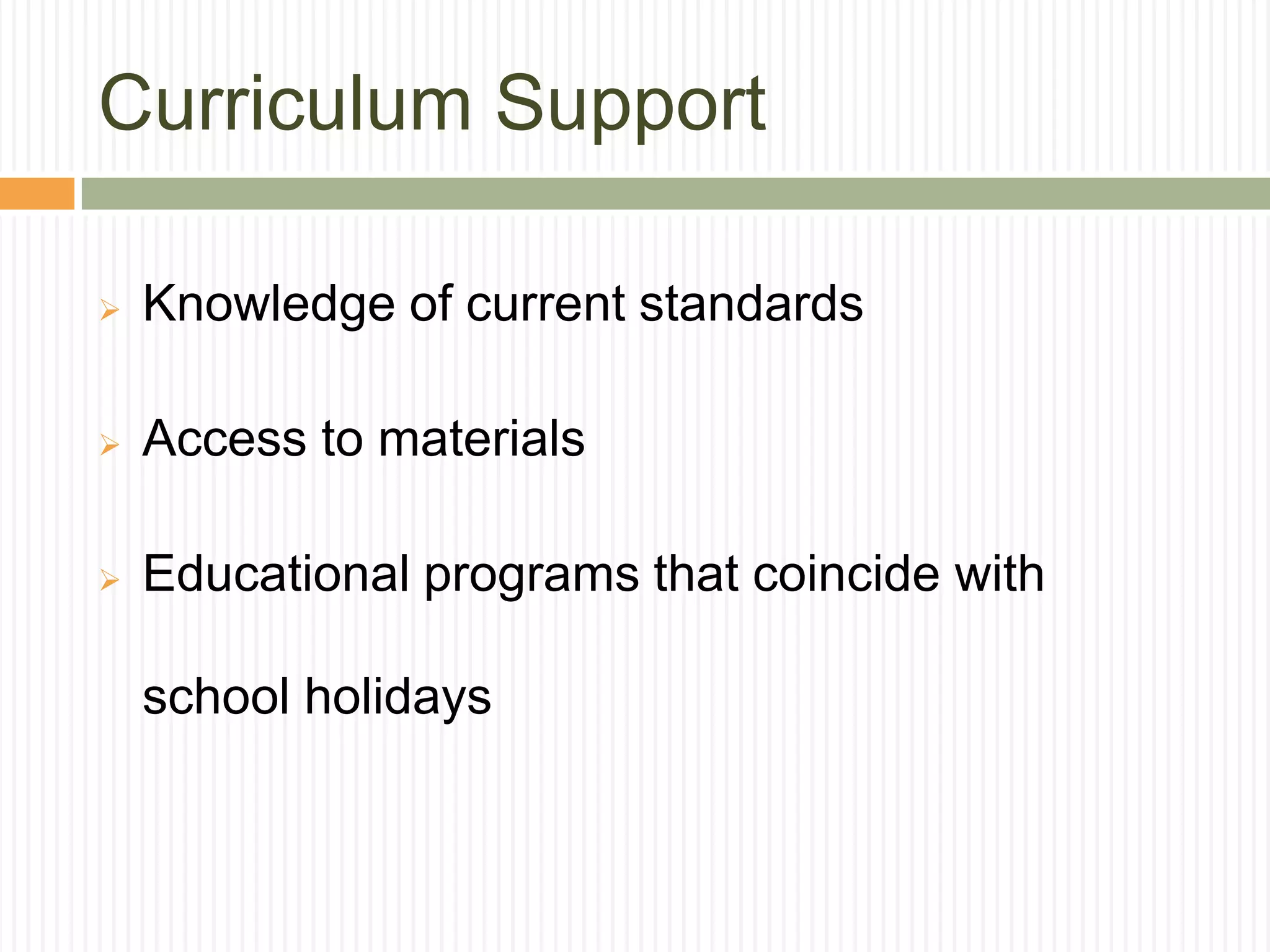
Curriculum Support
 Knowledge of current standards
 Access to materials
 Educational programs that coincide with
school holidays
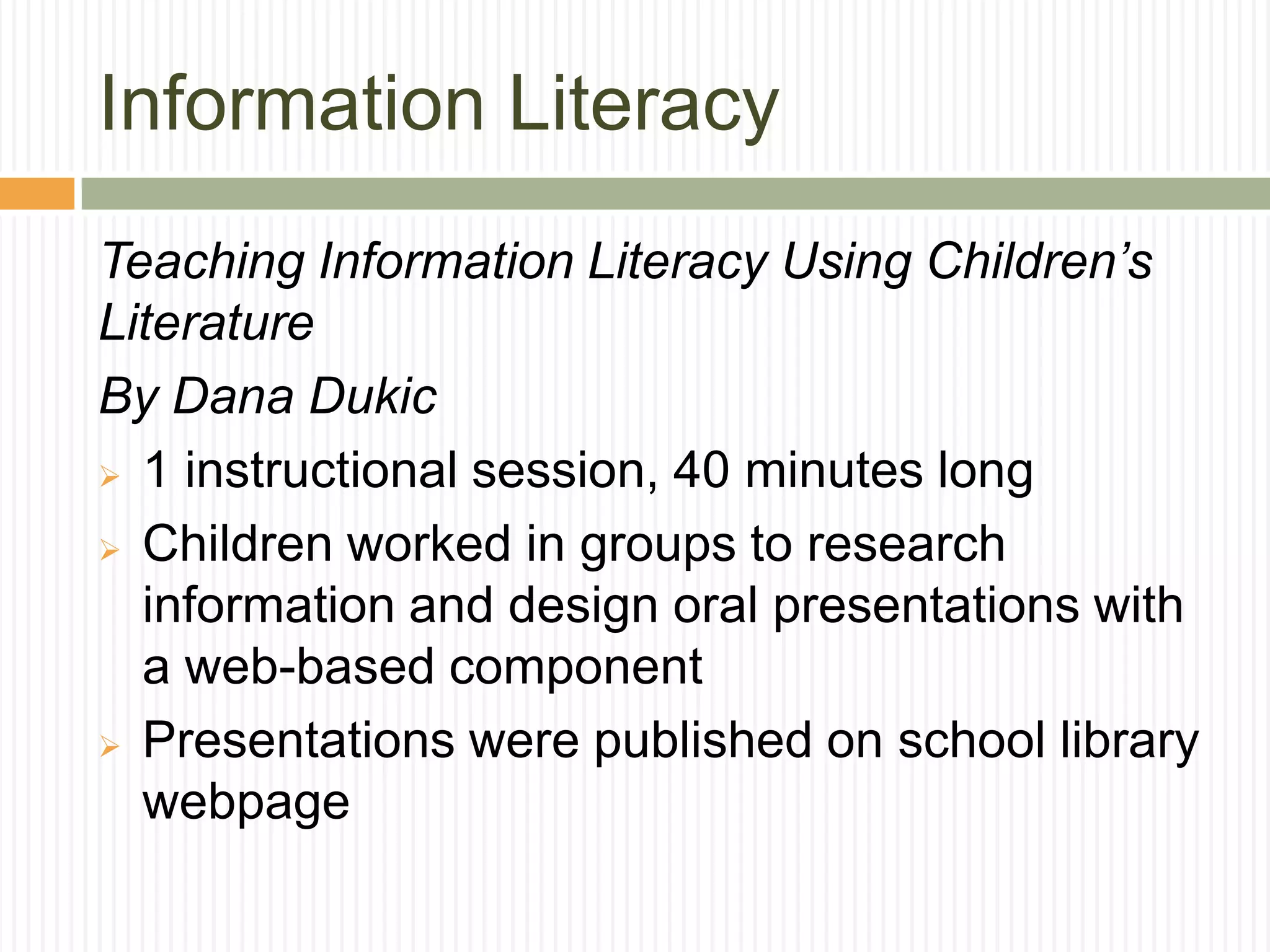
Information Literacy
Teaching Information Literacy Using Children’s
Literature
By Dana Dukic
 1 instructional session, 40 minutes long
 Children worked in groups to research
information and design oral presentations with
a web-based component
 Presentations were published on school library
webpage
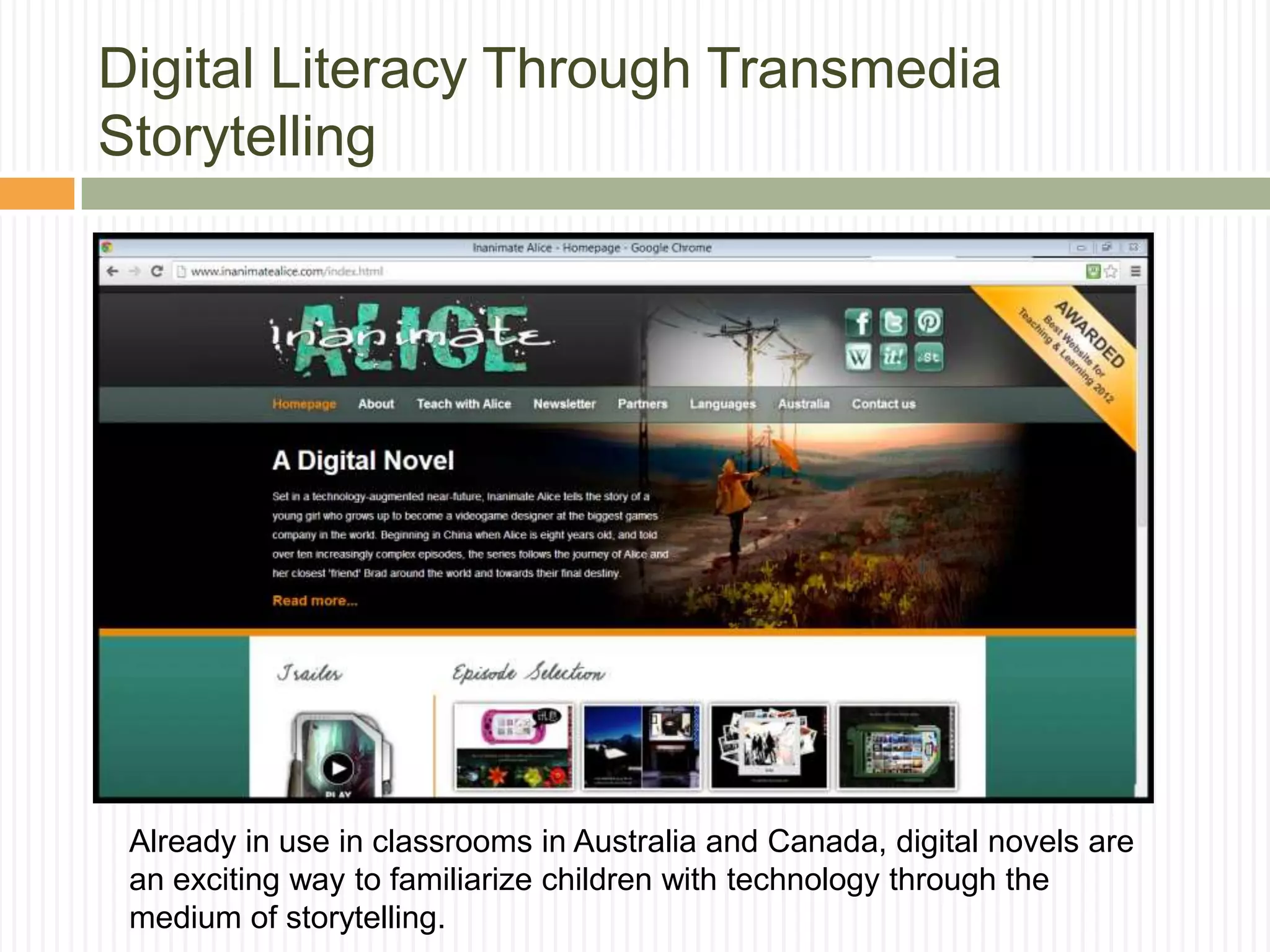
Digital Literacy Through Transmedia
Storytelling
Already in use in classrooms in Australia and Canada, digital novels are
an exciting way to familiarize children with technology through the
medium of storytelling.
Library as Family Resource
Center
Community
Resources
 Illinois Head Start
Association
 Cook County
Department of
Public Health
 Franklin County
Whole Child
Preschool Project
Library Resources
 Books/Programs on
parenting
 Storytimes to
support early
literacy
 Orientations for
students
 School-Library
collaboration
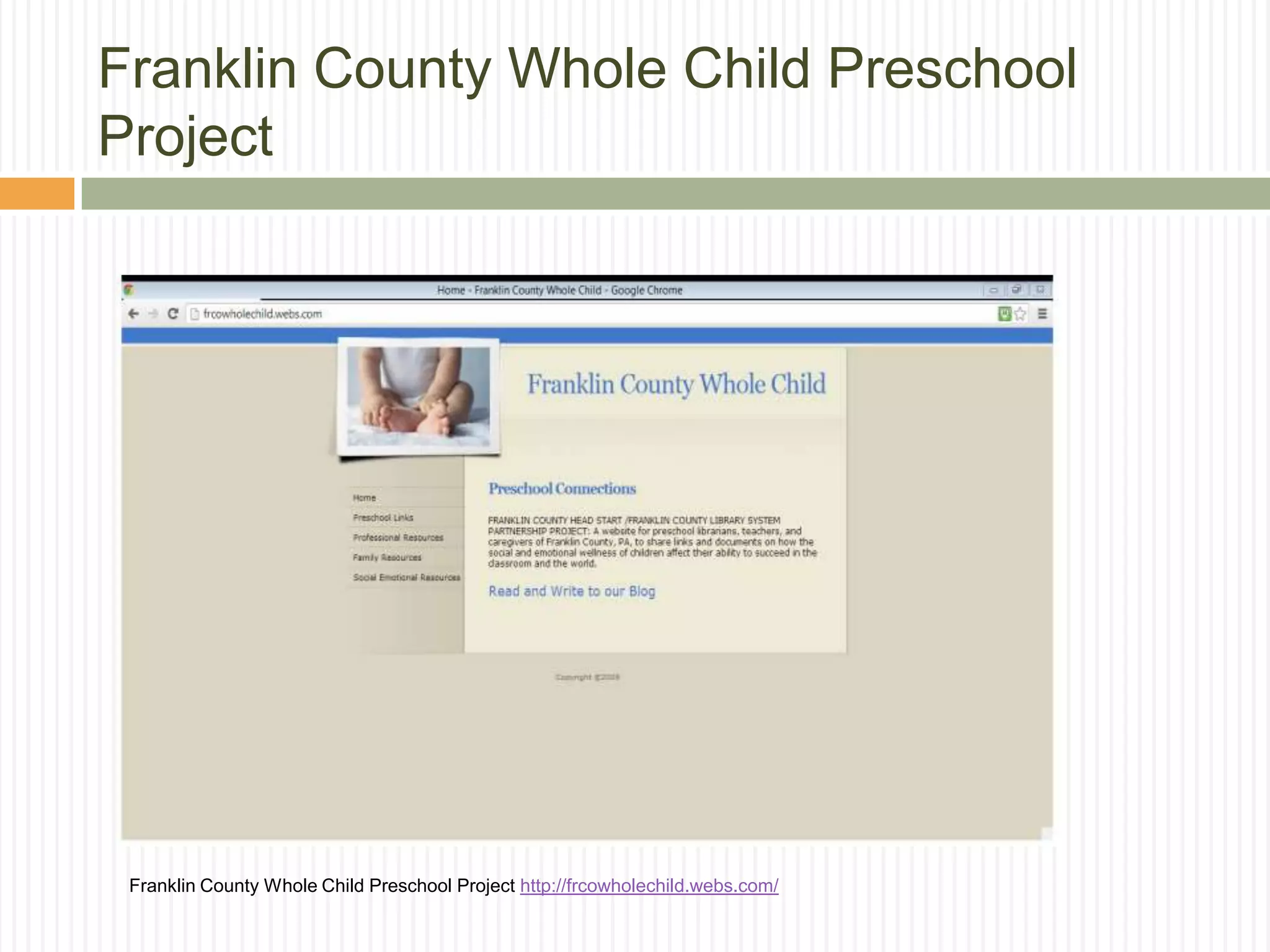
Franklin County Whole Child Preschool
Project
Franklin County Whole Child Preschool Project http://frcowholechild.webs.com/
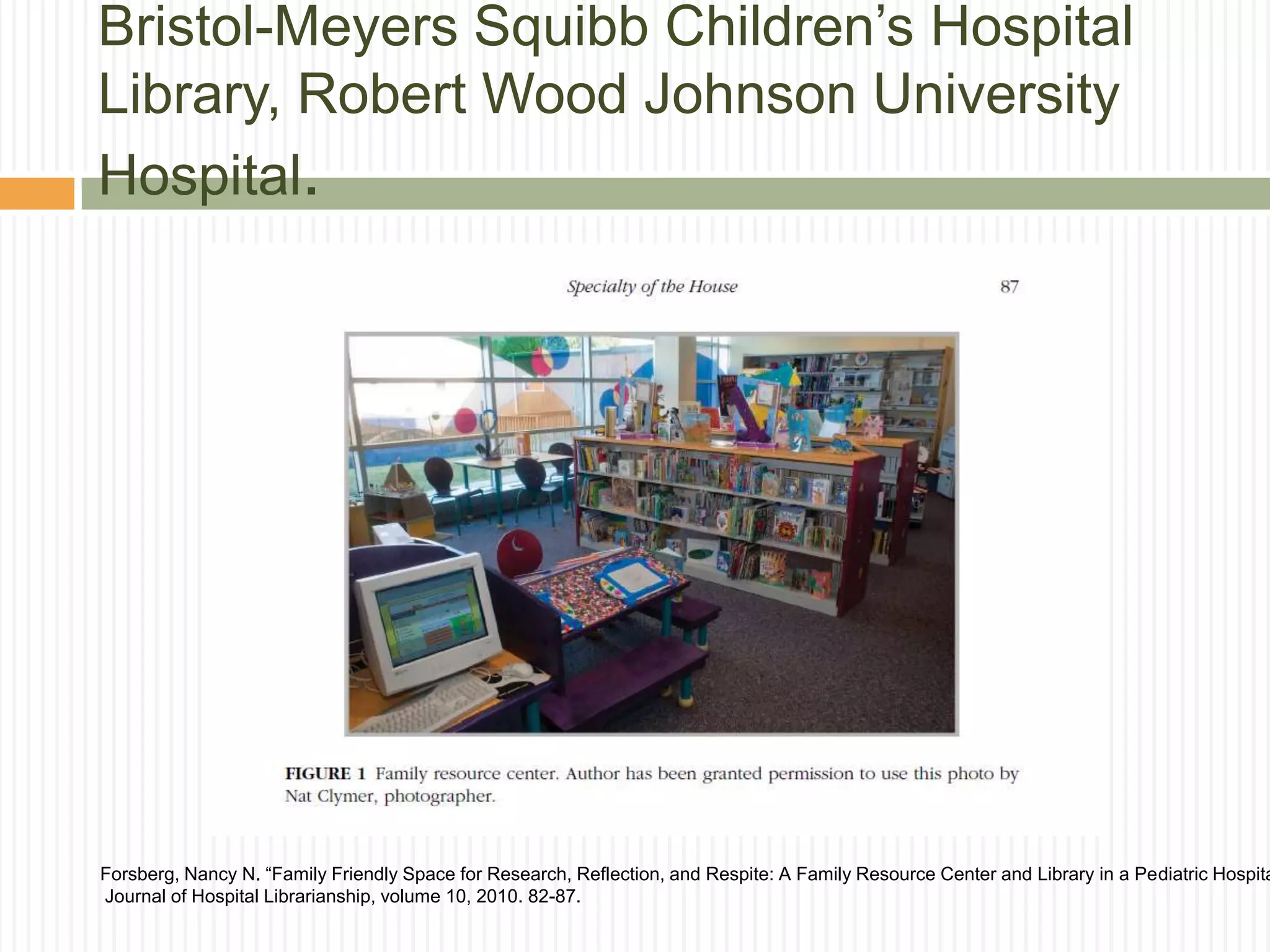
Bristol-Meyers Squibb Children’s Hospital
Library, Robert Wood Johnson University
Hospital.
Forsberg, Nancy N. “Family Friendly Space for Research, Reflection, and Respite: A Family Resource Center and Library in a Pediatric Hospita
Journal of Hospital Librarianship, volume 10, 2010. 82-87.
Conclusion
By familiarizing ourselves with the
goals of our client groups we can
determine their needs and be the
bridge to success.
Resources
Bon, Ingrid. “Best Practices of Children’s Library Services Around the World,” World Library and
Information Congress: 71th IFLA General Conference and Council Report, August 2005
Cook County Department of Health http://www.cookcountypublichealth.org/
Dahlgreen, MaryKay. “Ready to Read in Oregon: Building Best Practice in Library Service to
Children,” Children and Libraries. Winter 2004. 4-10
Druin, Allison. “What Children Can Teach Us: Developing Digital Libraries For Children With
Children.” The Library Quarterly, Volume 75, no. 1. 2005. 20-41.
Dukic, Dana. “Teaching Information Literacy Using Children’s Literature,” Access, June 2007. 21-26
Forsberg, Nancy N. “Family Friendly Space for Research, Reflection, and Respite: A Family
Resource Center and Library in a Pediatric Hospital Setting.” Journal of Hospital
Librarianship, volume 10, 2010. 82-87.
Franklin County Whole Child Preschool Project http://frcowholechild.webs.com/
Gilbert, Paula. “Pennsylvania Public Libraries: Best Practices in Early Learning,” Pennsylvania Library
Association Bulletin, May/June 2009. 4-6.
Illinois Head Start Association http://ilheadstart.org/
Indian Valley Public Library website https://sites.google.com/a/ivpl.org/school-age-
children/home/programs
Pullinger, Kate and Joseph, Chris. Inanimate Alice http://www.inanimatealice.com/index.html

An exploration of best practices in library service to parents and children 0-12

  • 1.
    AN EXPLORATION OF BESTPRACTICES SERVING PARENTS AND CHILDREN 0-12 Kara DeCarlo LIS 771
  • 2.
    Best Practices forIdentifying Community Needs 1. Identify the culture/client group 2. Identify community stakeholders 3. Identify goals of client group
  • 3.
    Determine Goals Parents  Face-to-face interviews Focus Groups  Paper Surveys Children  Paper Surveys  Focus Groups Community Stakeholders  Educators  Pediatricians  Social Workers  Caregivers  Parents  Children
  • 4.
    Community needs arefulfilled by the programs, materials, services that will help the group achieve their goals.
  • 5.
    “We need tomodel existing behaviors, attitudes and values and then apply what we know about future trends to create experiences that surprise and delight consumers” STEVE MCCALLION Future trends for Parents and Children 0-12  Newest Curriculum Standards  Kindergarten Readiness Expectations  Newest Child Development Findings
  • 6.
    Needs of Parentsand Children ages 0- 12 Access to materials and services Information on community resources Support of literacy (functional, informational, media) Curriculum Support Development of parenting skills
  • 7.
    International Federation ofLibrary Associations and Institutions (IFLA) Goals of children's services • To facilitate the right of every child to - information - functional, visual, digital and media literacy - cultural development - lifelong learning - creative programs in leisure time • To provide children with open access to all resources and media • To provide various activities for children, parents and caregivers • To facilitate families' entry into the community • To empower children and to advocate for their freedom and safety • To encourage children to become confident and competent people • To strive for a peaceful world.
  • 8.
    Oregon’s Ready toRead Program Dahlgreen, MaryKay. “Ready to Read in Oregon: Building Best Practice in Library Service to Children,” Children and Libraries. Winter 2004. 4-10
  • 9.
    Pennsylvania Public Libraries:Best Practices in Early Learning 2009. Gilbert, Paula. “Pennsylvania Public Libraries: Best Practices in Early Learning,” Pennsylvania Library Association Bulletin, May/June 2009. 4-6
  • 10.
    Pennsylvania Public Libraries:Best Practices in Early Learning 2009 Gilbert, Paula. “Pennsylvania Public Libraries: Best Practices in Early Learning,” Pennsylvania Library Association Bulletin, May/June 2009. 4-6.
  • 11.
    Curriculum Support  Knowledgeof current standards  Access to materials  Educational programs that coincide with school holidays
  • 12.
    Information Literacy Teaching InformationLiteracy Using Children’s Literature By Dana Dukic  1 instructional session, 40 minutes long  Children worked in groups to research information and design oral presentations with a web-based component  Presentations were published on school library webpage
  • 13.
    Digital Literacy ThroughTransmedia Storytelling Already in use in classrooms in Australia and Canada, digital novels are an exciting way to familiarize children with technology through the medium of storytelling.
  • 14.
    Library as FamilyResource Center Community Resources  Illinois Head Start Association  Cook County Department of Public Health  Franklin County Whole Child Preschool Project Library Resources  Books/Programs on parenting  Storytimes to support early literacy  Orientations for students  School-Library collaboration
  • 15.
    Franklin County WholeChild Preschool Project Franklin County Whole Child Preschool Project http://frcowholechild.webs.com/
  • 16.
    Bristol-Meyers Squibb Children’sHospital Library, Robert Wood Johnson University Hospital. Forsberg, Nancy N. “Family Friendly Space for Research, Reflection, and Respite: A Family Resource Center and Library in a Pediatric Hospita Journal of Hospital Librarianship, volume 10, 2010. 82-87.
  • 17.
    Conclusion By familiarizing ourselveswith the goals of our client groups we can determine their needs and be the bridge to success.
  • 19.
    Resources Bon, Ingrid. “BestPractices of Children’s Library Services Around the World,” World Library and Information Congress: 71th IFLA General Conference and Council Report, August 2005 Cook County Department of Health http://www.cookcountypublichealth.org/ Dahlgreen, MaryKay. “Ready to Read in Oregon: Building Best Practice in Library Service to Children,” Children and Libraries. Winter 2004. 4-10 Druin, Allison. “What Children Can Teach Us: Developing Digital Libraries For Children With Children.” The Library Quarterly, Volume 75, no. 1. 2005. 20-41. Dukic, Dana. “Teaching Information Literacy Using Children’s Literature,” Access, June 2007. 21-26 Forsberg, Nancy N. “Family Friendly Space for Research, Reflection, and Respite: A Family Resource Center and Library in a Pediatric Hospital Setting.” Journal of Hospital Librarianship, volume 10, 2010. 82-87. Franklin County Whole Child Preschool Project http://frcowholechild.webs.com/ Gilbert, Paula. “Pennsylvania Public Libraries: Best Practices in Early Learning,” Pennsylvania Library Association Bulletin, May/June 2009. 4-6. Illinois Head Start Association http://ilheadstart.org/ Indian Valley Public Library website https://sites.google.com/a/ivpl.org/school-age- children/home/programs Pullinger, Kate and Joseph, Chris. Inanimate Alice http://www.inanimatealice.com/index.html

Editor's Notes

  • #4 Beginning course details and/or books/materials needed for a class/project.
  • #13 A schedule design for optional periods of time/objectives.
  • #18 Conclusion to course, lecture, et al.