Intentions of this session
 To understand the concept of Digital Citizenship and how it
    relates to our context at Hillcrest Normal School.
   To review our policy and agreement documentation
    around Digital Citizenship
    To explore how we might promote Digital Citizenship
    across our school
   To explore how we might teach Digital Citizenship within
    classes
   To explore how we might engage whanau/family in
    supporting us in creating Digital Citizens.
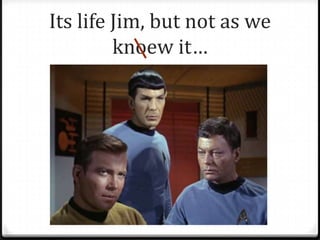
Its life Jim, but not as we
         knoew it…
Enter…

Digital Citizenship
Its about what people do
  online when no one is
 watching… and its much
broader than cyber safety.
What do you understand
  Digital Citizenship
    encompasses?

Place your ideas on the
      wallwisher
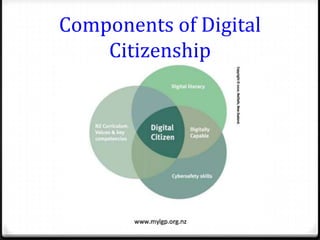
Components of Digital
    Citizenship
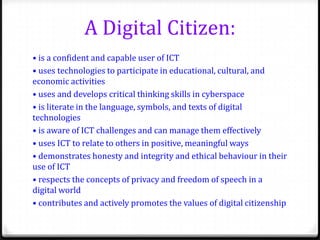
A Digital Citizen:
• is a confident and capable user of ICT
• uses technologies to participate in educational, cultural, and
economic activities
• uses and develops critical thinking skills in cyberspace
• is literate in the language, symbols, and texts of digital
technologies
• is aware of ICT challenges and can manage them effectively
• uses ICT to relate to others in positive, meaningful ways
• demonstrates honesty and integrity and ethical behaviour in their
use of ICT
• respects the concepts of privacy and freedom of speech in a
digital world
• contributes and actively promotes the values of digital citizenship
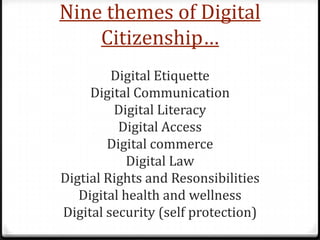
Nine themes of Digital
    Citizenship…
         Digital Etiquette
     Digital Communication
         Digital Literacy
          Digital Access
        Digital commerce
            Digital Law
Digtial Rights and Resonsibilities
   Digital health and wellness
Digital security (self protection)
An overview of strategic
direction from Netsafe:
       (reading)
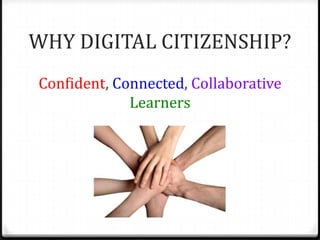
WHY DIGITAL CITIZENSHIP?
Confident, Connected, Collaborative
             Learners
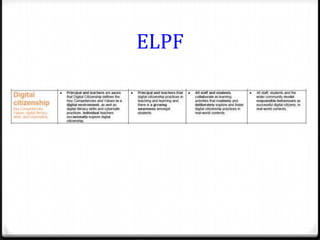
ELPF
Mentoring students to
   become digital citizens
includes addressing issues of
 respect and dignity, access
     and internet safety.
      It starts with you.
Vision, strategic intent,
protocols to model and
 demonstrate Digital
      Citizenship.
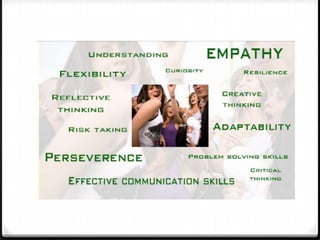
What do our school values look and
sound like when we (Teachers and
  Students) are showing digital
           citizenship?
         Caring - Atawhai
          Respect - Hono
          Curiosity-Nohi
        Confidence -Mana
      Creativity – Hangaru
         Perseverance-U
Use the etherpad to add your thoughts
How do the Key
Competencies link with these
         values?
http://ecompetencies.wikispace
          s.com/home
Lets have a look through our policy
  and agreement documentation.

  To what extent do they reflect the
   concept of Digital Citizenship?

         What do we need to:
                 Delete?
                 Start?
                Modify?
Netsafe are in the throws of
   creating a Values Based
  Acceptable Use Policy for
           schools.

http://www.mylgp.org.nz/gui
  de/362/-a-values-based-
    acceptable-use-policy/
Netsafe resources on Digital
Citizenship and Cyber Safety
How is this going to be
 implemented/supported in
  the way we do things here
    schoolwide at Hillcrest
       Normal School?
Eg: How will it be fostered, supported and acknowledged?
How Eastern Bay Auckland
 Schools approached it…
What will it look and sound
 like at classroom level?
What do we currently have in
  place to support this?

 Modifications? Additions?

  How are we going to get
          there?
http://wearedigitalcitizens.wikispaces.com/home
5 tips for creating digital
  citizenship in schools
         (reading)
There is also a group of NZ
    educators developing a
     Curriculum for Digital
Citizenship… join them on the
             VLN!
Tki also has information and
         resources…
How do and might we engage
   whanau and family in
supporting their children to
   be responsible Digital
         Citizens?
Digital Citizenship at Home-
Modules for whanau/parents.
In summary
 Policy and Agreements – next step actions?
 Digital Citizen profile – next step actions?
 Schoolwide implementation– next step
  actions?
 Classroom practices– next step actions?
 Whanau engagement– next step actions?

Digital citizenship

  • 2.
    Intentions of thissession  To understand the concept of Digital Citizenship and how it relates to our context at Hillcrest Normal School.  To review our policy and agreement documentation around Digital Citizenship  To explore how we might promote Digital Citizenship across our school  To explore how we might teach Digital Citizenship within classes  To explore how we might engage whanau/family in supporting us in creating Digital Citizens.
  • 3.
    Its life Jim,but not as we knoew it…
  • 8.
  • 9.
    Its about whatpeople do online when no one is watching… and its much broader than cyber safety.
  • 10.
    What do youunderstand Digital Citizenship encompasses? Place your ideas on the wallwisher
  • 14.
  • 15.
    A Digital Citizen: •is a confident and capable user of ICT • uses technologies to participate in educational, cultural, and economic activities • uses and develops critical thinking skills in cyberspace • is literate in the language, symbols, and texts of digital technologies • is aware of ICT challenges and can manage them effectively • uses ICT to relate to others in positive, meaningful ways • demonstrates honesty and integrity and ethical behaviour in their use of ICT • respects the concepts of privacy and freedom of speech in a digital world • contributes and actively promotes the values of digital citizenship
  • 17.
    Nine themes ofDigital Citizenship… Digital Etiquette Digital Communication Digital Literacy Digital Access Digital commerce Digital Law Digtial Rights and Resonsibilities Digital health and wellness Digital security (self protection)
  • 18.
    An overview ofstrategic direction from Netsafe: (reading)
  • 19.
    WHY DIGITAL CITIZENSHIP? Confident,Connected, Collaborative Learners
  • 21.
  • 26.
    Mentoring students to become digital citizens includes addressing issues of respect and dignity, access and internet safety. It starts with you.
  • 27.
    Vision, strategic intent, protocolsto model and demonstrate Digital Citizenship.
  • 28.
    What do ourschool values look and sound like when we (Teachers and Students) are showing digital citizenship? Caring - Atawhai Respect - Hono Curiosity-Nohi Confidence -Mana Creativity – Hangaru Perseverance-U Use the etherpad to add your thoughts
  • 29.
    How do theKey Competencies link with these values?
  • 31.
  • 32.
    Lets have alook through our policy and agreement documentation. To what extent do they reflect the concept of Digital Citizenship? What do we need to: Delete? Start? Modify?
  • 33.
    Netsafe are inthe throws of creating a Values Based Acceptable Use Policy for schools. http://www.mylgp.org.nz/gui de/362/-a-values-based- acceptable-use-policy/
  • 34.
    Netsafe resources onDigital Citizenship and Cyber Safety
  • 35.
    How is thisgoing to be implemented/supported in the way we do things here schoolwide at Hillcrest Normal School? Eg: How will it be fostered, supported and acknowledged?
  • 36.
    How Eastern BayAuckland Schools approached it…
  • 37.
    What will itlook and sound like at classroom level?
  • 38.
    What do wecurrently have in place to support this? Modifications? Additions? How are we going to get there?
  • 39.
  • 40.
    5 tips forcreating digital citizenship in schools (reading)
  • 41.
    There is alsoa group of NZ educators developing a Curriculum for Digital Citizenship… join them on the VLN!
  • 42.
    Tki also hasinformation and resources…
  • 43.
    How do andmight we engage whanau and family in supporting their children to be responsible Digital Citizens?
  • 45.
    Digital Citizenship atHome- Modules for whanau/parents.
  • 46.
    In summary  Policyand Agreements – next step actions?  Digital Citizen profile – next step actions?  Schoolwide implementation– next step actions?  Classroom practices– next step actions?  Whanau engagement– next step actions?

Editor's Notes

  • #29 Etherpad and use bus stop activity THEY DON’T MOVE, JUST PASS BUS STOP AROUIND