DIGITAL ASSETS

PROTECTING FOR LIFE
David Iscove!
Asset Management Consultant!
About globaledit
Globaledit is the online SaaS platform that empowers
creative professionals to manage visual production at
scale.!
CAPTURE. REVIEW. APPROVE. MARKUP. SHARE.
ARCHIVE. All within globaledit.!
www.globaledit.com!
Overview
•  Rights Management via Metadata!
•  Macro vs. Micro Security!
•  DAM vs. Storage Repository!
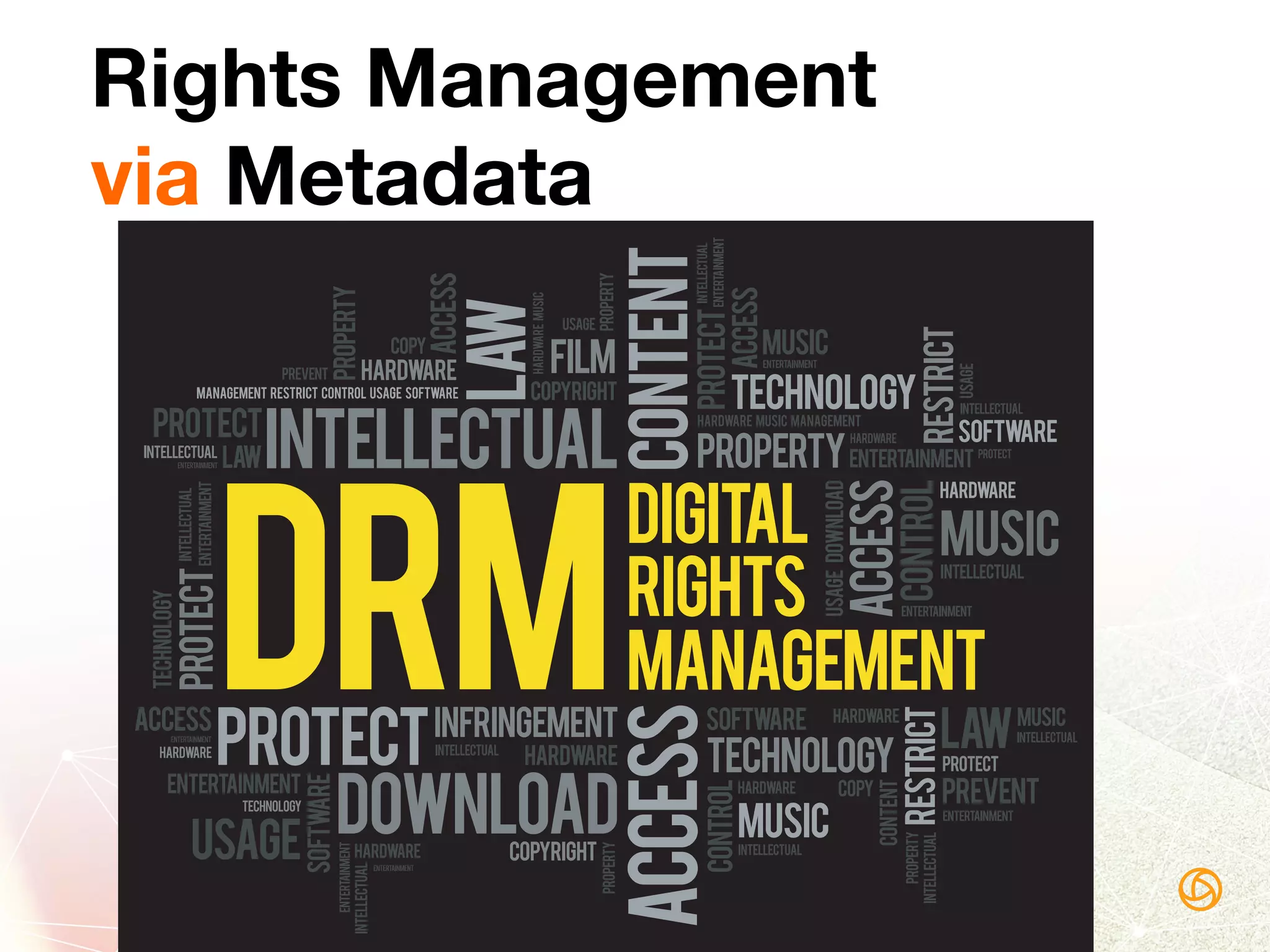
Rights Management
via Metadata
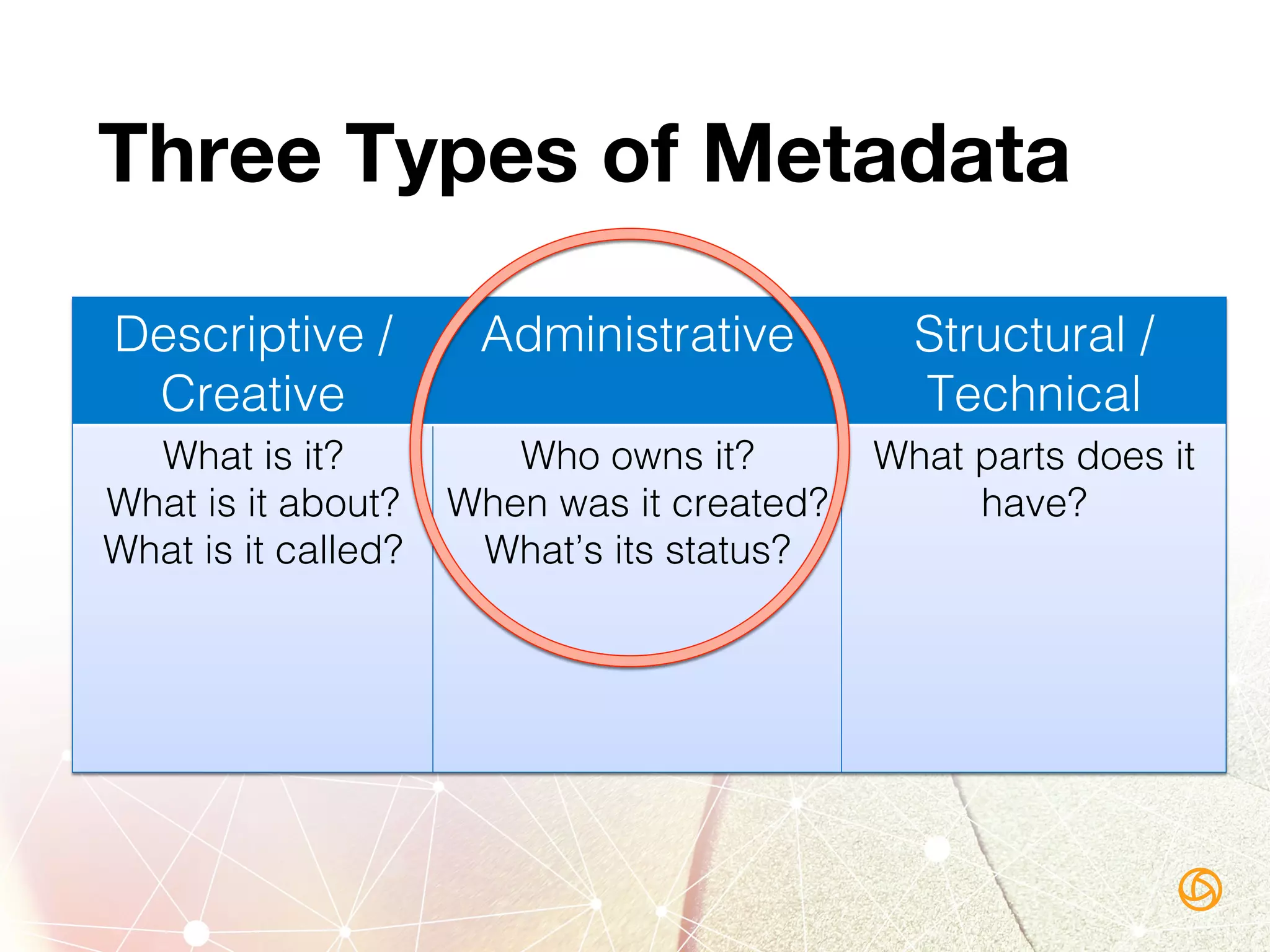
Three Types of Metadata
Descriptive /
Creative!
Administrative! Structural /
Technical!
What is it?!
What is it about?!
What is it called?!
Who owns it?!
When was it created?!
What’s its status?!
What parts does it
have?!
Rights Protection
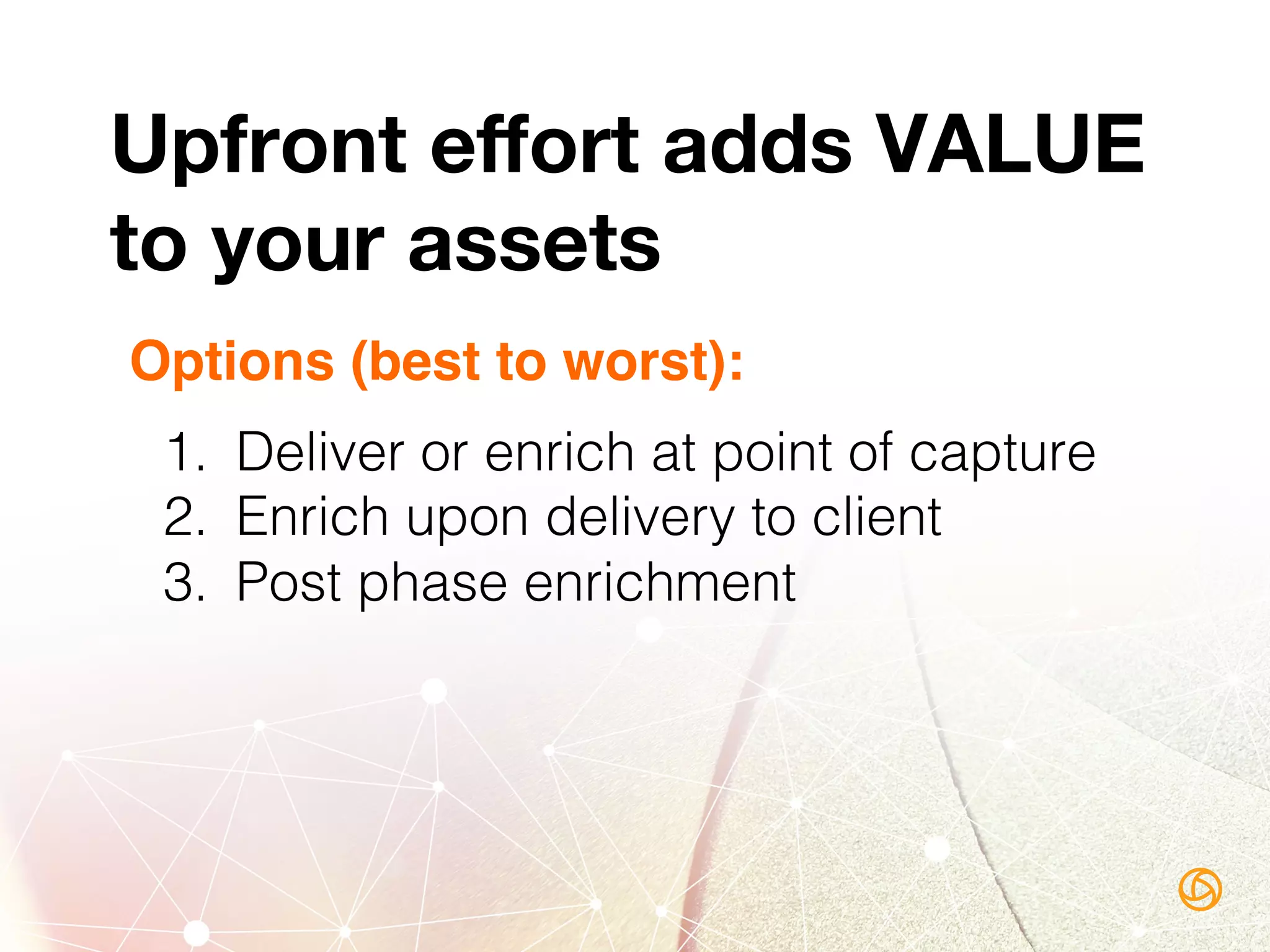
Options (best to worst):
1.  Deliver or enrich at point of capture!
2.  Enrich upon delivery to client!
3.  Post phase enrichment!
!
!
!
Upfront effort adds VALUE

to your assets
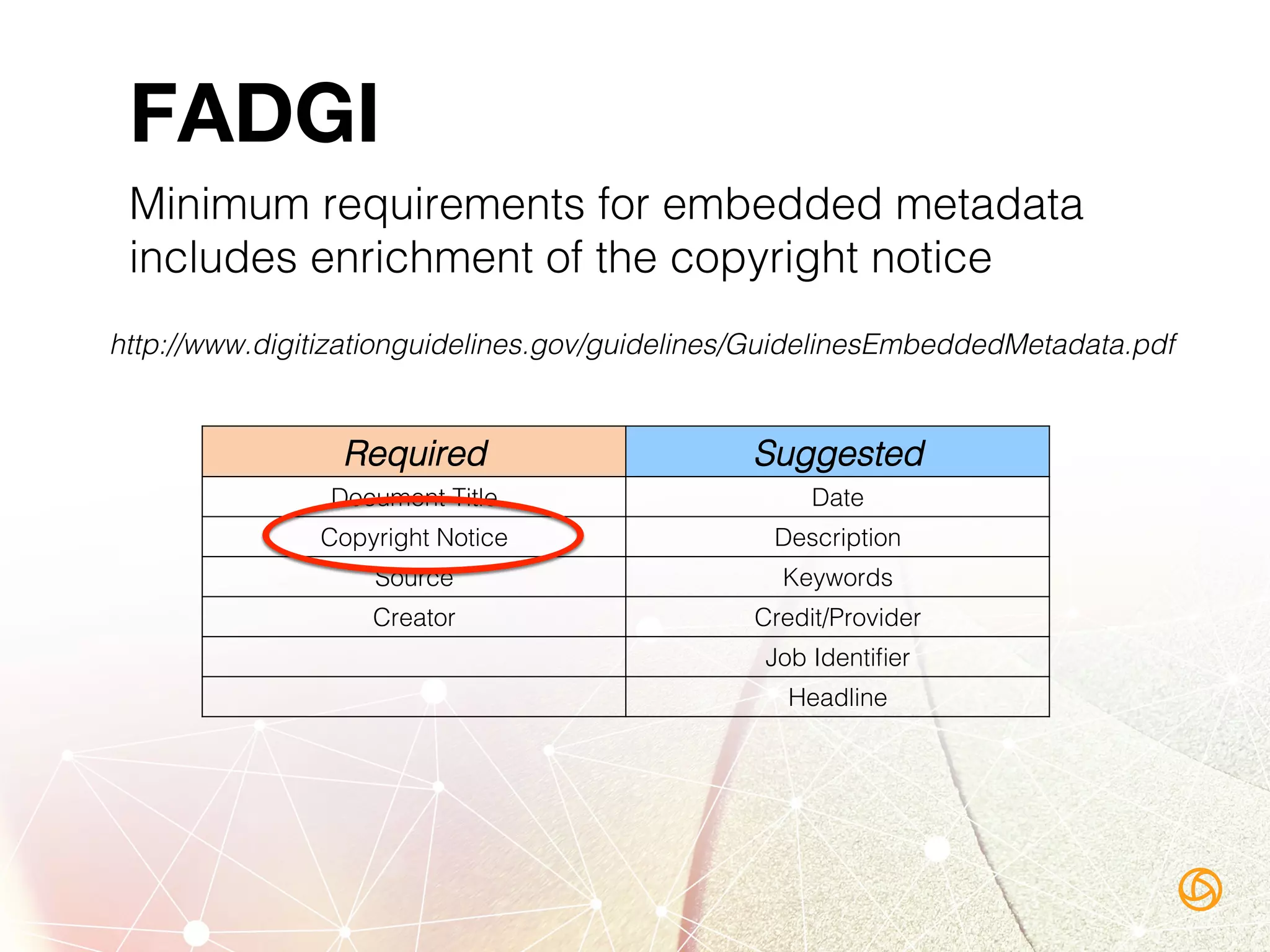
http://www.digitizationguidelines.gov/guidelines/GuidelinesEmbeddedMetadata.pdf!
!
!
!
!
Required! Suggested!
Document Title! Date!
Copyright Notice! Description!
Source! Keywords!
Creator! Credit/Provider!
Job Identifier!
Headline!
FADGI
Minimum requirements for embedded metadata
includes enrichment of the copyright notice!
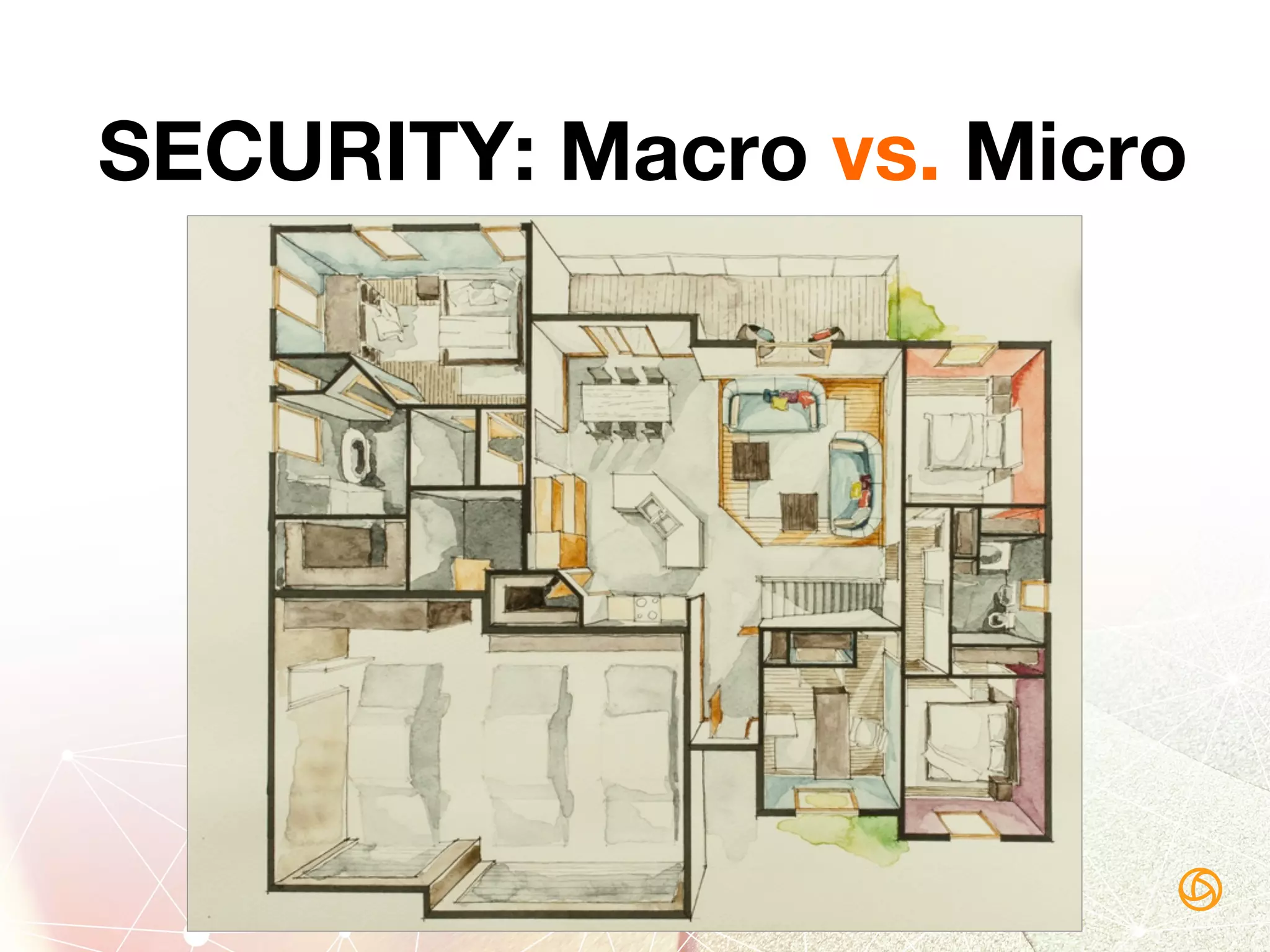
SECURITY: Macro vs. Micro
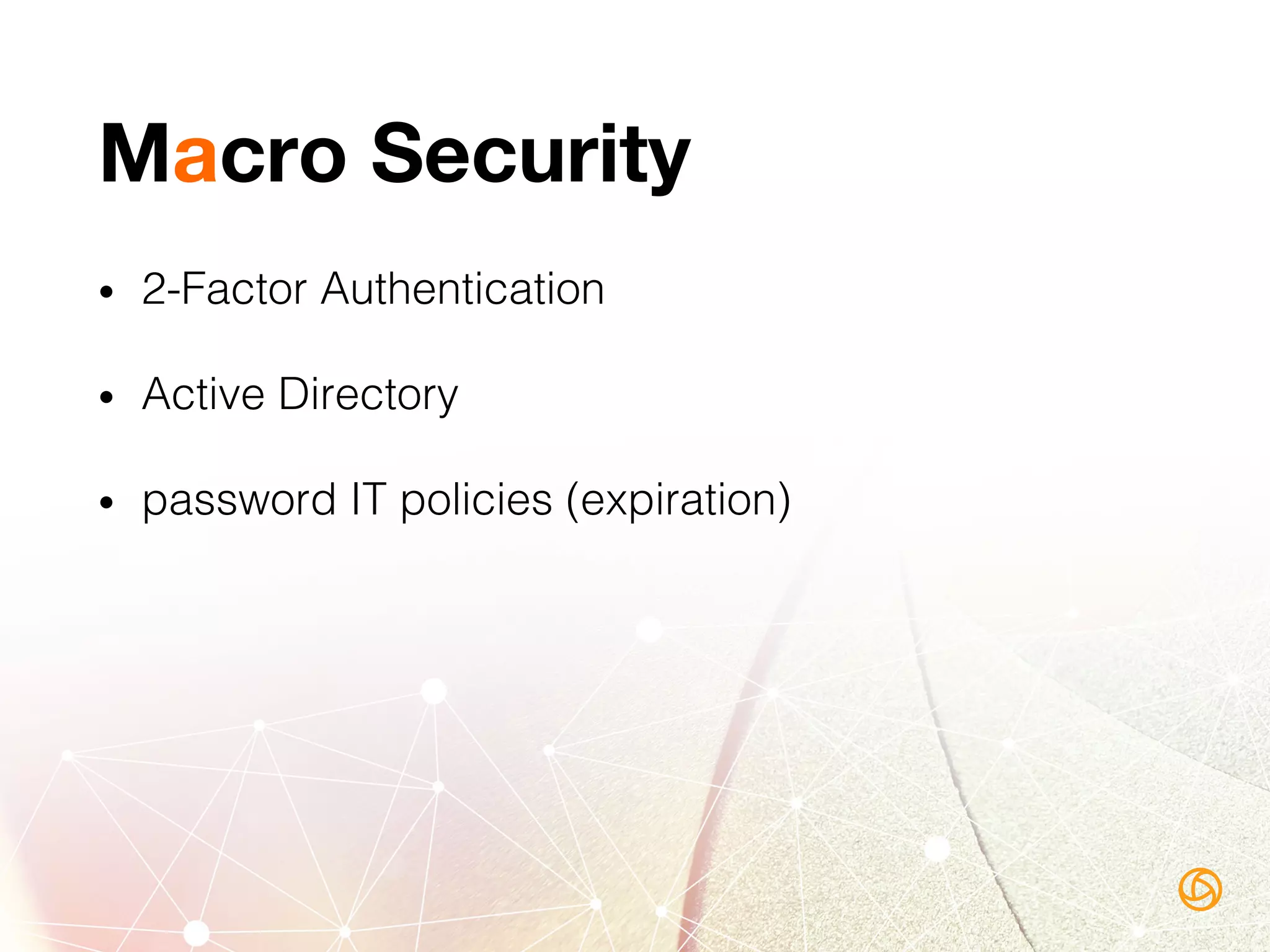
Macro Security
•  2-Factor Authentication!
•  Active Directory!
•  password IT policies (expiration)!
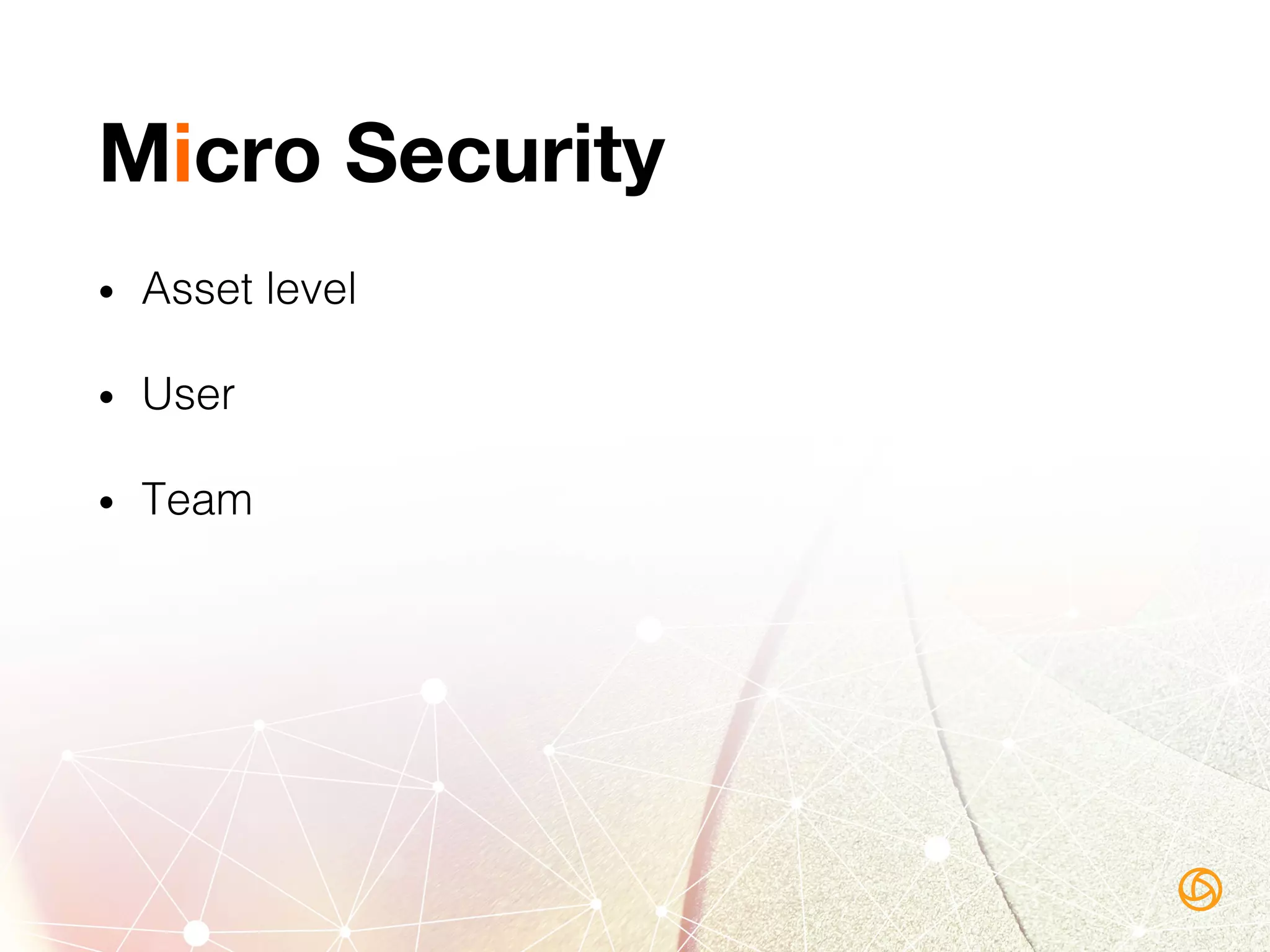
Micro Security
•  Asset level!
•  User!
•  Team!
!
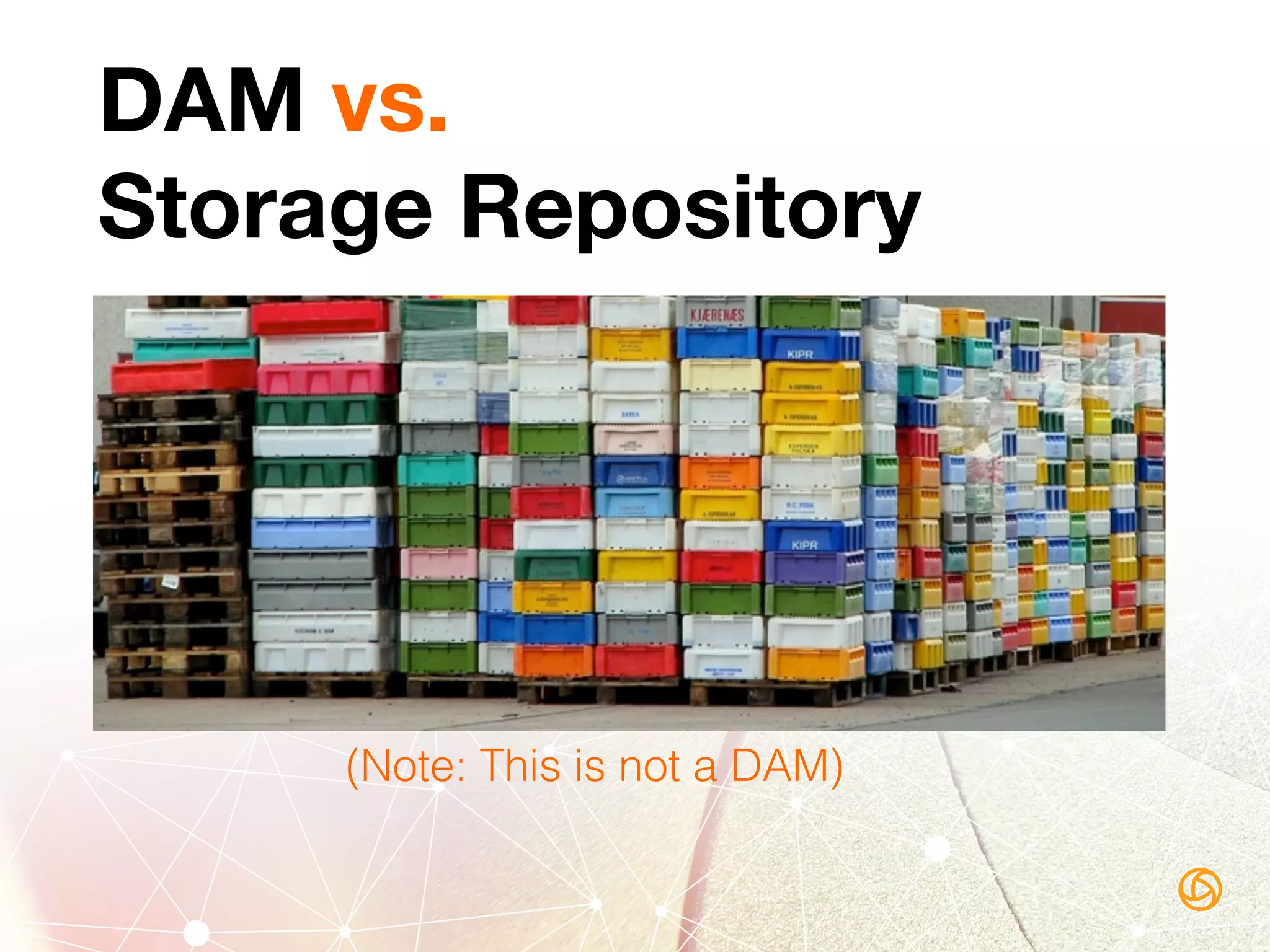
DAM vs. 

Storage Repository
(Note: This is not a DAM)!
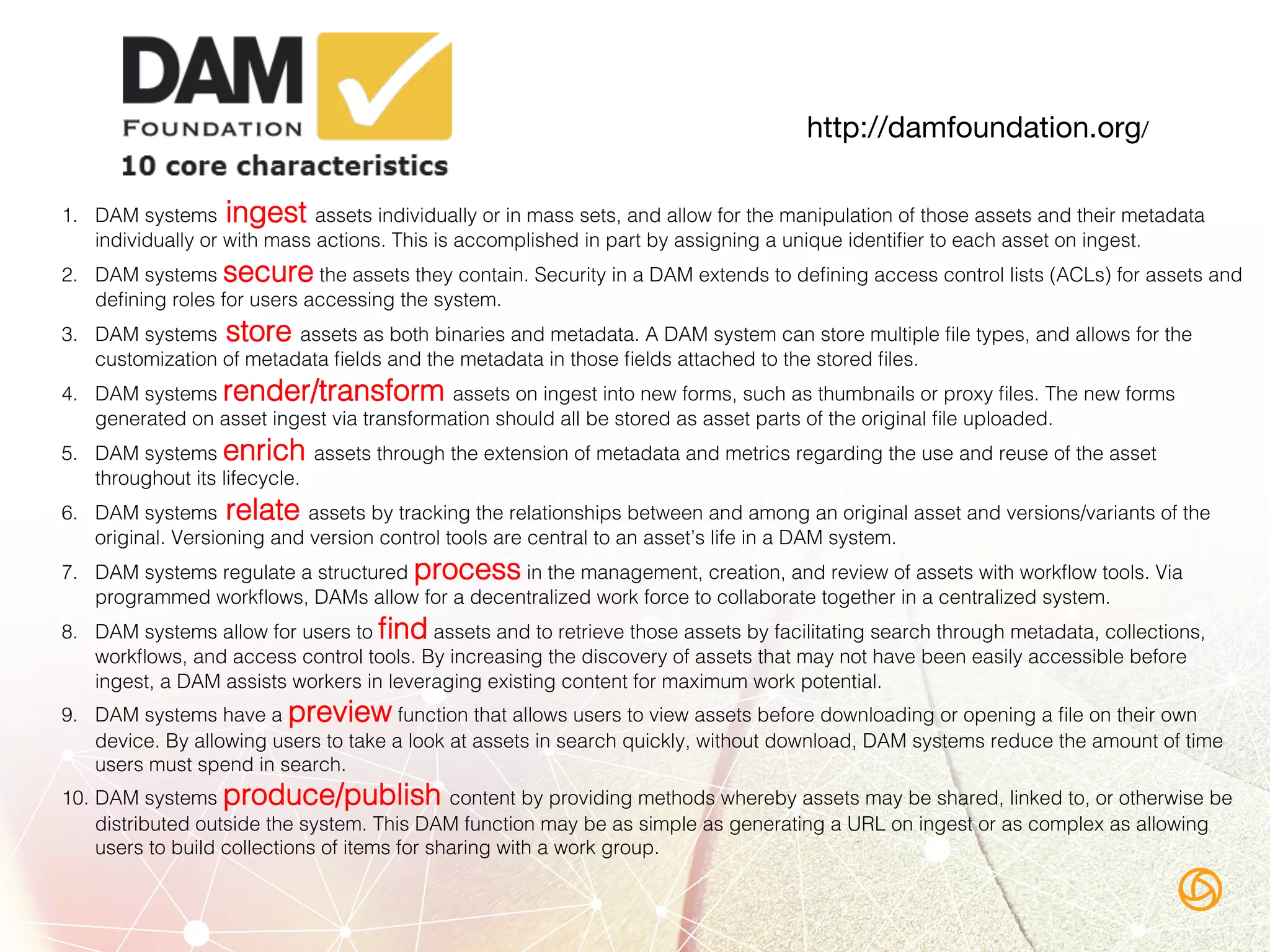
1.  DAM systems ingest assets individually or in mass sets, and allow for the manipulation of those assets and their metadata
individually or with mass actions. This is accomplished in part by assigning a unique identifier to each asset on ingest.!
2.  DAM systems secure the assets they contain. Security in a DAM extends to defining access control lists (ACLs) for assets and
defining roles for users accessing the system.!
3.  DAM systems store assets as both binaries and metadata. A DAM system can store multiple file types, and allows for the
customization of metadata fields and the metadata in those fields attached to the stored files.!
4.  DAM systems render/transform assets on ingest into new forms, such as thumbnails or proxy files. The new forms
generated on asset ingest via transformation should all be stored as asset parts of the original file uploaded.!
5.  DAM systems enrich assets through the extension of metadata and metrics regarding the use and reuse of the asset
throughout its lifecycle.!
6.  DAM systems relate assets by tracking the relationships between and among an original asset and versions/variants of the
original. Versioning and version control tools are central to an asset’s life in a DAM system.!
7.  DAM systems regulate a structured process in the management, creation, and review of assets with workflow tools. Via
programmed workflows, DAMs allow for a decentralized work force to collaborate together in a centralized system.!
8.  DAM systems allow for users to find assets and to retrieve those assets by facilitating search through metadata, collections,
workflows, and access control tools. By increasing the discovery of assets that may not have been easily accessible before
ingest, a DAM assists workers in leveraging existing content for maximum work potential.!
9.  DAM systems have a preview function that allows users to view assets before downloading or opening a file on their own
device. By allowing users to take a look at assets in search quickly, without download, DAM systems reduce the amount of time
users must spend in search.!
10.  DAM systems produce/publish content by providing methods whereby assets may be shared, linked to, or otherwise be
distributed outside the system. This DAM function may be as simple as generating a URL on ingest or as complex as allowing
users to build collections of items for sharing with a work group.!
http://damfoundation.org/
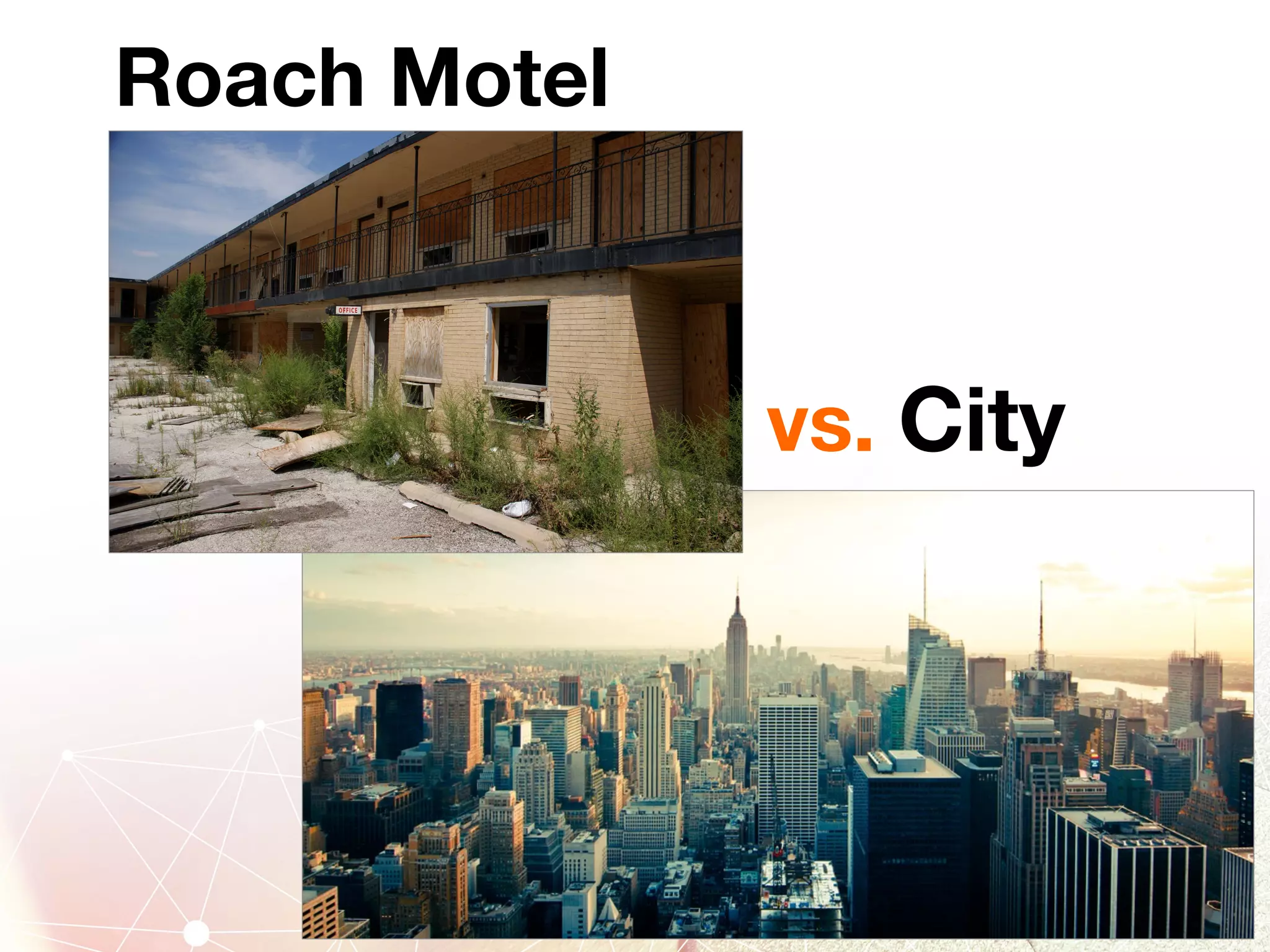
Roach Motel
vs. City
Thank you!

Digital Assets: Protecting for Life -- Creative Operations Essentials

  • 1.
    DIGITAL ASSETS
 PROTECTING FORLIFE David Iscove! Asset Management Consultant!
  • 3.
    About globaledit Globaledit isthe online SaaS platform that empowers creative professionals to manage visual production at scale.! CAPTURE. REVIEW. APPROVE. MARKUP. SHARE. ARCHIVE. All within globaledit.! www.globaledit.com!
  • 4.
    Overview •  Rights Managementvia Metadata! •  Macro vs. Micro Security! •  DAM vs. Storage Repository!
  • 5.
  • 6.
    Three Types ofMetadata Descriptive / Creative! Administrative! Structural / Technical! What is it?! What is it about?! What is it called?! Who owns it?! When was it created?! What’s its status?! What parts does it have?!
  • 7.
  • 8.
    Options (best toworst): 1.  Deliver or enrich at point of capture! 2.  Enrich upon delivery to client! 3.  Post phase enrichment! ! ! ! Upfront effort adds VALUE
 to your assets
  • 9.
    http://www.digitizationguidelines.gov/guidelines/GuidelinesEmbeddedMetadata.pdf! ! ! ! ! Required! Suggested! Document Title!Date! Copyright Notice! Description! Source! Keywords! Creator! Credit/Provider! Job Identifier! Headline! FADGI Minimum requirements for embedded metadata includes enrichment of the copyright notice!
  • 10.
  • 11.
    Macro Security •  2-FactorAuthentication! •  Active Directory! •  password IT policies (expiration)!
  • 12.
    Micro Security •  Assetlevel! •  User! •  Team! !
  • 13.
    DAM vs. 
 StorageRepository (Note: This is not a DAM)!
  • 14.
    1.  DAM systemsingest assets individually or in mass sets, and allow for the manipulation of those assets and their metadata individually or with mass actions. This is accomplished in part by assigning a unique identifier to each asset on ingest.! 2.  DAM systems secure the assets they contain. Security in a DAM extends to defining access control lists (ACLs) for assets and defining roles for users accessing the system.! 3.  DAM systems store assets as both binaries and metadata. A DAM system can store multiple file types, and allows for the customization of metadata fields and the metadata in those fields attached to the stored files.! 4.  DAM systems render/transform assets on ingest into new forms, such as thumbnails or proxy files. The new forms generated on asset ingest via transformation should all be stored as asset parts of the original file uploaded.! 5.  DAM systems enrich assets through the extension of metadata and metrics regarding the use and reuse of the asset throughout its lifecycle.! 6.  DAM systems relate assets by tracking the relationships between and among an original asset and versions/variants of the original. Versioning and version control tools are central to an asset’s life in a DAM system.! 7.  DAM systems regulate a structured process in the management, creation, and review of assets with workflow tools. Via programmed workflows, DAMs allow for a decentralized work force to collaborate together in a centralized system.! 8.  DAM systems allow for users to find assets and to retrieve those assets by facilitating search through metadata, collections, workflows, and access control tools. By increasing the discovery of assets that may not have been easily accessible before ingest, a DAM assists workers in leveraging existing content for maximum work potential.! 9.  DAM systems have a preview function that allows users to view assets before downloading or opening a file on their own device. By allowing users to take a look at assets in search quickly, without download, DAM systems reduce the amount of time users must spend in search.! 10.  DAM systems produce/publish content by providing methods whereby assets may be shared, linked to, or otherwise be distributed outside the system. This DAM function may be as simple as generating a URL on ingest or as complex as allowing users to build collections of items for sharing with a work group.! http://damfoundation.org/
  • 15.
  • 16.