



Internet Advertising, Privacy
and User-tracking Methods
honzapav.cz | @honzapav | 24. 4. 2014
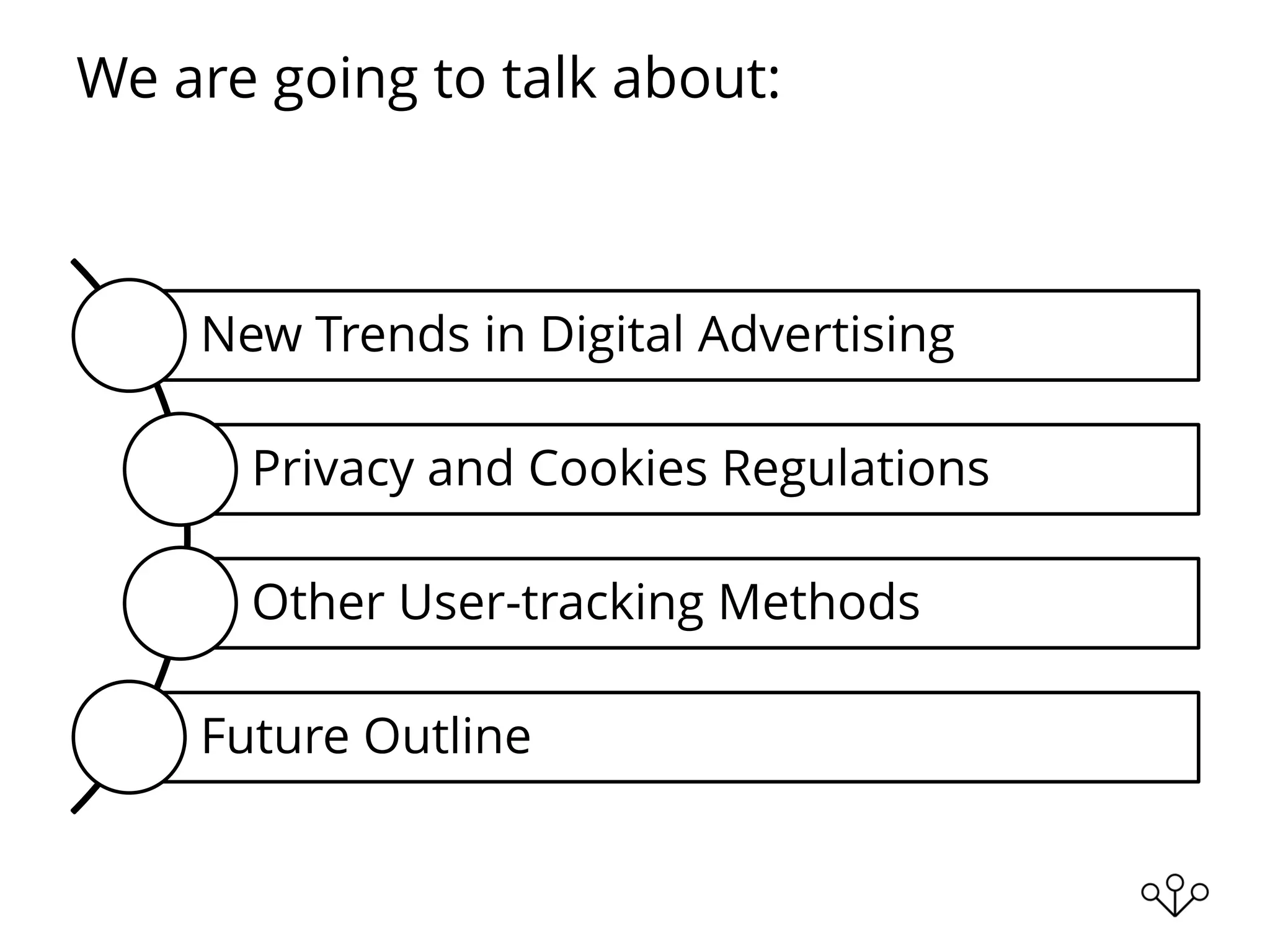
We are going to talk about:
New Trends in Digital Advertising
Privacy and Cookies Regulations
Other User-tracking Methods
Future Outline
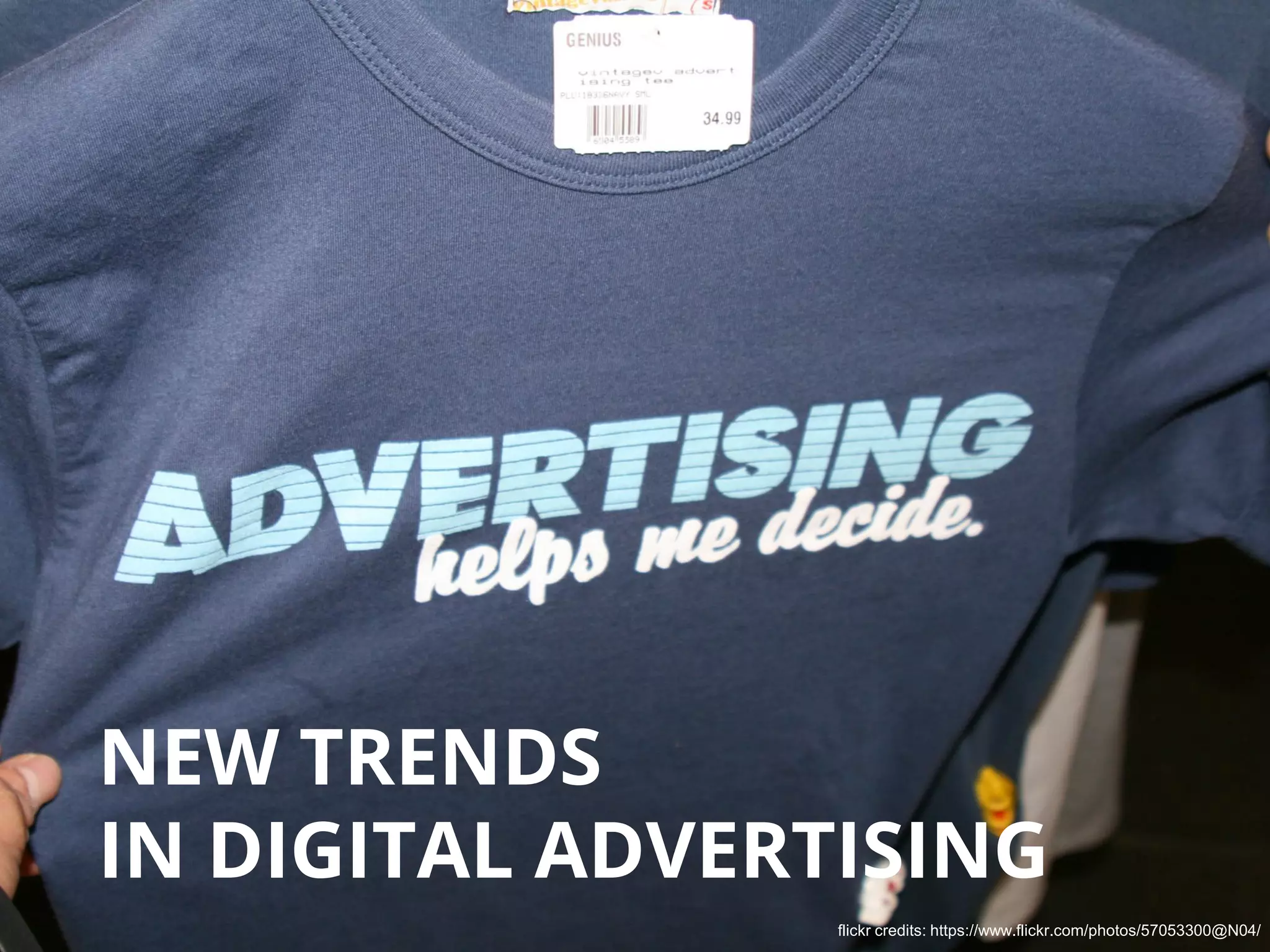
NEW TRENDS
IN DIGITAL ADVERTISING
flickr credits: https://www.flickr.com/photos/57053300@N04/
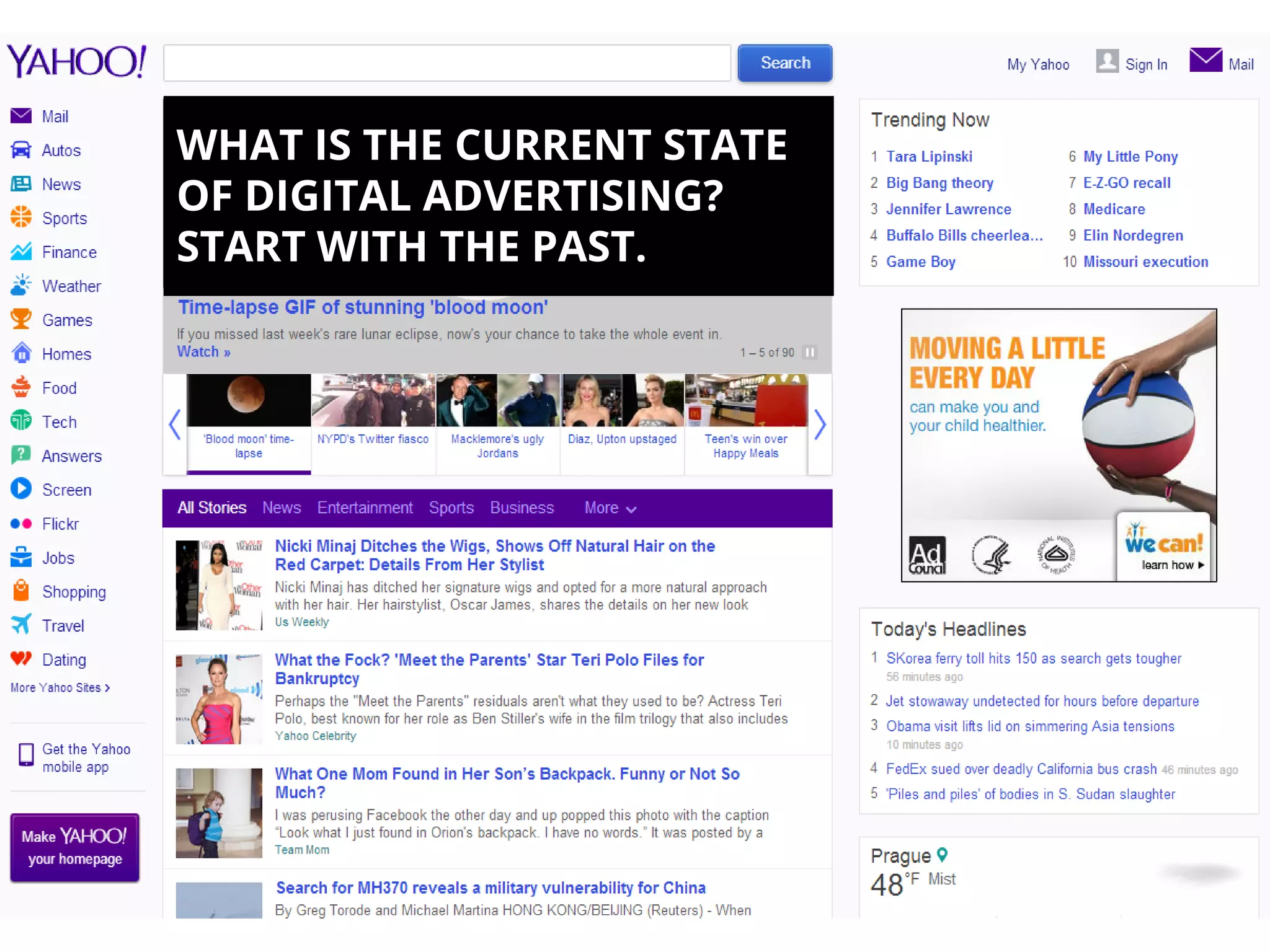
WHAT IS THE CURRENT STATE
OF DIGITAL ADVERTISING?
START WITH THE PAST.
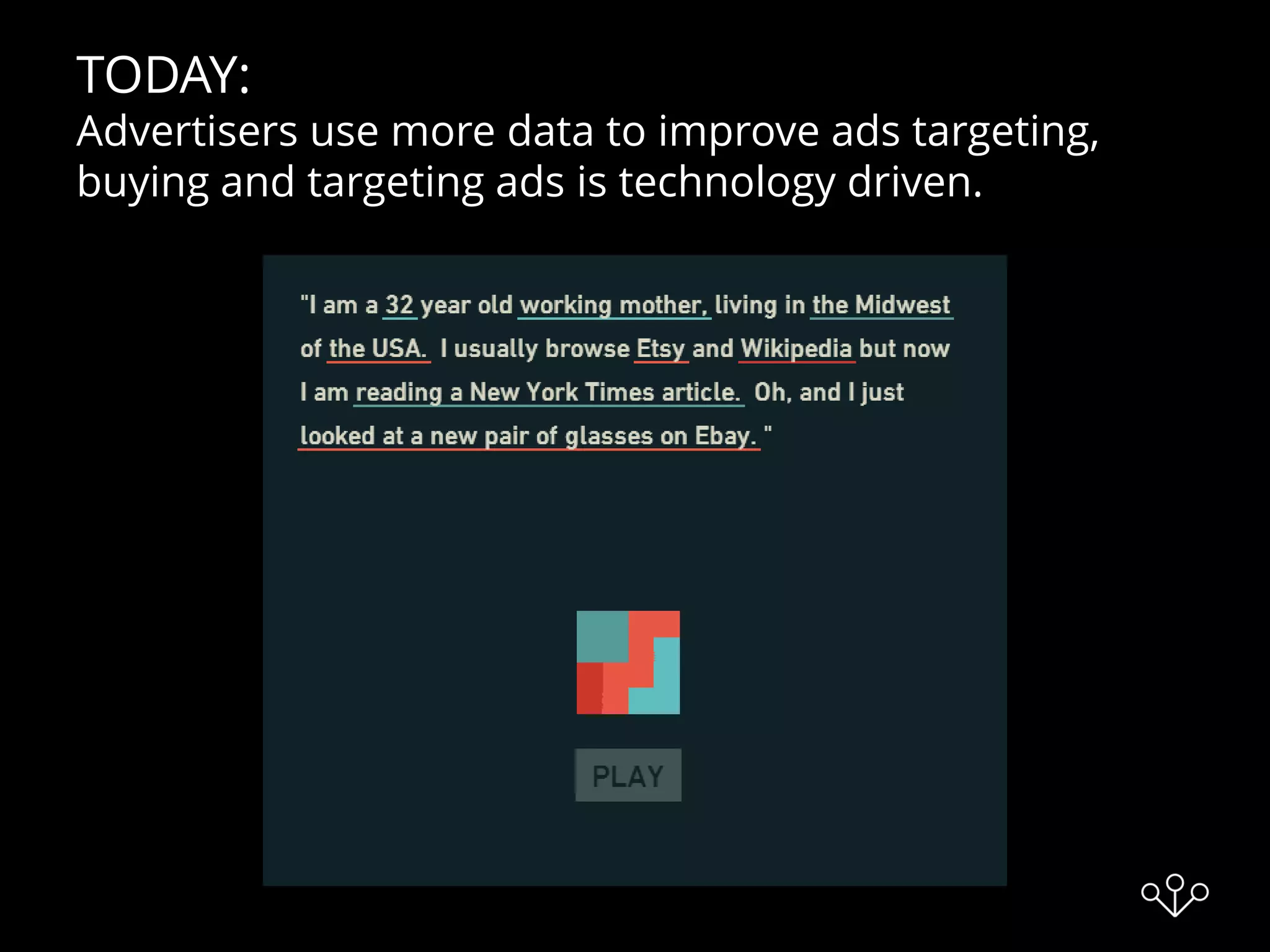
TODAY:
Advertisers use more data to improve ads targeting,
buying and targeting ads is technology driven.
Behavioral targeting refers to..
..a range of technologies and techniques used by online website
publishers and advertisers which allows them to increase the
effectiveness of their campaigns by capturing data generated by
website and landing page visitors.
http://en.wikipedia.org/wiki/Behavioral_targeting
flickr credit: https://www.flickr.com/photos/small_realm/
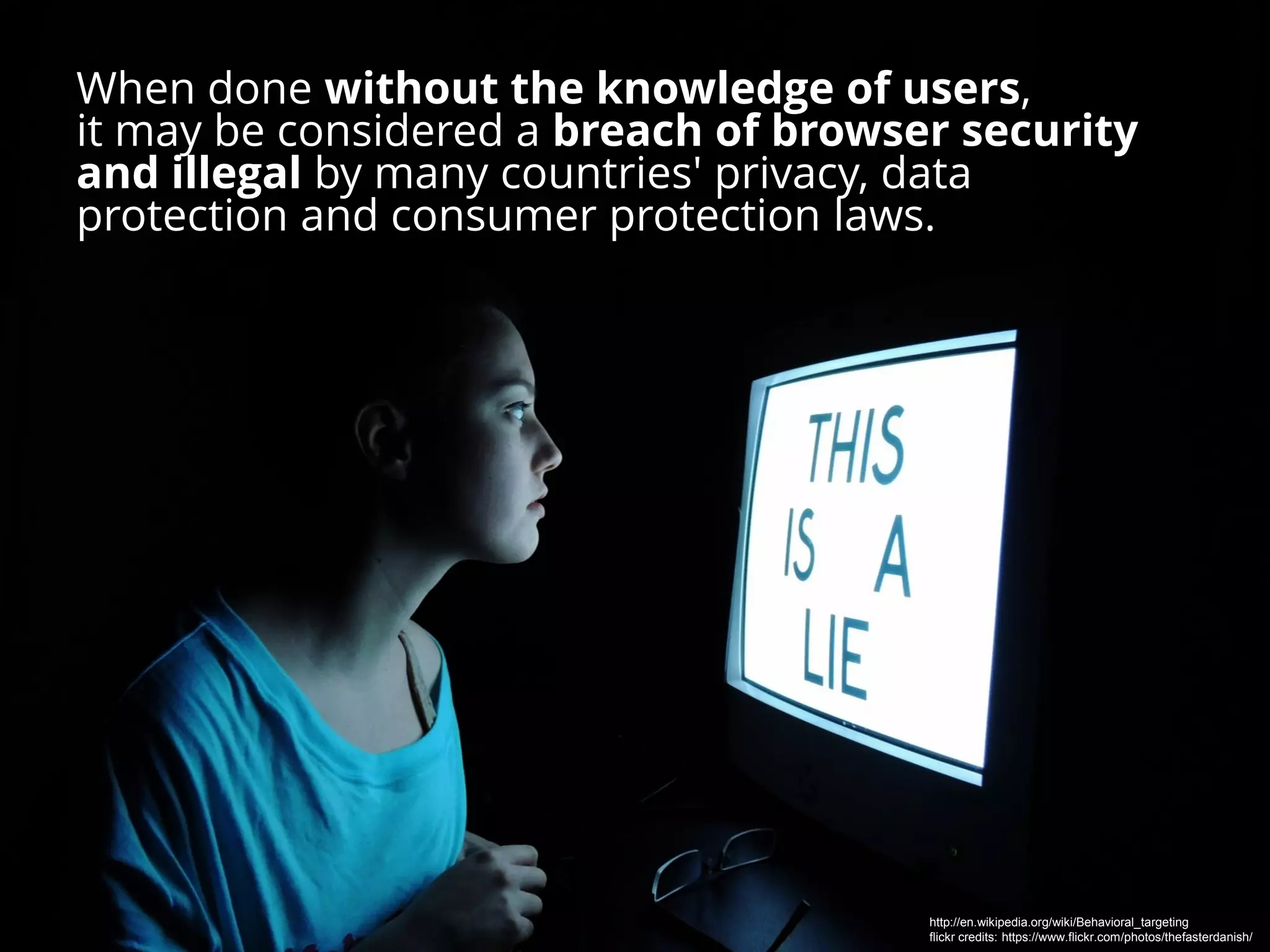
When done without the knowledge of users,
it may be considered a breach of browser security
and illegal by many countries' privacy, data
protection and consumer protection laws.
http://en.wikipedia.org/wiki/Behavioral_targeting
flickr credits: https://www.flickr.com/photos/thefasterdanish/
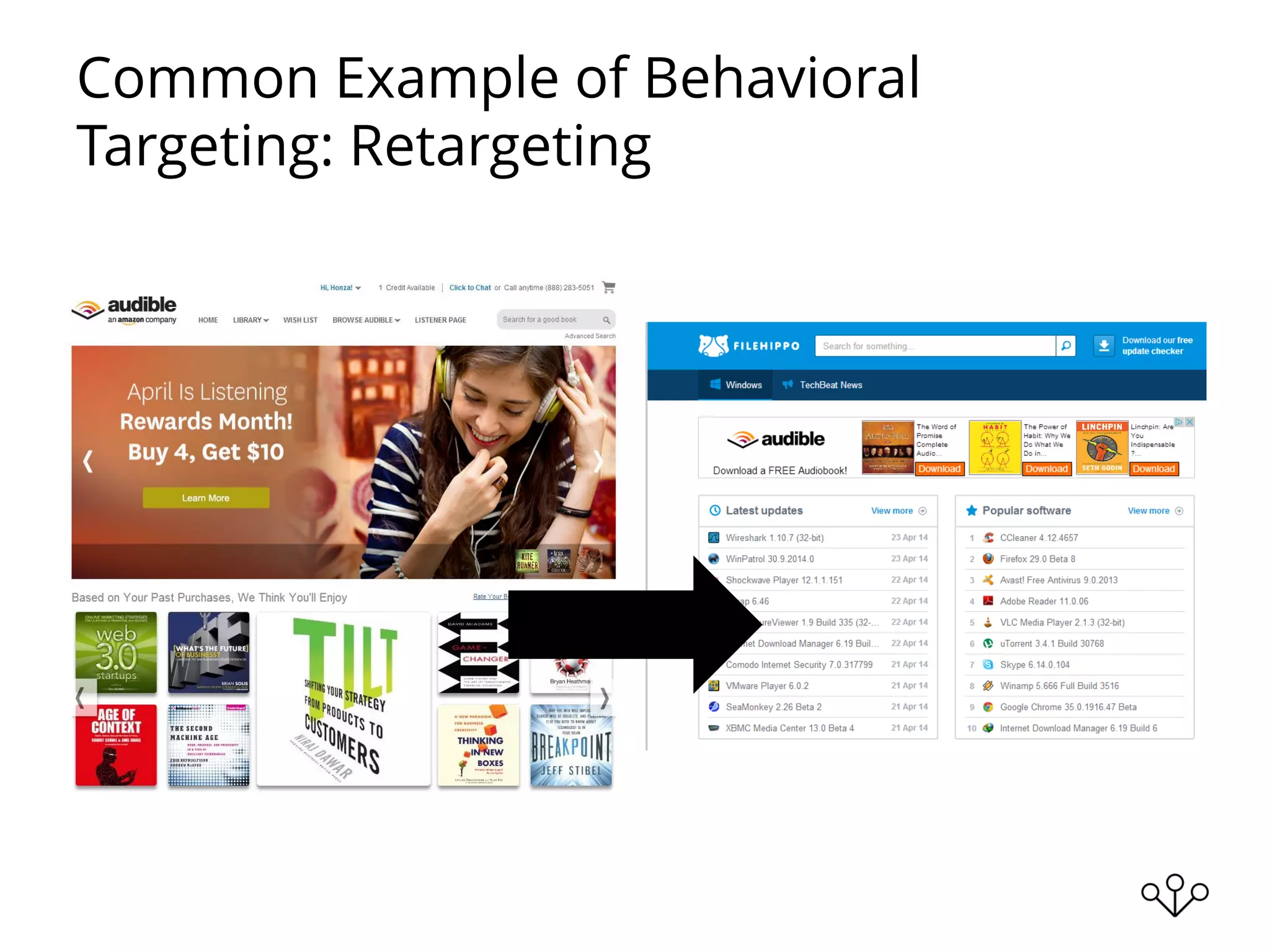
Common Example of Behavioral
Targeting: Retargeting
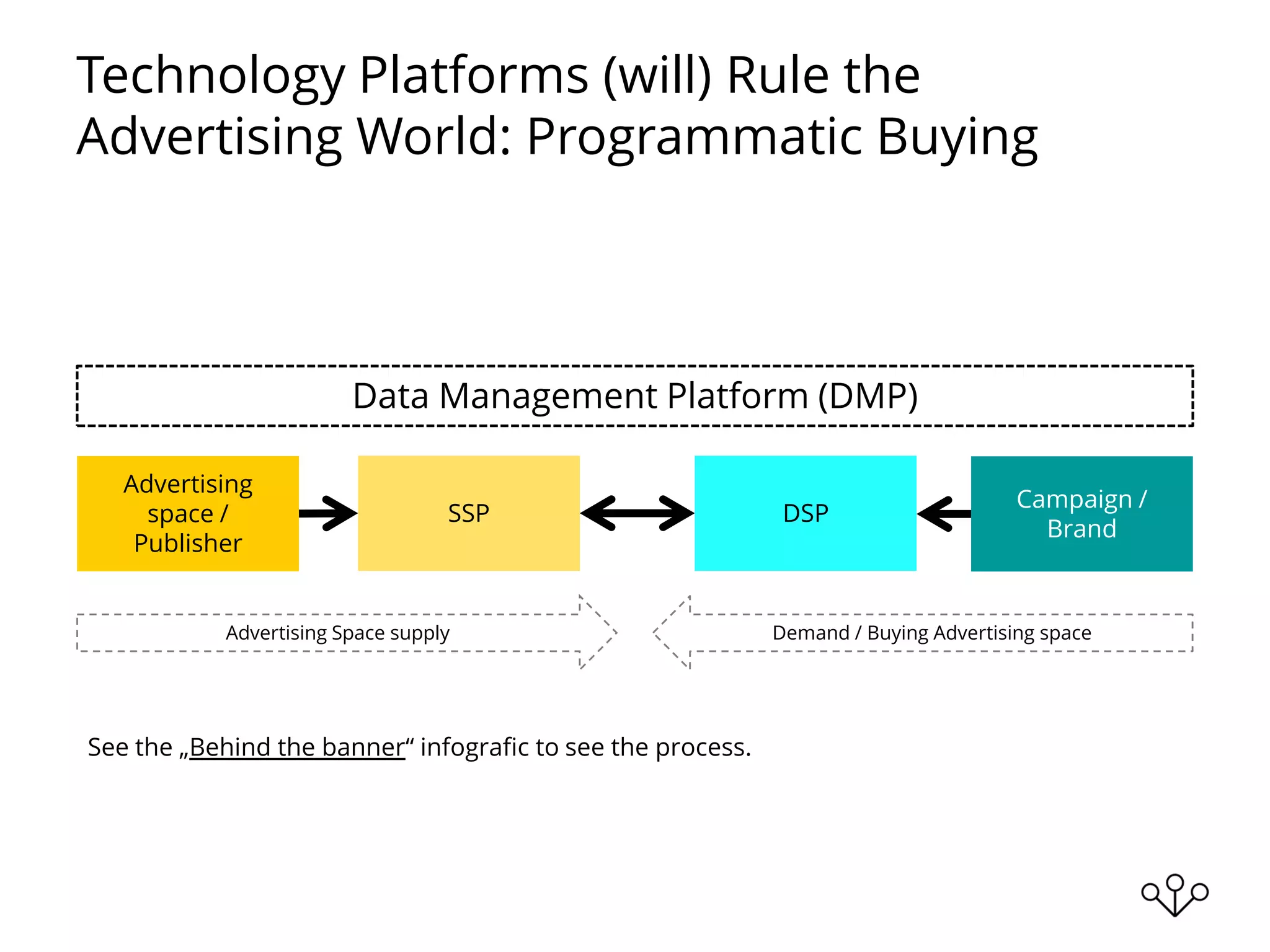
Technology Platforms (will) Rule the
Advertising World: Programmatic Buying
Advertising
space /
Publisher
SSP
Campaign /
Brand
Data Management Platform (DMP)
Advertising Space supply Demand / Buying Advertising space
DSP
See the „Behind the banner“ infografic to see the process.
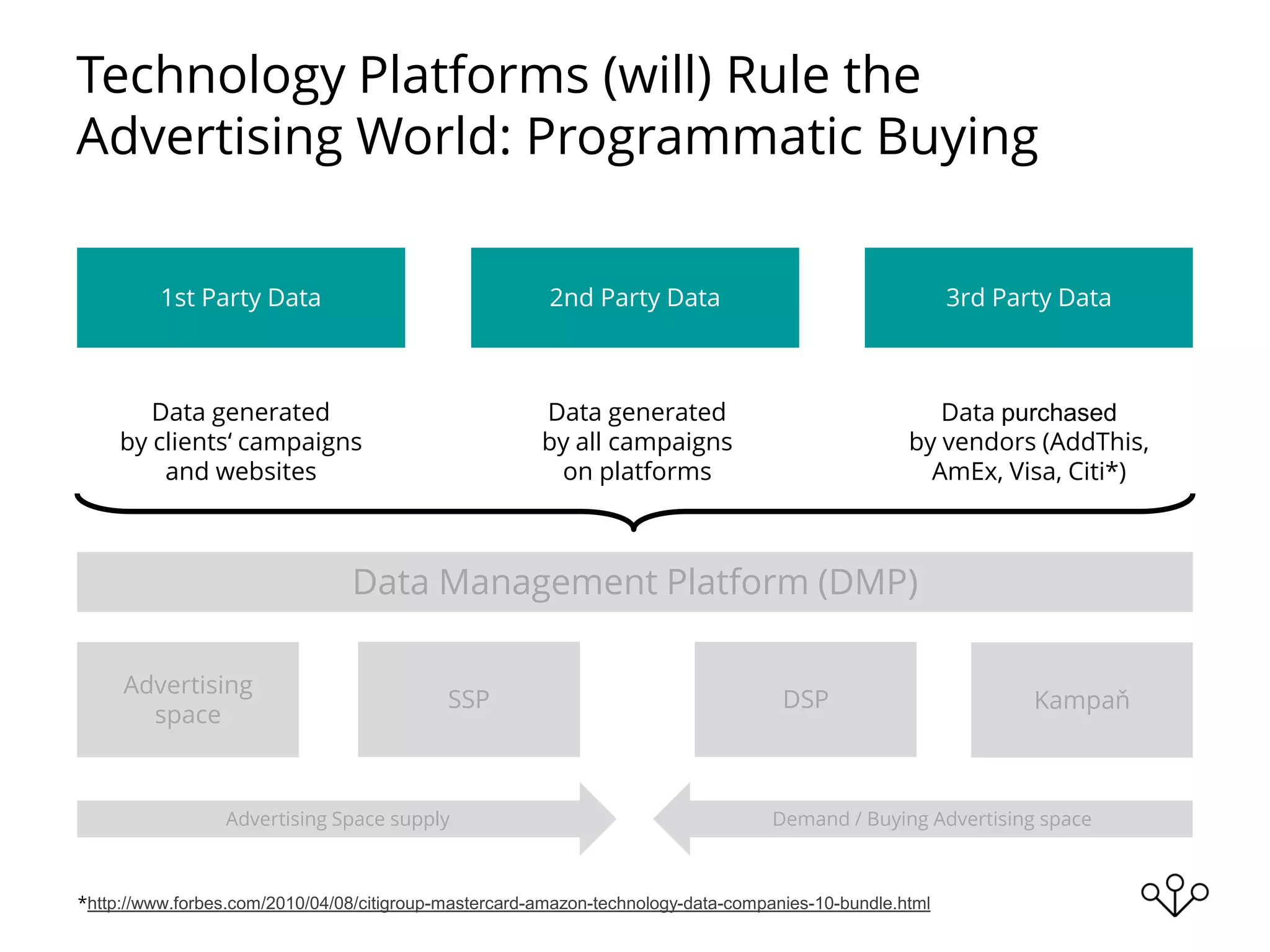
Technology Platforms (will) Rule the
Advertising World: Programmatic Buying
*http://www.forbes.com/2010/04/08/citigroup-mastercard-amazon-technology-data-companies-10-bundle.html
Advertising
space
SSP Kampaň
Data Management Platform (DMP)
Advertising Space supply Demand / Buying Advertising space
DSP
1st Party Data 2nd Party Data 3rd Party Data
Data generated
by clients‘ campaigns
and websites
Data generated
by all campaigns
on platforms
Data purchased
by vendors (AddThis,
AmEx, Visa, Citi*)
flickr credits: https://www.flickr.com/photos/bacteriano/
COOKIES
AND REGULATION
Data Collection is Mostly Based
on Browser Cookies
1. A piece of data stored in your computer
2. It loads browsers sends it back
3. Serve to remember stateful information or record browsing
activities
4. Esp. 3rd party cookies serve to compile long-term records
of individuals browsing history => Object of regulation by EU
etc.
http://en.wikipedia.org/wiki/HTTP_cookie
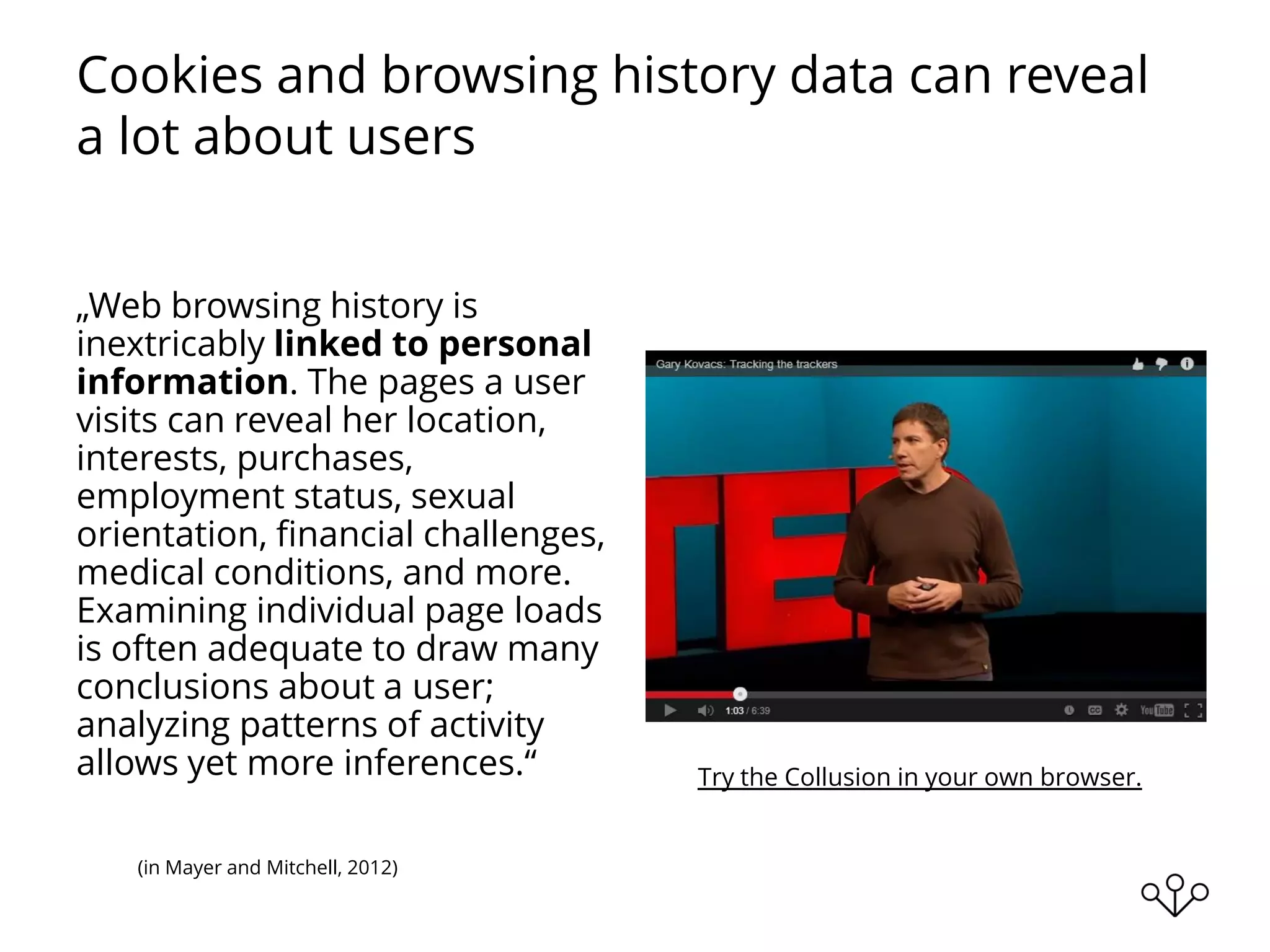
Cookies and browsing history data can reveal
a lot about users
„Web browsing history is
inextricably linked to personal
information. The pages a user
visits can reveal her location,
interests, purchases,
employment status, sexual
orientation, financial challenges,
medical conditions, and more.
Examining individual page loads
is often adequate to draw many
conclusions about a user;
analyzing patterns of activity
allows yet more inferences.“
(in Mayer and Mitchell, 2012)
Try the Collusion in your own browser.
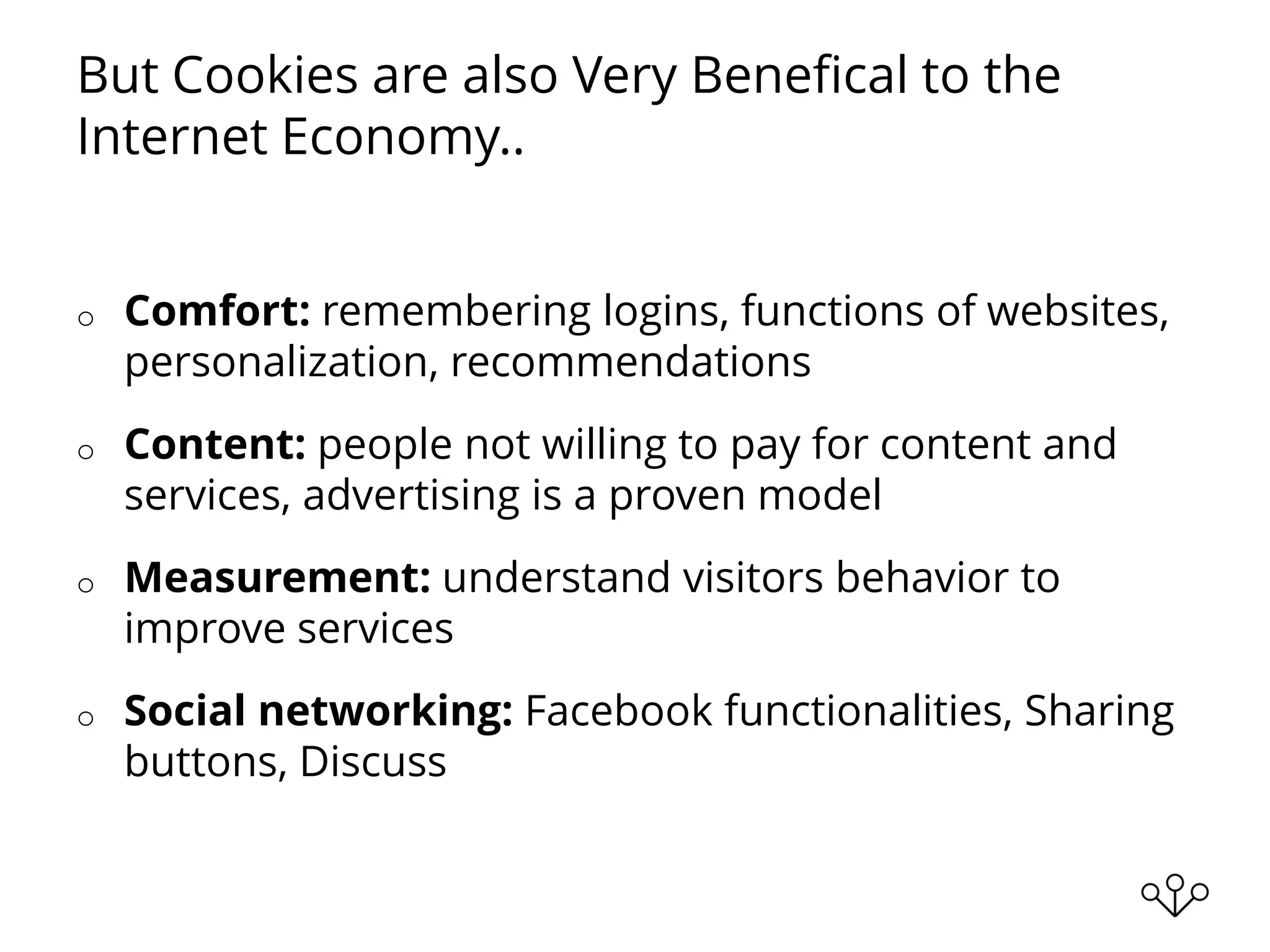
But Cookies are also Very Benefical to the
Internet Economy..
o Comfort: remembering logins, functions of websites,
personalization, recommendations
o Content: people not willing to pay for content and
services, advertising is a proven model
o Measurement: understand visitors behavior to
improve services
o Social networking: Facebook functionalities, Sharing
buttons, Discuss
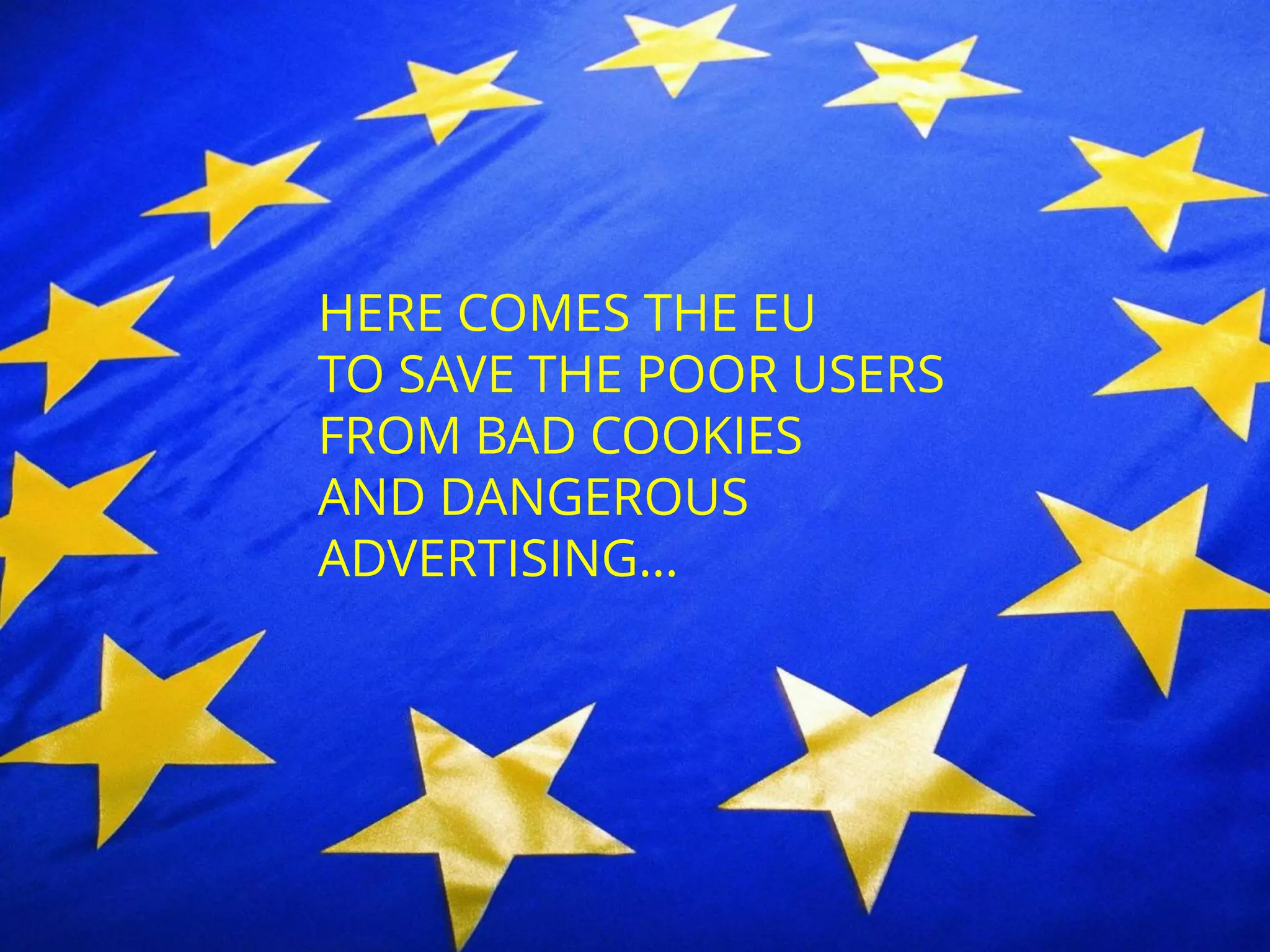
HERE COMES THE EU
TO SAVE THE POOR USERS
FROM BAD COOKIES
AND DANGEROUS
ADVERTISING…
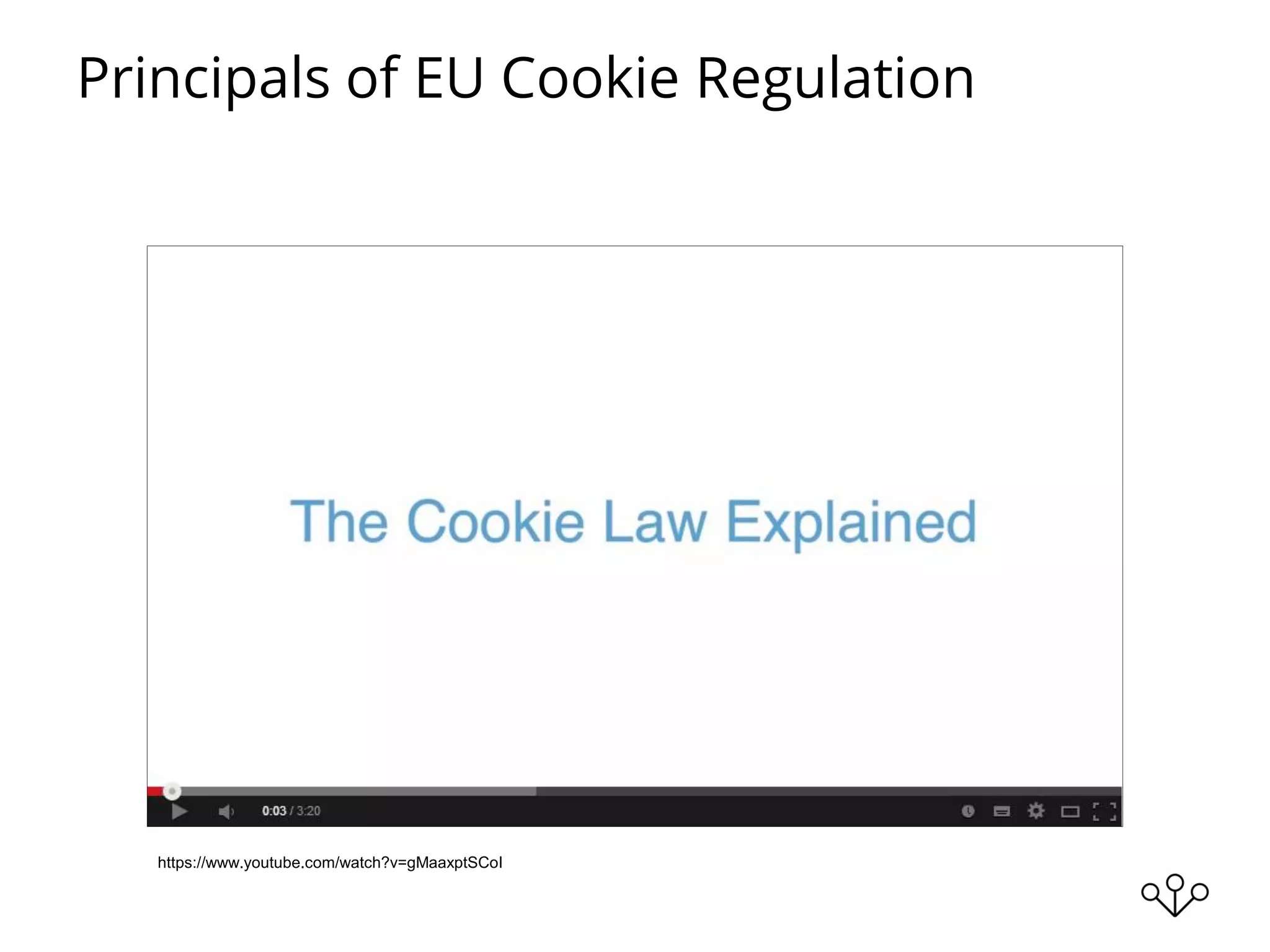
Principals of EU Cookie Regulation
https://www.youtube.com/watch?v=gMaaxptSCoI
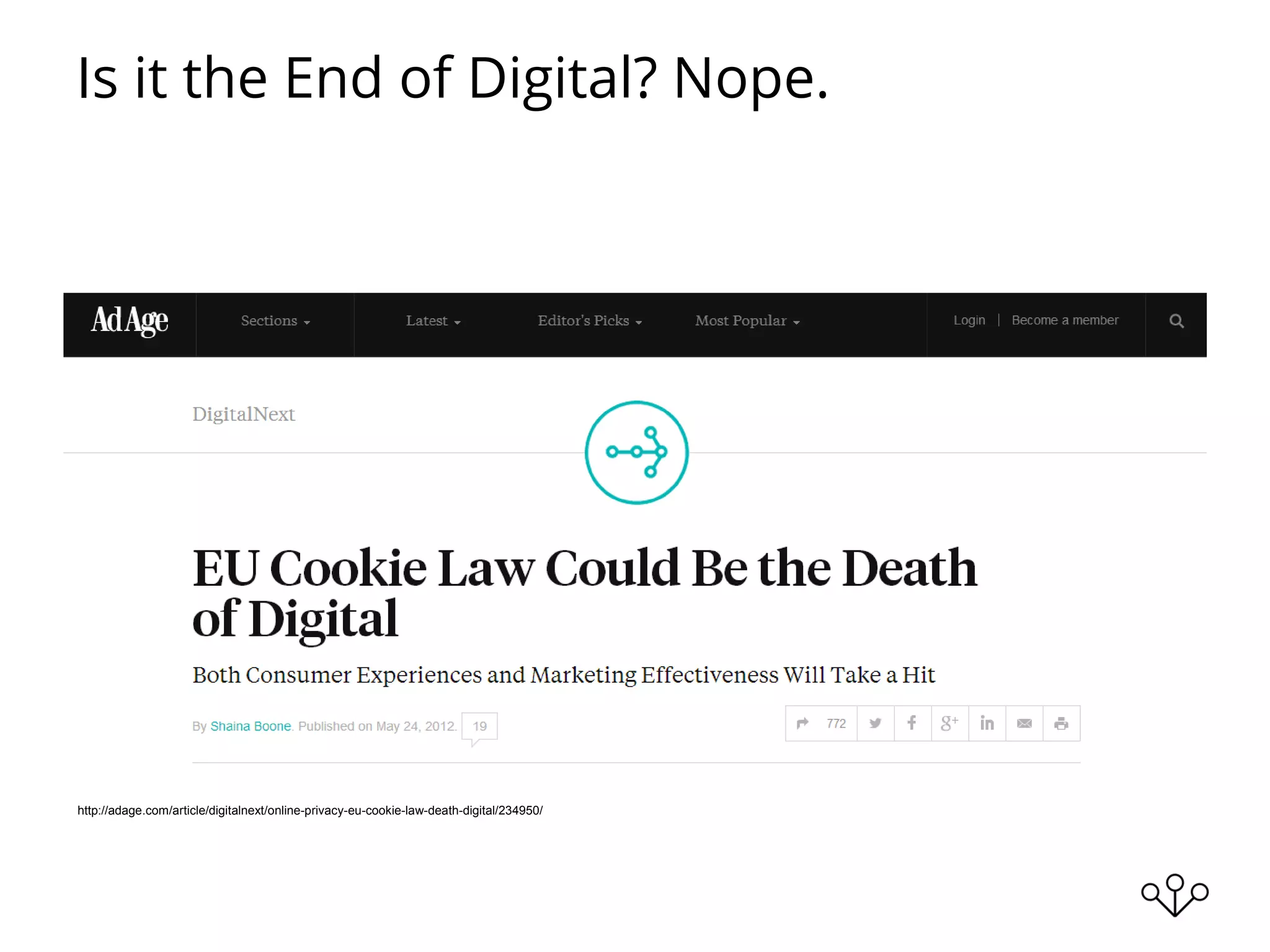
Is it the End of Digital? Nope.
http://adage.com/article/digitalnext/online-privacy-eu-cookie-law-death-digital/234950/
But it regulates only browser cookies
(and in a bad way), does EU knows?
flickr credits: https://www.flickr.com/photos/jdhancock/
OTHER
USER-TRACKING
METHODS
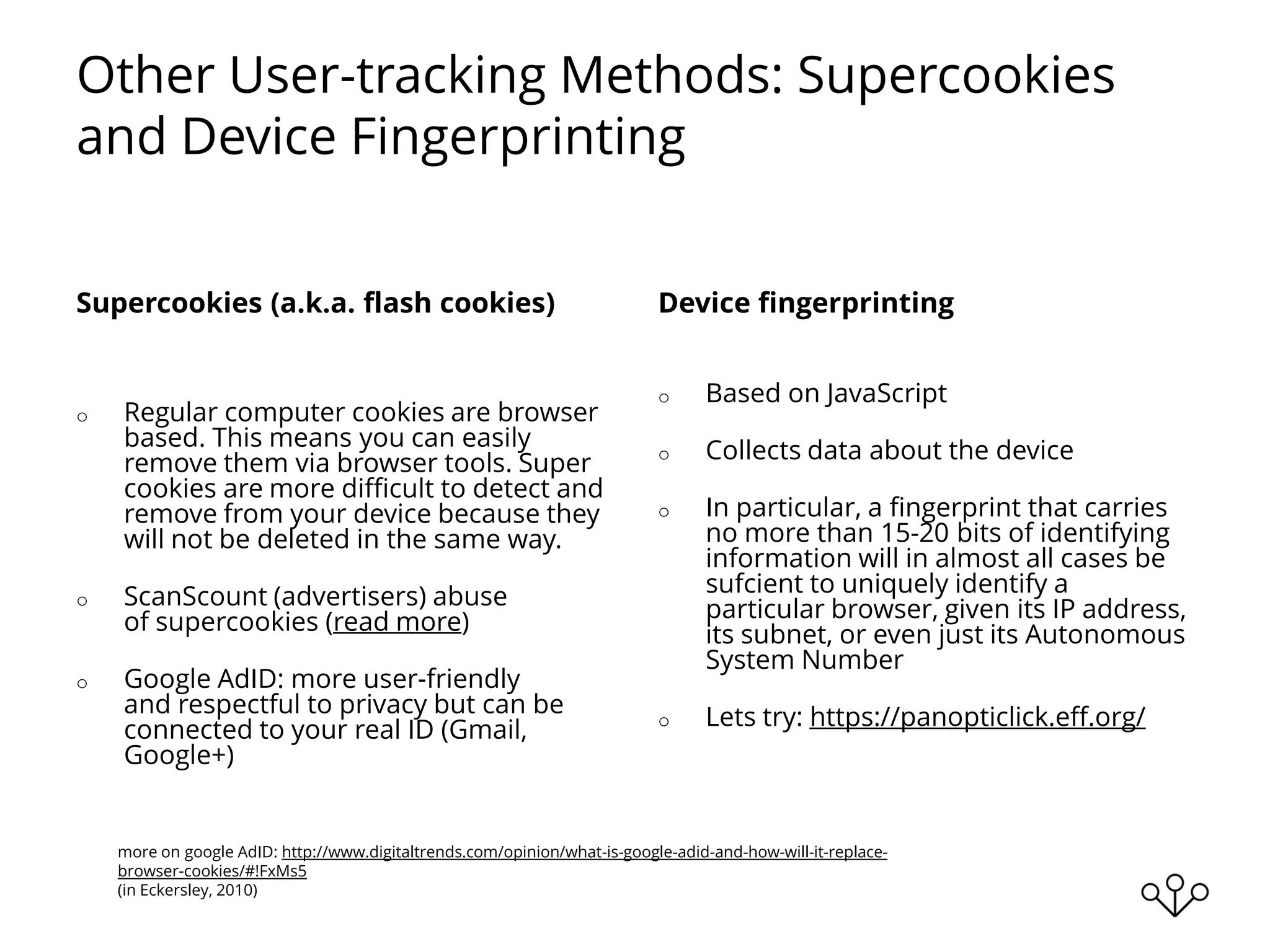
Other User-tracking Methods: Supercookies
and Device Fingerprinting
Supercookies (a.k.a. flash cookies)
o Regular computer cookies are browser
based. This means you can easily
remove them via browser tools. Super
cookies are more difficult to detect and
remove from your device because they
will not be deleted in the same way.
o ScanScount (advertisers) abuse
of supercookies (read more)
o Google AdID: more user-friendly
and respectful to privacy but can be
connected to your real ID (Gmail,
Google+)
Device fingerprinting
o Based on JavaScript
o Collects data about the device
o In particular, a fingerprint that carries
no more than 15-20 bits of identifying
information will in almost all cases be
sufcient to uniquely identify a
particular browser, given its IP address,
its subnet, or even just its Autonomous
System Number
o Lets try: https://panopticlick.eff.org/
more on google AdID: http://www.digitaltrends.com/opinion/what-is-google-adid-and-how-will-it-replace-
browser-cookies/#!FxMs5
(in Eckersley, 2010)
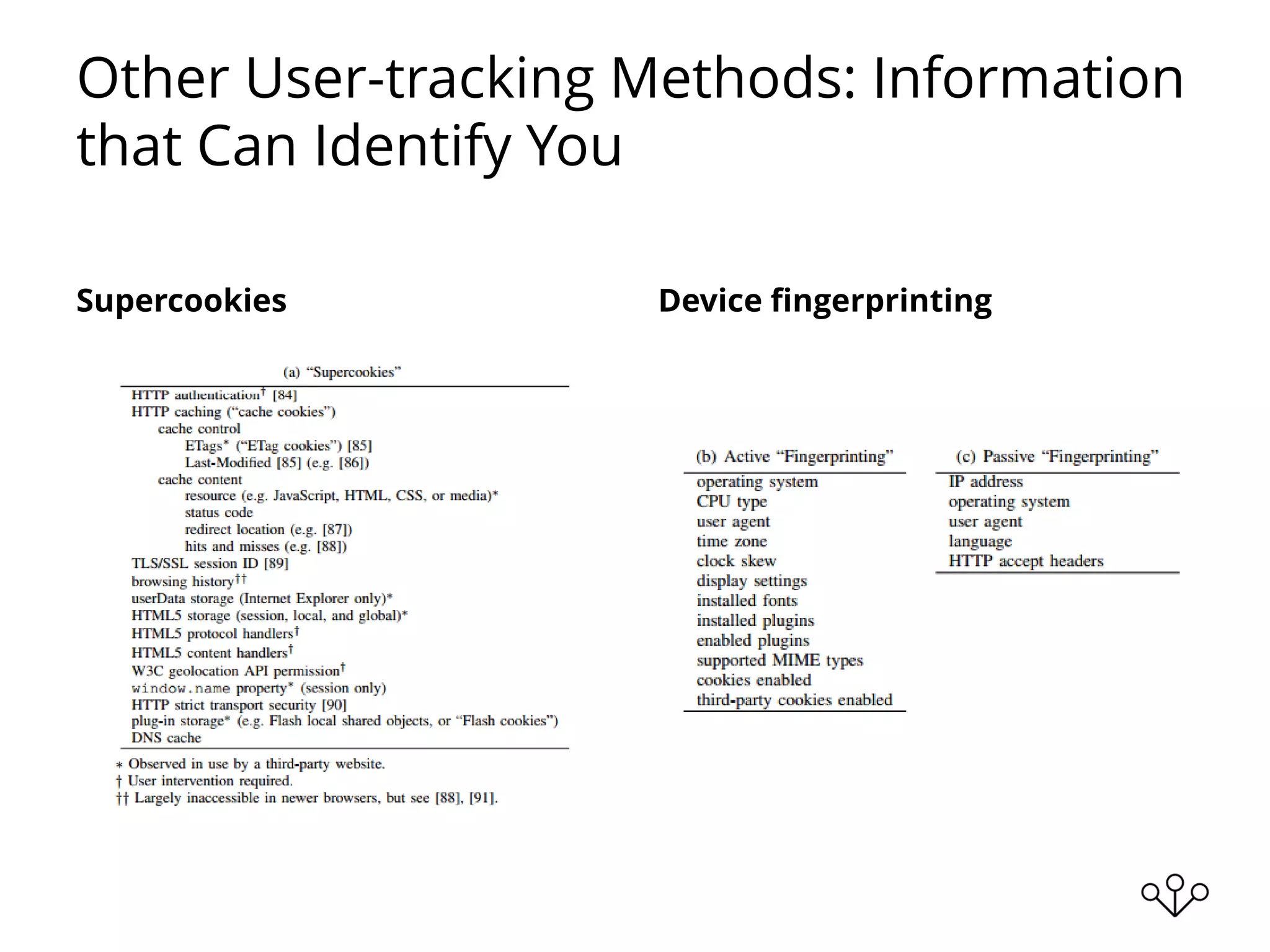
Other User-tracking Methods: Information
that Can Identify You
Supercookies Device fingerprinting
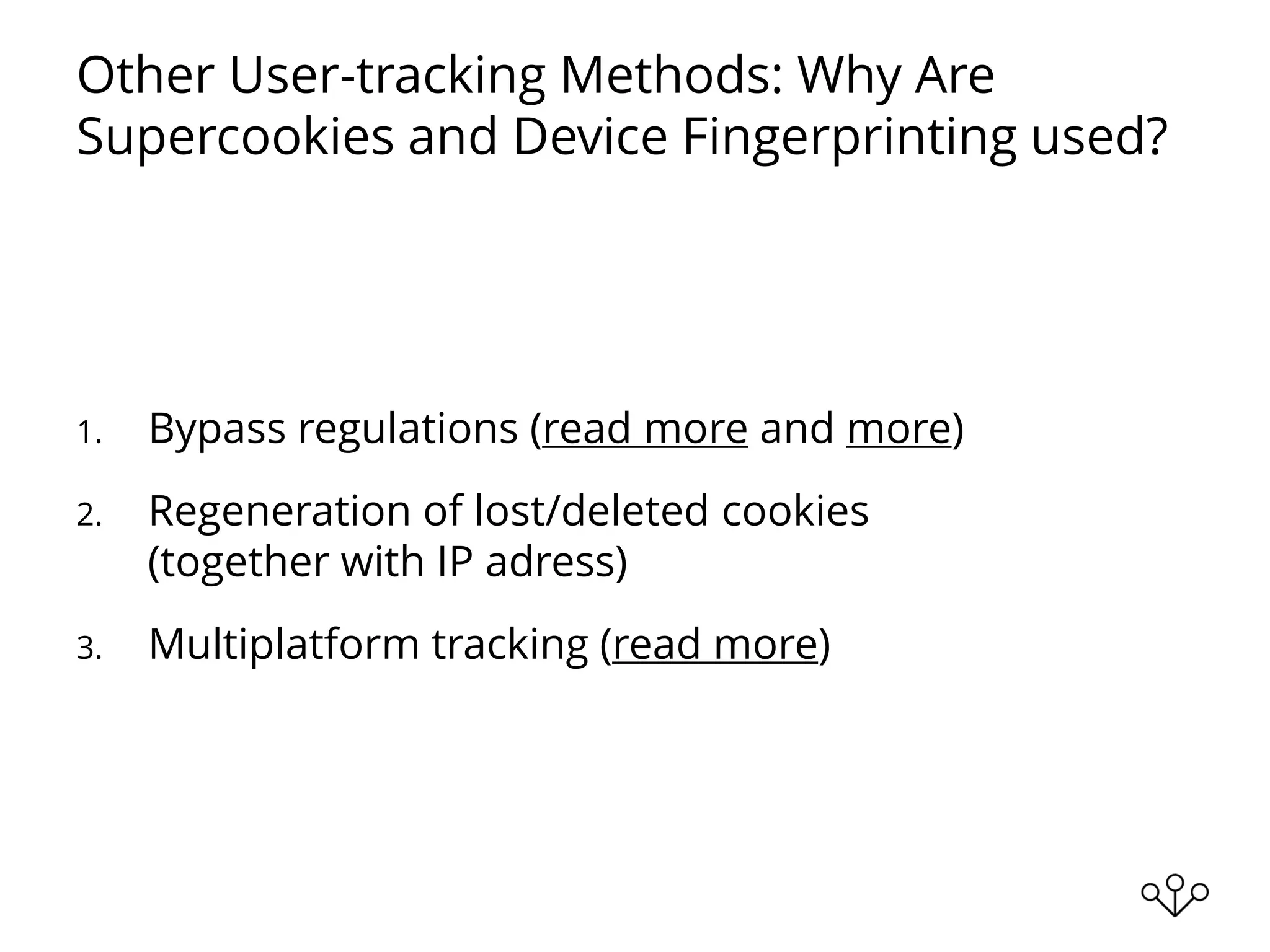
Other User-tracking Methods: Why Are
Supercookies and Device Fingerprinting used?
1. Bypass regulations (read more and more)
2. Regeneration of lost/deleted cookies
(together with IP adress)
3. Multiplatform tracking (read more)
How can people protect themselves
1. Awareness:
Privacychoice.org, Collusion, Ghostery
2. Browser Cookies Regulations:
Opt-out, Do Not Track
3. Blocking:
JavaScript, use TorButton, and certain
types of smartphone
FUTURE OUTLINES
Finally, the Advertising is not the Harmful One,
but Collects and Uses Data that Can Be
Abused.
o Advertisers won‘t collect your data if you don‘t want to
share them (Evidon example), but will offer benefits in
exchange for data (Google already does it)
o Education of end-users is a key: how to manage my
data and how to prevent its misuse
o Transparency and security of data on data platforms
providers
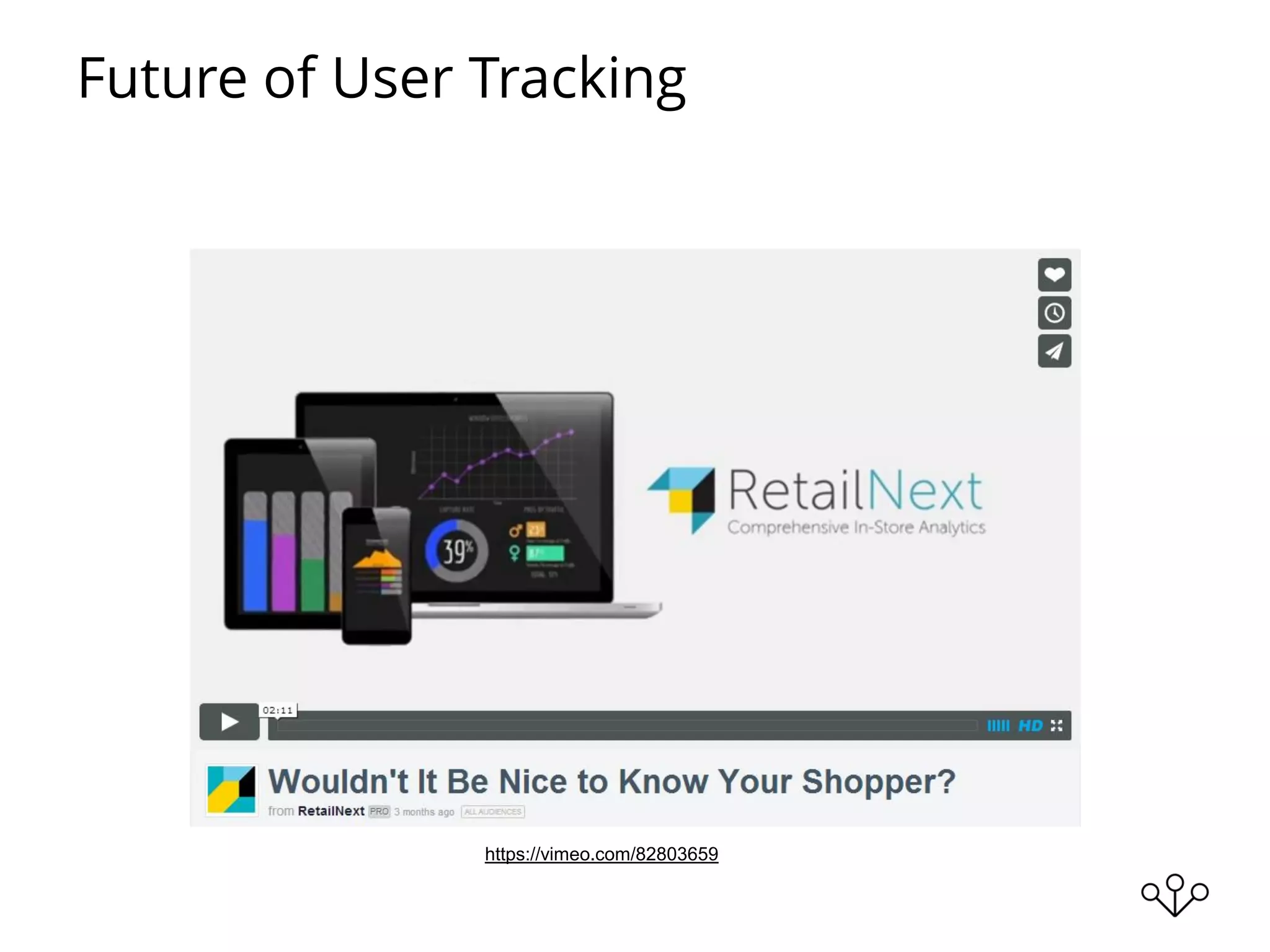
Future of User Tracking
https://vimeo.com/82803659
honza.pav@gmail.com
honzapav.cz
@honzapav
linkedin.com/in/honzapav/
Used and Related Sources
o MAYER, Jonathan R. a John C. MITCHELL. Third-Party Web Tracking: Policy and Technology. 2012 IEEE
Symposium on Security and Privacy. IEEE, 2012, s. 413-427. DOI: 10.1109/SP.2012.47. Dostupné z:
http://ieeexplore.ieee.org/lpdocs/epic03/wrapper.htm?arnumber=6234427
o ECKERSLEY, Peter. How Unique Is Your Web Browser?. Panopticlick: How unique and trackable is your browser?.
2010. Dostupné z: https://panopticlick.eff.org/browser-uniqueness.pdf
Flickr Credits
o Advertising helps me decide by https://www.flickr.com/photos/57053300@N04/
o Data center by https://www.flickr.com/photos/small_realm
o Girl with screen by https://www.flickr.com/photos/thefasterdanish/
o Cookie monster by https://www.flickr.com/photos/bacteriano/
o Cuperman by https://www.flickr.com/photos/jdhancock/

Digital Advertising, Privacy and User-tracking Methods

  • 1.
    Internet Advertising, Privacy andUser-tracking Methods honzapav.cz | @honzapav | 24. 4. 2014
  • 2.
    We are goingto talk about: New Trends in Digital Advertising Privacy and Cookies Regulations Other User-tracking Methods Future Outline
  • 3.
    NEW TRENDS IN DIGITALADVERTISING flickr credits: https://www.flickr.com/photos/57053300@N04/
  • 5.
    WHAT IS THECURRENT STATE OF DIGITAL ADVERTISING? START WITH THE PAST.
  • 6.
    TODAY: Advertisers use moredata to improve ads targeting, buying and targeting ads is technology driven.
  • 7.
    Behavioral targeting refersto.. ..a range of technologies and techniques used by online website publishers and advertisers which allows them to increase the effectiveness of their campaigns by capturing data generated by website and landing page visitors. http://en.wikipedia.org/wiki/Behavioral_targeting flickr credit: https://www.flickr.com/photos/small_realm/
  • 8.
    When done withoutthe knowledge of users, it may be considered a breach of browser security and illegal by many countries' privacy, data protection and consumer protection laws. http://en.wikipedia.org/wiki/Behavioral_targeting flickr credits: https://www.flickr.com/photos/thefasterdanish/
  • 9.
    Common Example ofBehavioral Targeting: Retargeting
  • 10.
    Technology Platforms (will)Rule the Advertising World: Programmatic Buying Advertising space / Publisher SSP Campaign / Brand Data Management Platform (DMP) Advertising Space supply Demand / Buying Advertising space DSP See the „Behind the banner“ infografic to see the process.
  • 11.
    Technology Platforms (will)Rule the Advertising World: Programmatic Buying *http://www.forbes.com/2010/04/08/citigroup-mastercard-amazon-technology-data-companies-10-bundle.html Advertising space SSP Kampaň Data Management Platform (DMP) Advertising Space supply Demand / Buying Advertising space DSP 1st Party Data 2nd Party Data 3rd Party Data Data generated by clients‘ campaigns and websites Data generated by all campaigns on platforms Data purchased by vendors (AddThis, AmEx, Visa, Citi*)
  • 12.
  • 13.
    Data Collection isMostly Based on Browser Cookies 1. A piece of data stored in your computer 2. It loads browsers sends it back 3. Serve to remember stateful information or record browsing activities 4. Esp. 3rd party cookies serve to compile long-term records of individuals browsing history => Object of regulation by EU etc. http://en.wikipedia.org/wiki/HTTP_cookie
  • 14.
    Cookies and browsinghistory data can reveal a lot about users „Web browsing history is inextricably linked to personal information. The pages a user visits can reveal her location, interests, purchases, employment status, sexual orientation, financial challenges, medical conditions, and more. Examining individual page loads is often adequate to draw many conclusions about a user; analyzing patterns of activity allows yet more inferences.“ (in Mayer and Mitchell, 2012) Try the Collusion in your own browser.
  • 15.
    But Cookies arealso Very Benefical to the Internet Economy.. o Comfort: remembering logins, functions of websites, personalization, recommendations o Content: people not willing to pay for content and services, advertising is a proven model o Measurement: understand visitors behavior to improve services o Social networking: Facebook functionalities, Sharing buttons, Discuss
  • 16.
    HERE COMES THEEU TO SAVE THE POOR USERS FROM BAD COOKIES AND DANGEROUS ADVERTISING…
  • 17.
    Principals of EUCookie Regulation https://www.youtube.com/watch?v=gMaaxptSCoI
  • 18.
    Is it theEnd of Digital? Nope. http://adage.com/article/digitalnext/online-privacy-eu-cookie-law-death-digital/234950/
  • 19.
    But it regulatesonly browser cookies (and in a bad way), does EU knows?
  • 20.
  • 21.
    Other User-tracking Methods:Supercookies and Device Fingerprinting Supercookies (a.k.a. flash cookies) o Regular computer cookies are browser based. This means you can easily remove them via browser tools. Super cookies are more difficult to detect and remove from your device because they will not be deleted in the same way. o ScanScount (advertisers) abuse of supercookies (read more) o Google AdID: more user-friendly and respectful to privacy but can be connected to your real ID (Gmail, Google+) Device fingerprinting o Based on JavaScript o Collects data about the device o In particular, a fingerprint that carries no more than 15-20 bits of identifying information will in almost all cases be sufcient to uniquely identify a particular browser, given its IP address, its subnet, or even just its Autonomous System Number o Lets try: https://panopticlick.eff.org/ more on google AdID: http://www.digitaltrends.com/opinion/what-is-google-adid-and-how-will-it-replace- browser-cookies/#!FxMs5 (in Eckersley, 2010)
  • 22.
    Other User-tracking Methods:Information that Can Identify You Supercookies Device fingerprinting
  • 23.
    Other User-tracking Methods:Why Are Supercookies and Device Fingerprinting used? 1. Bypass regulations (read more and more) 2. Regeneration of lost/deleted cookies (together with IP adress) 3. Multiplatform tracking (read more)
  • 24.
    How can peopleprotect themselves 1. Awareness: Privacychoice.org, Collusion, Ghostery 2. Browser Cookies Regulations: Opt-out, Do Not Track 3. Blocking: JavaScript, use TorButton, and certain types of smartphone
  • 25.
  • 26.
    Finally, the Advertisingis not the Harmful One, but Collects and Uses Data that Can Be Abused. o Advertisers won‘t collect your data if you don‘t want to share them (Evidon example), but will offer benefits in exchange for data (Google already does it) o Education of end-users is a key: how to manage my data and how to prevent its misuse o Transparency and security of data on data platforms providers
  • 27.
    Future of UserTracking https://vimeo.com/82803659
  • 28.
  • 29.
    Used and RelatedSources o MAYER, Jonathan R. a John C. MITCHELL. Third-Party Web Tracking: Policy and Technology. 2012 IEEE Symposium on Security and Privacy. IEEE, 2012, s. 413-427. DOI: 10.1109/SP.2012.47. Dostupné z: http://ieeexplore.ieee.org/lpdocs/epic03/wrapper.htm?arnumber=6234427 o ECKERSLEY, Peter. How Unique Is Your Web Browser?. Panopticlick: How unique and trackable is your browser?. 2010. Dostupné z: https://panopticlick.eff.org/browser-uniqueness.pdf
  • 30.
    Flickr Credits o Advertisinghelps me decide by https://www.flickr.com/photos/57053300@N04/ o Data center by https://www.flickr.com/photos/small_realm o Girl with screen by https://www.flickr.com/photos/thefasterdanish/ o Cookie monster by https://www.flickr.com/photos/bacteriano/ o Cuperman by https://www.flickr.com/photos/jdhancock/