Module - 4
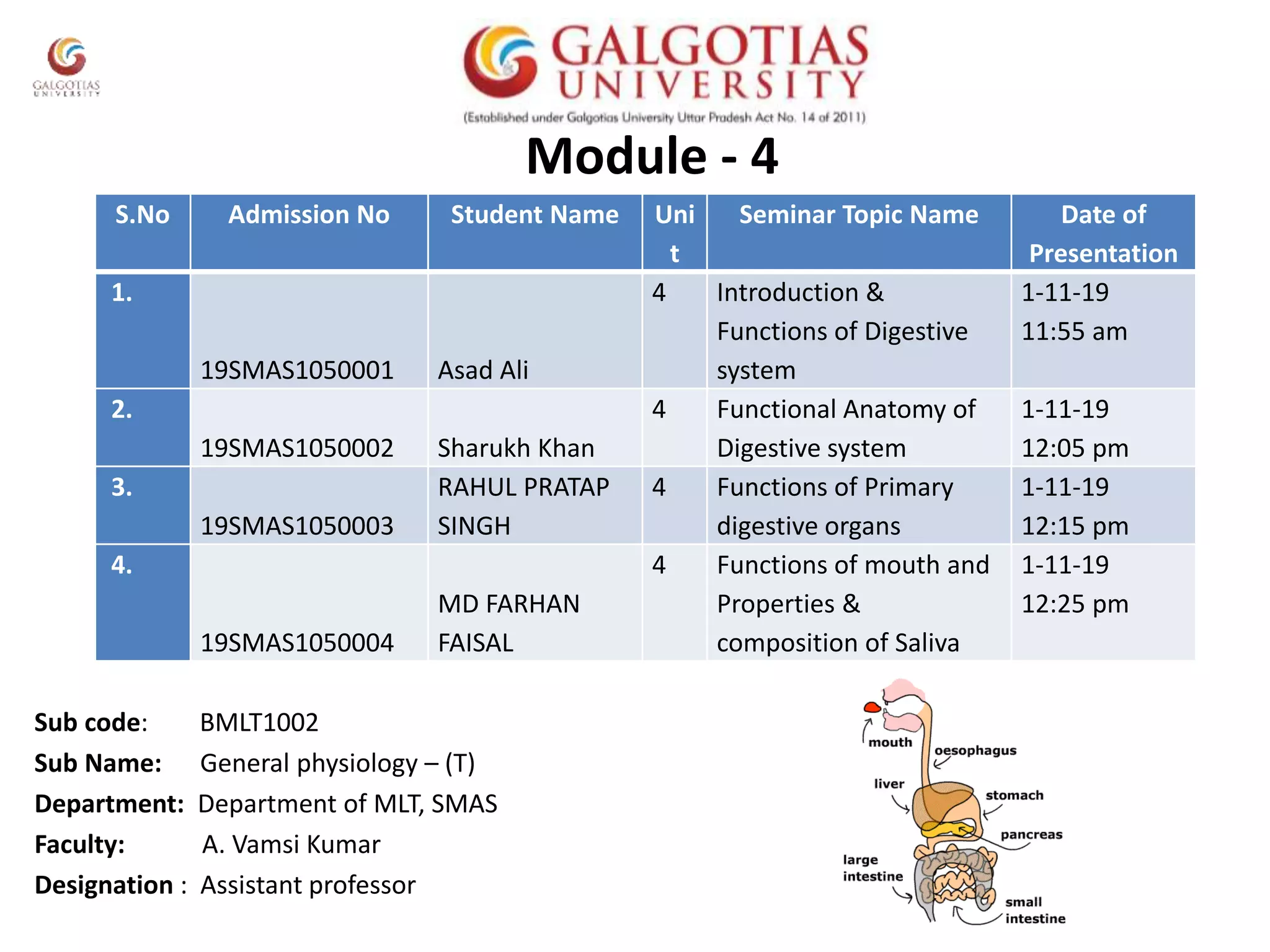
Sub code: BMLT1002
Sub Name: General physiology – (T)
Department: Department of MLT, SMAS
Faculty: A. Vamsi Kumar
Designation : Assistant professor
S.No Admission No Student Name Uni
t
Seminar Topic Name Date of
Presentation
1.
19SMAS1050001 Asad Ali
4 Introduction &
Functions of Digestive
system
1-11-19
11:55 am
2.
19SMAS1050002 Sharukh Khan
4 Functional Anatomy of
Digestive system
1-11-19
12:05 pm
3.
19SMAS1050003
RAHUL PRATAP
SINGH
4 Functions of Primary
digestive organs
1-11-19
12:15 pm
4.
19SMAS1050004
MD FARHAN
FAISAL
4 Functions of mouth and
Properties &
composition of Saliva
1-11-19
12:25 pm
Course outcomes
• Present the functions of Digestive system &
Accessory organs of Digestive system
Introduction & Functions of
Digestive system
By
Mr. Asad Ali
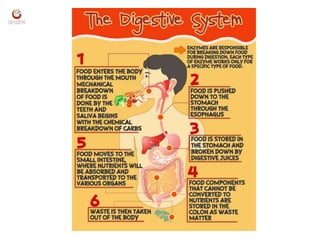
INTRODUCTION
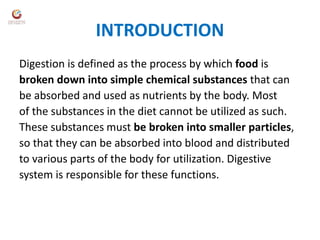
Digestion is defined as the process by which food is
broken down into simple chemical substances that can
be absorbed and used as nutrients by the body. Most
of the substances in the diet cannot be utilized as such.
These substances must be broken into smaller particles,
so that they can be absorbed into blood and distributed
to various parts of the body for utilization. Digestive
system is responsible for these functions.
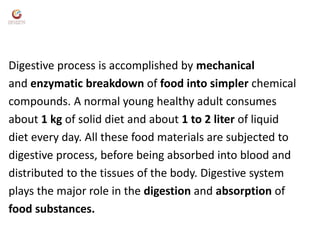
Digestive process is accomplished by mechanical
and enzymatic breakdown of food into simpler chemical
compounds. A normal young healthy adult consumes
about 1 kg of solid diet and about 1 to 2 liter of liquid
diet every day. All these food materials are subjected to
digestive process, before being absorbed into blood and
distributed to the tissues of the body. Digestive system
plays the major role in the digestion and absorption of
food substances.
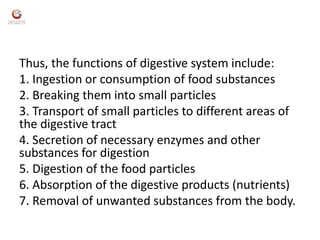
Thus, the functions of digestive system include:
1. Ingestion or consumption of food substances
2. Breaking them into small particles
3. Transport of small particles to different areas of
the digestive tract
4. Secretion of necessary enzymes and other
substances for digestion
5. Digestion of the food particles
6. Absorption of the digestive products (nutrients)
7. Removal of unwanted substances from the body.
FUNCTIONAL ANATOMY OF
DIGESTIVE SYSTEM
by
Mr. Sharuk Khan
„FUNCTIONAL ANATOMY OF
DIGESTIVE SYSTEM
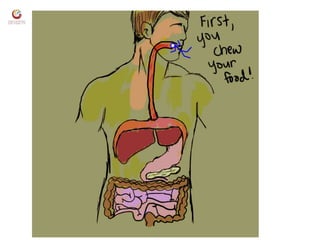
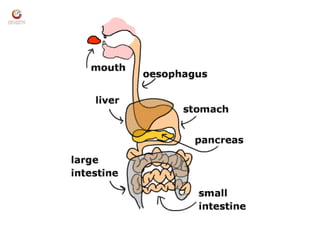
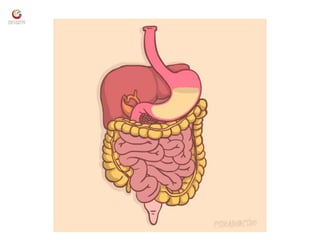
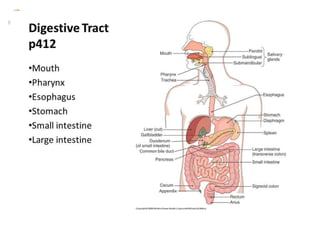
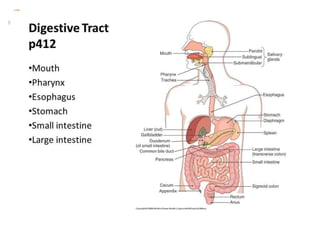
„Digestive system is made up of gastrointestinal tract
(GI tract) or alimentary canal and accessory organs,
which help in the process of digestion and absorption
(Fig. 36.1). GI tract is a tubular structure extending
from
the mouth up to anus, with a length of about 30 feet. It
opens to the external environment on both ends.
GI tract is formed by two types of organs:
1. Primary digestive organs.
2. Accessory digestive organs.
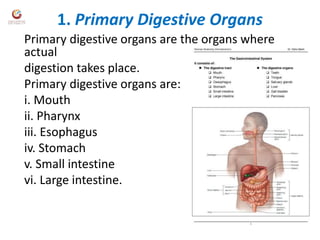
1. Primary Digestive Organs
Primary digestive organs are the organs where
actual
digestion takes place.
Primary digestive organs are:
i. Mouth
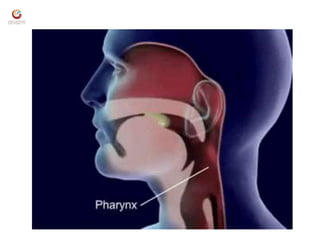
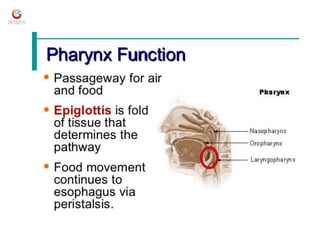
ii. Pharynx
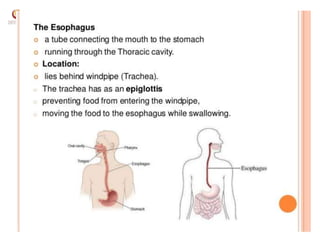
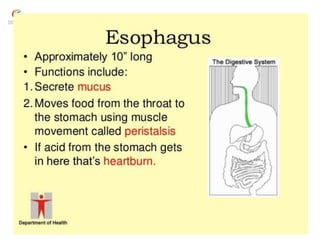
iii. Esophagus
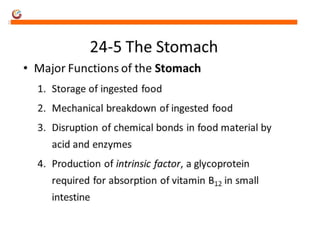
iv. Stomach
v. Small intestine
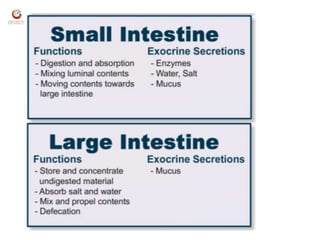
vi. Large intestine.
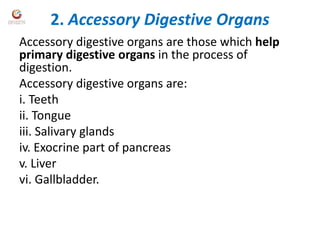
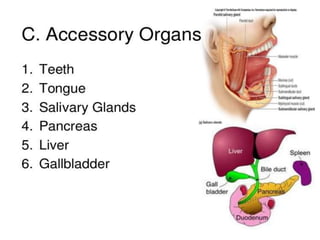
2. Accessory Digestive Organs
Accessory digestive organs are those which help
primary digestive organs in the process of
digestion.
Accessory digestive organs are:
i. Teeth
ii. Tongue
iii. Salivary glands
iv. Exocrine part of pancreas
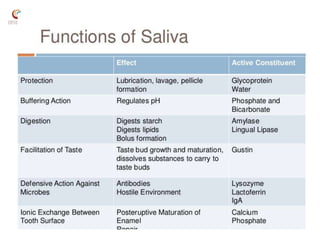
v. Liver
vi. Gallbladder.
Functions of Primary digestive organs
&
Functions of mouth and Properties &
composition of Saliva
By
Mr. FARHAN FAISAL
&
Mr. RAHUL PRATAP SINGH
FUNCTIONS OF MOUTH
Primary function of mouth is eating and it has few other
important functions also.
Functions of mouth include:
1. Ingestion of food materials
2. Chewing the food and mixing it with saliva
3. Appreciation of taste of the food
4. Transfer of food (bolus) to the esophagus by
swallowing
5. Role in speech
6. Social functions such as smiling and other
expressions.
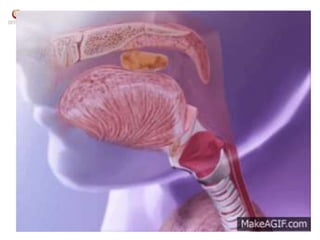
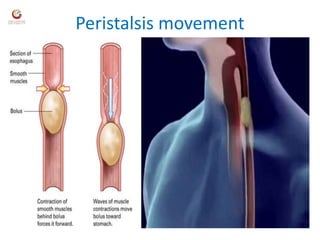
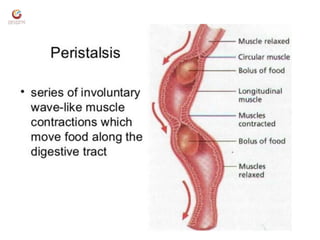
Peristalsis movement
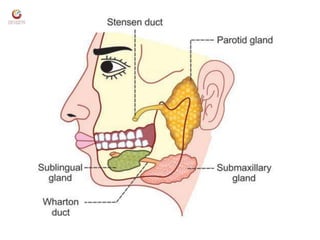
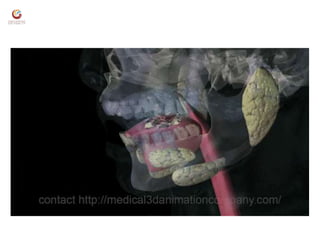
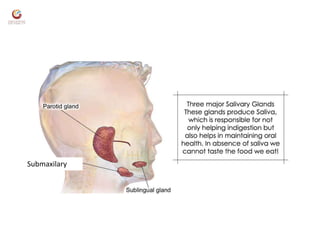
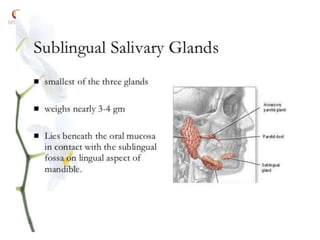
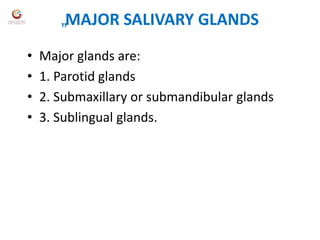
„MAJOR SALIVARY GLANDS
• Major glands are:
• 1. Parotid glands
• 2. Submaxillary or submandibular glands
• 3. Sublingual glands.
Submaxilary
PROPERTIES AND COMPOSITION
OF SALIVA
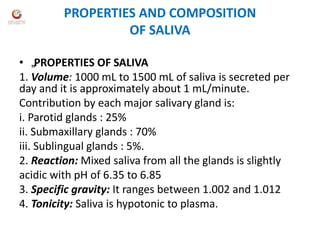
• „PROPERTIES OF SALIVA
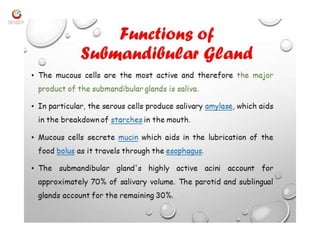
1. Volume: 1000 mL to 1500 mL of saliva is secreted per
day and it is approximately about 1 mL/minute.
Contribution by each major salivary gland is:
i. Parotid glands : 25%
ii. Submaxillary glands : 70%
iii. Sublingual glands : 5%.
2. Reaction: Mixed saliva from all the glands is slightly
acidic with pH of 6.35 to 6.85
3. Specific gravity: It ranges between 1.002 and 1.012
4. Tonicity: Saliva is hypotonic to plasma.
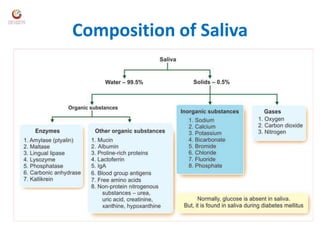
Composition of Saliva
Digestive system introduction

Digestive system introduction

  • 1.
    Module - 4 Subcode: BMLT1002 Sub Name: General physiology – (T) Department: Department of MLT, SMAS Faculty: A. Vamsi Kumar Designation : Assistant professor S.No Admission No Student Name Uni t Seminar Topic Name Date of Presentation 1. 19SMAS1050001 Asad Ali 4 Introduction & Functions of Digestive system 1-11-19 11:55 am 2. 19SMAS1050002 Sharukh Khan 4 Functional Anatomy of Digestive system 1-11-19 12:05 pm 3. 19SMAS1050003 RAHUL PRATAP SINGH 4 Functions of Primary digestive organs 1-11-19 12:15 pm 4. 19SMAS1050004 MD FARHAN FAISAL 4 Functions of mouth and Properties & composition of Saliva 1-11-19 12:25 pm
  • 2.
    Course outcomes • Presentthe functions of Digestive system & Accessory organs of Digestive system
  • 3.
    Introduction & Functionsof Digestive system By Mr. Asad Ali
  • 5.
    INTRODUCTION Digestion is definedas the process by which food is broken down into simple chemical substances that can be absorbed and used as nutrients by the body. Most of the substances in the diet cannot be utilized as such. These substances must be broken into smaller particles, so that they can be absorbed into blood and distributed to various parts of the body for utilization. Digestive system is responsible for these functions.
  • 6.
    Digestive process isaccomplished by mechanical and enzymatic breakdown of food into simpler chemical compounds. A normal young healthy adult consumes about 1 kg of solid diet and about 1 to 2 liter of liquid diet every day. All these food materials are subjected to digestive process, before being absorbed into blood and distributed to the tissues of the body. Digestive system plays the major role in the digestion and absorption of food substances.
  • 7.
    Thus, the functionsof digestive system include: 1. Ingestion or consumption of food substances 2. Breaking them into small particles 3. Transport of small particles to different areas of the digestive tract 4. Secretion of necessary enzymes and other substances for digestion 5. Digestion of the food particles 6. Absorption of the digestive products (nutrients) 7. Removal of unwanted substances from the body.
  • 11.
    FUNCTIONAL ANATOMY OF DIGESTIVESYSTEM by Mr. Sharuk Khan
  • 12.
    „FUNCTIONAL ANATOMY OF DIGESTIVESYSTEM „Digestive system is made up of gastrointestinal tract (GI tract) or alimentary canal and accessory organs, which help in the process of digestion and absorption (Fig. 36.1). GI tract is a tubular structure extending from the mouth up to anus, with a length of about 30 feet. It opens to the external environment on both ends. GI tract is formed by two types of organs: 1. Primary digestive organs. 2. Accessory digestive organs.
  • 13.
    1. Primary DigestiveOrgans Primary digestive organs are the organs where actual digestion takes place. Primary digestive organs are: i. Mouth ii. Pharynx iii. Esophagus iv. Stomach v. Small intestine vi. Large intestine.
  • 15.
    2. Accessory DigestiveOrgans Accessory digestive organs are those which help primary digestive organs in the process of digestion. Accessory digestive organs are: i. Teeth ii. Tongue iii. Salivary glands iv. Exocrine part of pancreas v. Liver vi. Gallbladder.
  • 17.
    Functions of Primarydigestive organs & Functions of mouth and Properties & composition of Saliva By Mr. FARHAN FAISAL & Mr. RAHUL PRATAP SINGH
  • 19.
    FUNCTIONS OF MOUTH Primaryfunction of mouth is eating and it has few other important functions also. Functions of mouth include: 1. Ingestion of food materials 2. Chewing the food and mixing it with saliva 3. Appreciation of taste of the food 4. Transfer of food (bolus) to the esophagus by swallowing 5. Role in speech 6. Social functions such as smiling and other expressions.
  • 26.
  • 38.
    „MAJOR SALIVARY GLANDS •Major glands are: • 1. Parotid glands • 2. Submaxillary or submandibular glands • 3. Sublingual glands.
  • 41.
  • 45.
    PROPERTIES AND COMPOSITION OFSALIVA • „PROPERTIES OF SALIVA 1. Volume: 1000 mL to 1500 mL of saliva is secreted per day and it is approximately about 1 mL/minute. Contribution by each major salivary gland is: i. Parotid glands : 25% ii. Submaxillary glands : 70% iii. Sublingual glands : 5%. 2. Reaction: Mixed saliva from all the glands is slightly acidic with pH of 6.35 to 6.85 3. Specific gravity: It ranges between 1.002 and 1.012 4. Tonicity: Saliva is hypotonic to plasma.
  • 46.