THE HUMAN
DIGESTIVE
SYSTEM
THE BODY SYSTEMS
LET’S OBSERVE!
Each student is given two crackers.
• Step 1: Put a regular cracker into the
mouth and chew.
• Step 2: Place a new cracker in the mouth
and let it sit for 2 minutes.
Let’s discuss students’ observations:
• Initial feeling
• Changes after 2 minutes
• Chewing process
DID YOU KNOW?
On average, a person produces about 1 to 1.5 liters
of saliva per day!
RUBRICS
LESSON OBJECTIVES
Identify key components
such as the mouth,
esophagus, stomach,
intestines, liver, gallbladder,
and pancreas.
Explain the purpose of
digestion, absorption, and
elimination and how
enzymes and acids aid in
breaking down food into
nutrients.
Describe the journey of food
inside the body from the
mouth to the rectum and the
specific functions performed
at each stage.
LET’S DISCUSS
The digestive system in the human body processes
food and liquids. It consists of the digestive tract, where
food passes through structures like the mouth,
esophagus, stomach, small intestine, large intestine,
and accessory organs.
These organs work together to break down food into
smaller components for absorption and assimilation.
DIGESTIVE
SYSTEM
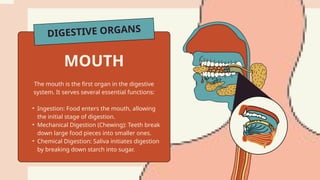
DIGESTIVE ORGANS
The mouth is the first organ in the digestive
system. It serves several essential functions:
• Ingestion: Food enters the mouth, allowing
the initial stage of digestion.
• Mechanical Digestion (Chewing): Teeth break
down large food pieces into smaller ones.
• Chemical Digestion: Saliva initiates digestion
by breaking down starch into sugar.
MOUTH
DIGESTIVE ORGANS
The esophagus ensures the smooth movement
of food from the mouth to the stomach,
allowing for efficient digestion and nutrient
absorption.
Unlike the stomach and small intestine, the
esophagus does not secrete digestive enzymes.
Its primary function is to facilitate the passage
of food.
ESOPHAGUS
DIGESTIVE ORGANS
he stomach is a hollow muscular organ that
holds food while it is being mixed with stomach
enzymes.
Its key functions include temporary food
storage, mechanical digestion (through
muscular contractions), chemical digestion (via
acids and enzymes), and controlled emptying of
partially digested food into the small intestine.
STOMACH
DIGESTIVE ORGANS
The pancreas is located behind the stomach; it
performs two key functions: it produces enzymes
that break down sugars, fats, proteins, and starches
during digestion.
The pancreas releases hormones into the
bloodstream. These chemical messengers help
regulate blood sugar levels, stimulate stomach
acids, and control appetite and stomach emptying.
PANCREAS
DIGESTIVE ORGANS
The liver, the largest organ in the body, performs
essential functions within the digestive system.
The liver continually produces bile, aiding fat
digestion and nutrient absorption. It processes
toxins and removes them from the blood. The liver
creates substances necessary for blood clotting
after injury. It helps maintain healthy blood sugar
levels.
LIVER
DIGESTIVE ORGANS
The gallbladder is a small, pear-shaped organ
located beneath the liver. Its primary role in the
digestive system is to store and concentrate bile
produced by the liver.
Bile is a sticky, yellow-green digestive fluid
produced by the liver and stored in the gallbladder.
Its primary function is to break down fats into fatty
acids during digestion.
GALLBLADDER
DIGESTIVE ORGANS
The small intestine's main functions include
breaking down food, absorbing nutrients, and
moving the intestinal contents along the digestive
tract. Specifically, the small intestine absorbs
carbohydrates, proteins, and fats. It plays a vital
role in digestion, ensuring efficient nutrient
absorption and waste elimination.
SMALL INTESTINE
DIGESTIVE ORGANS
The large intestine, also known as the colon, follows
the small intestine and extends to the anal canal,
where food waste exits the body. The large
intestine performs several essential functions, such
as absorbing water and electrolytes, forming stool,
facilitating bacterial fermentation, and protecting
against infections.
LARGE INTESTINE
DIGESTIVE ORGANS
The rectum connects the large intestine to the
anus. It acts as a reservoir where stool accumulates
before being ready for elimination. The anus marks
the exit point for food waste. Muscles, nerves, and
mucous membranes work together to facilitate
healthy bowel movements that you can control.
RECTUM AND
ANUS
THANK YOU
FOR
LISTENING!
ANATOMY CLASS
THE HUMAN
DIGESTIVE
SYSTEM
THE BODY SYSTEMS

The Digestive System - Day 1 .pptx.pptxc

  • 1.
  • 2.
    LET’S OBSERVE! Each studentis given two crackers. • Step 1: Put a regular cracker into the mouth and chew. • Step 2: Place a new cracker in the mouth and let it sit for 2 minutes. Let’s discuss students’ observations: • Initial feeling • Changes after 2 minutes • Chewing process DID YOU KNOW? On average, a person produces about 1 to 1.5 liters of saliva per day!
  • 3.
  • 4.
    LESSON OBJECTIVES Identify keycomponents such as the mouth, esophagus, stomach, intestines, liver, gallbladder, and pancreas. Explain the purpose of digestion, absorption, and elimination and how enzymes and acids aid in breaking down food into nutrients. Describe the journey of food inside the body from the mouth to the rectum and the specific functions performed at each stage.
  • 5.
    LET’S DISCUSS The digestivesystem in the human body processes food and liquids. It consists of the digestive tract, where food passes through structures like the mouth, esophagus, stomach, small intestine, large intestine, and accessory organs. These organs work together to break down food into smaller components for absorption and assimilation. DIGESTIVE SYSTEM
  • 6.
    DIGESTIVE ORGANS The mouthis the first organ in the digestive system. It serves several essential functions: • Ingestion: Food enters the mouth, allowing the initial stage of digestion. • Mechanical Digestion (Chewing): Teeth break down large food pieces into smaller ones. • Chemical Digestion: Saliva initiates digestion by breaking down starch into sugar. MOUTH
  • 7.
    DIGESTIVE ORGANS The esophagusensures the smooth movement of food from the mouth to the stomach, allowing for efficient digestion and nutrient absorption. Unlike the stomach and small intestine, the esophagus does not secrete digestive enzymes. Its primary function is to facilitate the passage of food. ESOPHAGUS
  • 8.
    DIGESTIVE ORGANS he stomachis a hollow muscular organ that holds food while it is being mixed with stomach enzymes. Its key functions include temporary food storage, mechanical digestion (through muscular contractions), chemical digestion (via acids and enzymes), and controlled emptying of partially digested food into the small intestine. STOMACH
  • 9.
    DIGESTIVE ORGANS The pancreasis located behind the stomach; it performs two key functions: it produces enzymes that break down sugars, fats, proteins, and starches during digestion. The pancreas releases hormones into the bloodstream. These chemical messengers help regulate blood sugar levels, stimulate stomach acids, and control appetite and stomach emptying. PANCREAS
  • 10.
    DIGESTIVE ORGANS The liver,the largest organ in the body, performs essential functions within the digestive system. The liver continually produces bile, aiding fat digestion and nutrient absorption. It processes toxins and removes them from the blood. The liver creates substances necessary for blood clotting after injury. It helps maintain healthy blood sugar levels. LIVER
  • 11.
    DIGESTIVE ORGANS The gallbladderis a small, pear-shaped organ located beneath the liver. Its primary role in the digestive system is to store and concentrate bile produced by the liver. Bile is a sticky, yellow-green digestive fluid produced by the liver and stored in the gallbladder. Its primary function is to break down fats into fatty acids during digestion. GALLBLADDER
  • 12.
    DIGESTIVE ORGANS The smallintestine's main functions include breaking down food, absorbing nutrients, and moving the intestinal contents along the digestive tract. Specifically, the small intestine absorbs carbohydrates, proteins, and fats. It plays a vital role in digestion, ensuring efficient nutrient absorption and waste elimination. SMALL INTESTINE
  • 13.
    DIGESTIVE ORGANS The largeintestine, also known as the colon, follows the small intestine and extends to the anal canal, where food waste exits the body. The large intestine performs several essential functions, such as absorbing water and electrolytes, forming stool, facilitating bacterial fermentation, and protecting against infections. LARGE INTESTINE
  • 14.
    DIGESTIVE ORGANS The rectumconnects the large intestine to the anus. It acts as a reservoir where stool accumulates before being ready for elimination. The anus marks the exit point for food waste. Muscles, nerves, and mucous membranes work together to facilitate healthy bowel movements that you can control. RECTUM AND ANUS
  • 15.
  • 16.