DIFFERENTIATION IN A
NONTRADITIONAL SCHOOL
Today’s Classroom
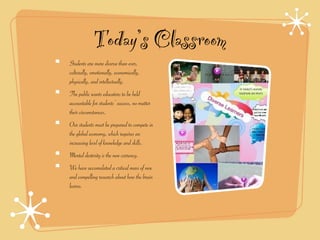
Students are more diverse than ever,
culturally, emotionally, economically,
physically, and intellectually.
The public wants educators to be held
accountable for students’ success, no matter
their circumstances.
Our students must be prepared to compete in
the global economy, which requires an
increasing level of knowledge and skills.
Mental dexterity is the new currency.
We have accumulated a critical mass of new
and compelling research about how the brain
learns.
Two Simple Charges of Differentiation
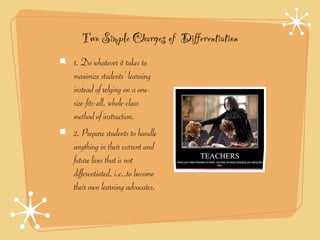
1. Do whatever it takes to
maximize students’ learning
instead of relying on a one-
size-fits-all, whole-class
method of instruction.
2. Prepare students to handle
anything in their current and
future lives that is not
differentiated, i.e.,to become
their own learning advocates.
Cognitive Science Structures and Tips That Help us
                   Differentiate

   Read widely about how the adolescent mind
   works.Here are some suggestions.
   How the Brain Learns, David Sousa
   The Primal Teen, Barbara Strauch
   Brain Matters, Patricia Wolfe
   The Adolescent Brain; Reaching for
   Autonomy, robert Sylvester
   Different Brains, Different Learners, Eric
   Jensen
Building Background Knowledge

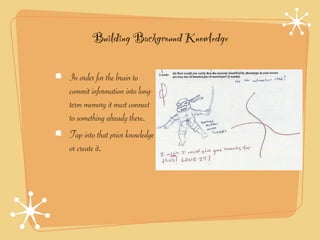
In order for the brain to
commit information into long-
term memory it must connect
to something already there.
Tap into that prior knowledge
or create it.
Priming the Brain and Structuring Information


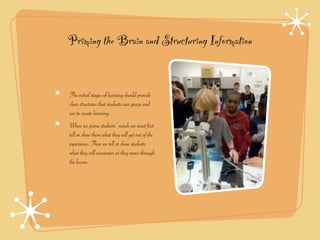
The initial stages of learning should provide
clear structures that students can grasp and
use to create learning.
When we prime students’ minds we must first
tell or show them what they will get out of the
experience. Then we tell or show students
what they will encounter as they move through
the lesson.
Primacy-Recency Effect


We remember best what we
first experience, and we
remember second best what we
experience last.
Explore Similarities ad Differences, Examples and
                  Non examples

  Powerful long-term memory
  retention happens when we
  create frequent and intense
  experiences examining the
  characteristics of related and
  unrelated terms.
Hydration

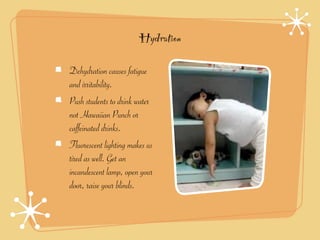
Dehydration causes fatigue
and irritability.
Push students to drink water
not Hawaiian Punch or
caffeinated drinks.
Fluorescent lighting makes us
tired as well. Get an
incandescent lamp, open your
door, raise your blinds.
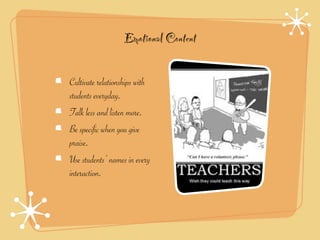
Emotional Content

Cultivate relationships with
students everyday.
Talk less and listen more.
Be specific when you give
praise.
Use students’ names in every
interaction.
Find out all you can about
your students, then consider
that information as you teach
them.
Don’t play “gotcha” with
students. Seek and affirm
their successes.
Teach as if you were selling
the subject to your students.
Affirm positive risk-taking in
the classroom.
Don’t punish the whole class
because of the actions of a few.
Ask students to coteach with
you.
Give students leadership
positions.
Be willing to revise your
thinking about a student in
light of new evidence.
Make sure students experience
real competence in your
classroom.
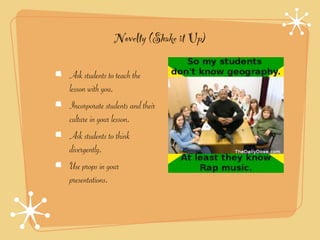
Novelty (Shake it Up)

Ask students to teach the
lesson with you.
Incorporate students and their
culture in your lesson.
Ask students to think
divergently.
Use props in your
presentations.
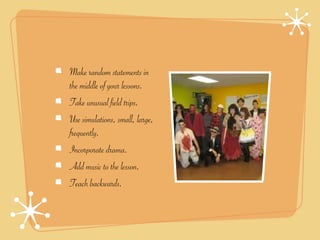
Make random statements in
the middle of your lessons.
Take unusual field trips.
Use simulations, small, large,
frequently.
Incorporate drama.
Add music to the lesson.
Teach backwards.
Meeting Survival Needs


Our brains will always choose
to conserve energy and
maintain dignity.
If we want students to learn,
we have to care about their
lives both in and out of school.
Memory Ideas

Elements of memories are
stored in different parts of the
brain.
Give students a variety of ways
to engage with the topic.
Make sure to spiral the
curriculum. Revisit
information.
Learning takes diligence.
Social Interaction

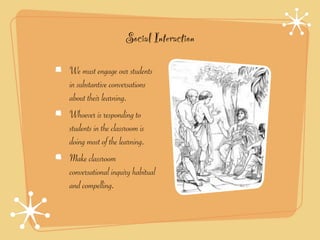
We must engage our students
in substantive conversations
about their learning.
Whoever is responding to
students in the classroom is
doing most of the learning.
Make classroom
conversational inquiry habitual
and compelling.
Remember, Rome wasn’t built in a day. It takes time to create a
differentiated classroom. As teachers we must seek a balance between our
        professional and personal lives or else we won’t be affective.

Differentiation

  • 1.
  • 2.
    Today’s Classroom Students aremore diverse than ever, culturally, emotionally, economically, physically, and intellectually. The public wants educators to be held accountable for students’ success, no matter their circumstances. Our students must be prepared to compete in the global economy, which requires an increasing level of knowledge and skills. Mental dexterity is the new currency. We have accumulated a critical mass of new and compelling research about how the brain learns.
  • 3.
    Two Simple Chargesof Differentiation 1. Do whatever it takes to maximize students’ learning instead of relying on a one- size-fits-all, whole-class method of instruction. 2. Prepare students to handle anything in their current and future lives that is not differentiated, i.e.,to become their own learning advocates.
  • 4.
    Cognitive Science Structuresand Tips That Help us Differentiate Read widely about how the adolescent mind works.Here are some suggestions. How the Brain Learns, David Sousa The Primal Teen, Barbara Strauch Brain Matters, Patricia Wolfe The Adolescent Brain; Reaching for Autonomy, robert Sylvester Different Brains, Different Learners, Eric Jensen
  • 5.
    Building Background Knowledge Inorder for the brain to commit information into long- term memory it must connect to something already there. Tap into that prior knowledge or create it.
  • 6.
    Priming the Brainand Structuring Information The initial stages of learning should provide clear structures that students can grasp and use to create learning. When we prime students’ minds we must first tell or show them what they will get out of the experience. Then we tell or show students what they will encounter as they move through the lesson.
  • 7.
    Primacy-Recency Effect We rememberbest what we first experience, and we remember second best what we experience last.
  • 8.
    Explore Similarities adDifferences, Examples and Non examples Powerful long-term memory retention happens when we create frequent and intense experiences examining the characteristics of related and unrelated terms.
  • 9.
    Hydration Dehydration causes fatigue andirritability. Push students to drink water not Hawaiian Punch or caffeinated drinks. Fluorescent lighting makes us tired as well. Get an incandescent lamp, open your door, raise your blinds.
  • 10.
    Emotional Content Cultivate relationshipswith students everyday. Talk less and listen more. Be specific when you give praise. Use students’ names in every interaction.
  • 11.
    Find out allyou can about your students, then consider that information as you teach them. Don’t play “gotcha” with students. Seek and affirm their successes. Teach as if you were selling the subject to your students.
  • 12.
    Affirm positive risk-takingin the classroom. Don’t punish the whole class because of the actions of a few. Ask students to coteach with you. Give students leadership positions.
  • 13.
    Be willing torevise your thinking about a student in light of new evidence. Make sure students experience real competence in your classroom.
  • 14.
    Novelty (Shake itUp) Ask students to teach the lesson with you. Incorporate students and their culture in your lesson. Ask students to think divergently. Use props in your presentations.
  • 15.
    Make random statementsin the middle of your lessons. Take unusual field trips. Use simulations, small, large, frequently. Incorporate drama. Add music to the lesson. Teach backwards.
  • 16.
    Meeting Survival Needs Ourbrains will always choose to conserve energy and maintain dignity. If we want students to learn, we have to care about their lives both in and out of school.
  • 17.
    Memory Ideas Elements ofmemories are stored in different parts of the brain. Give students a variety of ways to engage with the topic. Make sure to spiral the curriculum. Revisit information. Learning takes diligence.
  • 18.
    Social Interaction We mustengage our students in substantive conversations about their learning. Whoever is responding to students in the classroom is doing most of the learning. Make classroom conversational inquiry habitual and compelling.
  • 19.
    Remember, Rome wasn’tbuilt in a day. It takes time to create a differentiated classroom. As teachers we must seek a balance between our professional and personal lives or else we won’t be affective.