Effective
communicatio
n
Sammy Fugler
October, 2017
Communication Strategies
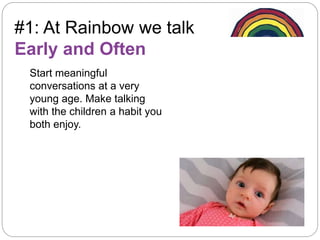
#1: At Rainbow we talk
Early and Often
Start meaningful
conversations at a very
young age. Make talking
with the children a habit you
both enjoy.
#2: Initiate the Conversation
Don’t wait for your
children to start
talking to you. Many
times they won’t or
don’t want to,
so get things started
yourself.
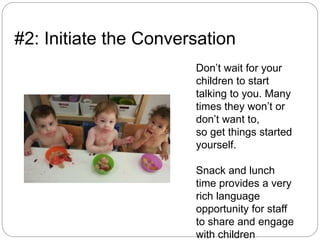
Snack and lunch
time provides a very
rich language
opportunity for staff
to share and engage
with children
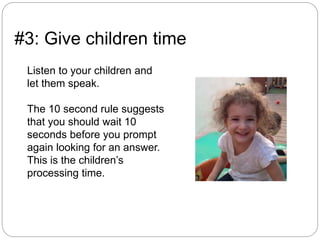
#3: Give children time
Listen to your children and
let them speak.
The 10 second rule suggests
that you should wait 10
seconds before you prompt
again looking for an answer.
This is the children’s
processing time.
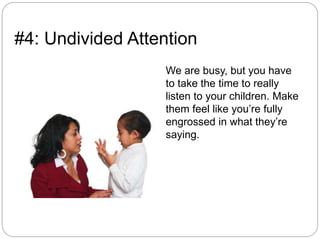
#4: Undivided Attention
We are busy, but you have
to take the time to really
listen to your children. Make
them feel like you’re fully
engrossed in what they’re
saying.
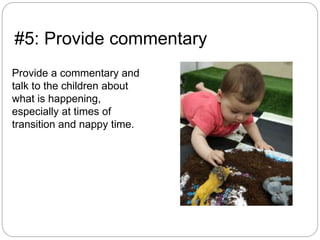
#5: Provide commentary
Provide a commentary and
talk to the children about
what is happening,
especially at times of
transition and nappy time.
#6: Schedule Time to Talk
Always make sure there is
time to talk when you can
really pay attention to one
another. 1:1 and in a group.
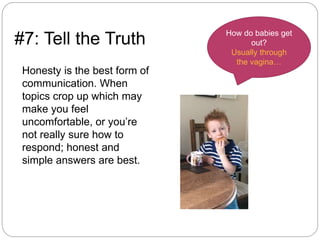
#7: Tell the Truth
Honesty is the best form of
communication. When
topics crop up which may
make you feel
uncomfortable, or you’re
not really sure how to
respond; honest and
simple answers are best.
How do babies get
out?
Usually through
the vagina…
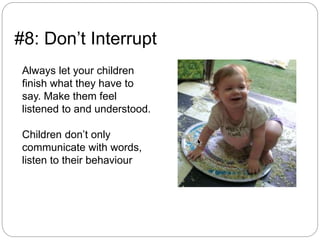
#8: Don’t Interrupt
Always let your children
finish what they have to
say. Make them feel
listened to and understood.
Children don’t only
communicate with words,
listen to their behaviour
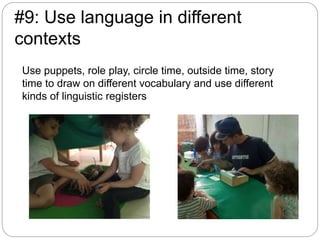
#9: Use language in different
contexts
Use puppets, role play, circle time, outside time, story
time to draw on different vocabulary and use different
kinds of linguistic registers
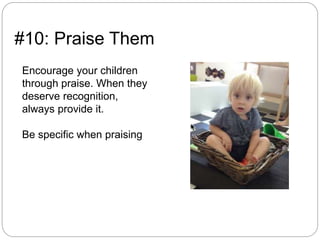
#10: Praise Them
Encourage your children
through praise. When they
deserve recognition,
always provide it.
Be specific when praising
Work in your allocated language
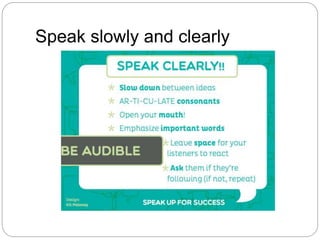
Speak slowly and clearly
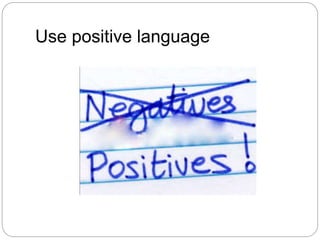
Use positive language
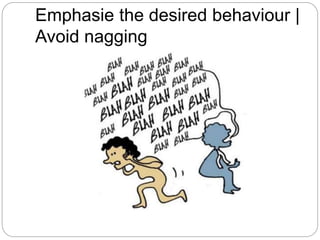
Emphasie the desired behaviour |
Avoid nagging
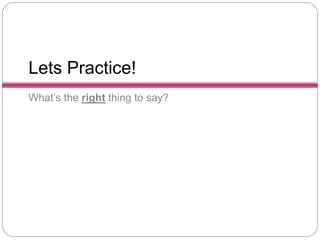
Lets Practice!
What’s the right thing to say?
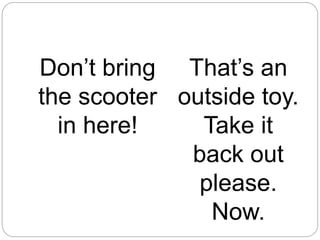
Don’t bring
the scooter
in here!
That’s an
outside toy.
Take it
back out
please.
Now.
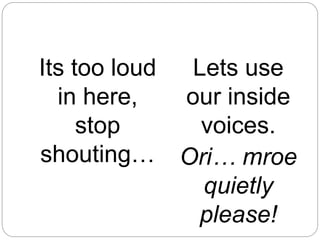
Its too loud
in here,
stop
shouting…
Lets use
our inside
voices.
Ori… mroe
quietly
please!
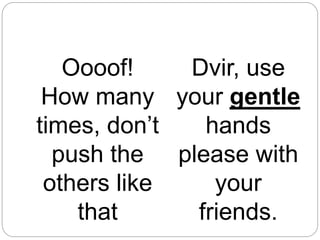
Oooof!
How many
times, don’t
push the
others like
that
Dvir, use
your gentle
hands
please with
your
friends.
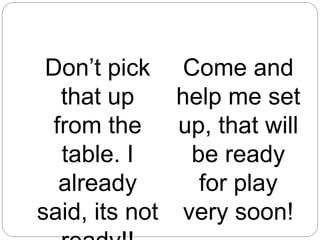
Don’t pick
that up
from the
table. I
already
said, its not
Come and
help me set
up, that will
be ready
for play
very soon!
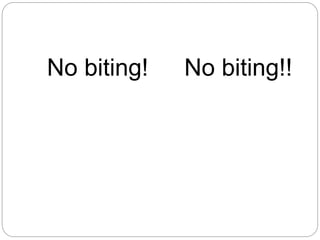
No biting! No biting!!

Effective communication in Early Years

  • 1.
  • 2.
    #1: At Rainbowwe talk Early and Often Start meaningful conversations at a very young age. Make talking with the children a habit you both enjoy.
  • 3.
    #2: Initiate theConversation Don’t wait for your children to start talking to you. Many times they won’t or don’t want to, so get things started yourself. Snack and lunch time provides a very rich language opportunity for staff to share and engage with children
  • 4.
    #3: Give childrentime Listen to your children and let them speak. The 10 second rule suggests that you should wait 10 seconds before you prompt again looking for an answer. This is the children’s processing time.
  • 5.
    #4: Undivided Attention Weare busy, but you have to take the time to really listen to your children. Make them feel like you’re fully engrossed in what they’re saying.
  • 6.
    #5: Provide commentary Providea commentary and talk to the children about what is happening, especially at times of transition and nappy time.
  • 7.
    #6: Schedule Timeto Talk Always make sure there is time to talk when you can really pay attention to one another. 1:1 and in a group.
  • 8.
    #7: Tell theTruth Honesty is the best form of communication. When topics crop up which may make you feel uncomfortable, or you’re not really sure how to respond; honest and simple answers are best. How do babies get out? Usually through the vagina…
  • 9.
    #8: Don’t Interrupt Alwayslet your children finish what they have to say. Make them feel listened to and understood. Children don’t only communicate with words, listen to their behaviour
  • 10.
    #9: Use languagein different contexts Use puppets, role play, circle time, outside time, story time to draw on different vocabulary and use different kinds of linguistic registers
  • 11.
    #10: Praise Them Encourageyour children through praise. When they deserve recognition, always provide it. Be specific when praising
  • 12.
    Work in yourallocated language
  • 13.
  • 14.
  • 15.
    Emphasie the desiredbehaviour | Avoid nagging
  • 16.
    Lets Practice! What’s theright thing to say?
  • 17.
    Don’t bring the scooter inhere! That’s an outside toy. Take it back out please. Now.
  • 18.
    Its too loud inhere, stop shouting… Lets use our inside voices. Ori… mroe quietly please!
  • 19.
    Oooof! How many times, don’t pushthe others like that Dvir, use your gentle hands please with your friends.
  • 20.
    Don’t pick that up fromthe table. I already said, its not Come and help me set up, that will be ready for play very soon!
  • 21.
    No biting! Nobiting!!