Differentiated Instruction
Presentation By: Monica Ceballos
Course: MTE/533
Larry Morgan
Introduction:
o Differentiated Instruction
• Flexible Grouping
• Grouping Student with Similar Learning Styles
• Instructional Scaffolding
• Technology
• Prior Knowledge
• Internet Security
Differentiated Instruction
Differentiated instruction is a method of teaching. It is the
act of taking what you know of your students and
provide them with different tasks and experiences to
help them achieve academic success and learning.
Thus creating a series of options and ways for students to
absorb the information by building on their learning
differences and similarities.
Flexible Grouping
Flexible grouping can be used in Math & Science as this allows
students grouping in different ways for different lessons helps
them increase their academic performance ("Fandom", 2020).
Types of Group:
▪ Small groups with similar learning styles
▪ Small groups with different learning styles
▪ One on One partners
▪ As a whole class
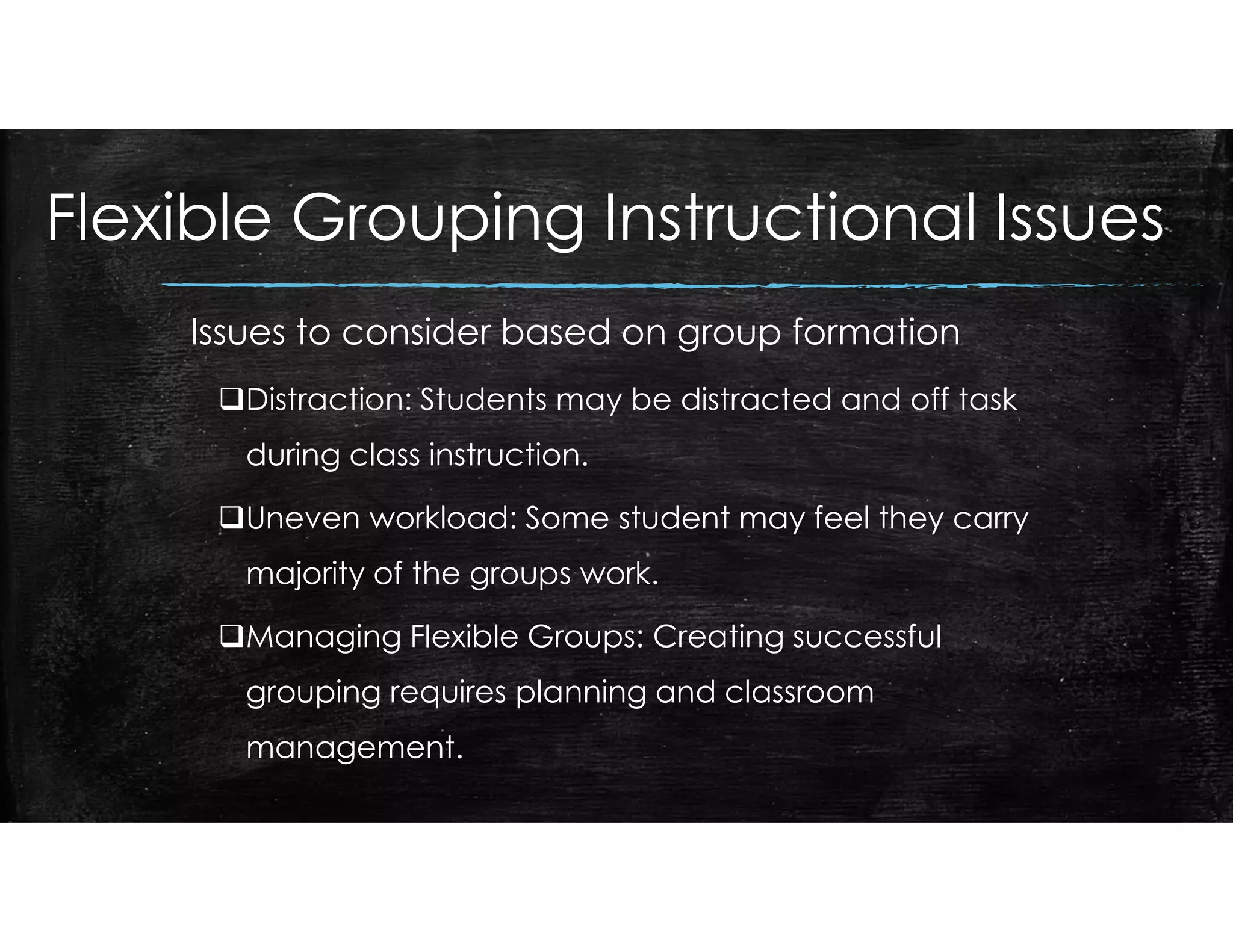
Flexible Grouping Instructional Issues
Issues to consider based on group formation
Distraction: Students may be distracted and off task
during class instruction.
Uneven workload: Some student may feel they carry
majority of the groups work.
Managing Flexible Groups: Creating successful
grouping requires planning and classroom
management.
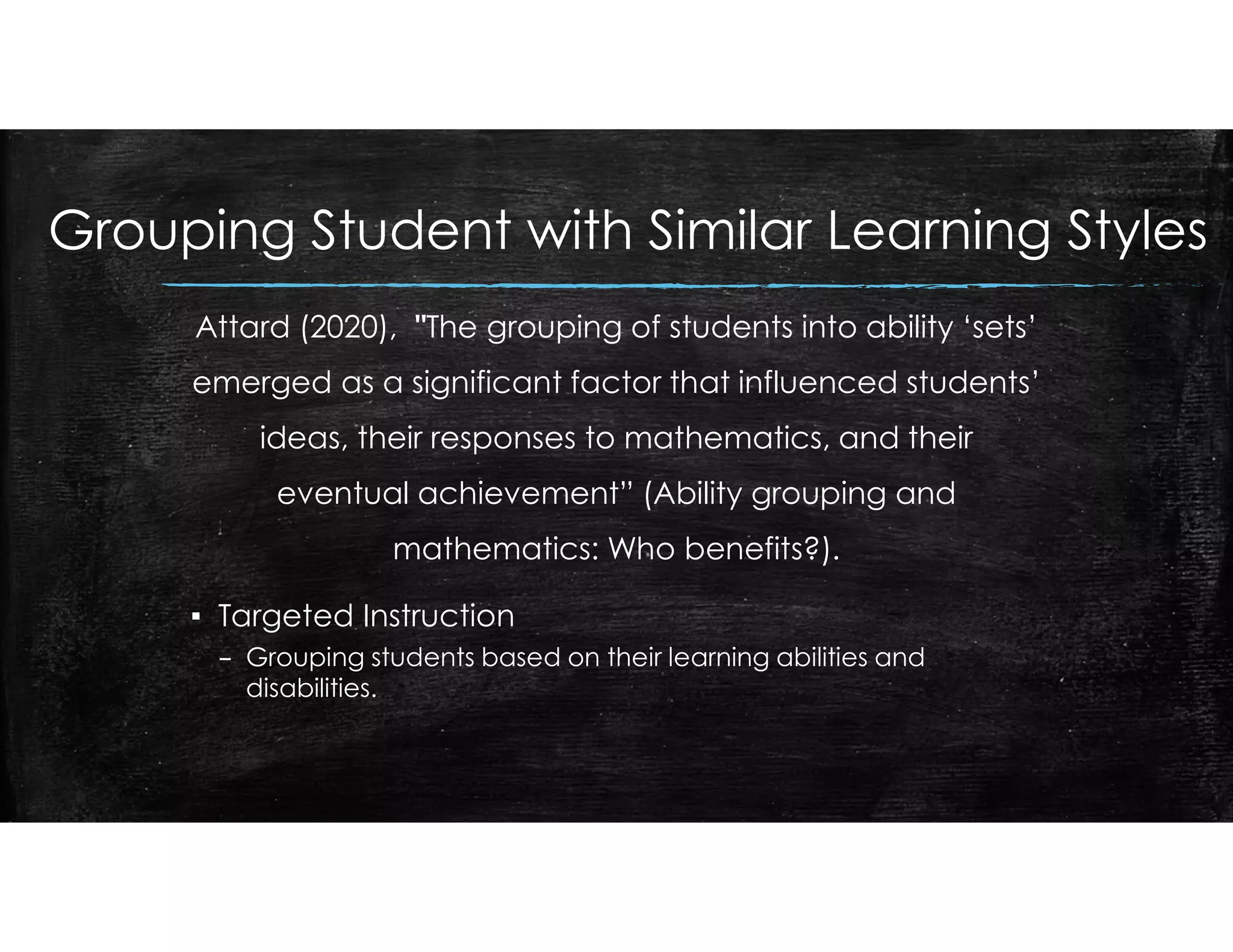
Grouping Student with Similar Learning Styles
Attard (2020), "The grouping of students into ability ‘sets’
emerged as a significant factor that influenced students’
ideas, their responses to mathematics, and their
eventual achievement” (Ability grouping and
mathematics: Who benefits?).
▪ Targeted Instruction
– Grouping students based on their learning abilities and
disabilities.
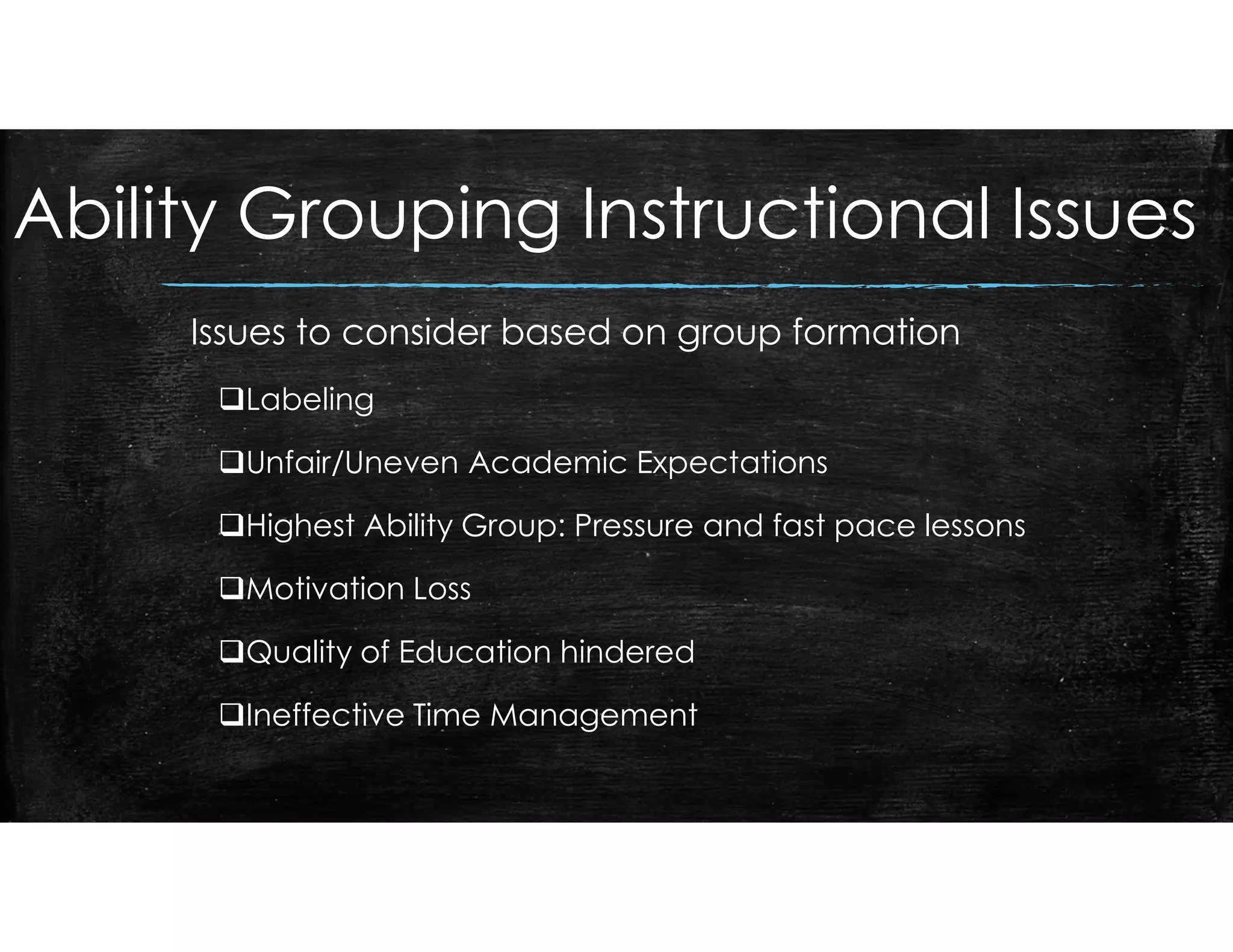
Ability Grouping Instructional Issues
Issues to consider based on group formation
Labeling
Unfair/Uneven Academic Expectations
Highest Ability Group: Pressure and fast pace lessons
Motivation Loss
Quality of Education hindered
Ineffective Time Management
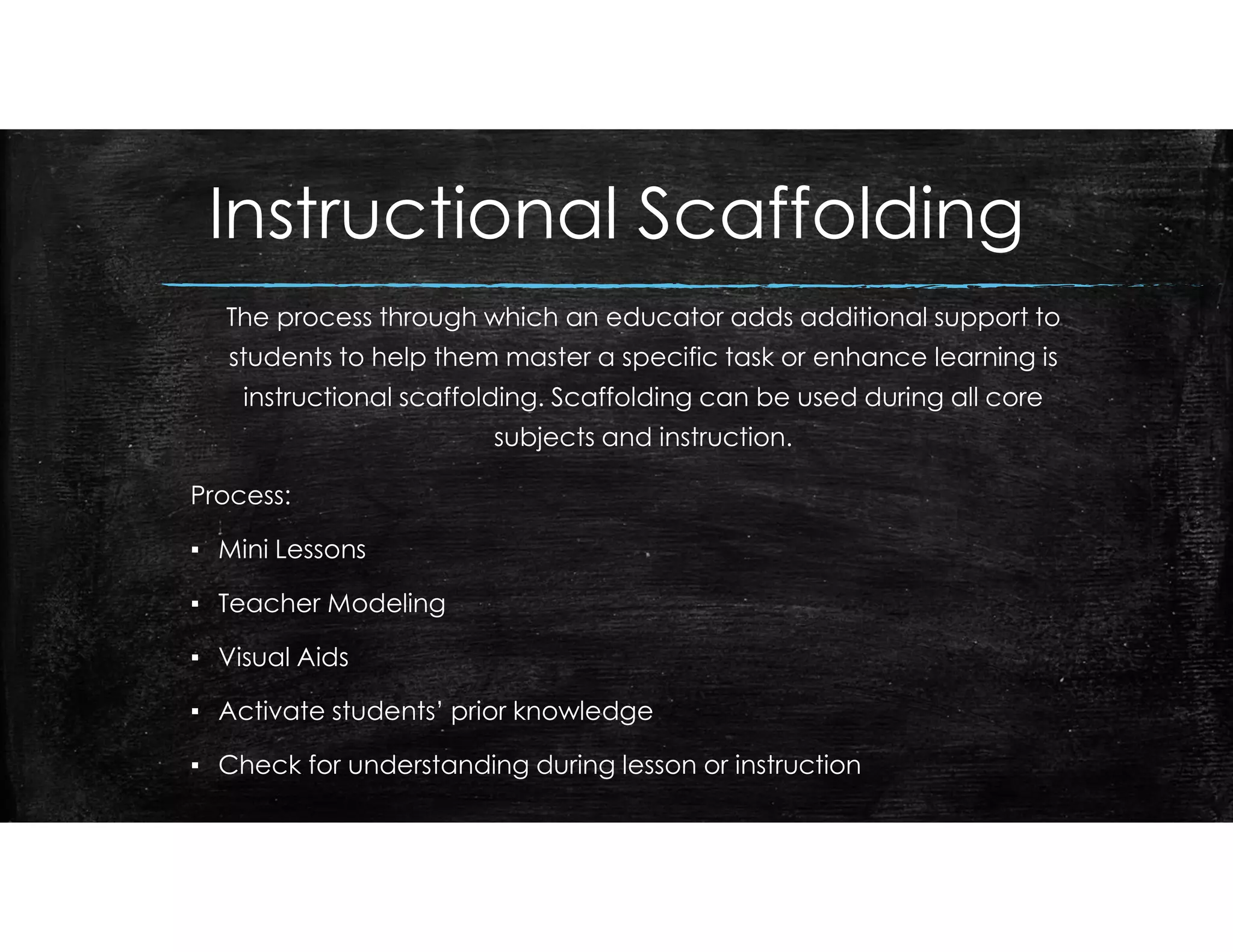
Instructional Scaffolding
The process through which an educator adds additional support to
students to help them master a specific task or enhance learning is
instructional scaffolding. Scaffolding can be used during all core
subjects and instruction.
Process:
▪ Mini Lessons
▪ Teacher Modeling
▪ Visual Aids
▪ Activate students’ prior knowledge
▪ Check for understanding during lesson or instruction
Scaffolding Instructional Issues
Instructional issues to consider:
Time Management: Scaffolding requires adequate
time for planning and lesson integration.
Lack of classroom support.
Technology
Enhancing learning an instructional quality through differentiated
technology by integrating the use of different forms of technology
within the instruction. This can be applied to all core subjects.
Process:
▪ Online Educational Gaming and Activities
▪ Web-Based Instruction
▪ Smartboard/Interactive Whiteboards
▪ Digital Assessments
Technology Instructional Issues
Instructional issues to consider:
May not appeal to all learning styles
Inadequate technology proficiency
Technical Errors/Issues
Limited Access
Prior Knowledge
Prior knowledge allows students to engage their prior understanding of
a specific topic or instruction which will help them learn and retain new
information. Students are less likely to mis-interpret the instruction or
lesson.
Strategies to Activate Prior Knowledge:
▪ Graphic Organizers
▪ KWL Charts
▪ Brainstorming
▪ Before Lesson Class Discussion
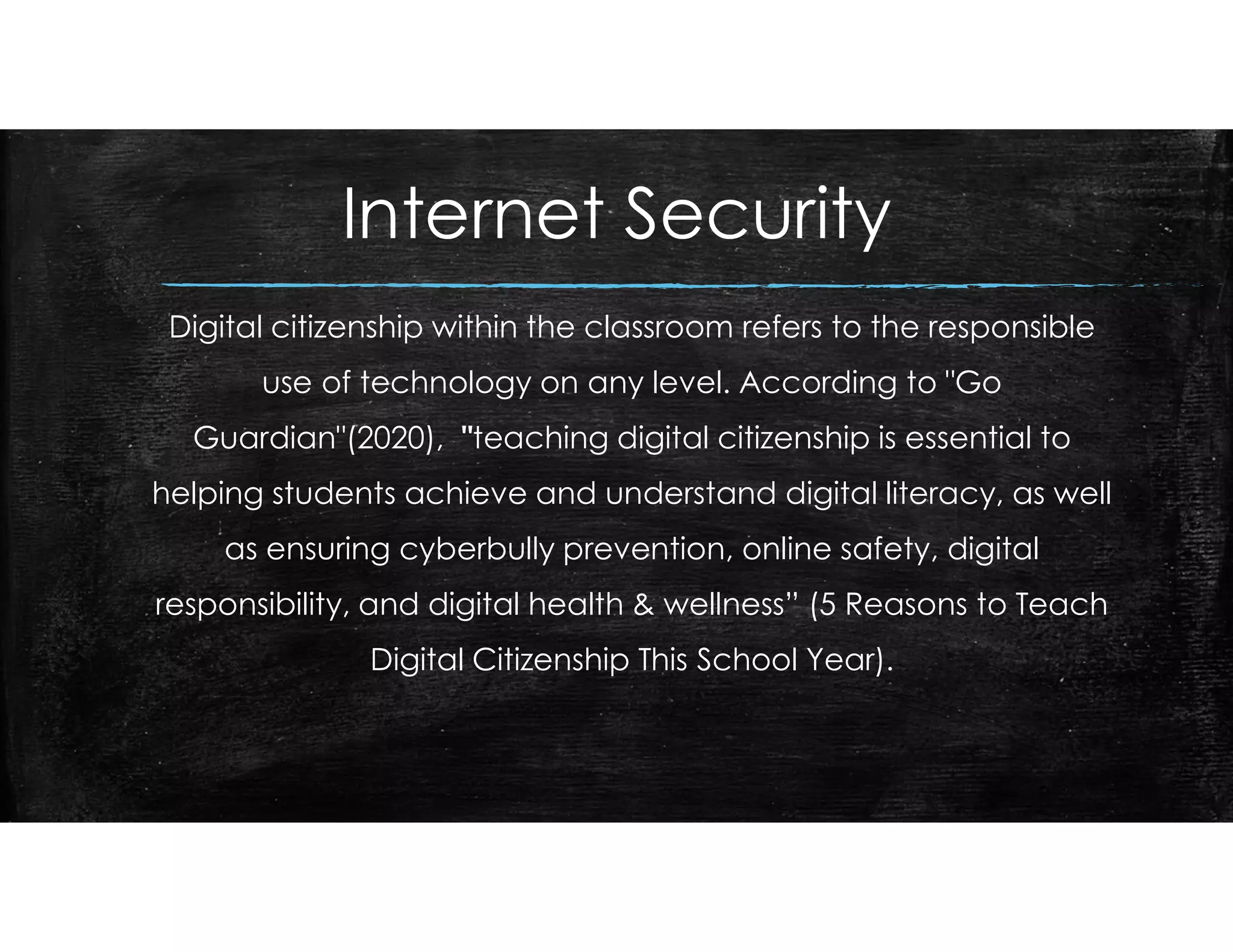
Internet Security
Digital citizenship within the classroom refers to the responsible
use of technology on any level. According to "Go
Guardian"(2020), "teaching digital citizenship is essential to
helping students achieve and understand digital literacy, as well
as ensuring cyberbully prevention, online safety, digital
responsibility, and digital health & wellness” (5 Reasons to Teach
Digital Citizenship This School Year).
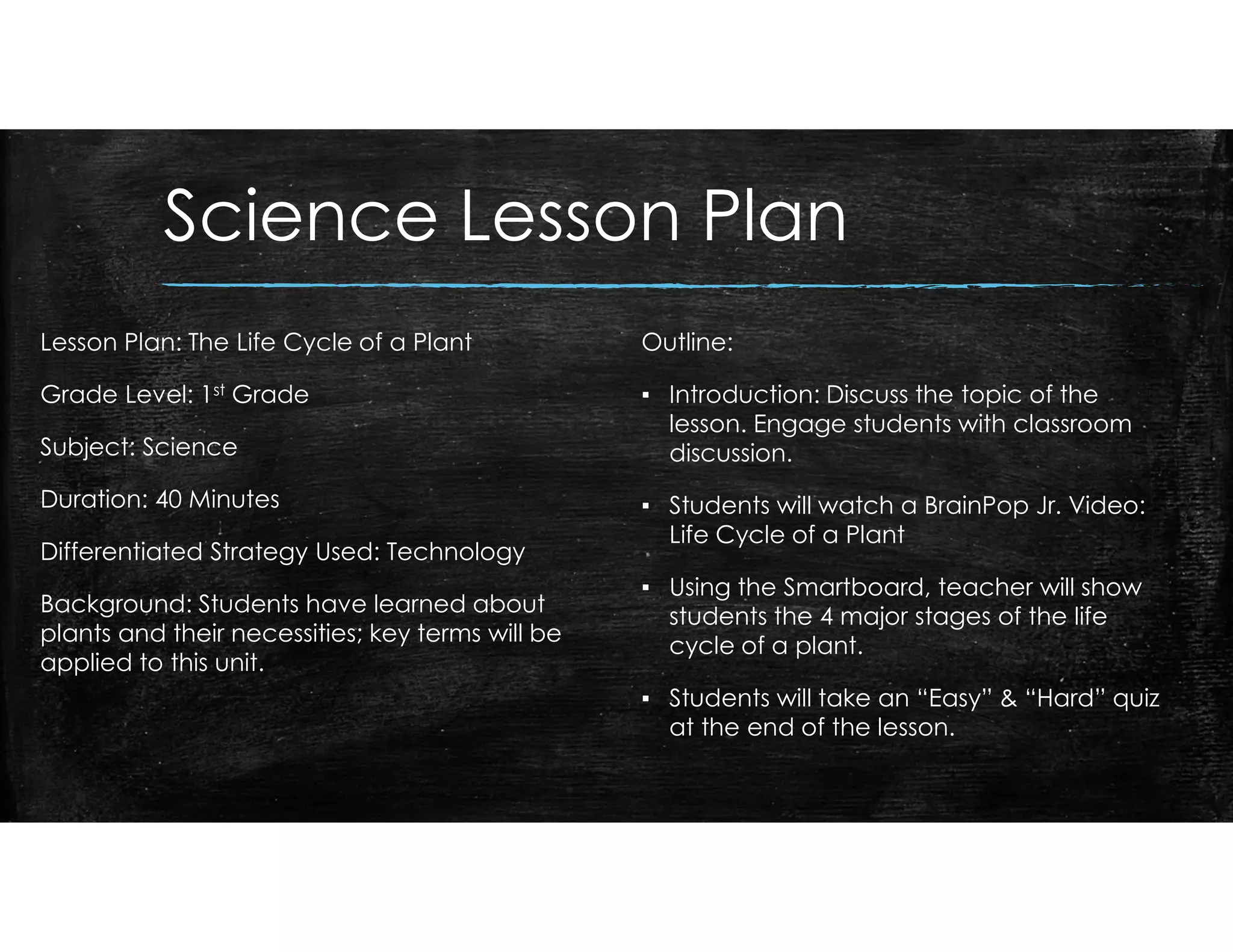
Science Lesson Plan
Lesson Plan: The Life Cycle of a Plant
Grade Level: 1st Grade
Subject: Science
Duration: 40 Minutes
Differentiated Strategy Used: Technology
Background: Students have learned about
plants and their necessities; key terms will be
applied to this unit.
Outline:
▪ Introduction: Discuss the topic of the
lesson. Engage students with classroom
discussion.
▪ Students will watch a BrainPop Jr. Video:
Life Cycle of a Plant
▪ Using the Smartboard, teacher will show
students the 4 major stages of the life
cycle of a plant.
▪ Students will take an “Easy” & “Hard” quiz
at the end of the lesson.
References:
▪ Robb, L. (2020). Scholastic. Retrieved from https://www.scholastic.com/teachers/articles/teaching-
content/what-differentiated-instruction/
▪ Fandom(2020). Retrieved from https://differentiating-instruction-for-math-and-
science.fandom.com/wiki/Current_Trends_in_Math_and_Science
▪ Teach Hub(2020). Retrieved from https://www.teachhub.com/flexible-grouping-differentiated-
instruction-strategy
▪ Attard, C. (2020). Engaging Maths. Retrieved from https://engagingmaths.com/2015/08/16/ability-
grouping-and-mathematics-who-benefits/
▪ We Are Teachers(2020). Retrieved from https://www.weareteachers.com/ways-to-scaffold-learning/
▪ Hampshire College (2020). Retrieved from https://sites.hampshire.edu/ctl/2017/09/14/the-importance-
of-engaging-prior-knowledge/
▪ Go Guardian(2020). Retrieved from https://www.goguardian.com/blog/learning/5-reasons-to-teach-
digital-citizenship-this-school-year/

Differentiating instruction

  • 1.
    Differentiated Instruction Presentation By:Monica Ceballos Course: MTE/533 Larry Morgan
  • 2.
    Introduction: o Differentiated Instruction •Flexible Grouping • Grouping Student with Similar Learning Styles • Instructional Scaffolding • Technology • Prior Knowledge • Internet Security
  • 3.
    Differentiated Instruction Differentiated instructionis a method of teaching. It is the act of taking what you know of your students and provide them with different tasks and experiences to help them achieve academic success and learning. Thus creating a series of options and ways for students to absorb the information by building on their learning differences and similarities.
  • 4.
    Flexible Grouping Flexible groupingcan be used in Math & Science as this allows students grouping in different ways for different lessons helps them increase their academic performance ("Fandom", 2020). Types of Group: ▪ Small groups with similar learning styles ▪ Small groups with different learning styles ▪ One on One partners ▪ As a whole class
  • 5.
    Flexible Grouping InstructionalIssues Issues to consider based on group formation Distraction: Students may be distracted and off task during class instruction. Uneven workload: Some student may feel they carry majority of the groups work. Managing Flexible Groups: Creating successful grouping requires planning and classroom management.
  • 6.
    Grouping Student withSimilar Learning Styles Attard (2020), "The grouping of students into ability ‘sets’ emerged as a significant factor that influenced students’ ideas, their responses to mathematics, and their eventual achievement” (Ability grouping and mathematics: Who benefits?). ▪ Targeted Instruction – Grouping students based on their learning abilities and disabilities.
  • 7.
    Ability Grouping InstructionalIssues Issues to consider based on group formation Labeling Unfair/Uneven Academic Expectations Highest Ability Group: Pressure and fast pace lessons Motivation Loss Quality of Education hindered Ineffective Time Management
  • 8.
    Instructional Scaffolding The processthrough which an educator adds additional support to students to help them master a specific task or enhance learning is instructional scaffolding. Scaffolding can be used during all core subjects and instruction. Process: ▪ Mini Lessons ▪ Teacher Modeling ▪ Visual Aids ▪ Activate students’ prior knowledge ▪ Check for understanding during lesson or instruction
  • 9.
    Scaffolding Instructional Issues Instructionalissues to consider: Time Management: Scaffolding requires adequate time for planning and lesson integration. Lack of classroom support.
  • 10.
    Technology Enhancing learning aninstructional quality through differentiated technology by integrating the use of different forms of technology within the instruction. This can be applied to all core subjects. Process: ▪ Online Educational Gaming and Activities ▪ Web-Based Instruction ▪ Smartboard/Interactive Whiteboards ▪ Digital Assessments
  • 11.
    Technology Instructional Issues Instructionalissues to consider: May not appeal to all learning styles Inadequate technology proficiency Technical Errors/Issues Limited Access
  • 12.
    Prior Knowledge Prior knowledgeallows students to engage their prior understanding of a specific topic or instruction which will help them learn and retain new information. Students are less likely to mis-interpret the instruction or lesson. Strategies to Activate Prior Knowledge: ▪ Graphic Organizers ▪ KWL Charts ▪ Brainstorming ▪ Before Lesson Class Discussion
  • 13.
    Internet Security Digital citizenshipwithin the classroom refers to the responsible use of technology on any level. According to "Go Guardian"(2020), "teaching digital citizenship is essential to helping students achieve and understand digital literacy, as well as ensuring cyberbully prevention, online safety, digital responsibility, and digital health & wellness” (5 Reasons to Teach Digital Citizenship This School Year).
  • 14.
    Science Lesson Plan LessonPlan: The Life Cycle of a Plant Grade Level: 1st Grade Subject: Science Duration: 40 Minutes Differentiated Strategy Used: Technology Background: Students have learned about plants and their necessities; key terms will be applied to this unit. Outline: ▪ Introduction: Discuss the topic of the lesson. Engage students with classroom discussion. ▪ Students will watch a BrainPop Jr. Video: Life Cycle of a Plant ▪ Using the Smartboard, teacher will show students the 4 major stages of the life cycle of a plant. ▪ Students will take an “Easy” & “Hard” quiz at the end of the lesson.
  • 15.
    References: ▪ Robb, L.(2020). Scholastic. Retrieved from https://www.scholastic.com/teachers/articles/teaching- content/what-differentiated-instruction/ ▪ Fandom(2020). Retrieved from https://differentiating-instruction-for-math-and- science.fandom.com/wiki/Current_Trends_in_Math_and_Science ▪ Teach Hub(2020). Retrieved from https://www.teachhub.com/flexible-grouping-differentiated- instruction-strategy ▪ Attard, C. (2020). Engaging Maths. Retrieved from https://engagingmaths.com/2015/08/16/ability- grouping-and-mathematics-who-benefits/ ▪ We Are Teachers(2020). Retrieved from https://www.weareteachers.com/ways-to-scaffold-learning/ ▪ Hampshire College (2020). Retrieved from https://sites.hampshire.edu/ctl/2017/09/14/the-importance- of-engaging-prior-knowledge/ ▪ Go Guardian(2020). Retrieved from https://www.goguardian.com/blog/learning/5-reasons-to-teach- digital-citizenship-this-school-year/