Surgical drains
Drains
• Drains are the devices that act as a channel to
drain established or potential collection of
blood,pus,body fluid or air.
• Often used after surgeries .
• Recording of quantity and content of drainage
is vital to ensure proper healing.
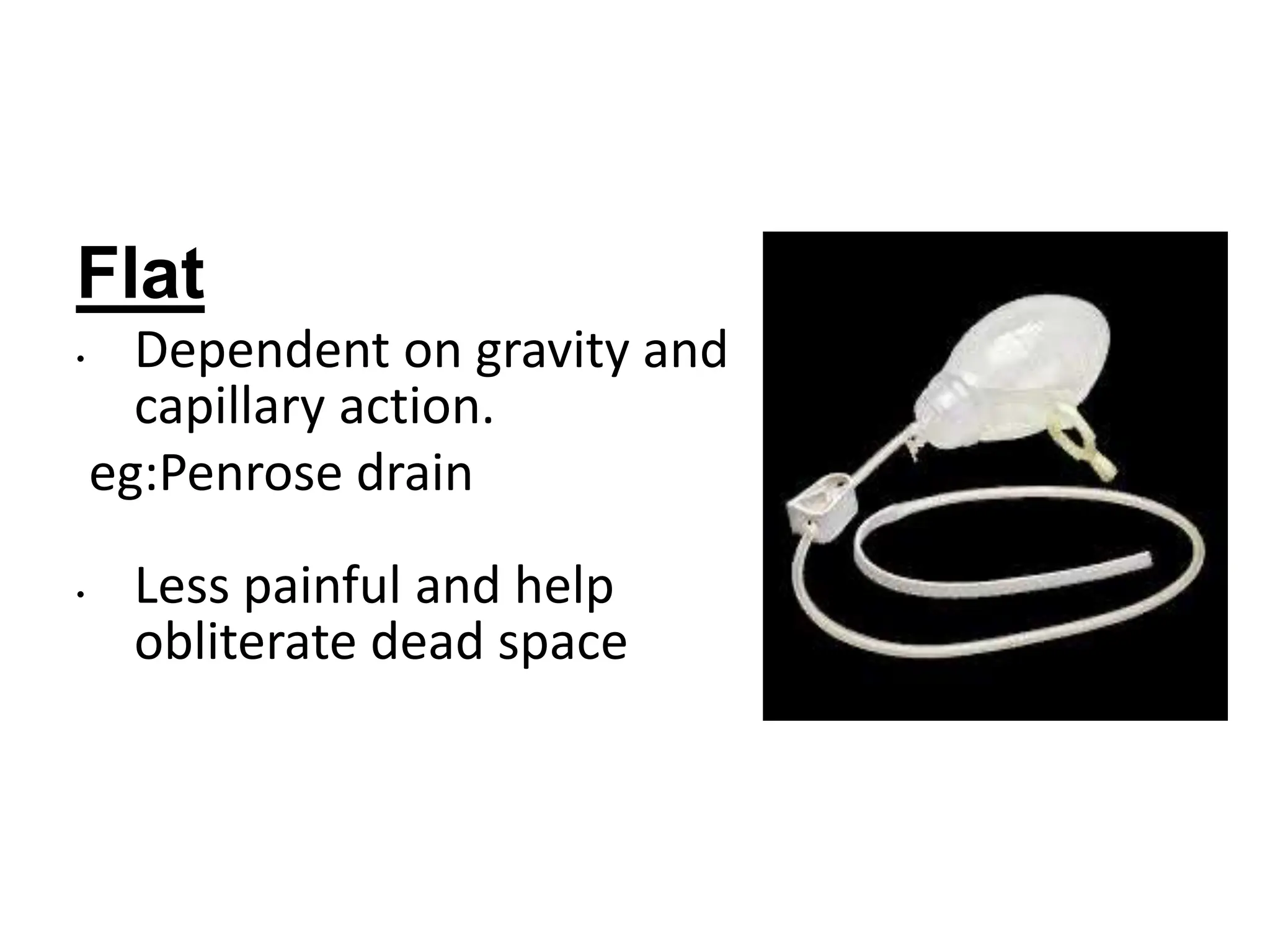
Flat
• Dependent on gravity and
capillary action.
eg:Penrose drain
• Less painful and help
obliterate dead space
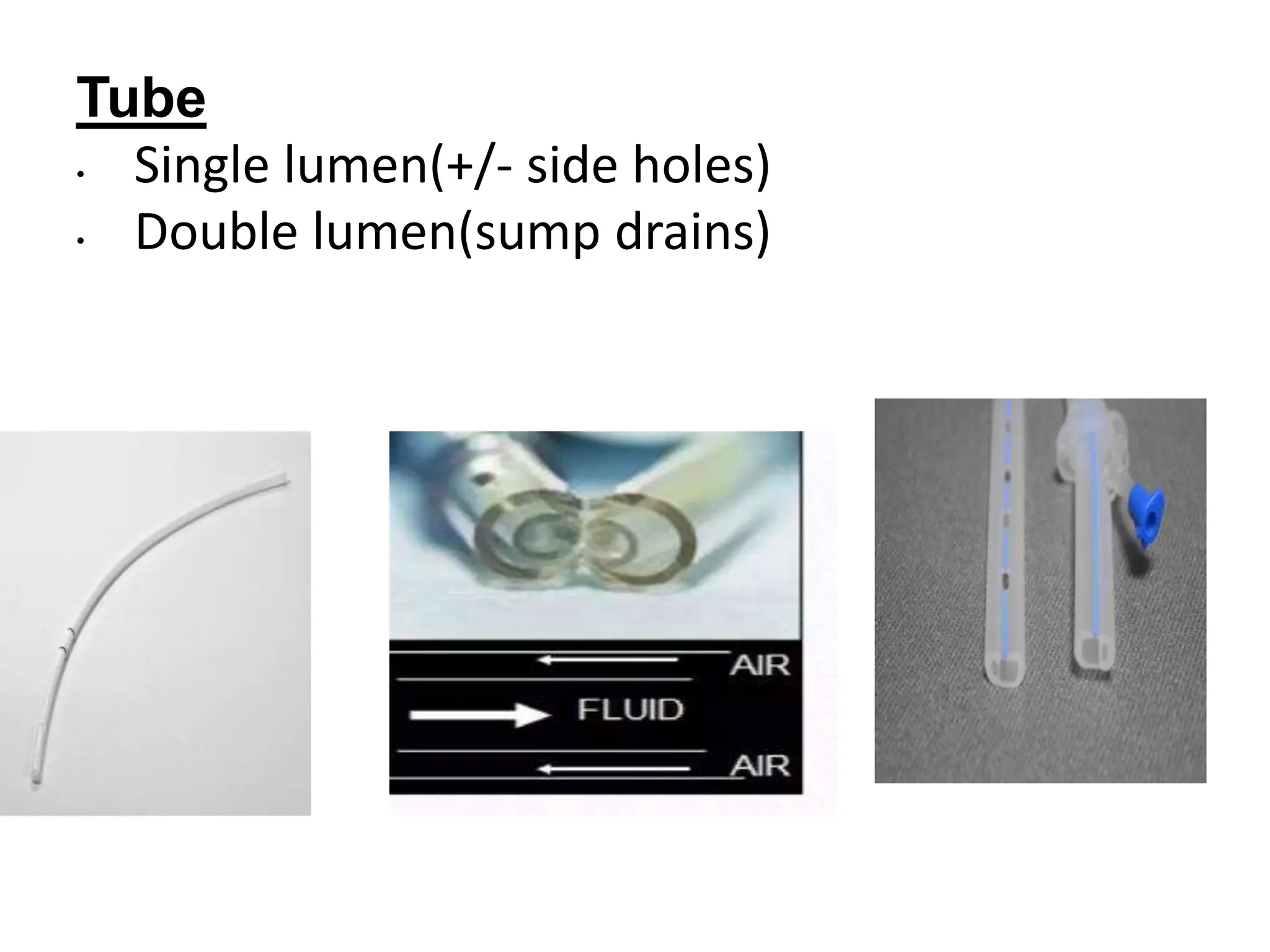
Tube
• Single lumen(+/- side holes)
• Double lumen(sump drains)
Classification
• Open vs closed systems
• Active vs passive
Open drains;
• Drain fluid collects in gauze pad or stoma
bag(increase the risk of infection)
eg:Penrose drain
Closed drains
• Consists of tubes draining into a bag or bottle.
Eg; jackson –pratt drains
• Maintained under suction
Advantage
• Keep wound dry
• Can be placed anywhere
• Prevent bacterial ascension
Disadvantage
• High negative pressure may injure tissue
• Drain clogged by tissue
Passive drains
• Have no suction
• Drains by means of pressure
differentials,overflow and gravity.
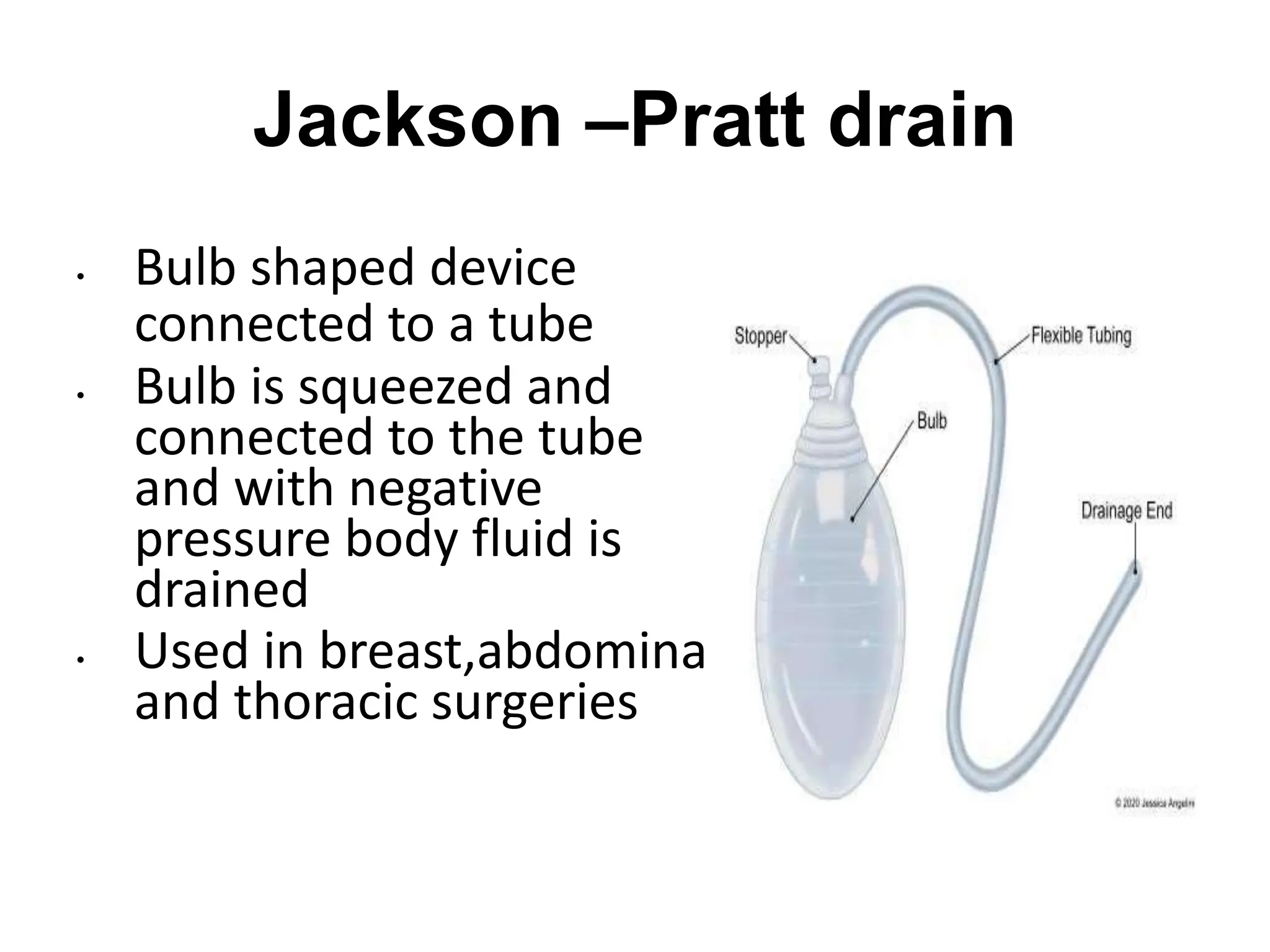
Jackson –Pratt drain
• Bulb shaped device
connected to a tube
• Bulb is squeezed and
connected to the tube
and with negative
pressure body fluid is
drained
• Used in breast,abdominal
and thoracic surgeries
Hemovac drain
• One end of tube with multiple holes goes into
the body and other end is connected to
hemovac bag(squeezed before connecting the
tube)
Pigtail drain
• Inserted under
strict radiological
guidance
• Used for drainage
of liver abscess, as
a nephrostomy
tube
Penrose drain
• Soft and flexible
• Passive drainage
• Drainage from the
area of greater
pressure of wound
to area of lesser
pressure
Davol drain
• Device has a rubber
bulb on top of the drain
that act as a pump
• Pump and inflate the
balloon
• And then plug in the
drain before balloon
deflates(inflated balloon
creates the suction)
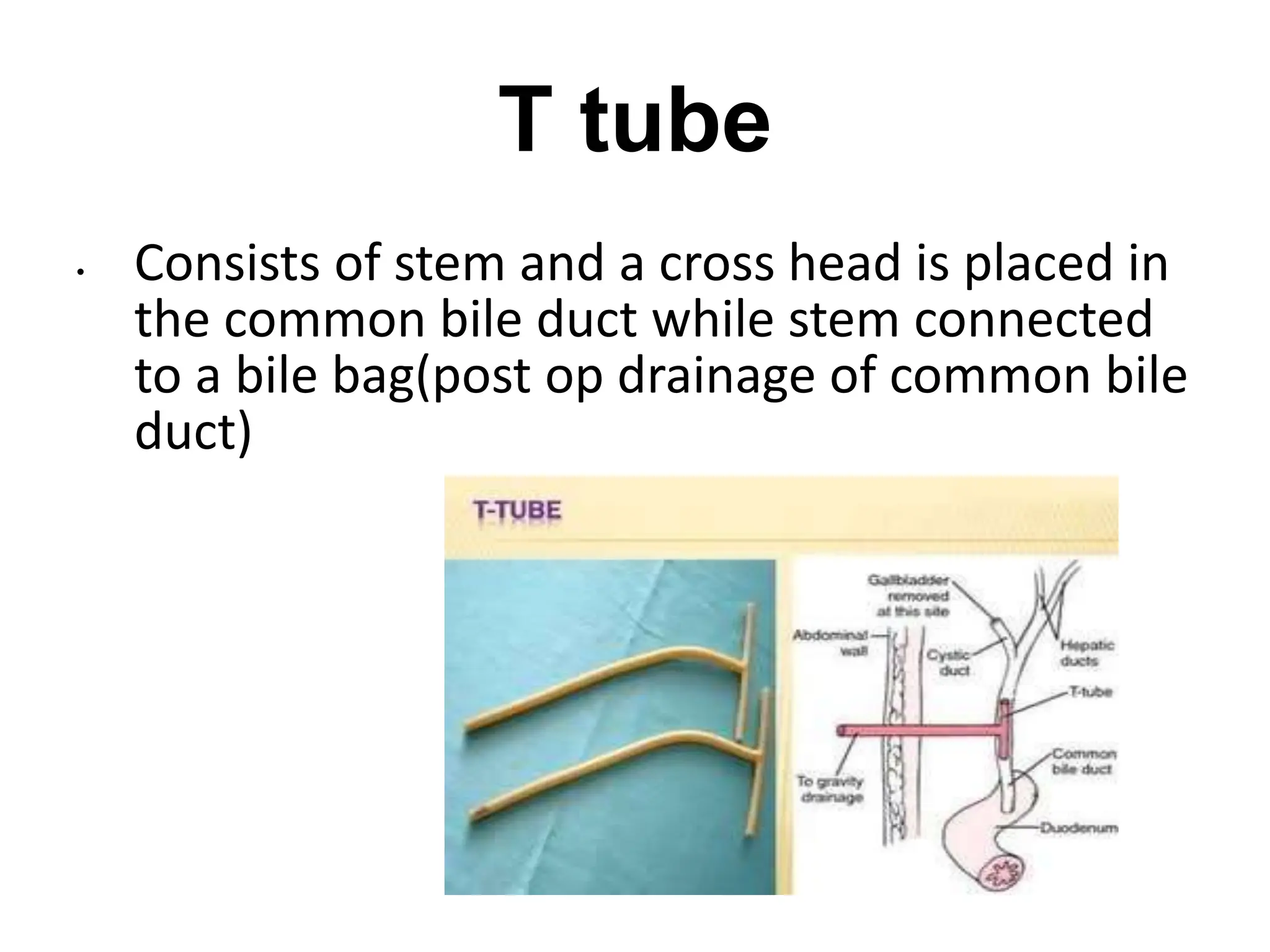
T tube
• Consists of stem and a cross head is placed in
the common bile duct while stem connected
to a bile bag(post op drainage of common bile
duct)
Chest tube(closed drain)
• Inserted in the 4th intercostal space in the
upper border of the rib below .
Uses
• Hemothorax
• pneumothorax
• pleural effusion
• chylothorax
Complications
• Arterial thrombosis
• air embolism
• hematoma
• bleeding
• infection
Nasogastric tube
• A tube passes through nostrils to stomach
Uses
• Aspiration of gastric juice
• Lavage
• Feeding
Complication
• Epistaxis
• aspiration
• erosions in nasal cavity
Negative pressure wound
therapy
• Promote wound
healing reduction of
bacteria in the wound
• Eg; skin grafted sites
and burn,infected
wound and diabetic
ulcers
Complication Of drain
• Inefficient drainage
• Obstruction
• Erosion into hollow organs
• Poor placement
• Accumulation Of fluid
• Foreign body reaction
• Poor post op management
Most Common Drains used in general surgery

Most Common Drains used in general surgery

  • 1.
  • 2.
    Drains • Drains arethe devices that act as a channel to drain established or potential collection of blood,pus,body fluid or air. • Often used after surgeries . • Recording of quantity and content of drainage is vital to ensure proper healing.
  • 3.
    Flat • Dependent ongravity and capillary action. eg:Penrose drain • Less painful and help obliterate dead space
  • 4.
    Tube • Single lumen(+/-side holes) • Double lumen(sump drains)
  • 5.
    Classification • Open vsclosed systems • Active vs passive
  • 6.
    Open drains; • Drainfluid collects in gauze pad or stoma bag(increase the risk of infection) eg:Penrose drain Closed drains • Consists of tubes draining into a bag or bottle. Eg; jackson –pratt drains
  • 7.
    • Maintained undersuction Advantage • Keep wound dry • Can be placed anywhere • Prevent bacterial ascension Disadvantage • High negative pressure may injure tissue • Drain clogged by tissue
  • 8.
    Passive drains • Haveno suction • Drains by means of pressure differentials,overflow and gravity.
  • 9.
    Jackson –Pratt drain •Bulb shaped device connected to a tube • Bulb is squeezed and connected to the tube and with negative pressure body fluid is drained • Used in breast,abdominal and thoracic surgeries
  • 10.
    Hemovac drain • Oneend of tube with multiple holes goes into the body and other end is connected to hemovac bag(squeezed before connecting the tube)
  • 11.
    Pigtail drain • Insertedunder strict radiological guidance • Used for drainage of liver abscess, as a nephrostomy tube
  • 12.
    Penrose drain • Softand flexible • Passive drainage • Drainage from the area of greater pressure of wound to area of lesser pressure
  • 13.
    Davol drain • Devicehas a rubber bulb on top of the drain that act as a pump • Pump and inflate the balloon • And then plug in the drain before balloon deflates(inflated balloon creates the suction)
  • 14.
    T tube • Consistsof stem and a cross head is placed in the common bile duct while stem connected to a bile bag(post op drainage of common bile duct)
  • 15.
    Chest tube(closed drain) •Inserted in the 4th intercostal space in the upper border of the rib below . Uses • Hemothorax • pneumothorax • pleural effusion • chylothorax
  • 16.
    Complications • Arterial thrombosis •air embolism • hematoma • bleeding • infection
  • 18.
    Nasogastric tube • Atube passes through nostrils to stomach Uses • Aspiration of gastric juice • Lavage • Feeding
  • 19.
  • 20.
    Negative pressure wound therapy •Promote wound healing reduction of bacteria in the wound • Eg; skin grafted sites and burn,infected wound and diabetic ulcers
  • 21.
    Complication Of drain •Inefficient drainage • Obstruction • Erosion into hollow organs • Poor placement • Accumulation Of fluid • Foreign body reaction • Poor post op management