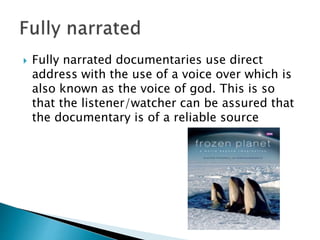
 Fully narrated documentaries use direct address with the use of a
voice over which is also known as the voice of god. This is so that
the listener/watcher can be assured that the documentary is of a
reliable source. The voice over conveys the exposition and it also
makes sense of what is on the screen. The narrator is authorative
about the topic.
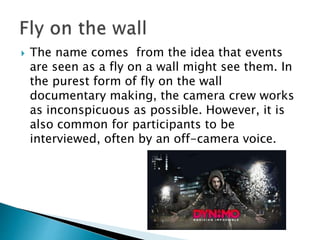
 The name comes from the idea that events are seen as a fly on a wall
might see them. It is also known as an observational documentary
but its communally known as fly-on-the-wall. In the purest form of
fly on the wall documentary making, the camera crew works as
inconspicuous as possible. However, it is also common for
participants to be interviewed, often by an off-camera voice. First
used in the 1960s and lightweight cameras where used so they
could film right where the action was taking place. The camera
worker do not know what the outcome will be because what they are
filming is real.
 Mixed documentaries use a combination of interviews, observations and
narration to back up/defend the argument. The narrator is usually placed
within a frame which is most communally known as news reporting.
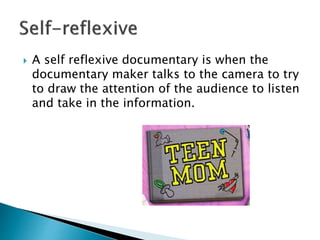
 A self reflexive documentary is when the documentary maker talks
to the camera to try to draw the attention of the audience to listen
and take in the information. The subjects acknowledge the camera
and speak directly to the film maker.
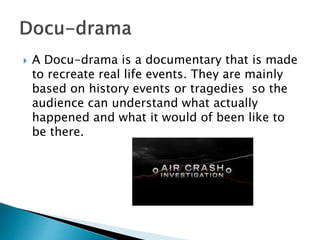
 A Docu-drama is a documentary that is made to recreate real life
events. They are mainly based on history events or tragedies so the
audience can understand what actually happened and what it would
of been like to be there. They are a combination of re-nactments
and real footage.
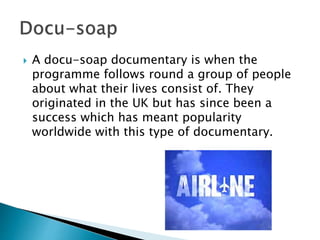
 A docu-soap documentary is when the programme follows round a group of
people about what their lives consist of. They originated in the UK but has
since been a success which has meant popularity worldwide with this type of
documentary. Get to know the characters that are involved within the show.

Different types of documentaries

  • 2.
     Fully narrateddocumentaries use direct address with the use of a voice over which is also known as the voice of god. This is so that the listener/watcher can be assured that the documentary is of a reliable source. The voice over conveys the exposition and it also makes sense of what is on the screen. The narrator is authorative about the topic.
  • 3.
     The namecomes from the idea that events are seen as a fly on a wall might see them. It is also known as an observational documentary but its communally known as fly-on-the-wall. In the purest form of fly on the wall documentary making, the camera crew works as inconspicuous as possible. However, it is also common for participants to be interviewed, often by an off-camera voice. First used in the 1960s and lightweight cameras where used so they could film right where the action was taking place. The camera worker do not know what the outcome will be because what they are filming is real.
  • 4.
     Mixed documentariesuse a combination of interviews, observations and narration to back up/defend the argument. The narrator is usually placed within a frame which is most communally known as news reporting.
  • 5.
     A selfreflexive documentary is when the documentary maker talks to the camera to try to draw the attention of the audience to listen and take in the information. The subjects acknowledge the camera and speak directly to the film maker.
  • 6.
     A Docu-dramais a documentary that is made to recreate real life events. They are mainly based on history events or tragedies so the audience can understand what actually happened and what it would of been like to be there. They are a combination of re-nactments and real footage.
  • 7.
     A docu-soapdocumentary is when the programme follows round a group of people about what their lives consist of. They originated in the UK but has since been a success which has meant popularity worldwide with this type of documentary. Get to know the characters that are involved within the show.