Cinematography
 Everything in the scene is there for a reason
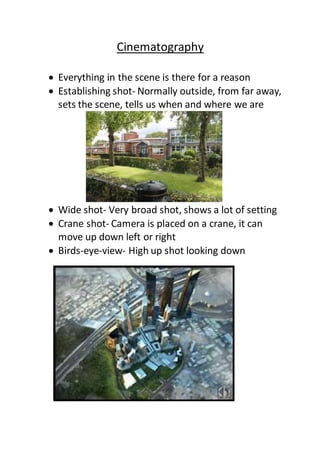
 Establishing shot- Normally outside, from far away,
sets the scene, tells us when and where we are
 Wide shot- Very broad shot, shows a lot of setting
 Crane shot- Camera is placed on a crane, it can
move up down left or right
 Birds-eye-view- High up shot looking down
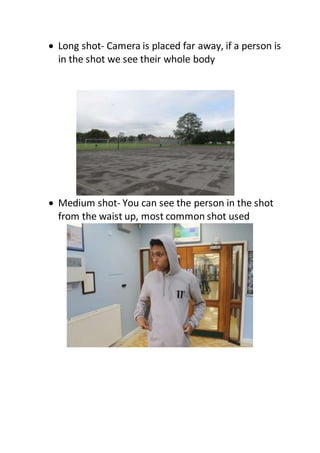
 Long shot- Camera is placed far away, if a person is
in the shot we see their whole body
 Medium shot- You can see the person in the shot
from the waist up, most common shot used
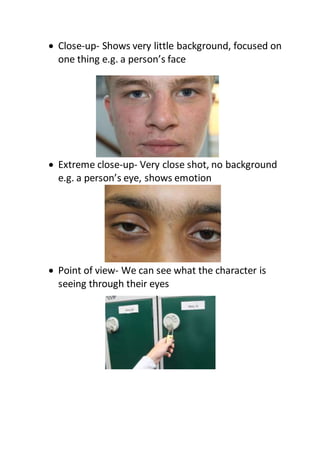
 Close-up- Shows very little background, focused on
one thing e.g. a person’s face
 Extreme close-up- Very close shot, no background
e.g. a person’s eye, shows emotion
 Point of view- We can see what the character is
seeing through their eyes
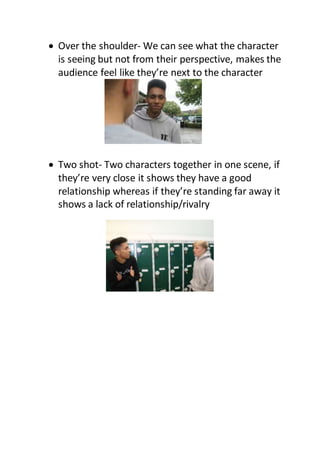
 Over the shoulder- We can see what the character
is seeing but not from their perspective, makes the
audience feel like they’re next to the character
 Two shot- Two characters together in one scene, if
they’re very close it shows they have a good
relationship whereas if they’re standing far away it
shows a lack of relationship/rivalry
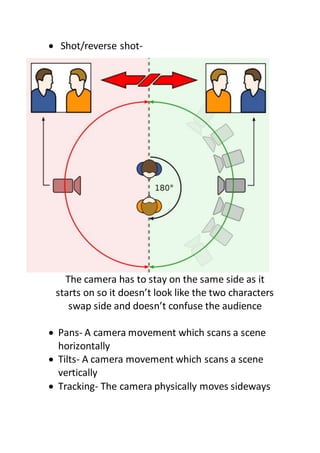
 Shot/reverse shot-
The camera has to stay on the same side as it
starts on so it doesn’t look like the two characters
swap side and doesn’t confuse the audience
 Pans- A camera movement which scans a scene
horizontally
 Tilts- A camera movement which scans a scene
vertically
 Tracking- The camera physically moves sideways
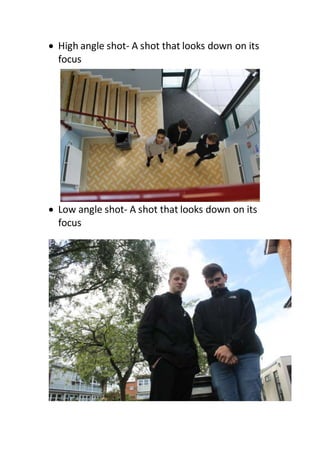
 High angle shot- A shot that looks down on its
focus
 Low angle shot- A shot that looks down on its
focus
 Dolly shot- A camera on wheels (Moves free flow)
 Hand held shot- The camera is being held (Jerky
movement)
 Zoom/reverse zoom- The camera moves closer or
further away from the action either done
physically or by the use of a zoom mechanism on
cameras
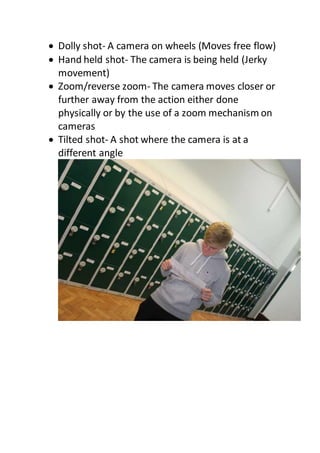
 Tilted shot- A shot where the camera is at a
different angle

Cinematography

  • 1.
    Cinematography  Everything inthe scene is there for a reason  Establishing shot- Normally outside, from far away, sets the scene, tells us when and where we are  Wide shot- Very broad shot, shows a lot of setting  Crane shot- Camera is placed on a crane, it can move up down left or right  Birds-eye-view- High up shot looking down
  • 2.
     Long shot-Camera is placed far away, if a person is in the shot we see their whole body  Medium shot- You can see the person in the shot from the waist up, most common shot used
  • 3.
     Close-up- Showsvery little background, focused on one thing e.g. a person’s face  Extreme close-up- Very close shot, no background e.g. a person’s eye, shows emotion  Point of view- We can see what the character is seeing through their eyes
  • 4.
     Over theshoulder- We can see what the character is seeing but not from their perspective, makes the audience feel like they’re next to the character  Two shot- Two characters together in one scene, if they’re very close it shows they have a good relationship whereas if they’re standing far away it shows a lack of relationship/rivalry
  • 5.
     Shot/reverse shot- Thecamera has to stay on the same side as it starts on so it doesn’t look like the two characters swap side and doesn’t confuse the audience  Pans- A camera movement which scans a scene horizontally  Tilts- A camera movement which scans a scene vertically  Tracking- The camera physically moves sideways
  • 6.
     High angleshot- A shot that looks down on its focus  Low angle shot- A shot that looks down on its focus
  • 7.
     Dolly shot-A camera on wheels (Moves free flow)  Hand held shot- The camera is being held (Jerky movement)  Zoom/reverse zoom- The camera moves closer or further away from the action either done physically or by the use of a zoom mechanism on cameras  Tilted shot- A shot where the camera is at a different angle