
The Different Parts
of Speech
“Parts of speech” are the basic
types of words that English has:
nouns, verbs, adjectives,
adverbs, pronouns, conjunctions,
prepositions and interjections.
We will add one more
type: articles.
Noun
A noun is a naming word.
It names a person, place, thing,
idea, living creature, quality, or
action.
Examples: cowboy, theatre, box,
thought, tree, kindness, arrival
Verb
A verb is a word
which describes an
action (doing
something) or a
state (being
something).
Examples: walk,
talk, think, believe,
live, like, want
Verb
A verb is a word which
describes an action (doing
something) or a state (being
something).
Examples: walk, talk, think,
believe, live, like, want
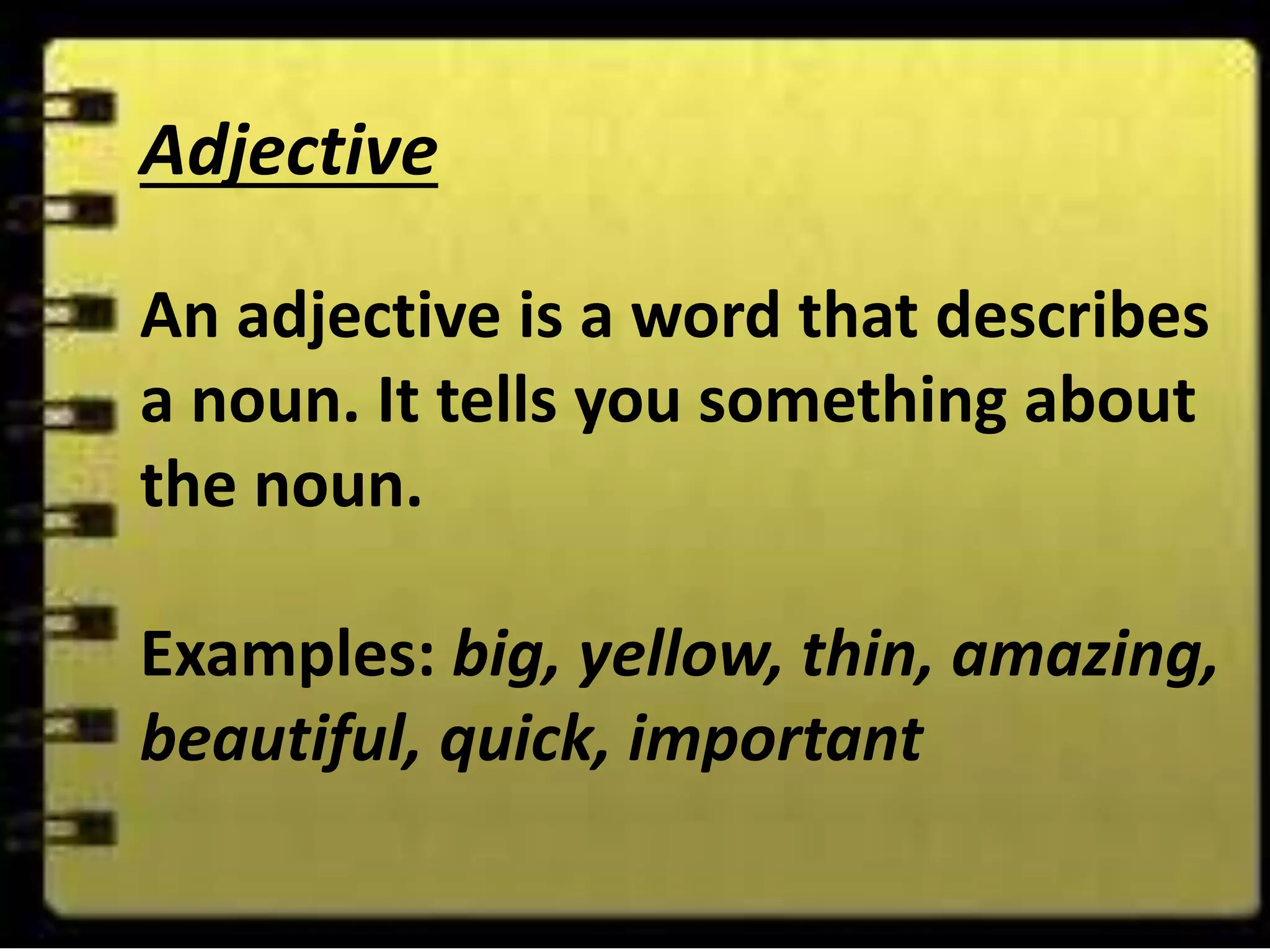
Adjective
An adjective is a word that describes
a noun. It tells you something about
the noun.
Examples: big, yellow, thin, amazing,
beautiful, quick, important
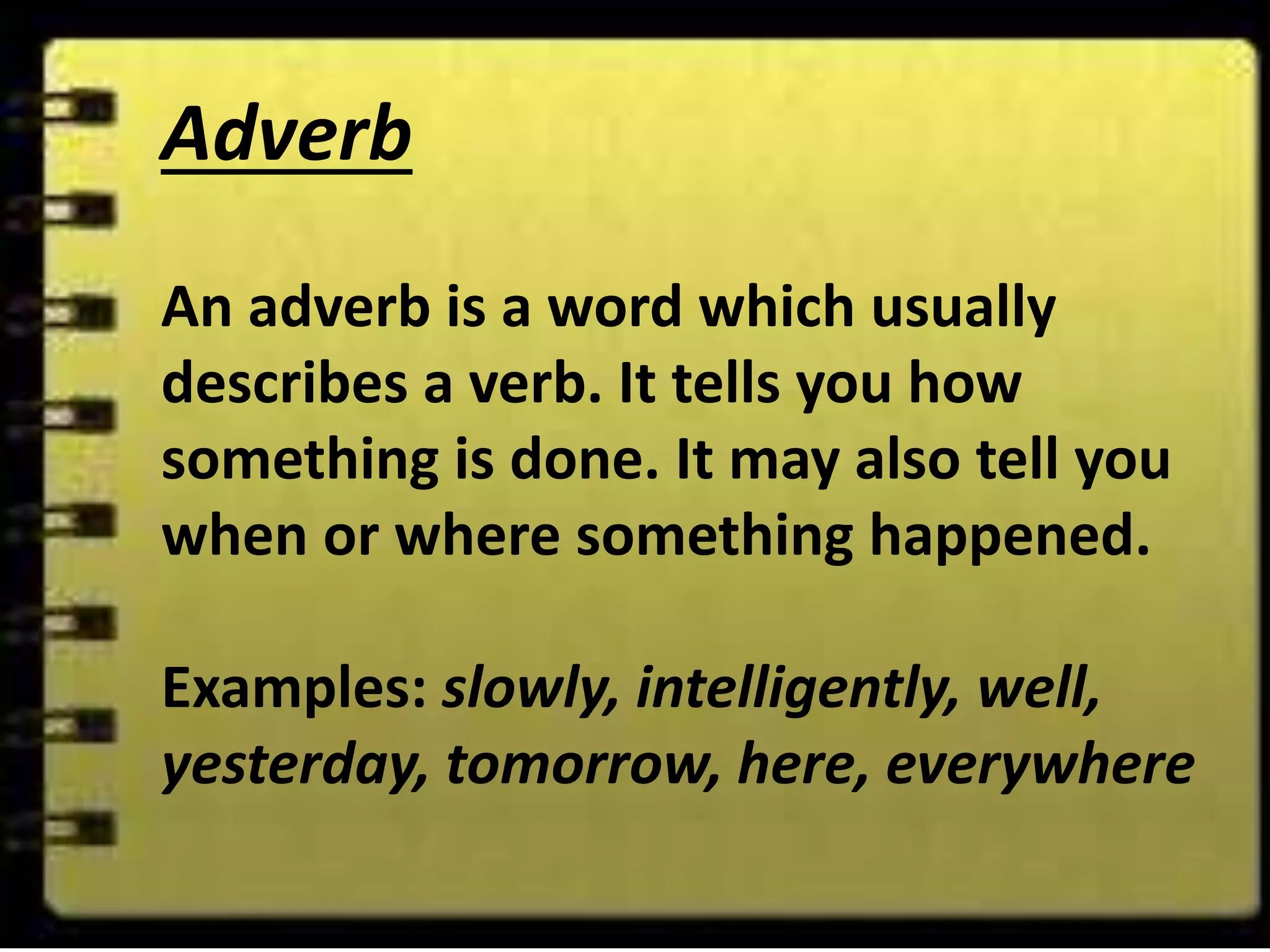
Adverb
An adverb is a word which usually
describes a verb. It tells you how
something is done. It may also tell you
when or where something happened.
Examples: slowly, intelligently, well,
yesterday, tomorrow, here, everywhere
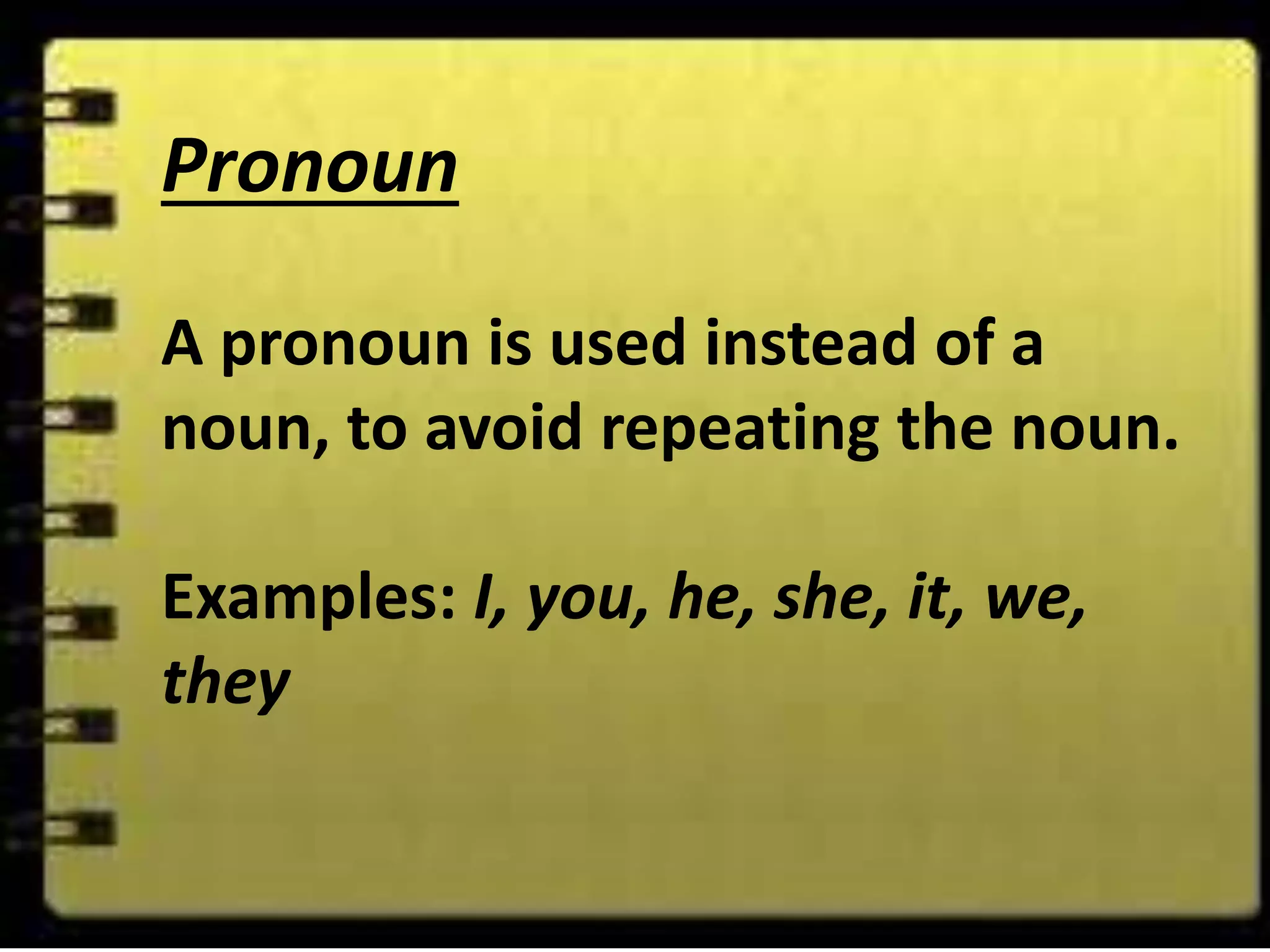
Pronoun
A pronoun is used instead of a
noun, to avoid repeating the noun.
Examples: I, you, he, she, it, we,
they
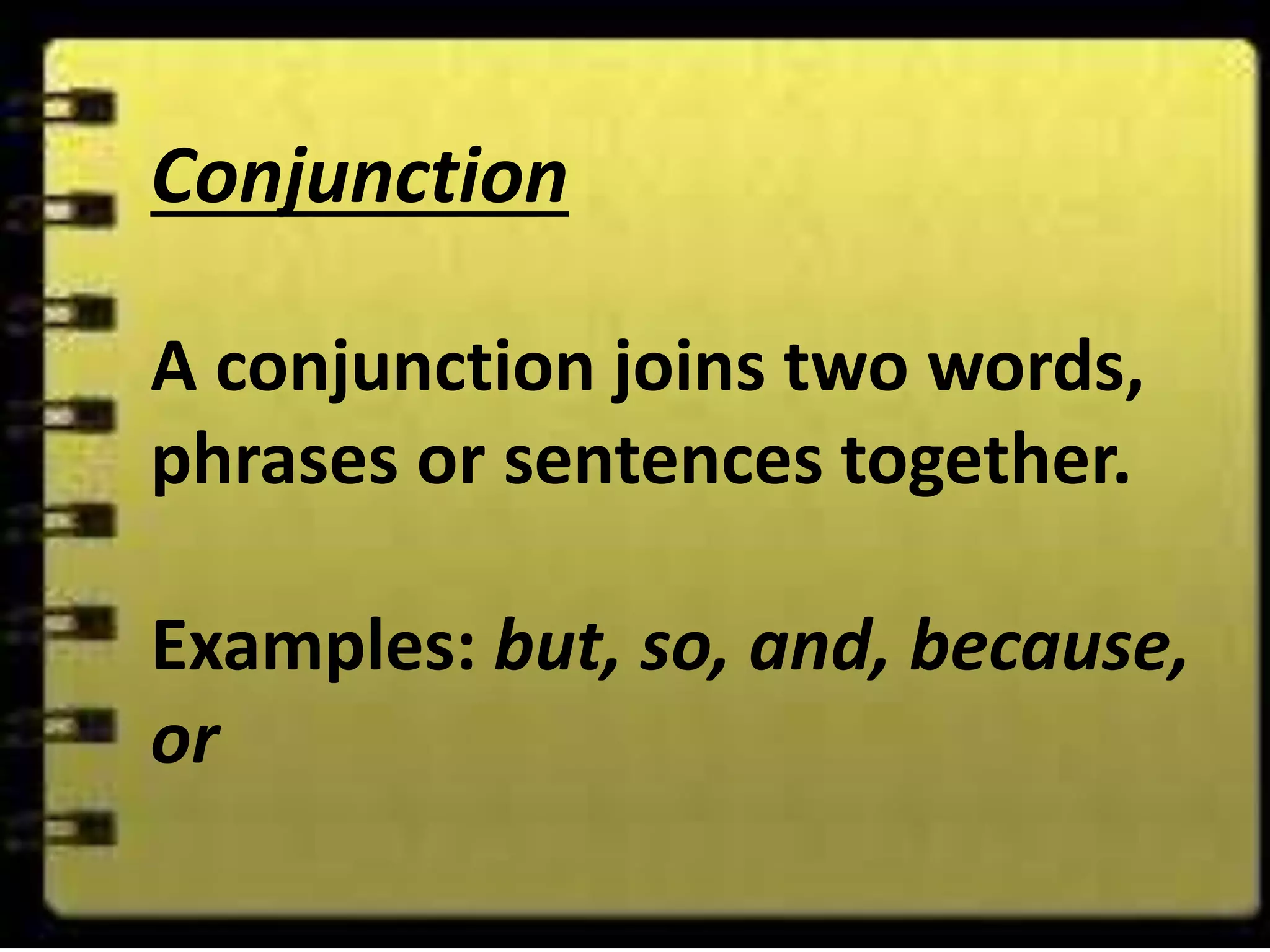
Conjunction
A conjunction joins two words,
phrases or sentences together.
Examples: but, so, and, because,
or
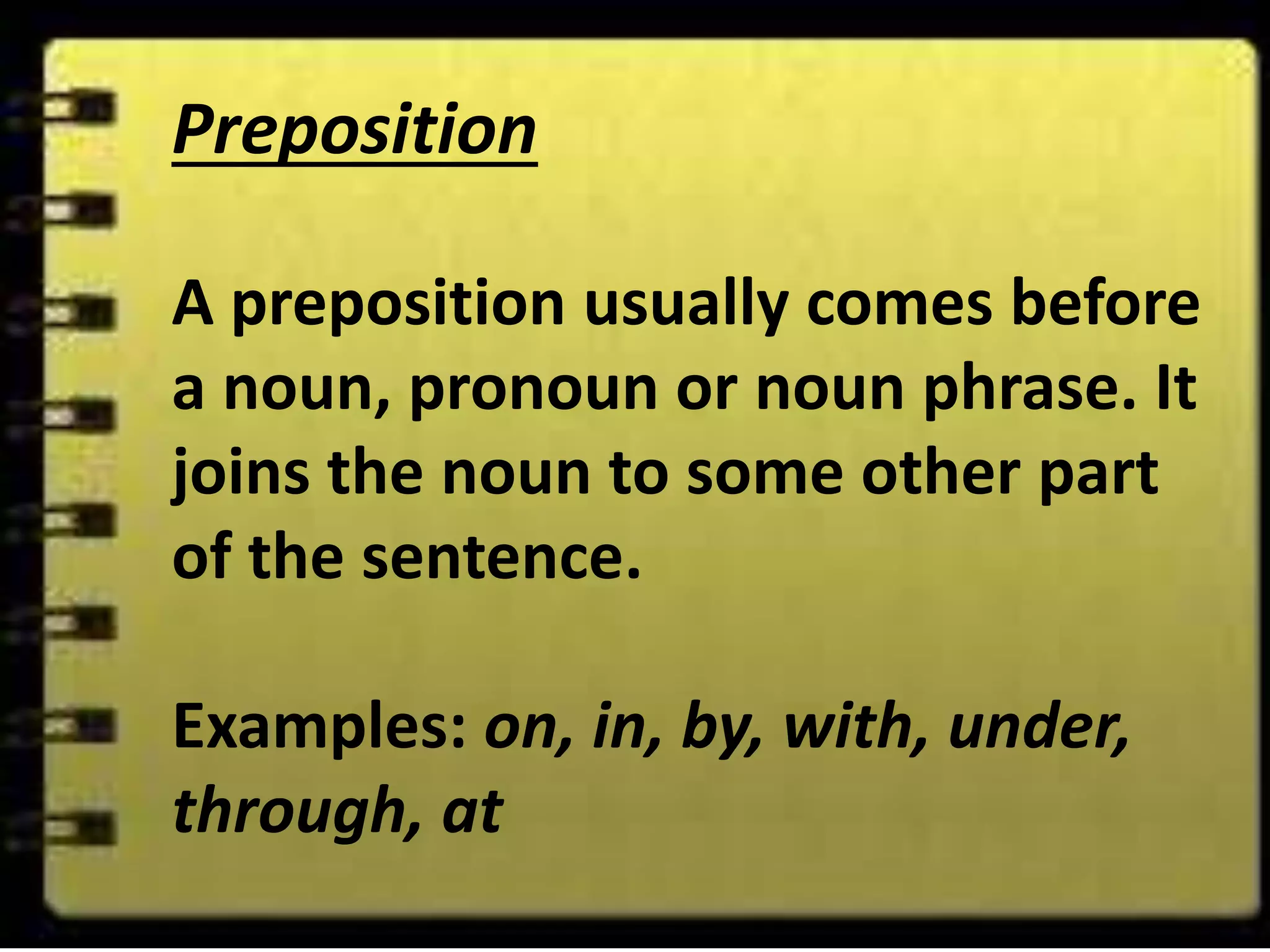
Preposition
A preposition usually comes before
a noun, pronoun or noun phrase. It
joins the noun to some other part
of the sentence.
Examples: on, in, by, with, under,
through, at
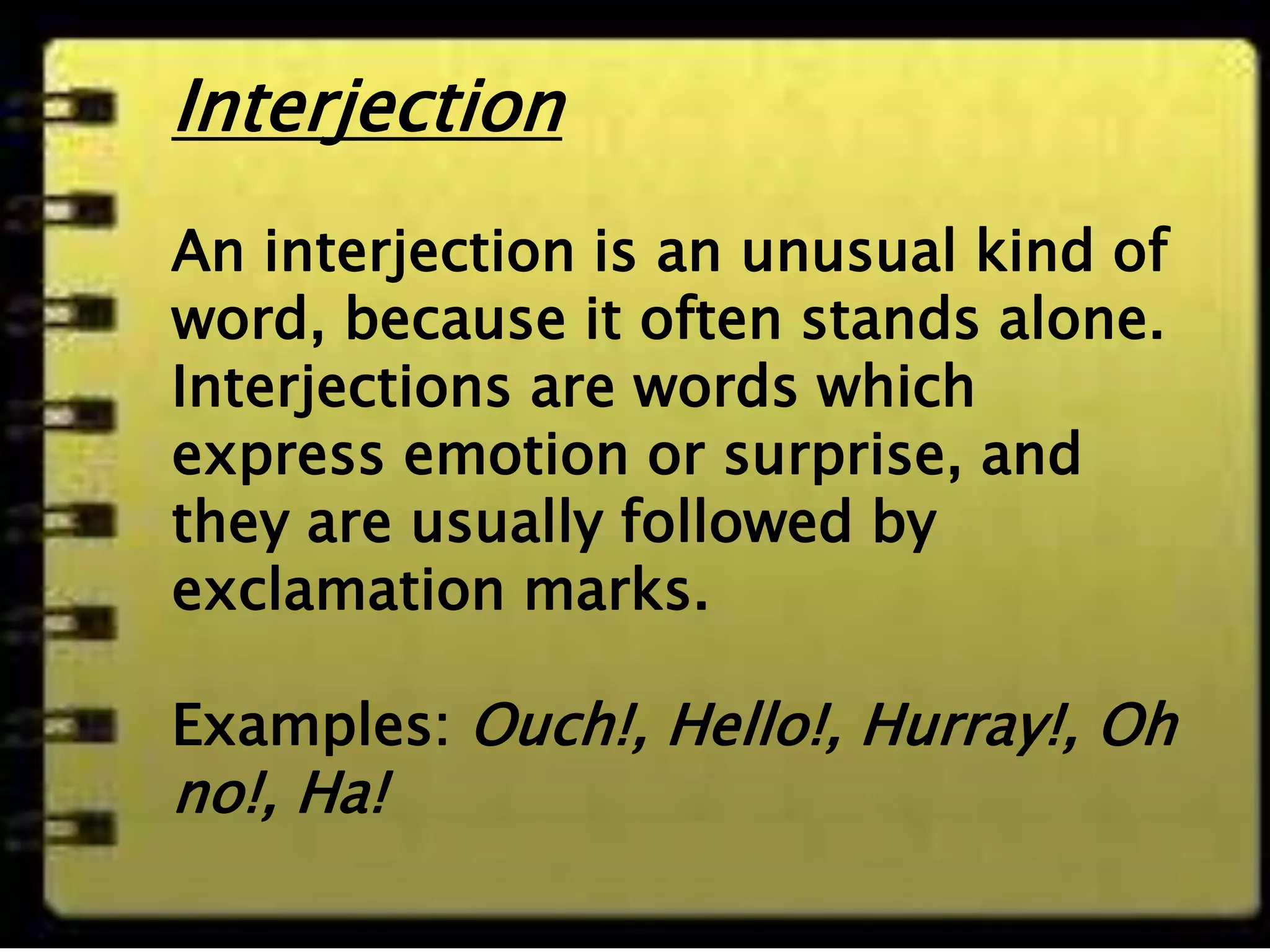
Interjection
An interjection is an
unusual kind of
word, because it
often stands alone.
Interjections are
words which
express emotion or
surprise, and they
are usually followed
by exclamation
marks.
Examples: Ouch!,
Hello!, Hurray!, Oh
no!, Ha!
Interjection
An interjection is an unusual kind of
word, because it often stands alone.
Interjections are words which
express emotion or surprise, and
they are usually followed by
exclamation marks.
Examples: Ouch!, Hello!, Hurray!, Oh
no!, Ha!
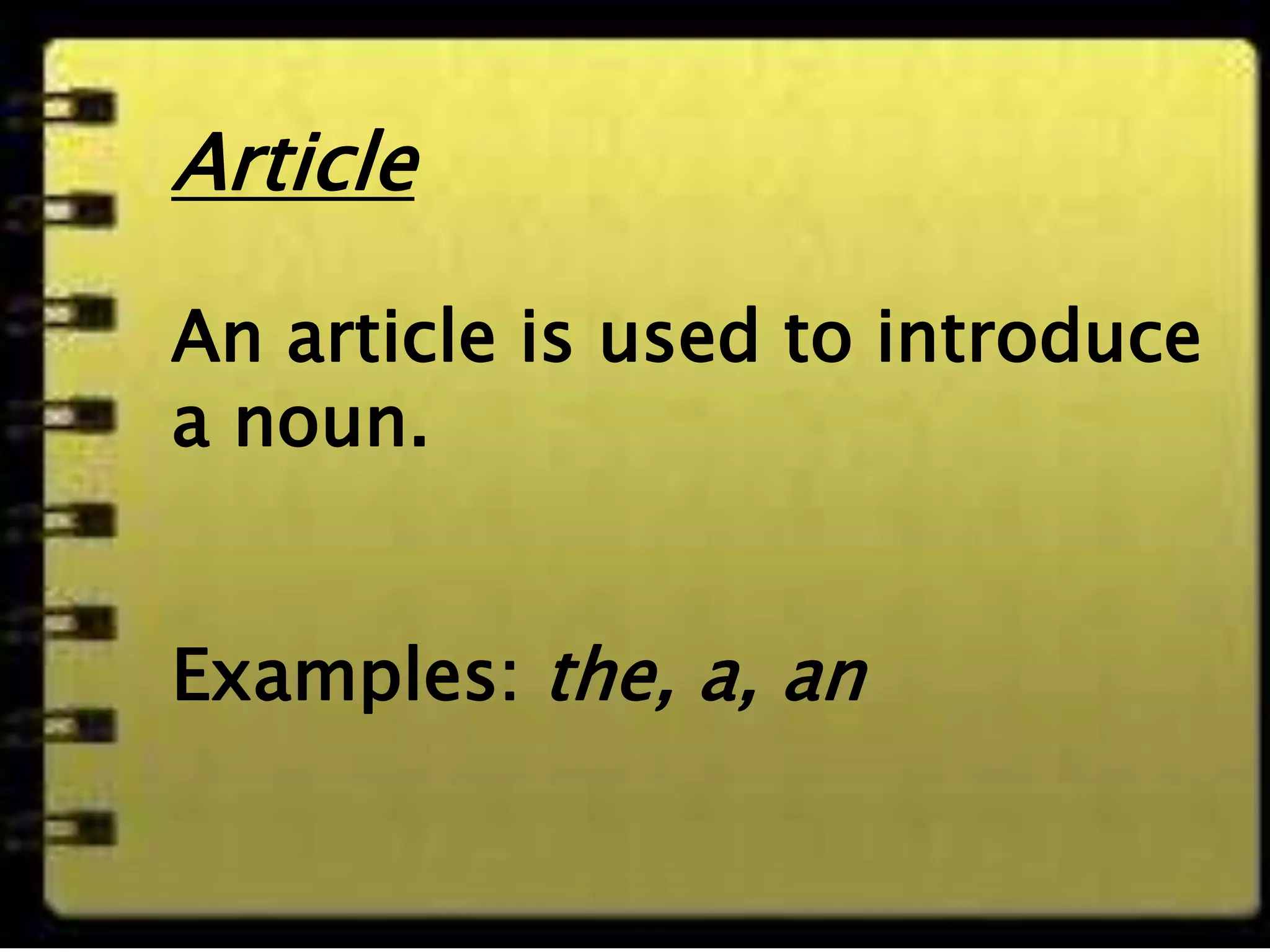
Article
An article is used to
introduce a noun.
Examples: the, a, an
Article
An article is used to introduce
a noun.
Examples: the, a, an
Different kinds of Speech

Different kinds of Speech

  • 1.
  • 2.
    “Parts of speech”are the basic types of words that English has: nouns, verbs, adjectives, adverbs, pronouns, conjunctions, prepositions and interjections. We will add one more type: articles.
  • 3.
    Noun A noun isa naming word. It names a person, place, thing, idea, living creature, quality, or action. Examples: cowboy, theatre, box, thought, tree, kindness, arrival
  • 4.
    Verb A verb isa word which describes an action (doing something) or a state (being something). Examples: walk, talk, think, believe, live, like, want Verb A verb is a word which describes an action (doing something) or a state (being something). Examples: walk, talk, think, believe, live, like, want
  • 5.
    Adjective An adjective isa word that describes a noun. It tells you something about the noun. Examples: big, yellow, thin, amazing, beautiful, quick, important
  • 6.
    Adverb An adverb isa word which usually describes a verb. It tells you how something is done. It may also tell you when or where something happened. Examples: slowly, intelligently, well, yesterday, tomorrow, here, everywhere
  • 7.
    Pronoun A pronoun isused instead of a noun, to avoid repeating the noun. Examples: I, you, he, she, it, we, they
  • 8.
    Conjunction A conjunction joinstwo words, phrases or sentences together. Examples: but, so, and, because, or
  • 9.
    Preposition A preposition usuallycomes before a noun, pronoun or noun phrase. It joins the noun to some other part of the sentence. Examples: on, in, by, with, under, through, at
  • 10.
    Interjection An interjection isan unusual kind of word, because it often stands alone. Interjections are words which express emotion or surprise, and they are usually followed by exclamation marks. Examples: Ouch!, Hello!, Hurray!, Oh no!, Ha! Interjection An interjection is an unusual kind of word, because it often stands alone. Interjections are words which express emotion or surprise, and they are usually followed by exclamation marks. Examples: Ouch!, Hello!, Hurray!, Oh no!, Ha!
  • 11.
    Article An article isused to introduce a noun. Examples: the, a, an Article An article is used to introduce a noun. Examples: the, a, an