DIFFERENT CONVENTIONAL HATCH
COVER INCLUDING STRUCTURAL
COMPONENTS, TESTING METHODS
AND WATERTIGHT AND WEATHER
TYPE OF THE HATCH COVER
WHAT IS A HATCH COVER?
HATCH COVER
A large steel structure fitted over a hatch opening
to prevent the ingress of water into the cargo hold.
It may also be the supporting structure for deck
cargo. Various designs exist for particular
applications.
Hatch Cover Function
Hatch covers provide a primary structural and
watertight barrier to prevent water ingress into
cargo hold.
•To maintain sufficient strength to resist green seas
landing on hatches in extreme weather
•To maintain a barrier against ingress of water
during normal seagoing weather conditions
TYPES OF HATCH COVER
1. FOLDING TYPE
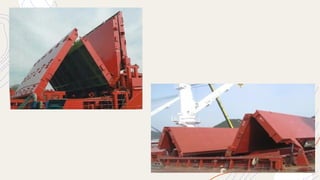
Folding type hatch covers consists of two flat type
topped panels which are operated via hydraulic arms.
These may be fitted on both weather deck as well as
tween deck. A major advantage in the design of folding
type hatch covers is its large size which means a smaller
number of panels.
2. LIFTING TYPE
Lift away type hatch covers can be classified into two types .
a) Single panel covers,
b) Multi-panel covers.
Single panel cover consists of a single cover for each opening,
these can be seen mainly on bulk carriers. In case of multi-
panel covers, a single hold is covered via multiple numbers of
covers, these are most commonly observed in cellular
container ships in the case of longitudinal joints, and for
multipurpose cargo ship in case of transverse joints.
MULTIPLE PANEL
COVERS
SINGLE PANEL
COVER
3. Stacking cover type
These type of facility are used on ships having relatively
smaller hatch cover. It consists of a hydraulically powered
lifting crane facility whose purpose is to lift the covers
longitudinally and stack it together at one end or over any
empty stowage tank. It is relatively cheap and is used
mostly in barges.
4. ROLLING TYPE
Rolling type hatch covers consists of two covers at
the end of the hatchway. Wheels are fitted which
help in the sliding of the panel either
athwartship in case of side rolling or longitudinally
in case of end rolling.
5. Roll stowing type
A roll-stowing type hatch cover is a type of hatch cover
used primarily on cargo ships to secure the holds of the
vessel. The main feature of this type of hatch cover is that
it can be rolled up or down to open or close the hatch,
which makes it particularly suitable for large or heavy
loads.
TESTING OF HATCH COVER
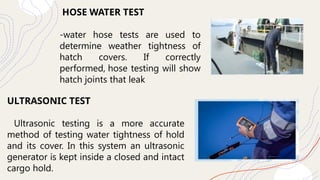
HOSE WATER TEST
-water hose tests are used to
determine weather tightness of
hatch covers. If correctly
performed, hose testing will show
hatch joints that leak
ULTRASONIC TEST
Ultrasonic testing is a more accurate
method of testing water tightness of hold
and its cover. In this system an ultrasonic
generator is kept inside a closed and intact
cargo hold.
CHALK TEST
This is the oldest or most
traditional method for testing
hold cover compression, but it
cannot test the watertight
integrity of the hold

Different Conventional Hatch Cover TOPIC-2-SEAM3.pptx

  • 1.
    DIFFERENT CONVENTIONAL HATCH COVERINCLUDING STRUCTURAL COMPONENTS, TESTING METHODS AND WATERTIGHT AND WEATHER TYPE OF THE HATCH COVER
  • 2.
    WHAT IS AHATCH COVER?
  • 3.
    HATCH COVER A largesteel structure fitted over a hatch opening to prevent the ingress of water into the cargo hold. It may also be the supporting structure for deck cargo. Various designs exist for particular applications.
  • 4.
    Hatch Cover Function Hatchcovers provide a primary structural and watertight barrier to prevent water ingress into cargo hold. •To maintain sufficient strength to resist green seas landing on hatches in extreme weather •To maintain a barrier against ingress of water during normal seagoing weather conditions
  • 5.
  • 6.
    1. FOLDING TYPE Foldingtype hatch covers consists of two flat type topped panels which are operated via hydraulic arms. These may be fitted on both weather deck as well as tween deck. A major advantage in the design of folding type hatch covers is its large size which means a smaller number of panels.
  • 8.
    2. LIFTING TYPE Liftaway type hatch covers can be classified into two types . a) Single panel covers, b) Multi-panel covers. Single panel cover consists of a single cover for each opening, these can be seen mainly on bulk carriers. In case of multi- panel covers, a single hold is covered via multiple numbers of covers, these are most commonly observed in cellular container ships in the case of longitudinal joints, and for multipurpose cargo ship in case of transverse joints.
  • 9.
  • 10.
    3. Stacking covertype These type of facility are used on ships having relatively smaller hatch cover. It consists of a hydraulically powered lifting crane facility whose purpose is to lift the covers longitudinally and stack it together at one end or over any empty stowage tank. It is relatively cheap and is used mostly in barges.
  • 12.
    4. ROLLING TYPE Rollingtype hatch covers consists of two covers at the end of the hatchway. Wheels are fitted which help in the sliding of the panel either athwartship in case of side rolling or longitudinally in case of end rolling.
  • 14.
    5. Roll stowingtype A roll-stowing type hatch cover is a type of hatch cover used primarily on cargo ships to secure the holds of the vessel. The main feature of this type of hatch cover is that it can be rolled up or down to open or close the hatch, which makes it particularly suitable for large or heavy loads.
  • 15.
  • 16.
    HOSE WATER TEST -waterhose tests are used to determine weather tightness of hatch covers. If correctly performed, hose testing will show hatch joints that leak ULTRASONIC TEST Ultrasonic testing is a more accurate method of testing water tightness of hold and its cover. In this system an ultrasonic generator is kept inside a closed and intact cargo hold.
  • 17.
    CHALK TEST This isthe oldest or most traditional method for testing hold cover compression, but it cannot test the watertight integrity of the hold