z
Name::- Sneha Agravat
Batch:- 2020-22 (MA sem 2)
Paper 8:-The American literature
Roll no.:-16
Enrollment no.:-3069206420200001
E-mail Id :- snehaagravat2000@gmail.com
Submitted to:- S.B.Gardi Department Of English
Maharaja krishnkumarsinhji Bhavngar University
Differences between
Transcendentalism and Puritanism
z
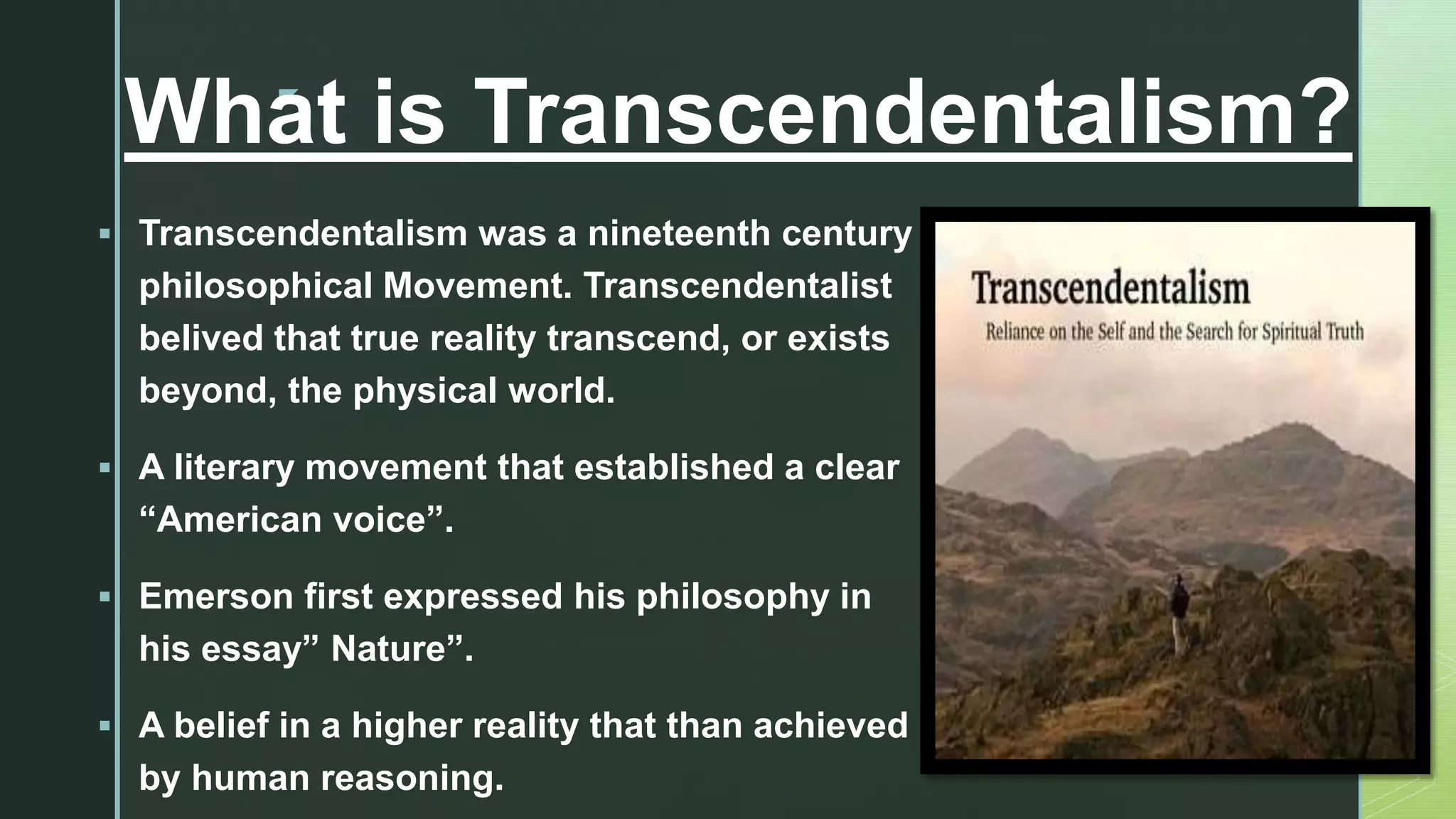
What is Transcendentalism?
 Transcendentalism was a nineteenth century
philosophical Movement. Transcendentalist
belived that true reality transcend, or exists
beyond, the physical world.
 A literary movement that established a clear
“American voice”.
 Emerson first expressed his philosophy in
his essay” Nature”.
 A belief in a higher reality that than achieved
by human reasoning.
z
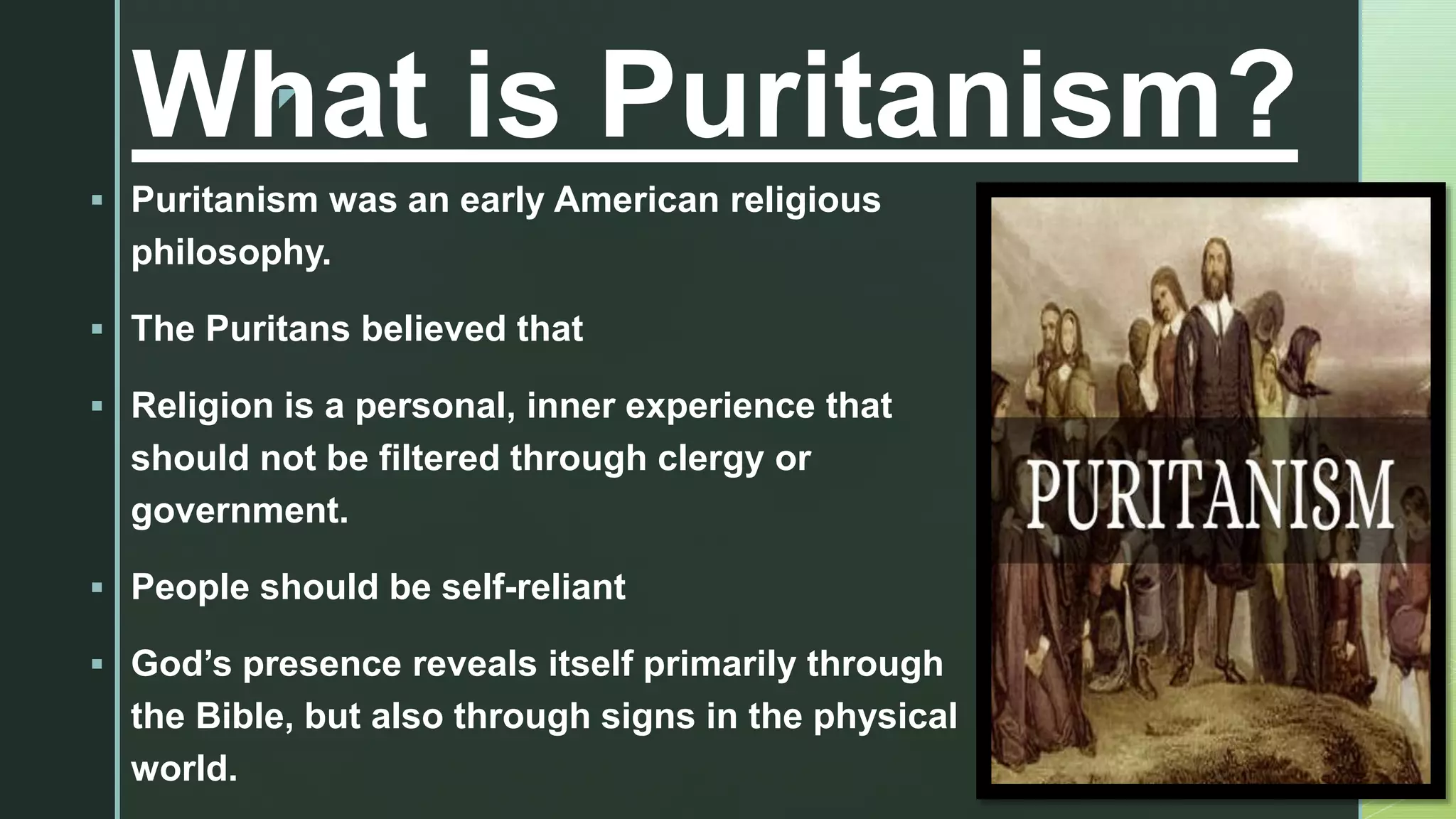
What is Puritanism?
 Puritanism was an early American religious
philosophy.
 The Puritans believed that
 Religion is a personal, inner experience that
should not be filtered through clergy or
government.
 People should be self-reliant
 God’s presence reveals itself primarily through
the Bible, but also through signs in the physical
world.
z
Transcendentalism
Puritanism
V/s
z
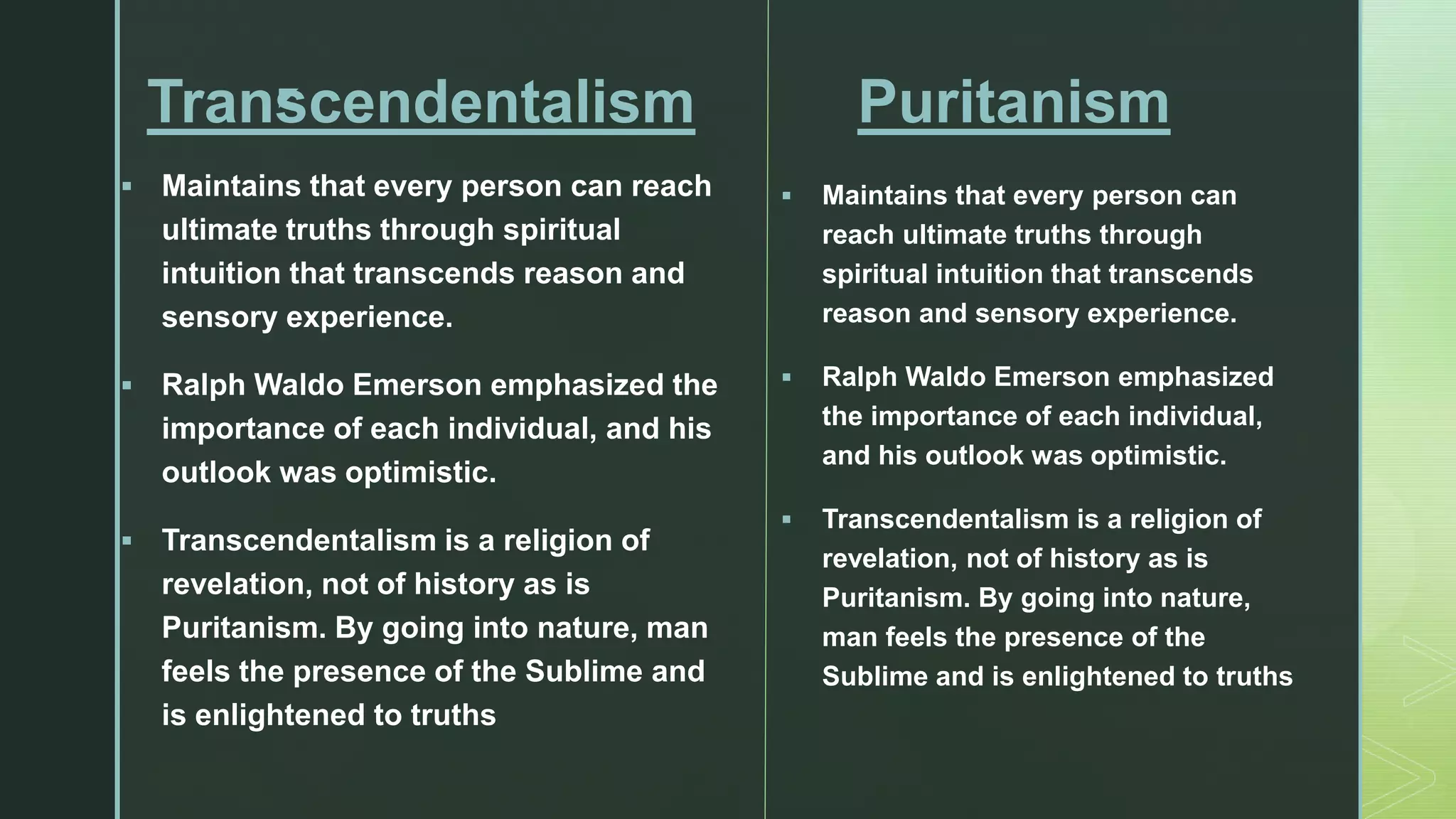
Transcendentalism
 Maintains that every person can reach
ultimate truths through spiritual
intuition that transcends reason and
sensory experience.
 Ralph Waldo Emerson emphasized the
importance of each individual, and his
outlook was optimistic.
 Transcendentalism is a religion of
revelation, not of history as is
Puritanism. By going into nature, man
feels the presence of the Sublime and
is enlightened to truths
Puritanism
 Maintains that every person can
reach ultimate truths through
spiritual intuition that transcends
reason and sensory experience.
 Ralph Waldo Emerson emphasized
the importance of each individual,
and his outlook was optimistic.
 Transcendentalism is a religion of
revelation, not of history as is
Puritanism. By going into nature,
man feels the presence of the
Sublime and is enlightened to truths
z
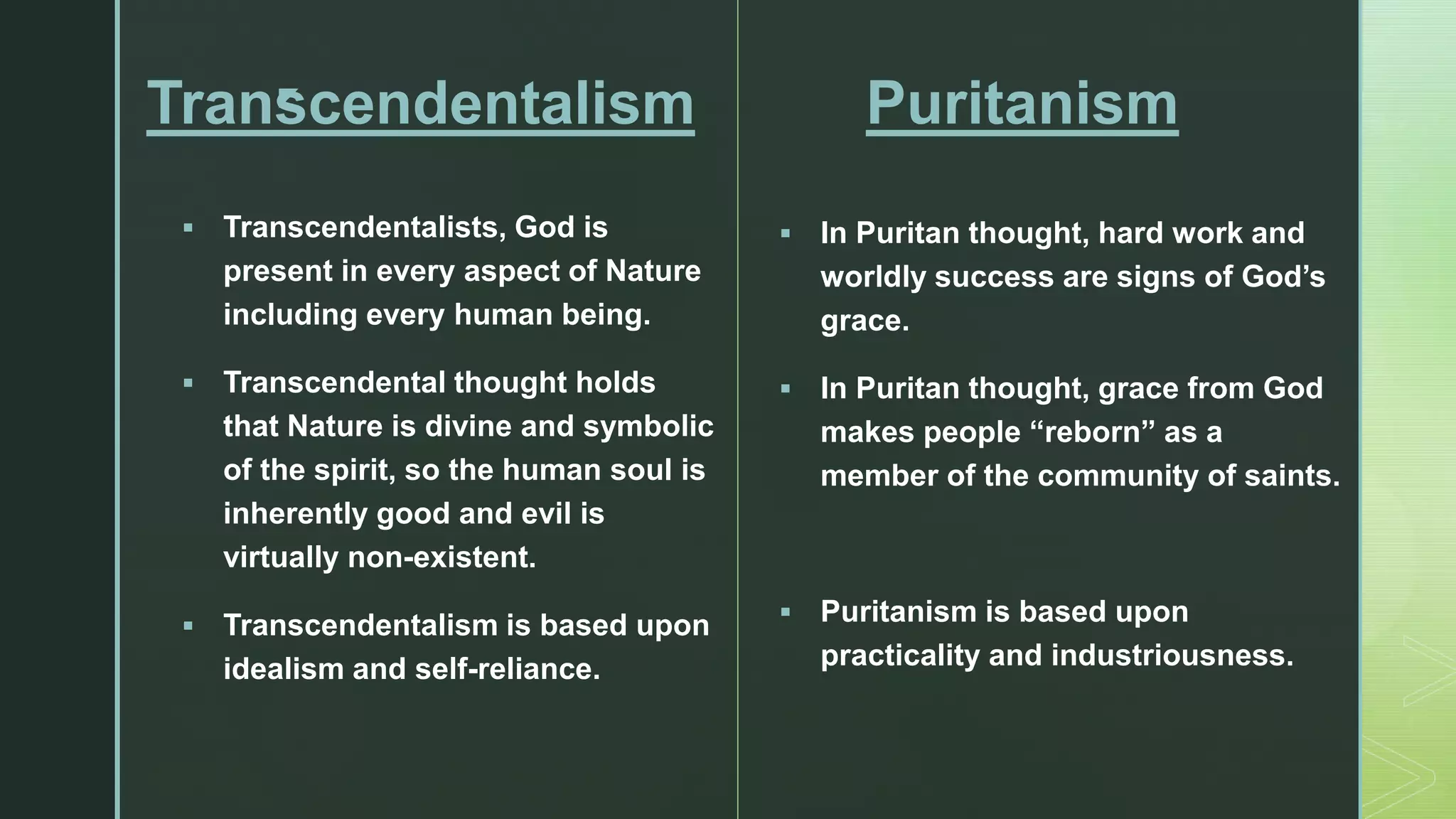
Transcendentalism
 Transcendentalists, God is
present in every aspect of Nature
including every human being.
 Transcendental thought holds
that Nature is divine and symbolic
of the spirit, so the human soul is
inherently good and evil is
virtually non-existent.
 Transcendentalism is based upon
idealism and self-reliance.
Puritanism
 In Puritan thought, hard work and
worldly success are signs of God’s
grace.
 In Puritan thought, grace from God
makes people “reborn” as a
member of the community of saints.
 Puritanism is based upon
practicality and industriousness.
z
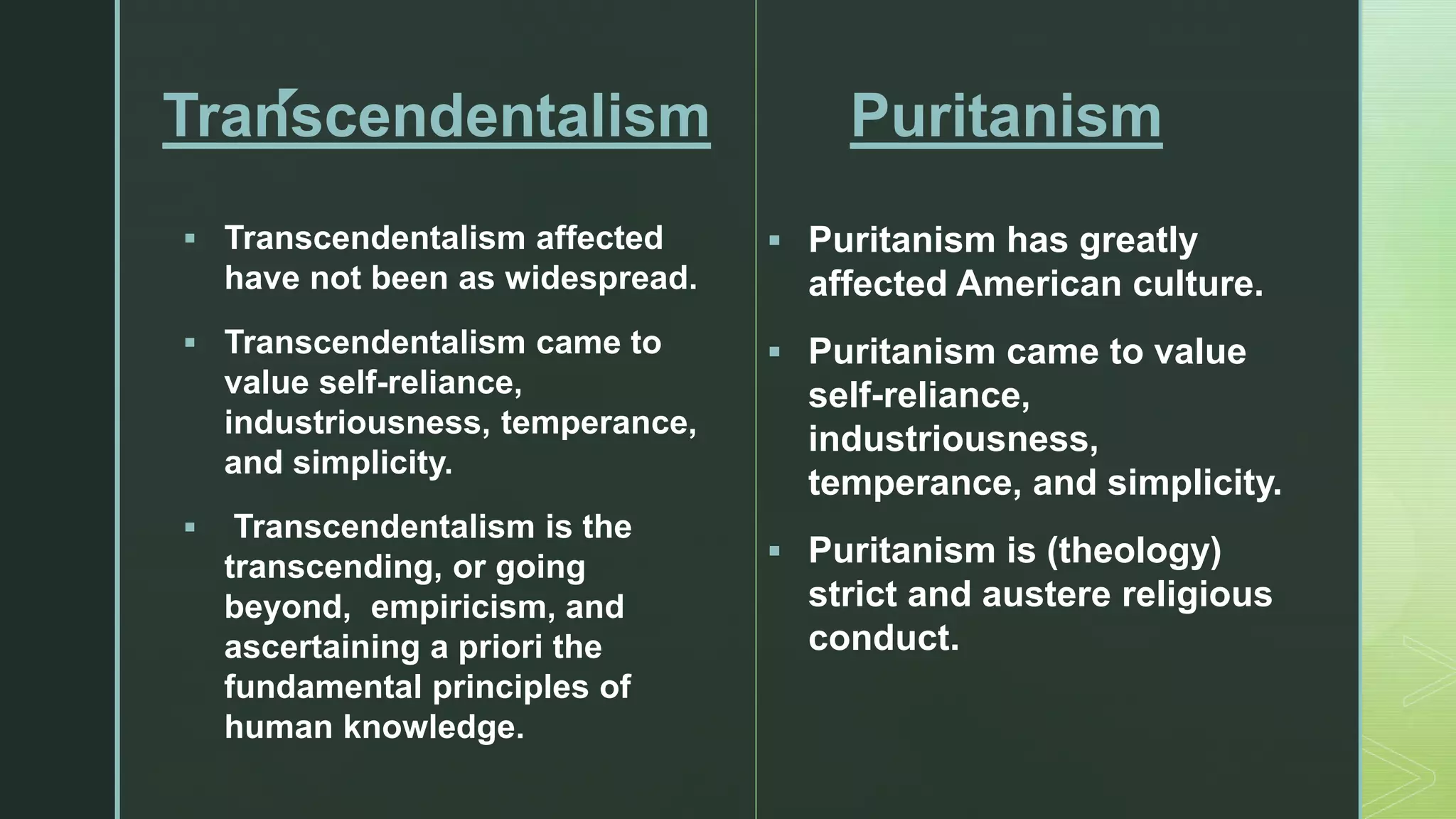
Transcendentalism
 Transcendentalism affected
have not been as widespread.
 Transcendentalism came to
value self-reliance,
industriousness, temperance,
and simplicity.
 Transcendentalism is the
transcending, or going
beyond, empiricism, and
ascertaining a priori the
fundamental principles of
human knowledge.
Puritanism
 Puritanism has greatly
affected American culture.
 Puritanism came to value
self-reliance,
industriousness,
temperance, and simplicity.
 Puritanism is (theology)
strict and austere religious
conduct.
z
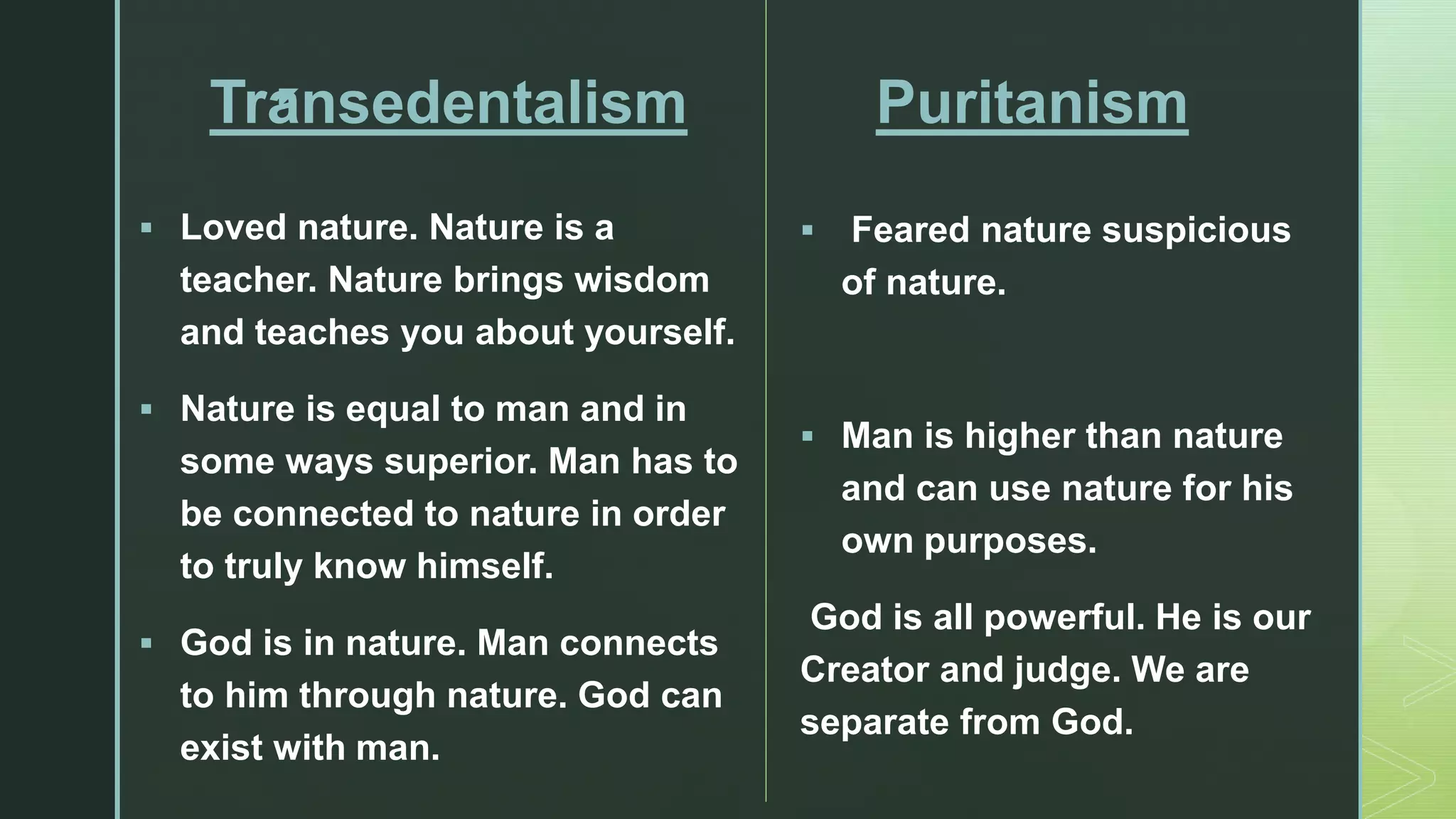
Transedentalism
 Loved nature. Nature is a
teacher. Nature brings wisdom
and teaches you about yourself.
 Nature is equal to man and in
some ways superior. Man has to
be connected to nature in order
to truly know himself.
 God is in nature. Man connects
to him through nature. God can
exist with man.
Puritanism
 Feared nature suspicious
of nature.
 Man is higher than nature
and can use nature for his
own purposes.
God is all powerful. He is our
Creator and judge. We are
separate from God.
z
Conclusion
 Both Puritanism and Transcendentalism
have evolved from religious doctrine and
pervaded the American culture, politics,
and identity, becoming more secular in
their visions. However, Puritanism
possesses a darker perspective from that
of Transcendentalism.
z
Reference
 Britannica, The Editors of Encyclopaedia. "New England". Encyclopedia
Britannica, 3 Jun. 2021, https://www.britannica.com/place/New-England.
Accessed 22 June 2021.
 Britannica, The Editors of Encyclopaedia. "Puritanism". Encyclopedia
Britannica, 15 May. 2020, https://www.britannica.com/topic/Puritanism.
Accessed 22 June 2021.
 Views of transcendentalism versus puritanism. (2016, Jul 21). Retrieved from
http://studymoose.com/views-of-transcendentalism-versus-puritanism-essay.
 "What are the differences between Transcendentalism and Puritanism
(Transcendentalism vs. Puritanism)?" eNotes Editorial, 18 Dec. 2013,
https://www.enotes.com/homework-help/transcendentalism-vs-puritanism-
465649. Accessed 23 June 2021.
z

difference between transcendentalism and puritanism

  • 1.
    z Name::- Sneha Agravat Batch:-2020-22 (MA sem 2) Paper 8:-The American literature Roll no.:-16 Enrollment no.:-3069206420200001 E-mail Id :- snehaagravat2000@gmail.com Submitted to:- S.B.Gardi Department Of English Maharaja krishnkumarsinhji Bhavngar University Differences between Transcendentalism and Puritanism
  • 2.
    z What is Transcendentalism? Transcendentalism was a nineteenth century philosophical Movement. Transcendentalist belived that true reality transcend, or exists beyond, the physical world.  A literary movement that established a clear “American voice”.  Emerson first expressed his philosophy in his essay” Nature”.  A belief in a higher reality that than achieved by human reasoning.
  • 3.
    z What is Puritanism? Puritanism was an early American religious philosophy.  The Puritans believed that  Religion is a personal, inner experience that should not be filtered through clergy or government.  People should be self-reliant  God’s presence reveals itself primarily through the Bible, but also through signs in the physical world.
  • 4.
  • 5.
    z Transcendentalism  Maintains thatevery person can reach ultimate truths through spiritual intuition that transcends reason and sensory experience.  Ralph Waldo Emerson emphasized the importance of each individual, and his outlook was optimistic.  Transcendentalism is a religion of revelation, not of history as is Puritanism. By going into nature, man feels the presence of the Sublime and is enlightened to truths Puritanism  Maintains that every person can reach ultimate truths through spiritual intuition that transcends reason and sensory experience.  Ralph Waldo Emerson emphasized the importance of each individual, and his outlook was optimistic.  Transcendentalism is a religion of revelation, not of history as is Puritanism. By going into nature, man feels the presence of the Sublime and is enlightened to truths
  • 6.
    z Transcendentalism  Transcendentalists, Godis present in every aspect of Nature including every human being.  Transcendental thought holds that Nature is divine and symbolic of the spirit, so the human soul is inherently good and evil is virtually non-existent.  Transcendentalism is based upon idealism and self-reliance. Puritanism  In Puritan thought, hard work and worldly success are signs of God’s grace.  In Puritan thought, grace from God makes people “reborn” as a member of the community of saints.  Puritanism is based upon practicality and industriousness.
  • 7.
    z Transcendentalism  Transcendentalism affected havenot been as widespread.  Transcendentalism came to value self-reliance, industriousness, temperance, and simplicity.  Transcendentalism is the transcending, or going beyond, empiricism, and ascertaining a priori the fundamental principles of human knowledge. Puritanism  Puritanism has greatly affected American culture.  Puritanism came to value self-reliance, industriousness, temperance, and simplicity.  Puritanism is (theology) strict and austere religious conduct.
  • 8.
    z Transedentalism  Loved nature.Nature is a teacher. Nature brings wisdom and teaches you about yourself.  Nature is equal to man and in some ways superior. Man has to be connected to nature in order to truly know himself.  God is in nature. Man connects to him through nature. God can exist with man. Puritanism  Feared nature suspicious of nature.  Man is higher than nature and can use nature for his own purposes. God is all powerful. He is our Creator and judge. We are separate from God.
  • 9.
    z Conclusion  Both Puritanismand Transcendentalism have evolved from religious doctrine and pervaded the American culture, politics, and identity, becoming more secular in their visions. However, Puritanism possesses a darker perspective from that of Transcendentalism.
  • 10.
    z Reference  Britannica, TheEditors of Encyclopaedia. "New England". Encyclopedia Britannica, 3 Jun. 2021, https://www.britannica.com/place/New-England. Accessed 22 June 2021.  Britannica, The Editors of Encyclopaedia. "Puritanism". Encyclopedia Britannica, 15 May. 2020, https://www.britannica.com/topic/Puritanism. Accessed 22 June 2021.  Views of transcendentalism versus puritanism. (2016, Jul 21). Retrieved from http://studymoose.com/views-of-transcendentalism-versus-puritanism-essay.  "What are the differences between Transcendentalism and Puritanism (Transcendentalism vs. Puritanism)?" eNotes Editorial, 18 Dec. 2013, https://www.enotes.com/homework-help/transcendentalism-vs-puritanism- 465649. Accessed 23 June 2021.
  • 11.