DIAGNOSTIC PROCEDURES
BY
S.CHRISTY SOPNA
M.P.Y-II YEAR
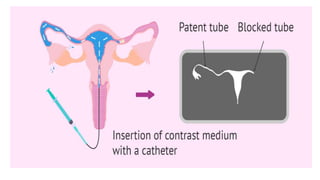
HYSTEROSALPHYNGOGRAPHY(HSG)
• Hystero+salpingo+graphy
• Hystero- uterus
• salpingo- fallopian tubes
• Graphy – radiolological procedure
INDICATIONS
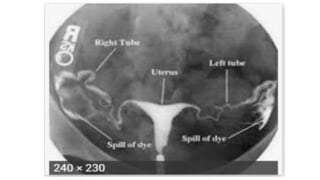
• Assessment of tubal patency
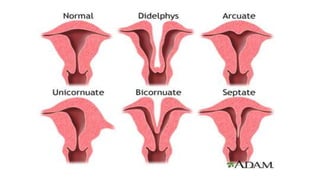
• Detection of uterine malformation
• Diagnosis of cervical incompetence
• Detection of translocated IUD
• Diagnosis of uterine synechiae(adhesions)
• Diagnosis of uterine fibroid, uterine polyp
• Diagnosis of abdominal pregnancy
• Infertility
PROCEDURE
• Anaesthesia given
• Radio-opaque dye 5-10ml
• Radiographic x rays
• TIMING OF PROCEDURE
• HSG is done D6 and D 10 of cycle
• Antiobiotics given one day before procedure upto 5 days
CONTRAINDICATIONS
• Suspected pregnancy
• Acute pelvic infection
• Active vaginal bleeding
• Recent dilatation and curettage
• Immediate pre and post menstrual phase
• Tubal or uterine surgery within last 6 weeks
• Contrast sensitivity
DILATATION AND CURETTAGE
Dilatation and curettage (D&C)
• Dilatation (widening/opening)
• Curettage (removal of part of the lining of the uterus or contents of
the uterus by scraping and scooping )
• TYPES
• Diagnostic D&C
• Therapeutic D&C
INDICATIONS
• Abortions
• Molar pregnancy
• Prolonged or excessive bleeding
• Postpartum haemorrhage
• Anaesthesia
• General
• Regional
• Paracervical – around cervix
Complications
• Uterine perforation
• Cervical injury
• Infection
• Intrauterine adhesions
LAPAROSCOPY
INTRODUCTION
• A surgical procedure in which a fibre optic instrument is inserted
through the abdominal wall to view the organs in the abdomen or
permit small-scale surgery
• Also known as minimally invasive surgery(MIS) , Keyhole surgery
• Small incision (usually 0.5-1.5cm)
• Uses
• Diagnostic
• Therapeutic
Diagnostic laparoscopy indications
• Infertility ( status of fallopian tube and adhesions)
• Ovarian cysts
• Ectopic pregnancy
• PID
• Endometriosis
Colposcopy
Introduction
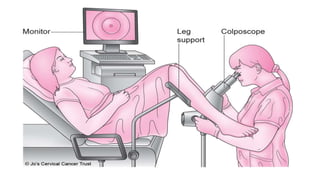
• Colposcopy is a gynaecological procedure that illuminates and
magnifies vulva , vaginal walls and uterine cervix
• Detect abnormalities of these structures
Indication
• If Pap smear is abnormal
• Cervix looks abnormal
• Patient with postcoital vaginal bleeding
• To take biopsy
• Can also be used for therapeutic procedures
HYSTERECTOMY
INTRODUCTION
• HYSTEREC- uterus
• Tomy – removal
• Types
• Subtotal hysterectomy – uterine body only
• Total hysterectomy – uterine body and cervix
• Hysterectomy with BSO
• Radical (or Wertheim) hysterectomy
total hysterectomy with pelvic lymph nodes , paracervical
tissue and upper 1/3 vagina
INDICATIONS
• Fibroids 30%
• Endometriosis
• Uterine prolapse
• Cancer of the uterus , cervix or ovaries
• Vaginal bleeding , DUB(dysfunctional uterine bleeding) 20%
• Uncontrollable PPH
ROUTES OF HYSTERCTOMY
• Abdominal hysterectomy
• Vaginal hysterectomy
• Laparoscopic hysterectomy
• Caesarean hysterectomy

DIAGNOSTIC PROCEDURES.pptx

  • 1.
  • 2.
    HYSTEROSALPHYNGOGRAPHY(HSG) • Hystero+salpingo+graphy • Hystero-uterus • salpingo- fallopian tubes • Graphy – radiolological procedure
  • 3.
    INDICATIONS • Assessment oftubal patency • Detection of uterine malformation • Diagnosis of cervical incompetence • Detection of translocated IUD • Diagnosis of uterine synechiae(adhesions) • Diagnosis of uterine fibroid, uterine polyp • Diagnosis of abdominal pregnancy • Infertility
  • 5.
    PROCEDURE • Anaesthesia given •Radio-opaque dye 5-10ml • Radiographic x rays • TIMING OF PROCEDURE • HSG is done D6 and D 10 of cycle • Antiobiotics given one day before procedure upto 5 days
  • 6.
    CONTRAINDICATIONS • Suspected pregnancy •Acute pelvic infection • Active vaginal bleeding • Recent dilatation and curettage • Immediate pre and post menstrual phase • Tubal or uterine surgery within last 6 weeks • Contrast sensitivity
  • 9.
  • 10.
    Dilatation and curettage(D&C) • Dilatation (widening/opening) • Curettage (removal of part of the lining of the uterus or contents of the uterus by scraping and scooping ) • TYPES • Diagnostic D&C • Therapeutic D&C
  • 11.
    INDICATIONS • Abortions • Molarpregnancy • Prolonged or excessive bleeding • Postpartum haemorrhage • Anaesthesia • General • Regional • Paracervical – around cervix
  • 12.
    Complications • Uterine perforation •Cervical injury • Infection • Intrauterine adhesions
  • 13.
  • 14.
    INTRODUCTION • A surgicalprocedure in which a fibre optic instrument is inserted through the abdominal wall to view the organs in the abdomen or permit small-scale surgery • Also known as minimally invasive surgery(MIS) , Keyhole surgery • Small incision (usually 0.5-1.5cm) • Uses • Diagnostic • Therapeutic
  • 15.
    Diagnostic laparoscopy indications •Infertility ( status of fallopian tube and adhesions) • Ovarian cysts • Ectopic pregnancy • PID • Endometriosis
  • 16.
  • 17.
    Introduction • Colposcopy isa gynaecological procedure that illuminates and magnifies vulva , vaginal walls and uterine cervix • Detect abnormalities of these structures
  • 18.
    Indication • If Papsmear is abnormal • Cervix looks abnormal • Patient with postcoital vaginal bleeding • To take biopsy • Can also be used for therapeutic procedures
  • 20.
  • 21.
    INTRODUCTION • HYSTEREC- uterus •Tomy – removal • Types • Subtotal hysterectomy – uterine body only • Total hysterectomy – uterine body and cervix • Hysterectomy with BSO • Radical (or Wertheim) hysterectomy total hysterectomy with pelvic lymph nodes , paracervical tissue and upper 1/3 vagina
  • 22.
    INDICATIONS • Fibroids 30% •Endometriosis • Uterine prolapse • Cancer of the uterus , cervix or ovaries • Vaginal bleeding , DUB(dysfunctional uterine bleeding) 20% • Uncontrollable PPH
  • 23.
    ROUTES OF HYSTERCTOMY •Abdominal hysterectomy • Vaginal hysterectomy • Laparoscopic hysterectomy • Caesarean hysterectomy