Diabetes Insipidus
DONE BY
SARAVANAN NIRMAL KUMAR
1527
DEFINITION
 It is a disorder of water metabolism caused by
deficiency of ADH (Vasopresin) or by inability of the
kidneys to respond to ADH.
FORMS OF DI
1. Transient DI:
Abrupt onset within first few after neuro surgery
resolve within several days.
2. Permanent DI:
Abrupt and early onset, persists for several weeks
or forever. Usually occurs after damage to
hypothalamus or Neurohypophyseal damage.
CONT….
3. Triphasic DI:
Immediate post injury increases Urine volume
with decrease in urine osmolity lasting 4-5days and
followed by permanent phase of polyuria.
4. Nephrogenic:
Rare Hereditary disorder acquired structural or
functional changes in kidney occurs. ADH produced
normally, but distal and collecting tubules cannot
respond.
CONT….
5. Complete DI:
When there is disruption of hypophyseal tract
and a complete absence of ADH.
6. Neurogenic DI:
CNS interruption of anatomic integrity of
posterior pituitary. ADH synthesis or release is
affected, may be transient or permanent.
7. Idiopathic DI:
ETIOLOGY
1. Primary – Idiopathic
2. Secondary
 Head trauma
 Neuro surgery
 Tumors (Intra cranial)
 Vascular
 Infection (Meningitis)
 Longstanding renal disease
 Hypokalemia.
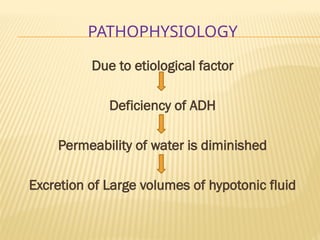
PATHOPHYSIOLOGY
Due to etiological factor
Deficiency of ADH
Permeability of water is diminished
Excretion of Large volumes of hypotonic fluid
CONT….
Note:
 Normally ADH increases kidneys permeability to water
to promote water reabsorption and decrease urine
output.
 ADH is normally released in response to increase
serum osmolality and decrease Extracellular volume.
CLINICAL MANIFESTATION
i.Genito Urinary :
* Polyuria (few liters to 18 l/day )
* Clear urine
* Urinary Frequency
* Nocturia
ii. Gastro Intestinal:
*Weight loss
* Polydipsia (if thirst mechanism intact 4 to
40 l/day)
* Has craving for cold water.
CONT….
iii.Integumentary:
*Dry skin and mucous membrane
iv. Neurologic:
* Electrolyte Imbalance
* Hypotention
v. High serum osmolality
vi. High serum sodium level.
DIAGNOSTIC EVALUATION
 History collection
 Physical Examination
 Water deprivation test
 Hyper-tonic Saline test
 Urine output
 Serum Na+ level
 Plasma and Serum Osmolality
MEDICAL MANAGEMENT
Administration of ADH or its derivative:
a) Vasopressin (Pitressin)
- IM, Effective for 24 to72hrs.
- Vial should be warmed and shaken vigorously before
administrating to mix active component settles at bottom of
vial.
b) Lypressin (Diapid nasal Spray)
- Absorbed through nasal mucosa
- Duration of action 4 to 6 hrs
- may cause chronic nasal irritation.
CONT….
c) Desmo-pressin acetate.
- Vasopressin deratives administered into the nose through a
soft, flexible nasal.
- Duration of action 12 to 24 hrs
- For patient who have some residual hypothalamic ADH.
d) Chloropropamide:
- Potenciate action of reducing polyuria.
e) Hydro – Chlorothiacin:
- Reduce the urine volume
- Dose 20 – 75 mg /kg/day
SURGICAL MANAGEMENT
1.) Hypophysectomy:-
- Removal of pituitary gland may be performed for the
treatment of primary tumor of the pituitary gland.
COMPLICATION
 Electrolyte imbalance
 Hypotension
 Hypovolemia
 Shock
 Death
NURSING DIAGNOSIS
 Risk for fluid volume deficit r/t disease process.
 Imbalanced Nutrition Less than Body Requirements
related to insufficiency of insulin, decreased
oral input.
 Fluid Volume Deficit related to osmotic diuresis.
 Risk for Infection related to hyperglycemia.

Saravanan Nirmal kumar_1527.pptxmmmmmmmm

  • 1.
  • 2.
    DEFINITION  It isa disorder of water metabolism caused by deficiency of ADH (Vasopresin) or by inability of the kidneys to respond to ADH.
  • 3.
    FORMS OF DI 1.Transient DI: Abrupt onset within first few after neuro surgery resolve within several days. 2. Permanent DI: Abrupt and early onset, persists for several weeks or forever. Usually occurs after damage to hypothalamus or Neurohypophyseal damage.
  • 4.
    CONT…. 3. Triphasic DI: Immediatepost injury increases Urine volume with decrease in urine osmolity lasting 4-5days and followed by permanent phase of polyuria. 4. Nephrogenic: Rare Hereditary disorder acquired structural or functional changes in kidney occurs. ADH produced normally, but distal and collecting tubules cannot respond.
  • 5.
    CONT…. 5. Complete DI: Whenthere is disruption of hypophyseal tract and a complete absence of ADH. 6. Neurogenic DI: CNS interruption of anatomic integrity of posterior pituitary. ADH synthesis or release is affected, may be transient or permanent. 7. Idiopathic DI:
  • 6.
    ETIOLOGY 1. Primary –Idiopathic 2. Secondary  Head trauma  Neuro surgery  Tumors (Intra cranial)  Vascular  Infection (Meningitis)  Longstanding renal disease  Hypokalemia.
  • 7.
    PATHOPHYSIOLOGY Due to etiologicalfactor Deficiency of ADH Permeability of water is diminished Excretion of Large volumes of hypotonic fluid
  • 8.
    CONT…. Note:  Normally ADHincreases kidneys permeability to water to promote water reabsorption and decrease urine output.  ADH is normally released in response to increase serum osmolality and decrease Extracellular volume.
  • 9.
    CLINICAL MANIFESTATION i.Genito Urinary: * Polyuria (few liters to 18 l/day ) * Clear urine * Urinary Frequency * Nocturia ii. Gastro Intestinal: *Weight loss * Polydipsia (if thirst mechanism intact 4 to 40 l/day) * Has craving for cold water.
  • 10.
    CONT…. iii.Integumentary: *Dry skin andmucous membrane iv. Neurologic: * Electrolyte Imbalance * Hypotention v. High serum osmolality vi. High serum sodium level.
  • 11.
    DIAGNOSTIC EVALUATION  Historycollection  Physical Examination  Water deprivation test  Hyper-tonic Saline test  Urine output  Serum Na+ level  Plasma and Serum Osmolality
  • 12.
    MEDICAL MANAGEMENT Administration ofADH or its derivative: a) Vasopressin (Pitressin) - IM, Effective for 24 to72hrs. - Vial should be warmed and shaken vigorously before administrating to mix active component settles at bottom of vial. b) Lypressin (Diapid nasal Spray) - Absorbed through nasal mucosa - Duration of action 4 to 6 hrs - may cause chronic nasal irritation.
  • 13.
    CONT…. c) Desmo-pressin acetate. -Vasopressin deratives administered into the nose through a soft, flexible nasal. - Duration of action 12 to 24 hrs - For patient who have some residual hypothalamic ADH. d) Chloropropamide: - Potenciate action of reducing polyuria. e) Hydro – Chlorothiacin: - Reduce the urine volume - Dose 20 – 75 mg /kg/day
  • 14.
    SURGICAL MANAGEMENT 1.) Hypophysectomy:- -Removal of pituitary gland may be performed for the treatment of primary tumor of the pituitary gland.
  • 15.
    COMPLICATION  Electrolyte imbalance Hypotension  Hypovolemia  Shock  Death
  • 16.
    NURSING DIAGNOSIS  Riskfor fluid volume deficit r/t disease process.  Imbalanced Nutrition Less than Body Requirements related to insufficiency of insulin, decreased oral input.  Fluid Volume Deficit related to osmotic diuresis.  Risk for Infection related to hyperglycemia.