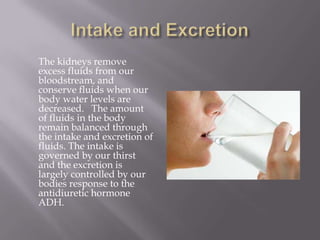
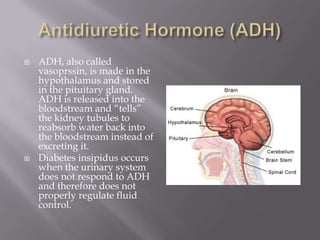
Diabetes insipidus is a disorder caused by inadequate secretion of antidiuretic hormone (ADH) from the pituitary gland. It is characterized by excessive thirst and urination. ADH tells the kidneys to reabsorb water instead of excreting it, but in diabetes insipidus the kidneys do not respond to ADH properly. There are three main types - central diabetes insipidus caused by pituitary or hypothalamus damage; nephrogenic diabetes insipidus from kidney defects; and gestational diabetes insipidus during pregnancy. Treatment depends on the type but may include synthetic ADH, managing water intake, or diuretics.