



Devising New Collection
Policies in Academic Libraries:
Let‟s Be Smart!
Facilitators:
Diane Bruxvoort, Sr. Associate Dean
&
Steven Carrico, Chair, Acquisitions
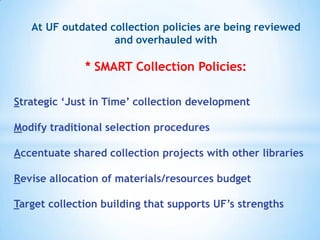
At UF outdated collection policies are being reviewed
and overhauled with

* SMART Collection Policies:
Strategic „Just in Time‟ collection development
Modify traditional selection procedures
Accentuate shared collection projects with other libraries
Revise allocation of materials/resources budget
Target collection building that supports UF‟s strengths
Why switch collection development
philosophy from the old school
„Just in Case‟ methodology
to the emerging
„Just in Time‟ approach?
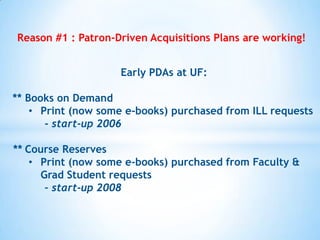
Reason #1 : Patron-Driven Acquisitions Plans are working!
Early PDAs at UF:
** Books on Demand
• Print (now some e-books) purchased from ILL requests
- start-up 2006
** Course Reserves
• Print (now some e-books) purchased from Faculty &
Grad Student requests
– start-up 2008
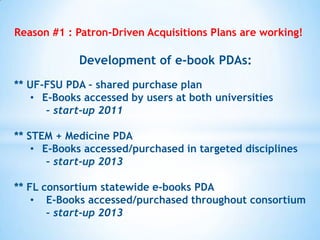
Reason #1 : Patron-Driven Acquisitions Plans are working!

Development of e-book PDAs:
** UF-FSU PDA – shared purchase plan
• E-Books accessed by users at both universities
– start-up 2011
** STEM + Medicine PDA
• E-Books accessed/purchased in targeted disciplines
– start-up 2013
** FL consortium statewide e-books PDA
• E-Books accessed/purchased throughout consortium
– start-up 2013
Reason #1 : Patron-Driven Acquisitions Plans are working!

Ongoing Pilots & Future Plans:
** Two ongoing e-journal PDAs
- start-up 2013
** Expand the scope & size of the UF-FSU PDA

** Launch a print book PDA
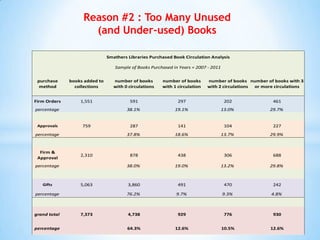
Reason #2 : Too Many Unused
(and Under-used) Books
Smathers Libraries Purchased Book Circulation Analysis
Sample of Books Purchased in Years = 2007 - 2011
purchase
method

books added to
collections

number of books
with 0 circulations

number of books
with 1 circulation

Firm Orders

1,551

591

297

202

461

38.1%

19.1%

13.0%

29.7%

287

141

104

227

37.8%

18.6%

13.7%

29.9%

878

438

306

688

38.0%

19.0%

13.2%

29.8%

3,860

491

470

242

76.2%

9.7%

9.3%

4.8%

4,738

929

776

930

64.3%

12.6%

10.5%

12.6%

percentage

Approvals

759

percentage

Firm &
Approval

2,310

percentage

Gifts

5,063

percentage

grand total
percentage

7,373

number of books number of books with 3
with 2 circulations or more circulations
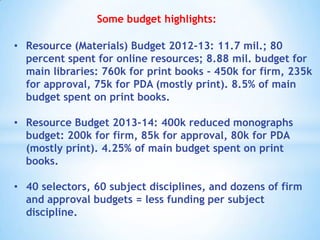
Some budget highlights:
• Resource (Materials) Budget 2012-13: 11.7 mil.; 80
percent spent for online resources; 8.88 mil. budget for
main libraries: 760k for print books - 450k for firm, 235k
for approval, 75k for PDA (mostly print). 8.5% of main
budget spent on print books.
• Resource Budget 2013-14: 400k reduced monographs
budget: 200k for firm, 85k for approval, 80k for PDA
(mostly print). 4.25% of main budget spent on print
books.

• 40 selectors, 60 subject disciplines, and dozens of firm
and approval budgets = less funding per subject
discipline.
Considerations for Budget Reallocation:
• How dependent are subject disciplines on print books?
• Are there endowment, grants, or other sources of funds
available – and how much is there - in subject areas to
augment book budgets?

• What is the overall percentage of the monographs budget
spent on specific disciplines or broad subject areas?
Goals of New Collection Policies
• Set collection strategies by subject areas and
disciplines, but apply key „umbrella policies‟:
- print serials to online
- purchase e-books over print books when
e-versions are available
• Reallocate budgets to target disciplines or collections less
supported in an online environment (e.g. Art).
• Create new programs that support disciplines and
collections in a variety of formats (e.g. LAC e-book plans)
• Streamline traditional methods of collection building
- reduce print book purchases (firm orders)
- revise gift acceptance and selection parameters
SMART Collection Policies
Strategic „Just in Time‟ collection development
Modify traditional selection procedures
Accentuate shared collection projects with other libraries
Revise allocation of materials/resources budget

Target collection building that supports UF‟s strengths
Questions & Discussion Points:
Is your library currently revising or considering revising its collection
policies? If so, will you incorporate “Just in Case” strategies?

Is you library running pilot or ongoing patron-driven acquisitions plans?
If so, how are you balancing these programs with your traditional
collection development? How are you allocating budgets to pay for PDAs
and traditional methods of selection?
Given that a significant percentage of print books are either unused or
under-used, what justification does a library have to continue
purchasing and building print collections?
Some librarians are suggesting that e-books acquired by package or firm
orders have a similar pattern of non-use or under-use to print books. If
so, how would this affect collection development strategies?
Are there any questions or issues that were not covered? Feedback?
Diane Bruxvoort, Sr. Associate Dean
dbruxvoort@ufl.edu
Steven Carrico, Chair, Acquisitions
stecarr@uflib.ufl.edu

*

Devising New Collection Policies in Academic Libraries: Let's Be Smart!

  • 1.
    Devising New Collection Policiesin Academic Libraries: Let‟s Be Smart! Facilitators: Diane Bruxvoort, Sr. Associate Dean & Steven Carrico, Chair, Acquisitions
  • 2.
    At UF outdatedcollection policies are being reviewed and overhauled with * SMART Collection Policies: Strategic „Just in Time‟ collection development Modify traditional selection procedures Accentuate shared collection projects with other libraries Revise allocation of materials/resources budget Target collection building that supports UF‟s strengths
  • 3.
    Why switch collectiondevelopment philosophy from the old school „Just in Case‟ methodology to the emerging „Just in Time‟ approach?
  • 4.
    Reason #1 :Patron-Driven Acquisitions Plans are working! Early PDAs at UF: ** Books on Demand • Print (now some e-books) purchased from ILL requests - start-up 2006 ** Course Reserves • Print (now some e-books) purchased from Faculty & Grad Student requests – start-up 2008
  • 5.
    Reason #1 :Patron-Driven Acquisitions Plans are working! Development of e-book PDAs: ** UF-FSU PDA – shared purchase plan • E-Books accessed by users at both universities – start-up 2011 ** STEM + Medicine PDA • E-Books accessed/purchased in targeted disciplines – start-up 2013 ** FL consortium statewide e-books PDA • E-Books accessed/purchased throughout consortium – start-up 2013
  • 6.
    Reason #1 :Patron-Driven Acquisitions Plans are working! Ongoing Pilots & Future Plans: ** Two ongoing e-journal PDAs - start-up 2013 ** Expand the scope & size of the UF-FSU PDA ** Launch a print book PDA
  • 7.
    Reason #2 :Too Many Unused (and Under-used) Books Smathers Libraries Purchased Book Circulation Analysis Sample of Books Purchased in Years = 2007 - 2011 purchase method books added to collections number of books with 0 circulations number of books with 1 circulation Firm Orders 1,551 591 297 202 461 38.1% 19.1% 13.0% 29.7% 287 141 104 227 37.8% 18.6% 13.7% 29.9% 878 438 306 688 38.0% 19.0% 13.2% 29.8% 3,860 491 470 242 76.2% 9.7% 9.3% 4.8% 4,738 929 776 930 64.3% 12.6% 10.5% 12.6% percentage Approvals 759 percentage Firm & Approval 2,310 percentage Gifts 5,063 percentage grand total percentage 7,373 number of books number of books with 3 with 2 circulations or more circulations
  • 9.
    Some budget highlights: •Resource (Materials) Budget 2012-13: 11.7 mil.; 80 percent spent for online resources; 8.88 mil. budget for main libraries: 760k for print books - 450k for firm, 235k for approval, 75k for PDA (mostly print). 8.5% of main budget spent on print books. • Resource Budget 2013-14: 400k reduced monographs budget: 200k for firm, 85k for approval, 80k for PDA (mostly print). 4.25% of main budget spent on print books. • 40 selectors, 60 subject disciplines, and dozens of firm and approval budgets = less funding per subject discipline.
  • 10.
    Considerations for BudgetReallocation: • How dependent are subject disciplines on print books? • Are there endowment, grants, or other sources of funds available – and how much is there - in subject areas to augment book budgets? • What is the overall percentage of the monographs budget spent on specific disciplines or broad subject areas?
  • 11.
    Goals of NewCollection Policies • Set collection strategies by subject areas and disciplines, but apply key „umbrella policies‟: - print serials to online - purchase e-books over print books when e-versions are available • Reallocate budgets to target disciplines or collections less supported in an online environment (e.g. Art). • Create new programs that support disciplines and collections in a variety of formats (e.g. LAC e-book plans) • Streamline traditional methods of collection building - reduce print book purchases (firm orders) - revise gift acceptance and selection parameters
  • 12.
    SMART Collection Policies Strategic„Just in Time‟ collection development Modify traditional selection procedures Accentuate shared collection projects with other libraries Revise allocation of materials/resources budget Target collection building that supports UF‟s strengths
  • 13.
    Questions & DiscussionPoints: Is your library currently revising or considering revising its collection policies? If so, will you incorporate “Just in Case” strategies? Is you library running pilot or ongoing patron-driven acquisitions plans? If so, how are you balancing these programs with your traditional collection development? How are you allocating budgets to pay for PDAs and traditional methods of selection? Given that a significant percentage of print books are either unused or under-used, what justification does a library have to continue purchasing and building print collections? Some librarians are suggesting that e-books acquired by package or firm orders have a similar pattern of non-use or under-use to print books. If so, how would this affect collection development strategies? Are there any questions or issues that were not covered? Feedback?
  • 14.
    Diane Bruxvoort, Sr.Associate Dean dbruxvoort@ufl.edu Steven Carrico, Chair, Acquisitions stecarr@uflib.ufl.edu *