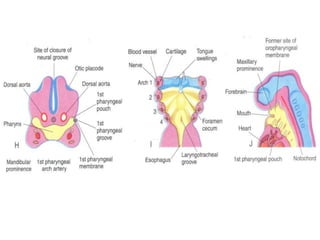
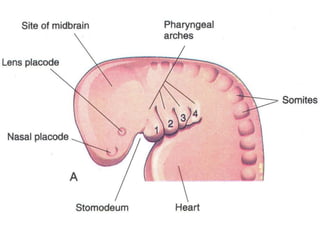
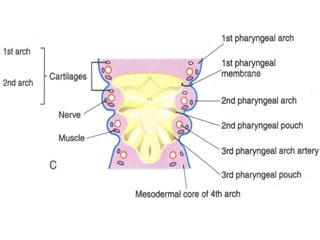
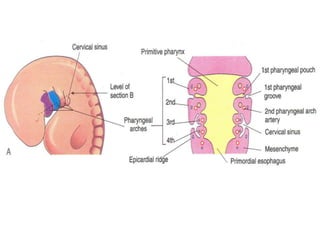
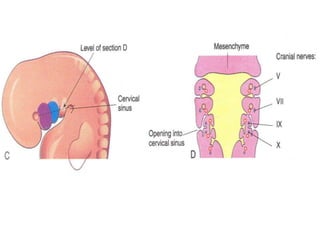
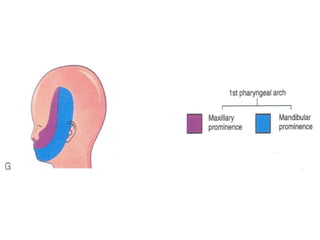
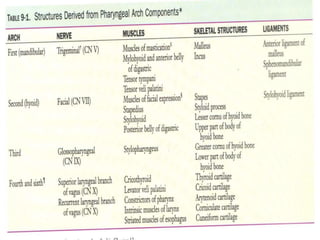
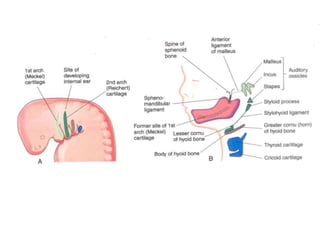
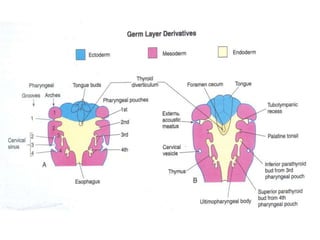
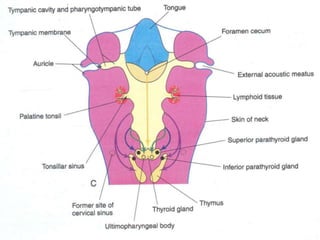
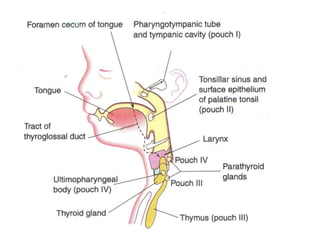
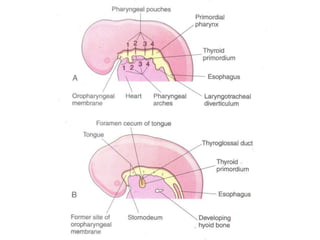
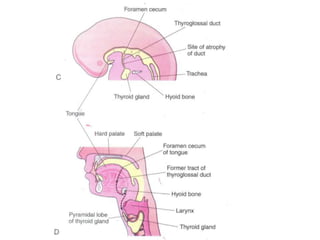
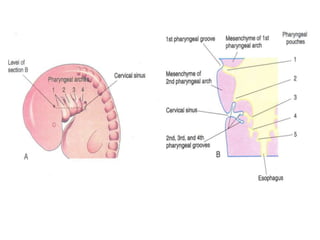
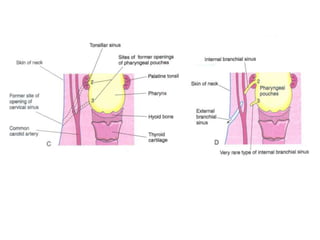
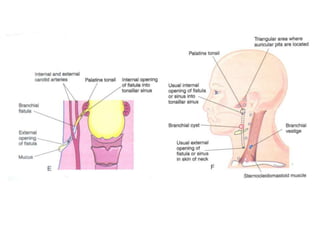
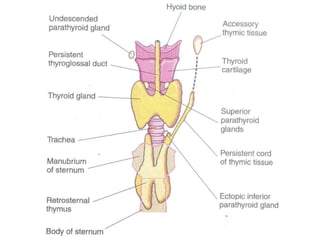
The pharyngeal apparatus consists of pharyngeal arches, pouches, grooves, and membranes that form in the developing embryo and contribute to structures in the head and neck region. The arches support the pharynx walls and give rise to skeletal, muscular, vascular and nerve components. The pouches form diverticula that develop into structures like the tonsils, thymus and parathyroid glands. Pharyngeal anomalies can result if parts of the apparatus that normally disappear persist.
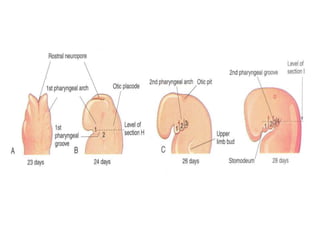
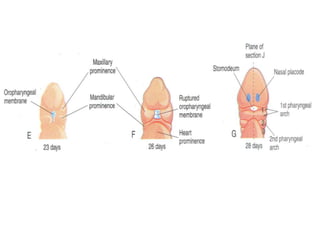

![PHARYNGEAL ARCHES
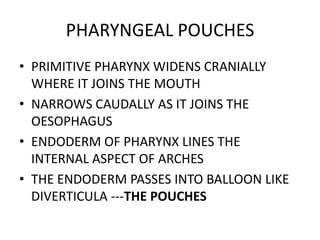
• THE ARCHES SUPPORT THE LATERAL WALLS OF
THE CRANIAL PART OF THE FOREGUT [ THE
PRIMITIVE PHAYRYNX ]
• STOMODEUM [PRIMTIVE MOUTH ] APPEARS AS A
SLIGHT DEPRESSION OF SURFACE ECTODERM
• STOMODEUM COVERED BY OROPHARNGEAL
MEMBRANE
• PHARYNX COMMUNICATES WITH THE AMNIOTIC
CAVITY WHEN OROPHARYNGEAL MEMBRANE
RUPTURES](https://image.slidesharecdn.com/developmentofheadandneckeditted-111027024129-phpapp01/85/Development-of-head-and-neck-editted-7-320.jpg)
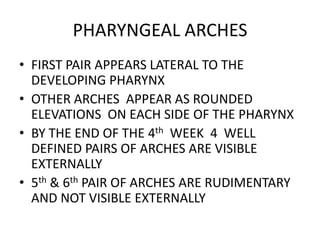
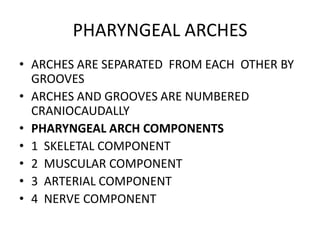

![PHARYNGEAL MEMBRANES
• TEMPORARY STRUCTURES
• APPEAR IN THE BOTTOM OF PHARYNGEAL
GROOVES ON EACH SIDE OF THE NECK DURING
THE 4th WEEK
• FORMED WHEN EPITHELIA OF A GROOVE
[ECTODERM] AND A POUCH [ENDODERM ]
APPROACH EACH OTHER SEPARATED BY
MESENCHYME
• ONLY 1st MEMBRANE GIVES RISE TO THE
TYMPANIC MEMBRANE](https://image.slidesharecdn.com/developmentofheadandneckeditted-111027024129-phpapp01/85/Development-of-head-and-neck-editted-32-320.jpg)


![CTEV [ clubfoot] DR ARUN LAL ,DR MOHAMED ASHRAF travancore medical college k...](https://cdn.slidesharecdn.com/ss_thumbnails/ctevclubfootdrarunlaldrmohamedashraftravancoremedicalcollegekollamkeralaindia-260208063247-18fc466c-thumbnail.jpg?width=640&height=640&fit=bounds)


