IIPM (SS 11-13)
DEVALUATION OF A
RUPEE
Presented by:
Umesh Gemnani
Pawan Chhatani
Nikita Mirani
Kavita Makhija
What is Devaluation?
“one country's currency is reduced in value in comparison
to other currencies”
NEEDS FOR DEVALUATION
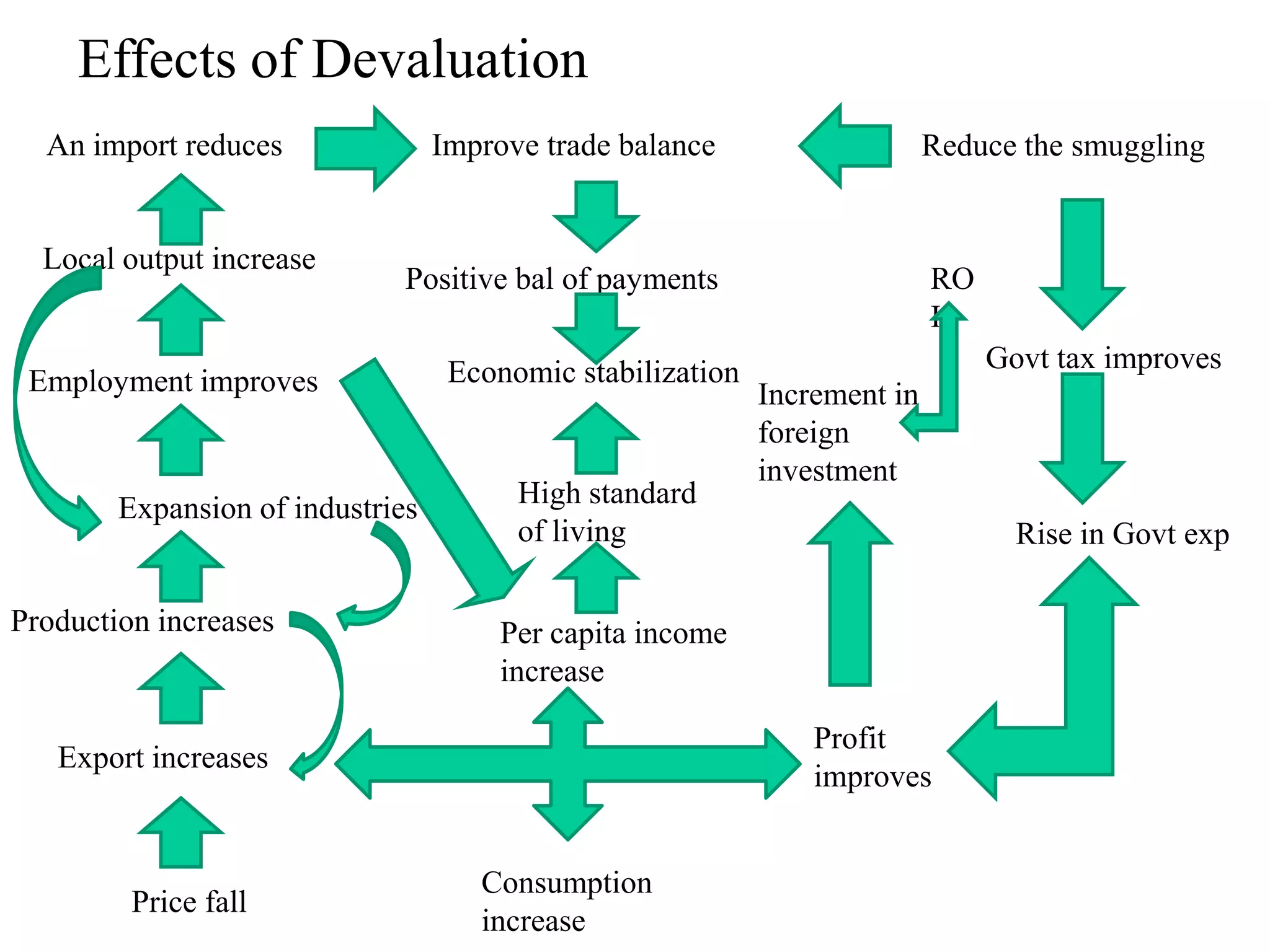
Effects of Devaluation
An import reduces Improve trade balance Reduce the smuggling
Local output increase
Employment improves
Expansion of industries
Production increases
Govt tax improves
Increment in
foreign
investment
Profit
improves
Price fall
Export increases
Positive bal of payments
Rise in Govt exp
Consumption
increase
RO
I
Per capita income
increase
High standard
of living
Economic stabilization
THE 1966 DEVALUATION
The first was India's war with Pakistan in late 1965.
The US and other countries friendly towards pakistan withdrew
foreign aid to India.
Budget deficit due to defense spending in 1965/1966 was
24.06% of total expenditure.
Current account deficit of over 290 crore due to second five
year plan
Inflation has caused Indian prices to become much higher than
world prices
Money supply increase
Depleting foreign reserves
THE 1991 DEVALUATION
The trade deficit in 1990 US $9.44 billion.
The current account deficit was US $9.7 billion.
The gulf war to higher imports due to the rise in oil prices.
Cost pull inflation.
Political and economical instability.
Depleting foreign exchange reserves.
Gold is pledged to IMF by preceding government.
IIPM (SS 11-13)
0
10
20
30
40
50
60
70
196619801991199119971998200220072009201120122013
Series 1
Series 1
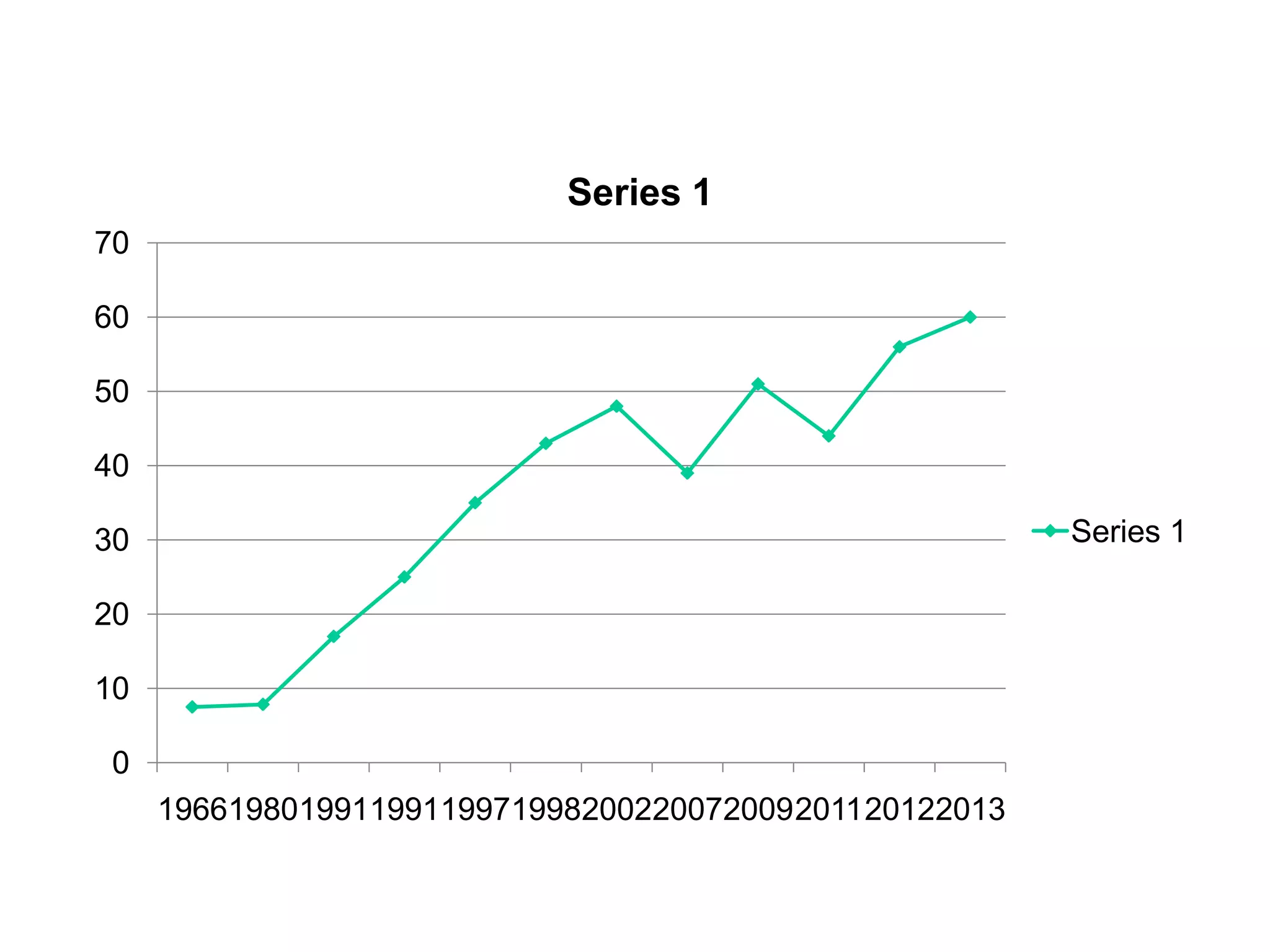
JOURNEY OF RUPEE FROM 5 to 60
• June 4,1966: First Major Devaluation
• 1980 Inflation: From 1966 to 1980, rupee
stayed constant
• 1991 crisis. In July 1991, we hit another major
crisis
• 1993 liberalization. In 1993, Indian finance
minister Dr. Manmohan Singh let rupee to float
a little freely.
• 1997 Asian Financial Crisis
Continue..
• Pokhran II 1998
• Goodtimes 2000-07
• Financial Crisis of 2007-08
• European Sovereing Debt Crisis
IIPM (SS 11-13)
Measures taken by RBI and government of
India
• FDI in telecom increase from 74% upto 100%
• FDI in insurance from 26% to 49%
• FDI in defence upto 49%
• Forwards contract cannot be rebooked once
cancelled.
• Restriction on oil marketing companies on
forward contracts.
IIPM (SS 11-13)
Devaluation of money

Devaluation of money

  • 1.
    IIPM (SS 11-13) DEVALUATIONOF A RUPEE Presented by: Umesh Gemnani Pawan Chhatani Nikita Mirani Kavita Makhija
  • 2.
    What is Devaluation? “onecountry's currency is reduced in value in comparison to other currencies”
  • 3.
  • 4.
    Effects of Devaluation Animport reduces Improve trade balance Reduce the smuggling Local output increase Employment improves Expansion of industries Production increases Govt tax improves Increment in foreign investment Profit improves Price fall Export increases Positive bal of payments Rise in Govt exp Consumption increase RO I Per capita income increase High standard of living Economic stabilization
  • 5.
    THE 1966 DEVALUATION Thefirst was India's war with Pakistan in late 1965. The US and other countries friendly towards pakistan withdrew foreign aid to India. Budget deficit due to defense spending in 1965/1966 was 24.06% of total expenditure. Current account deficit of over 290 crore due to second five year plan Inflation has caused Indian prices to become much higher than world prices Money supply increase Depleting foreign reserves
  • 6.
    THE 1991 DEVALUATION Thetrade deficit in 1990 US $9.44 billion. The current account deficit was US $9.7 billion. The gulf war to higher imports due to the rise in oil prices. Cost pull inflation. Political and economical instability. Depleting foreign exchange reserves. Gold is pledged to IMF by preceding government. IIPM (SS 11-13)
  • 7.
  • 8.
    JOURNEY OF RUPEEFROM 5 to 60 • June 4,1966: First Major Devaluation • 1980 Inflation: From 1966 to 1980, rupee stayed constant • 1991 crisis. In July 1991, we hit another major crisis • 1993 liberalization. In 1993, Indian finance minister Dr. Manmohan Singh let rupee to float a little freely. • 1997 Asian Financial Crisis
  • 9.
    Continue.. • Pokhran II1998 • Goodtimes 2000-07 • Financial Crisis of 2007-08 • European Sovereing Debt Crisis IIPM (SS 11-13)
  • 10.
    Measures taken byRBI and government of India • FDI in telecom increase from 74% upto 100% • FDI in insurance from 26% to 49% • FDI in defence upto 49% • Forwards contract cannot be rebooked once cancelled. • Restriction on oil marketing companies on forward contracts. IIPM (SS 11-13)