EXAMINATION OF MALE
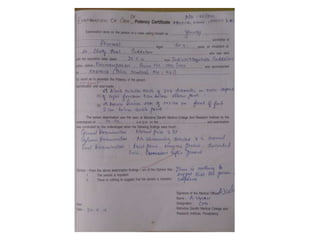
(POTENCY CERTIFICATE)
DR. SATISH KUMAR
HEAD OF DEPARTMENT
FORENSIC MEDICINE
Sexual Act
• In male the sexual act comprises of erection,
intermission and ejaculation. Female is also an
active party to intercourse.
Impotence – is inability of a person to perform
sexual intercourse.
Better term for impotence is Erectile disfunction
Common situation wherein such examination is
conducted.
Criminal cases –
Rape, Adultery, unnatural sexual offences.
Civil cases
• Nullity of marriage (Unconsummated Marriage
• Disputed paternity
• Claims/ Damages arising from injuries resulted in impotence
Guidelines for such examination
•Examination may be undertaken on the
authorization of competent authority
•Magistrate or police officer.
•If person is arrested, examination without consent
can be done.
Medical history
• Habits - 1. Smoking, 2. Alcohol, 3. Drugs
• Diabetes - when complicated by peripheral neuropathy
• Trauma - Head injury, Amputation of penis, spinal
injury -(1st Lumber vertebra spinal nerve concerned with
erection and ejaculation).
•Venereal disease - syphilis in tertiary stage can
affect the posterior column of spinal cord can
cause impotence.
•Hypertension - Ganglion blocking drugs can
cause impotence.
•Occupation- Painters or other workers exposé to
lead - neuropathy.
History of sexual development
• Masturbation
• Night emission & morning erection of penis.
• Homo sexual practice.
• H/O sexual intercourse.
• Libido.
• Sexual development.
• Marital status (No. of children)
• Sexual deviation.
History related to local diseases.
• Congenital absence of penis, infantile penis.
• Amputation of penis at the root by trauma or surgical
removal.
• Large hydrocele.
History suggestion of Endocrine disorder like
• Hypopituitarism
• CNS disorders like syringomelia.
 Other causes are
• Tumors of spinal cord.
• Spina bifida.
• Pelvic fractures.
• Tranquilizers.
• Surgery of pelvic organs.
Examination
1.Physical examination
Height
Weight
Build – good/ moderate/ poor
Adam's apple
Hair - public/ Axillary/ Facial/ Chest
scalp (male type hairline)
2.Local Examination
Penis
• Penis – present/ absent
• Development – Adult size or infantile.
• Length & circumference in flaccid state
• Anomalies developmental/ acquired.
• Evidence of disease
• Foreskin – retractable/ non retractable
• Glans penis sensation – present/ Absent
Injuries.
Scrotum
Scrotum – pendulous or non pendulous
Testis - Present/ Absent – Rt. & Lt.
Epididymis & cord
Evidence of – STD
Urethral discharge – Present/ Absent
Ulcers/ any other lesion.
Psychological evaluation for Impotence
- Anxieties - Fears - Depression
- phobias - Repulsion against partner (quoadhoc)
•Systemic examination
•CVS
•CNS
•GIT
•RS
•Abdomen & Spine
•Investigations
• Blood for sugar and VDRL
• Xray head, spine, pelvis- if trauma
• LFT – To diagnose liner failure
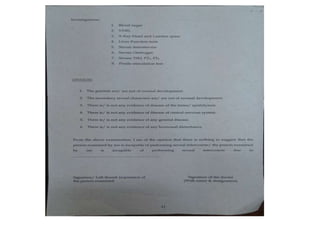
• Opinion:
Every healthy individual is presumed to be potent but
certificate to that effect should not be given as psychogenic
impotence can not be ruled out by physical examination.
Hence certificate is usually given in double negative form.
1. “There is nothing to suggest that the above person is
incapable of performing the sexual act”.
2. The above subject is incapable of performing the sexual act
because of the following impediments.
 Determination of potency
 Determination of potency
 Determination of potency
 Determination of potency
 Determination of potency
 Determination of potency

Determination of potency

  • 1.
    EXAMINATION OF MALE (POTENCYCERTIFICATE) DR. SATISH KUMAR HEAD OF DEPARTMENT FORENSIC MEDICINE
  • 2.
    Sexual Act • Inmale the sexual act comprises of erection, intermission and ejaculation. Female is also an active party to intercourse. Impotence – is inability of a person to perform sexual intercourse. Better term for impotence is Erectile disfunction
  • 3.
    Common situation whereinsuch examination is conducted. Criminal cases – Rape, Adultery, unnatural sexual offences. Civil cases • Nullity of marriage (Unconsummated Marriage • Disputed paternity • Claims/ Damages arising from injuries resulted in impotence
  • 4.
    Guidelines for suchexamination •Examination may be undertaken on the authorization of competent authority •Magistrate or police officer. •If person is arrested, examination without consent can be done.
  • 5.
    Medical history • Habits- 1. Smoking, 2. Alcohol, 3. Drugs • Diabetes - when complicated by peripheral neuropathy • Trauma - Head injury, Amputation of penis, spinal injury -(1st Lumber vertebra spinal nerve concerned with erection and ejaculation).
  • 6.
    •Venereal disease -syphilis in tertiary stage can affect the posterior column of spinal cord can cause impotence. •Hypertension - Ganglion blocking drugs can cause impotence. •Occupation- Painters or other workers exposé to lead - neuropathy.
  • 7.
    History of sexualdevelopment • Masturbation • Night emission & morning erection of penis. • Homo sexual practice. • H/O sexual intercourse. • Libido. • Sexual development. • Marital status (No. of children) • Sexual deviation.
  • 8.
    History related tolocal diseases. • Congenital absence of penis, infantile penis. • Amputation of penis at the root by trauma or surgical removal. • Large hydrocele. History suggestion of Endocrine disorder like • Hypopituitarism • CNS disorders like syringomelia.
  • 9.
     Other causesare • Tumors of spinal cord. • Spina bifida. • Pelvic fractures. • Tranquilizers. • Surgery of pelvic organs.
  • 10.
    Examination 1.Physical examination Height Weight Build –good/ moderate/ poor Adam's apple Hair - public/ Axillary/ Facial/ Chest scalp (male type hairline)
  • 11.
    2.Local Examination Penis • Penis– present/ absent • Development – Adult size or infantile. • Length & circumference in flaccid state • Anomalies developmental/ acquired. • Evidence of disease • Foreskin – retractable/ non retractable • Glans penis sensation – present/ Absent Injuries.
  • 12.
    Scrotum Scrotum – pendulousor non pendulous Testis - Present/ Absent – Rt. & Lt. Epididymis & cord Evidence of – STD Urethral discharge – Present/ Absent Ulcers/ any other lesion. Psychological evaluation for Impotence - Anxieties - Fears - Depression - phobias - Repulsion against partner (quoadhoc)
  • 13.
    •Systemic examination •CVS •CNS •GIT •RS •Abdomen &Spine •Investigations • Blood for sugar and VDRL • Xray head, spine, pelvis- if trauma • LFT – To diagnose liner failure
  • 14.
    • Opinion: Every healthyindividual is presumed to be potent but certificate to that effect should not be given as psychogenic impotence can not be ruled out by physical examination. Hence certificate is usually given in double negative form. 1. “There is nothing to suggest that the above person is incapable of performing the sexual act”. 2. The above subject is incapable of performing the sexual act because of the following impediments.