P R E P A R E D B Y F E D E R I C K A N A K M Y D I N
R E G I S T E R N O : 0 5 D T P 0 9 F 2 0 3 6
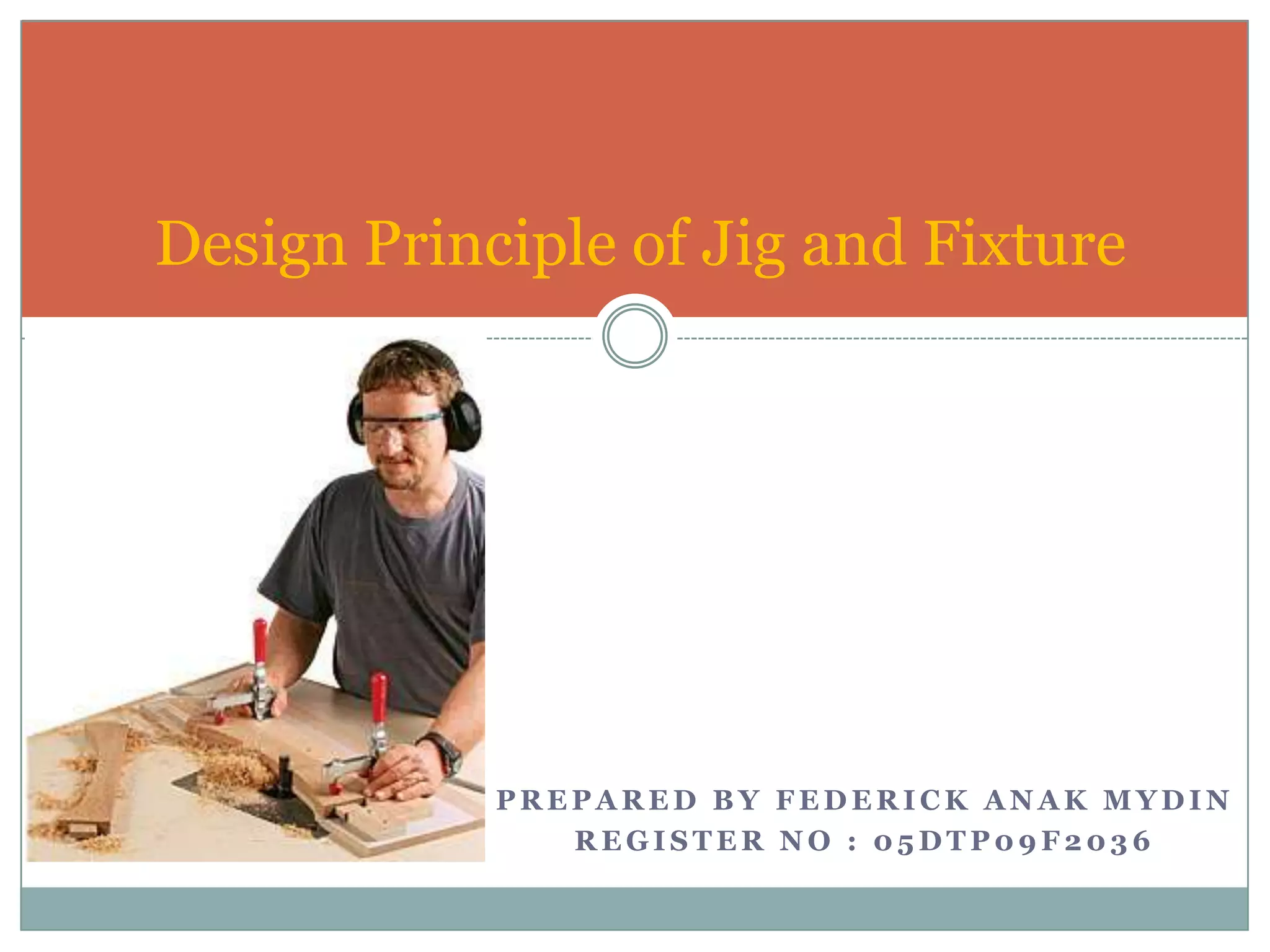
Design Principle of Jig and Fixture
1 : Rigidity
Jigs and fixtures should be
sufficiently stiff to secure the
preset accuracy of machining.
2 : Clearance
 Clearance is provided in the jig or fixture
body
 (A) to allow for any variation in component
sizes specially casting and forging.
 (B) To allow for hand movements so that
the work piece can easily placed in the jig or
fixture and removal after machining .
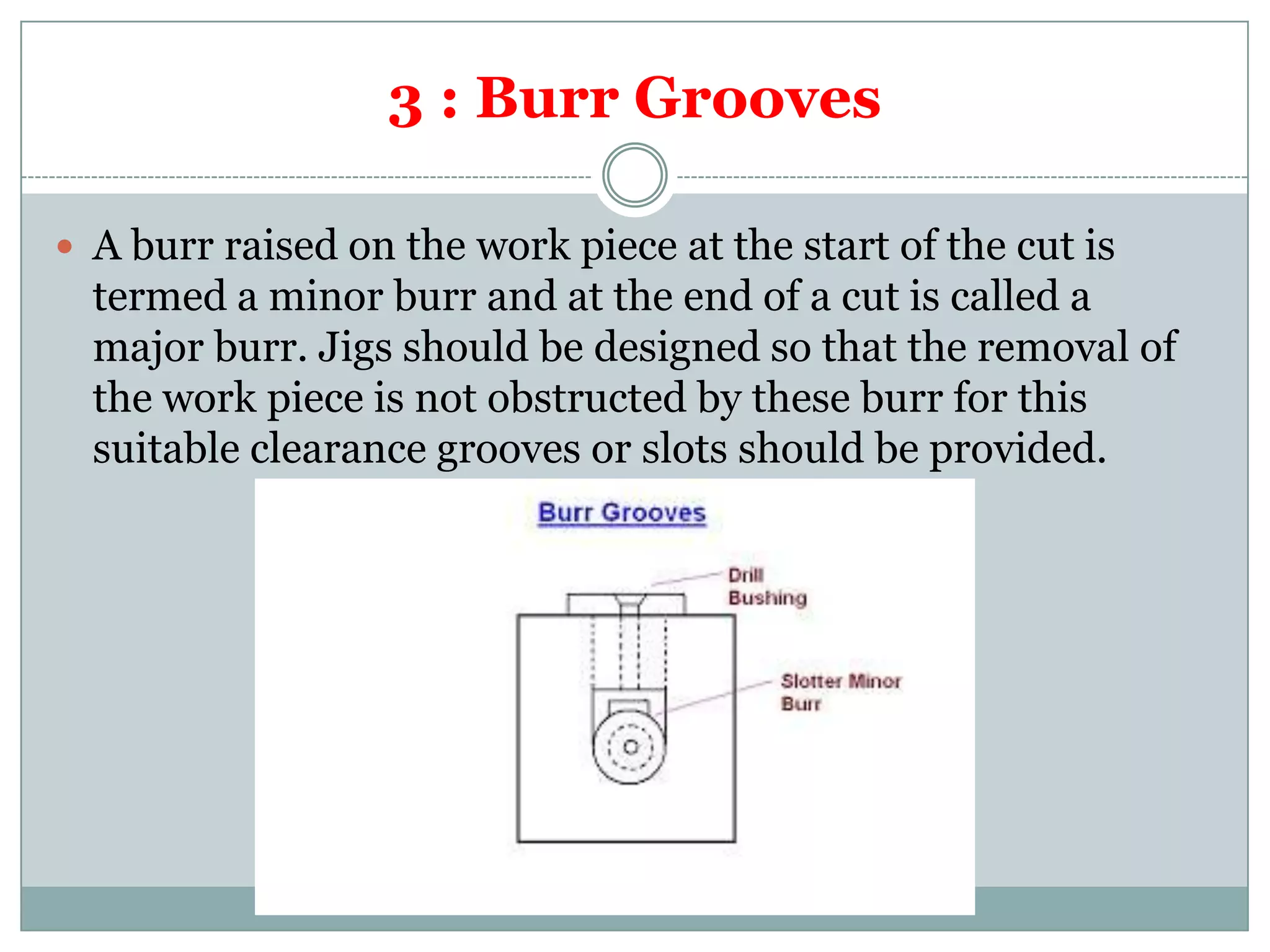
3 : Burr Grooves
 A burr raised on the work piece at the start of the cut is
termed a minor burr and at the end of a cut is called a
major burr. Jigs should be designed so that the removal of
the work piece is not obstructed by these burr for this
suitable clearance grooves or slots should be provided.
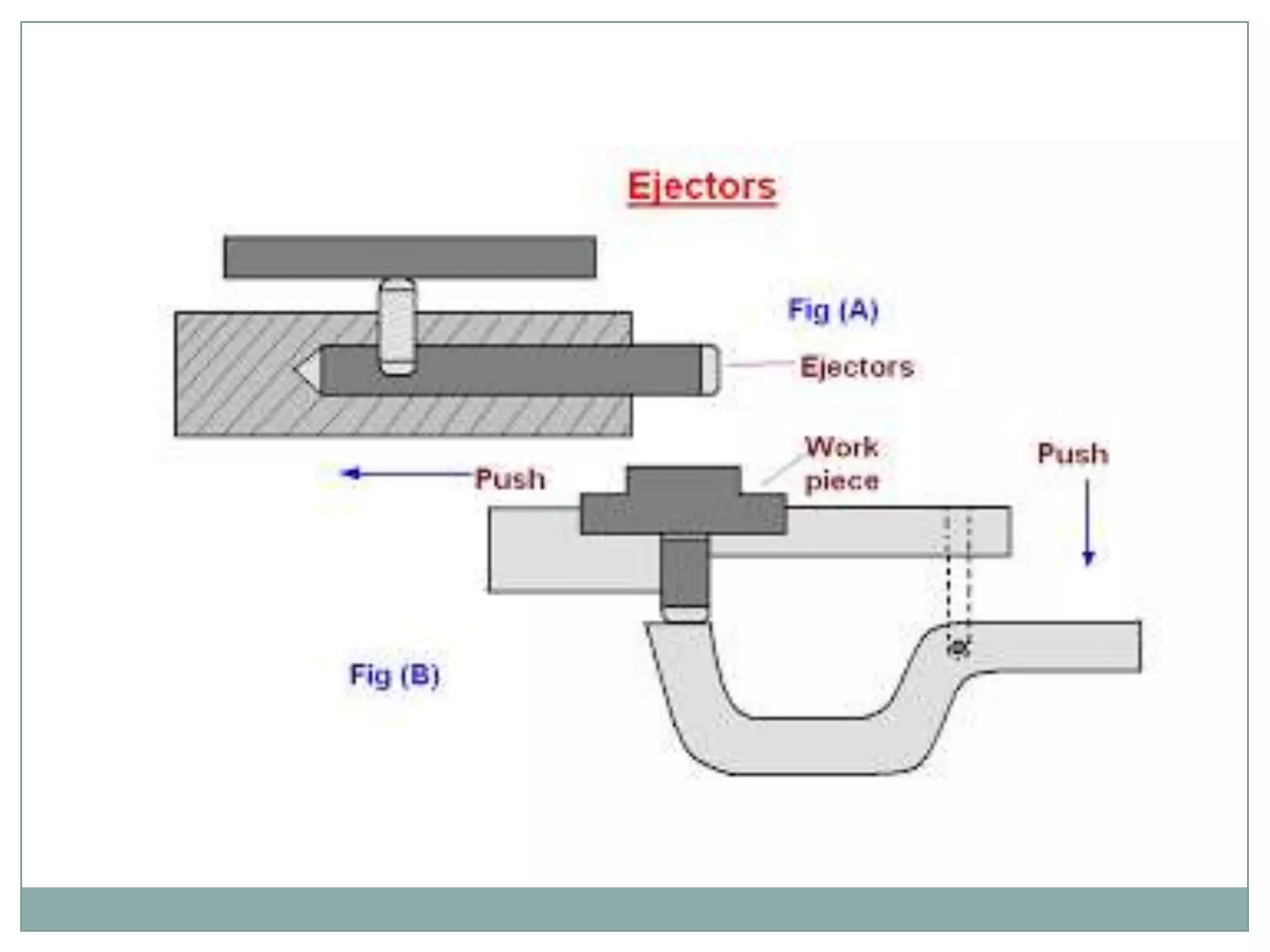
4 : Ejectors
 The use of ejection devices to force the work piece
out from the jig or fixture is important in two
positions.
 (A) the work piece is heavy
 (B) machining pressure forces the work piece to the
slides or based on the jig or fixture and the pressure
and oil or coolant fill will cause the work to strick
and difficult to remove on small jigs and fixtures , a
pin located under the work will remove the
part radially.
5 : Inserts
 To avoid any damage to fragile and soft
work piece and also to the finished
surfaces of the work piece while
clamping. Inserts of some soft material
such as copper, lead , fiber , leather ,
hard rubber and plastic should be
fitted to the faces of the clamps.
6 : Design for Safety
 Jigs and fixtures must be safe and convenient in use,
following are the some
 Factors for the safety of worker working on jigs and
fixtures.
 (A): Sharp corner on the body of jig and fixture
should be avoided.
 (B): Sighting surfaces should be cleared.
 (C): Bolt and nut should be inside the body of jig or
fixture and not protrude on the surface.
7 : Sighting Surface
Machining on the work piece
must be clearly visible to the
worker. He should not be
required to bend is neck for
seeing the work piece or work
surfaces.
8 : Simplicity in design
Design of the jig and fixture should
be a simple one. A completed
design require a large maintenance.
They should be easily to set , cheap
in manufacture.
9 : Economical
 Jig and fixtures should be simple in
construction, give high accuracy , be
sufficiently rigid and lightly weight. To
satisfy these conditions an economical
balance has to be made.
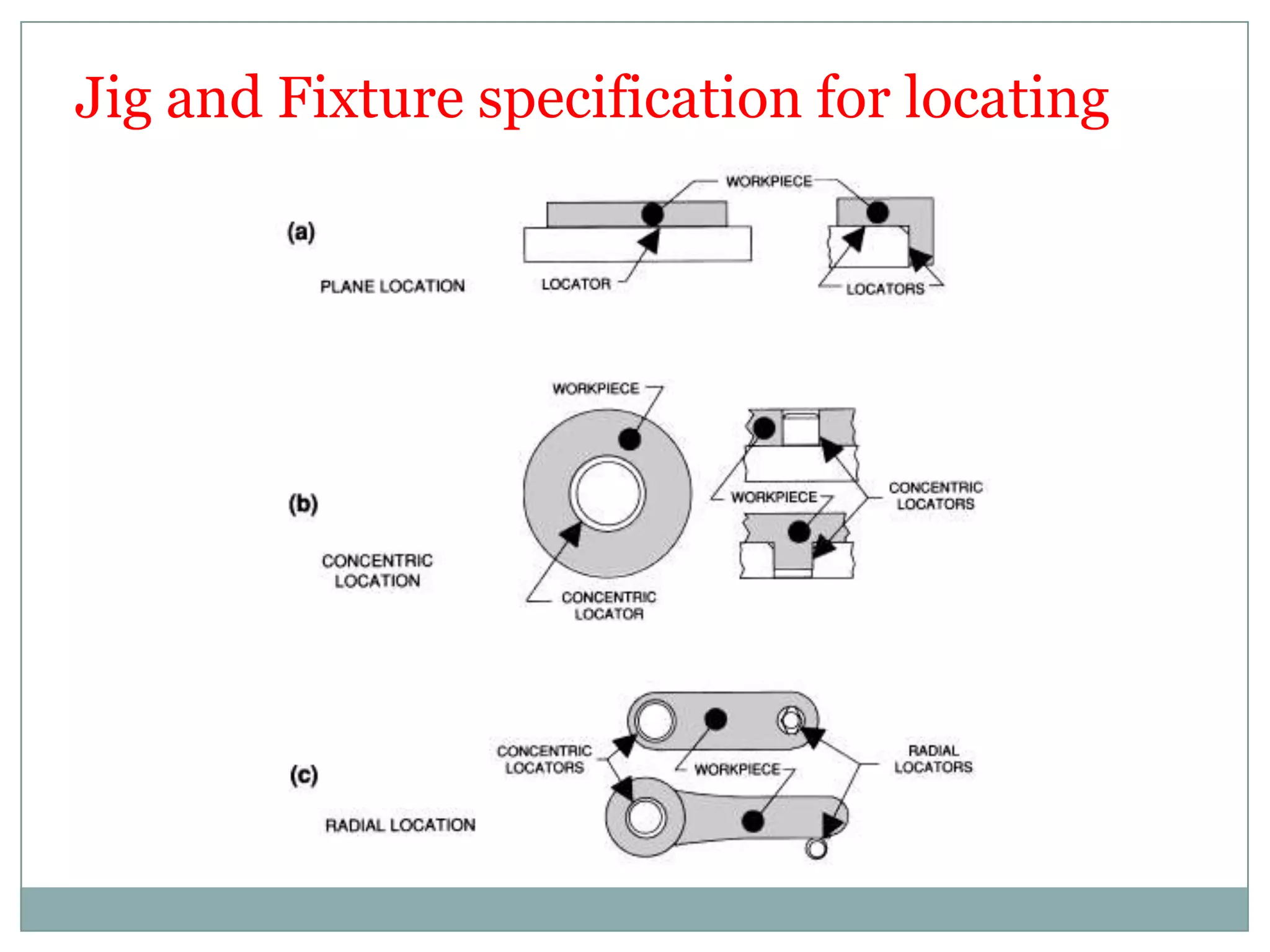
Jig and Fixture specification for locating
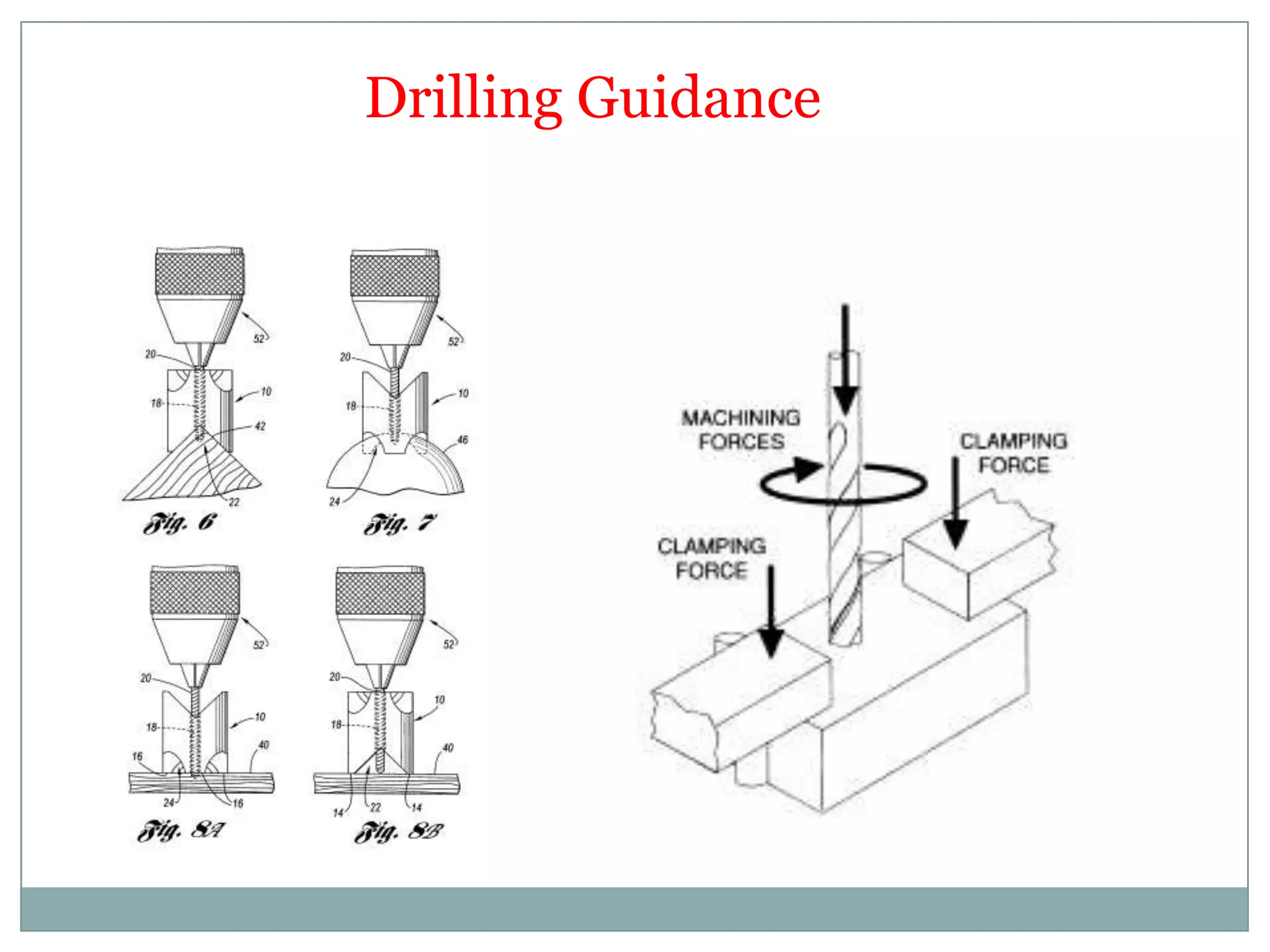
Drilling Guidance
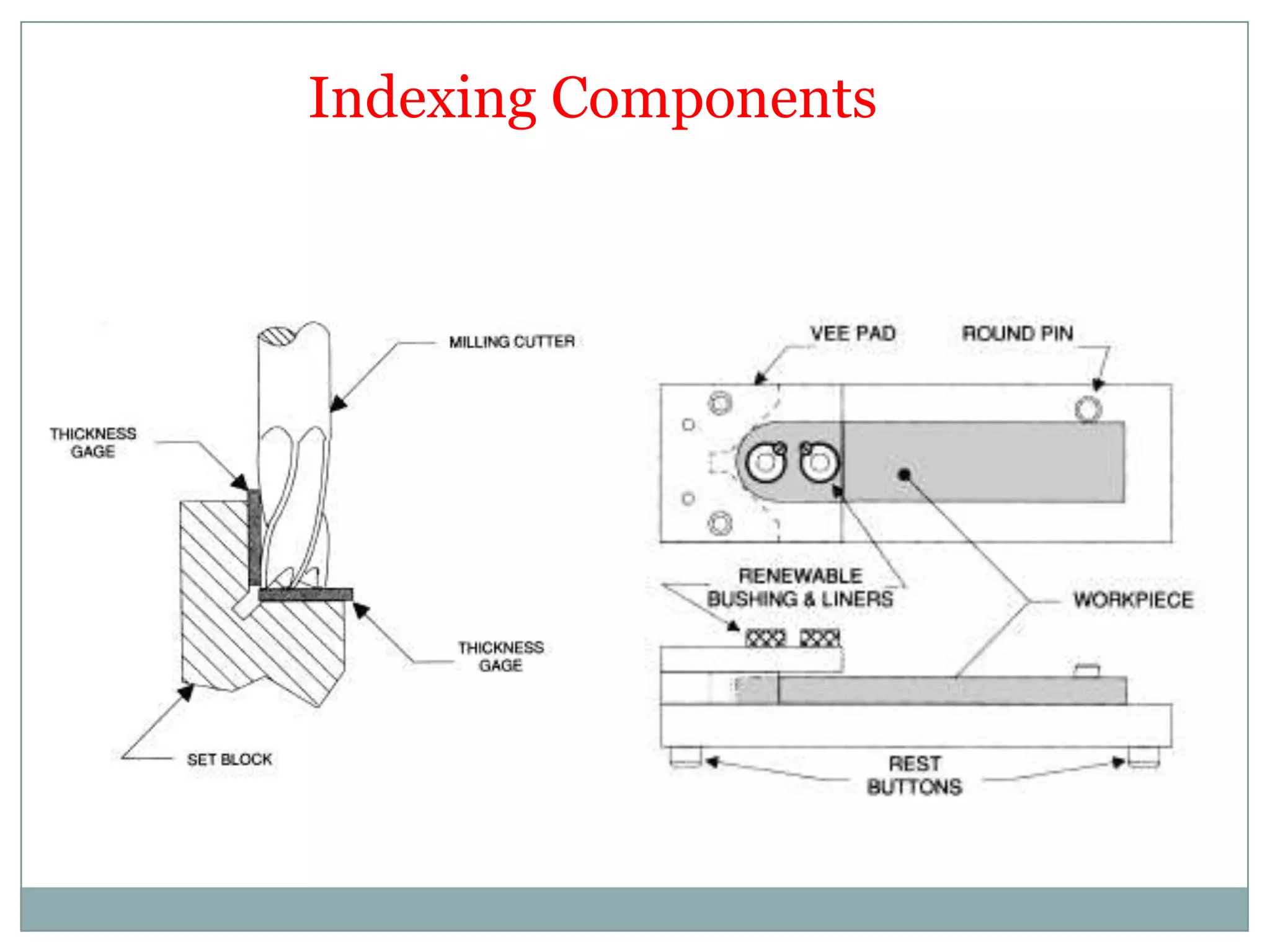
Indexing Components

Design principle of jig and fixture

  • 1.
    P R EP A R E D B Y F E D E R I C K A N A K M Y D I N R E G I S T E R N O : 0 5 D T P 0 9 F 2 0 3 6 Design Principle of Jig and Fixture
  • 2.
    1 : Rigidity Jigsand fixtures should be sufficiently stiff to secure the preset accuracy of machining.
  • 3.
    2 : Clearance Clearance is provided in the jig or fixture body  (A) to allow for any variation in component sizes specially casting and forging.  (B) To allow for hand movements so that the work piece can easily placed in the jig or fixture and removal after machining .
  • 4.
    3 : BurrGrooves  A burr raised on the work piece at the start of the cut is termed a minor burr and at the end of a cut is called a major burr. Jigs should be designed so that the removal of the work piece is not obstructed by these burr for this suitable clearance grooves or slots should be provided.
  • 5.
    4 : Ejectors The use of ejection devices to force the work piece out from the jig or fixture is important in two positions.  (A) the work piece is heavy  (B) machining pressure forces the work piece to the slides or based on the jig or fixture and the pressure and oil or coolant fill will cause the work to strick and difficult to remove on small jigs and fixtures , a pin located under the work will remove the part radially.
  • 7.
    5 : Inserts To avoid any damage to fragile and soft work piece and also to the finished surfaces of the work piece while clamping. Inserts of some soft material such as copper, lead , fiber , leather , hard rubber and plastic should be fitted to the faces of the clamps.
  • 8.
    6 : Designfor Safety  Jigs and fixtures must be safe and convenient in use, following are the some  Factors for the safety of worker working on jigs and fixtures.  (A): Sharp corner on the body of jig and fixture should be avoided.  (B): Sighting surfaces should be cleared.  (C): Bolt and nut should be inside the body of jig or fixture and not protrude on the surface.
  • 9.
    7 : SightingSurface Machining on the work piece must be clearly visible to the worker. He should not be required to bend is neck for seeing the work piece or work surfaces.
  • 10.
    8 : Simplicityin design Design of the jig and fixture should be a simple one. A completed design require a large maintenance. They should be easily to set , cheap in manufacture.
  • 11.
    9 : Economical Jig and fixtures should be simple in construction, give high accuracy , be sufficiently rigid and lightly weight. To satisfy these conditions an economical balance has to be made.
  • 12.
    Jig and Fixturespecification for locating
  • 13.
  • 14.