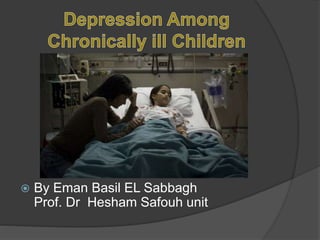
 By Eman Basil EL Sabbagh
Prof. Dr Hesham Safouh unit
Are they sad or Are they depressed?
 If a child or teenager’s symptoms become
persistent, disruptive, and interfere with social
activities, interests, schoolwork and family life,
he or she may be depressed.
 Depression is one of the most common
complications of chronic illness.
 It is estimated that up to 1/3 of individuals with a
serious medical condition experience symptoms of
depression.
Common chronic diseases
associated with depression
 Cancer e.g. leukemia, lymphomas
 Respiratory e.g. Asthma, Cystic fibrosis
 Renal e.g. Chronic renal failure
 Hematological e.g. Hemophilia, Thalasemia
 Rheumatology: e.g. SLE, Rheumatoid artheritis, FMF
 Endocrine e.g. Diabetes
 Neurological e.g. Epilepsy, myopathy
 Cardiology e.g. Heart failure, Rheumatic heart
disease
 HIV, HBV, HCV
 Metabolic diseases e.g. wilson, gaucher, niemann
pick
It is very tricky to diagnose
depression in a chronically ill child
 Some of the symptoms of depression
may overlap the symptoms of the
chronic disease e.g.
 Tiredness
 Lose of interest in activities
 eating more,
 Difficulty to concentrate.
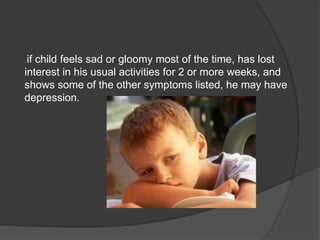
if child feels sad or gloomy most of the time, has lost
interest in his usual activities for 2 or more weeks, and
shows some of the other symptoms listed, he may have
depression.
Symptoms of depression in a child
1. Grumpy, irritable or sad mood
2. Loss of interest or enjoyment in activities that she typically finds fun
3. Inappropriate feelings of guilt, worthlessness, inadequacy, or
incompetence
4. Poor or increased appetite; weight gain or loss
5. Insomnia, or sleeping more than usual
6. Low energy or exhaustion after doing simple tasks
7. Feelings of hopelessness
8. Decrease in productivity (e.g., being absent from school more than
usual, cutting classes, or a drop in grades)
9. Trouble thinking or making decisions
10. Outbursts of shouting, complaining or crying
11. Excessive boredom
12. Loss of interest in friends and poor communication with people
13. Fear of death
14. Sensitivity to rejection or failure
15. Acting recklessly
How is a child's life affected
by a chronic disease?
 Discomfort or loss of energy
 Restriction of activities
 Disruption of his life due to medical
treatment
 Isolation from family and friends
 Feeling self-conscious, embarrassed, or
stigmatized if his disease makes him
different from other people
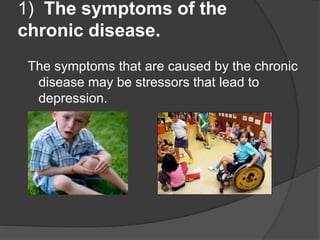
1) The symptoms of the
chronic disease.
The symptoms that are caused by the chronic
disease may be stressors that lead to
depression.
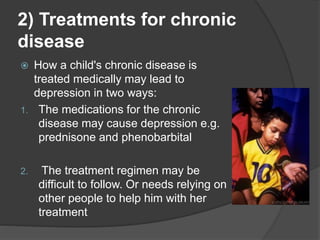
2) Treatments for chronic
disease
 How a child's chronic disease is
treated medically may lead to
depression in two ways:
1. The medications for the chronic
disease may cause depression e.g.
prednisone and phenobarbital
2. The treatment regimen may be
difficult to follow. Or needs relying on
other people to help him with her
treatment
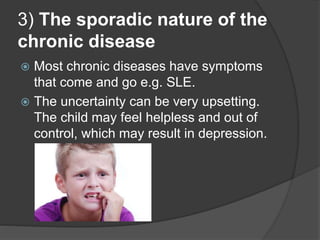
3) The sporadic nature of the
chronic disease
 Most chronic diseases have symptoms
that come and go e.g. SLE.
 The uncertainty can be very upsetting.
The child may feel helpless and out of
control, which may result in depression.
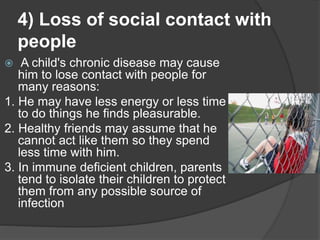
4) Loss of social contact with
people
 A child's chronic disease may cause
him to lose contact with people for
many reasons:
1. He may have less energy or less time
to do things he finds pleasurable.
2. Healthy friends may assume that he
cannot act like them so they spend
less time with him.
3. In immune deficient children, parents
tend to isolate their children to protect
them from any possible source of
infection
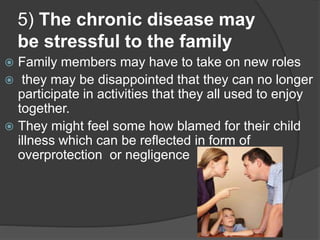
5) The chronic disease may
be stressful to the family
 Family members may have to take on new roles
 they may be disappointed that they can no longer
participate in activities that they all used to enjoy
together.
 They might feel some how blamed for their child
illness which can be reflected in form of
overprotection or negligence
6) Chemicals in the brain
 For example, pain from a child's chronic
disease may be related to too little
serotonin. Lack of serotonin also causes
depression
Why is depression a problem
for children with a chronic
disease?
 Depression is harmful whether or not a child
has a chronic disease
 However, if a child has a chronic disease
and is also depressed, the problems are
compounded
Why is depression a problem for
children with a chronic disease? (
Cont.)
1- Chronic disease symptoms may increase or get
worse.
2-The risk of dying from the chronic disease is
increased when the child is depressed.
3-Child may be hospitalized more frequently and
for longer durations.
4-The child may not be motivated to take good care
of himself if he is depressed.
Role of parents
 Parents can help by being present for all procedures,
staying with their child (when possible) during
hospitalizations and interacting with them as much as
possible
 Parents can help by allowing children to help in the
management of their illness (with supervision), as this
increases compliance.
 Parents should also reassure their children that the
illness is not their fault
 Parents should help facilitate their child’s participation
in school or other activities to the extent allowed by
the child’s doctors. Parents should avoid being over
protective
Role of Physicians
 Develop new coping strategies for the chronic disease e.g.
1- positive reappraisal (reassessing the disease in a positive light)
2-putting in perspective (making a rational assessment of the impact of illness)
3- positive refocusing (shifting one’s thoughts to pleasant matters)
4-focusing on planning (using one’s energy to plan for the future, and make the
best of the situation)
 Change the medication used to treat the chronic disease if depression is a side-
effect of the drug
 Enroll the child or family in a support group
 Have the child seen in individual psychotherapy or begin family therapy
 Change the child's lifestyle to reduce stress levels e.g. healthy food and enough
sleep
 Take medication for the depression
Role of society
 Awareness campaigns for children at
schools
 Funding psychotherapy centers that
treat chronically ill children for free
 Arranging events for the sick children to
meet and have fun
Depression among chronically ill children (2)

Depression among chronically ill children (2)

  • 1.
     By EmanBasil EL Sabbagh Prof. Dr Hesham Safouh unit
  • 2.
    Are they sador Are they depressed?  If a child or teenager’s symptoms become persistent, disruptive, and interfere with social activities, interests, schoolwork and family life, he or she may be depressed.
  • 3.
     Depression isone of the most common complications of chronic illness.  It is estimated that up to 1/3 of individuals with a serious medical condition experience symptoms of depression.
  • 4.
    Common chronic diseases associatedwith depression  Cancer e.g. leukemia, lymphomas  Respiratory e.g. Asthma, Cystic fibrosis  Renal e.g. Chronic renal failure  Hematological e.g. Hemophilia, Thalasemia  Rheumatology: e.g. SLE, Rheumatoid artheritis, FMF  Endocrine e.g. Diabetes  Neurological e.g. Epilepsy, myopathy  Cardiology e.g. Heart failure, Rheumatic heart disease  HIV, HBV, HCV  Metabolic diseases e.g. wilson, gaucher, niemann pick
  • 5.
    It is verytricky to diagnose depression in a chronically ill child  Some of the symptoms of depression may overlap the symptoms of the chronic disease e.g.  Tiredness  Lose of interest in activities  eating more,  Difficulty to concentrate.
  • 6.
    if child feelssad or gloomy most of the time, has lost interest in his usual activities for 2 or more weeks, and shows some of the other symptoms listed, he may have depression.
  • 7.
    Symptoms of depressionin a child 1. Grumpy, irritable or sad mood 2. Loss of interest or enjoyment in activities that she typically finds fun 3. Inappropriate feelings of guilt, worthlessness, inadequacy, or incompetence 4. Poor or increased appetite; weight gain or loss 5. Insomnia, or sleeping more than usual 6. Low energy or exhaustion after doing simple tasks 7. Feelings of hopelessness 8. Decrease in productivity (e.g., being absent from school more than usual, cutting classes, or a drop in grades) 9. Trouble thinking or making decisions 10. Outbursts of shouting, complaining or crying 11. Excessive boredom 12. Loss of interest in friends and poor communication with people 13. Fear of death 14. Sensitivity to rejection or failure 15. Acting recklessly
  • 8.
    How is achild's life affected by a chronic disease?  Discomfort or loss of energy  Restriction of activities  Disruption of his life due to medical treatment  Isolation from family and friends  Feeling self-conscious, embarrassed, or stigmatized if his disease makes him different from other people
  • 10.
    1) The symptomsof the chronic disease. The symptoms that are caused by the chronic disease may be stressors that lead to depression.
  • 11.
    2) Treatments forchronic disease  How a child's chronic disease is treated medically may lead to depression in two ways: 1. The medications for the chronic disease may cause depression e.g. prednisone and phenobarbital 2. The treatment regimen may be difficult to follow. Or needs relying on other people to help him with her treatment
  • 12.
    3) The sporadicnature of the chronic disease  Most chronic diseases have symptoms that come and go e.g. SLE.  The uncertainty can be very upsetting. The child may feel helpless and out of control, which may result in depression.
  • 13.
    4) Loss ofsocial contact with people  A child's chronic disease may cause him to lose contact with people for many reasons: 1. He may have less energy or less time to do things he finds pleasurable. 2. Healthy friends may assume that he cannot act like them so they spend less time with him. 3. In immune deficient children, parents tend to isolate their children to protect them from any possible source of infection
  • 14.
    5) The chronicdisease may be stressful to the family  Family members may have to take on new roles  they may be disappointed that they can no longer participate in activities that they all used to enjoy together.  They might feel some how blamed for their child illness which can be reflected in form of overprotection or negligence
  • 15.
    6) Chemicals inthe brain  For example, pain from a child's chronic disease may be related to too little serotonin. Lack of serotonin also causes depression
  • 16.
    Why is depressiona problem for children with a chronic disease?  Depression is harmful whether or not a child has a chronic disease  However, if a child has a chronic disease and is also depressed, the problems are compounded
  • 17.
    Why is depressiona problem for children with a chronic disease? ( Cont.) 1- Chronic disease symptoms may increase or get worse. 2-The risk of dying from the chronic disease is increased when the child is depressed. 3-Child may be hospitalized more frequently and for longer durations. 4-The child may not be motivated to take good care of himself if he is depressed.
  • 19.
    Role of parents Parents can help by being present for all procedures, staying with their child (when possible) during hospitalizations and interacting with them as much as possible  Parents can help by allowing children to help in the management of their illness (with supervision), as this increases compliance.  Parents should also reassure their children that the illness is not their fault  Parents should help facilitate their child’s participation in school or other activities to the extent allowed by the child’s doctors. Parents should avoid being over protective
  • 20.
    Role of Physicians Develop new coping strategies for the chronic disease e.g. 1- positive reappraisal (reassessing the disease in a positive light) 2-putting in perspective (making a rational assessment of the impact of illness) 3- positive refocusing (shifting one’s thoughts to pleasant matters) 4-focusing on planning (using one’s energy to plan for the future, and make the best of the situation)  Change the medication used to treat the chronic disease if depression is a side- effect of the drug  Enroll the child or family in a support group  Have the child seen in individual psychotherapy or begin family therapy  Change the child's lifestyle to reduce stress levels e.g. healthy food and enough sleep  Take medication for the depression
  • 21.
    Role of society Awareness campaigns for children at schools  Funding psychotherapy centers that treat chronically ill children for free  Arranging events for the sick children to meet and have fun