Content
 Internet

 Positive influence

Negative influence

 Ways to stop misuse of internet

 Conclusion
Internet?


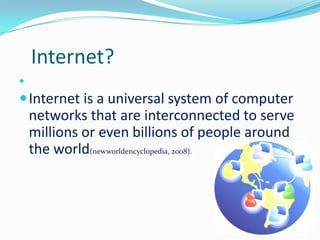
 Internet is a universal system of computer
    networks that are interconnected to serve
    millions or even billions of people around
    the world(newworldencyclopedia, 2008).
POSITIVE INFLUENCE

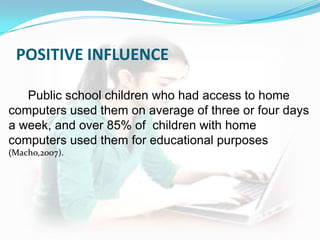
   Public school children who had access to home
computers used them on average of three or four days
a week, and over 85% of children with home
computers used them for educational purposes
(Macho,2007).
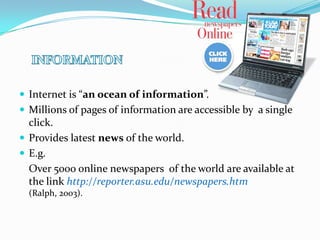
 Internet is “an ocean of information”.
 Millions of pages of information are accessible by a single
  click.
 Provides latest news of the world.
 E.g.
  Over 5000 online newspapers of the world are available at
  the link http://reporter.asu.edu/newspapers.htm
  (Ralph, 2003).
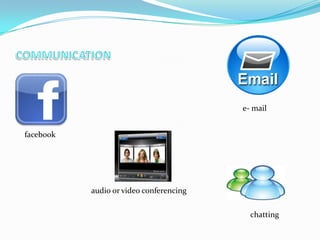
e- mail


facebook


           audio or video conferencing

                                           chatting
o They can;
 share information
 discuss on particular subject


 For example,
   Student can discuss his or her homework with friends
    anywhere in the world.

   Teachers can also contact parents or guardians easily
    using internet.
LIBRARY
e- library / online- library


 Internet is the world largest library

 Can read books and other resources which are not available at
school library

 Reduce the demand for school library

 For instance,
       libraries on different subjects, books, newspapers,
journals, magazines, speeches and other resources are available
on the website http://www.libraryspot.com(Ralph, 2003).
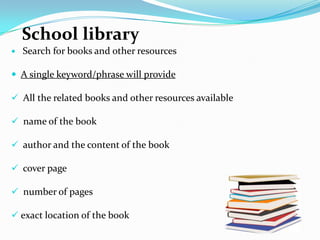
School library
   Search for books and other resources

 A single keyword/phrase will provide

 All the related books and other resources available

 name of the book

 author and the content of the book

 cover page

 number of pages

 exact location of the book
 check the new books arrived

 his or her current loans

 over due dates

 reserve books

 request for new books
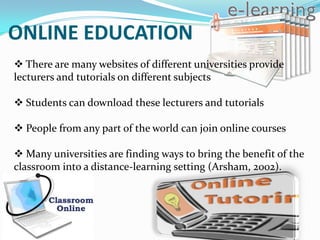
ONLINE EDUCATION
 There are many websites of different universities provide
lecturers and tutorials on different subjects

 Students can download these lecturers and tutorials

 People from any part of the world can join online courses

 Many universities are finding ways to bring the benefit of the
classroom into a distance-learning setting (Arsham, 2002).
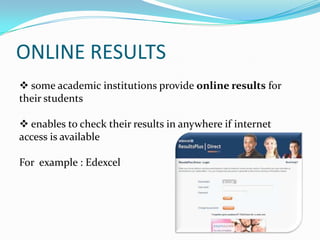
ONLINE RESULTS
 some academic institutions provide online results for
their students

 enables to check their results in anywhere if internet
access is available

For example : Edexcel
HELPFUL FOR TEACHERS
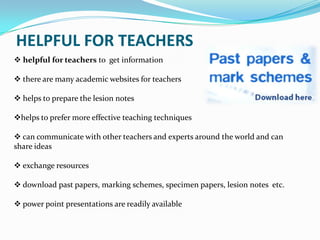
 helpful for teachers to get information

 there are many academic websites for teachers

 helps to prepare the lesion notes

helps to prefer more effective teaching techniques

 can communicate with other teachers and experts around the world and can
share ideas

 exchange resources

 download past papers, marking schemes, specimen papers, lesion notes etc.

 power point presentations are readily available
Academic games & exercises
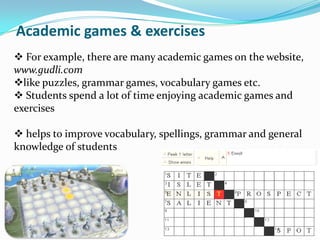
 For example, there are many academic games on the website,
www.gudli.com
like puzzles, grammar games, vocabulary games etc.
 Students spend a lot of time enjoying academic games and
exercises

 helps to improve vocabulary, spellings, grammar and general
knowledge of students
NEGATIVE INFLUENCE


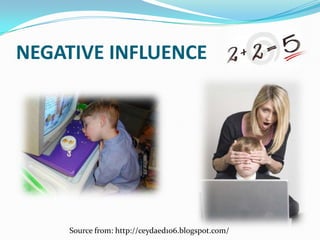
     Source from: http://ceydaed106.blogspot.com/
NEGATIVE INFLUENCE


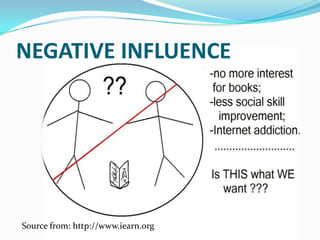
Source from: http://www.iearn.org
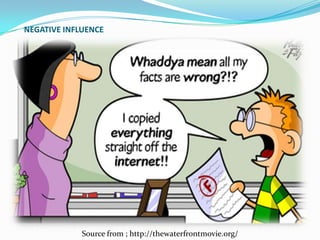
NEGATIVE INFLUENCE


             Source from ; http://thewaterfrontmovie.org/
NEGATIVE INFLUENCE
 Students fail to identify what is appropriate and valuable to them

 They use what they find rather than evaluating the sources

 More dependent on the internet

 Access to internet for some academic purpose, but may spend times on
something else

E.g. Access to unethical or unwanted information or websites

 Students hack the school website, steal the examination papers and put
them on internet that everyone can see it.
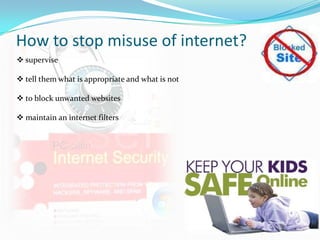
How to stop misuse of internet?
 supervise

 tell them what is appropriate and what is not

 to block unwanted websites

 maintain an internet filters
The positive impacts overweight the
 negative impacts of the internet.
References;

    Anna. (2010). The Influence of the Internet: More Harm than Good or Vice
    Versa. Retrieved April 11, 2011, from
    http://www.articlesdot.net/all/computers-and-technology/internet-
    computers-and-technology/influence-internet-harm-good-vice-
    versa.html

    Arsham, H. (2002). Impact of the Internet on Learning and Teaching.
    Retrieved April 11, 2011, from
    http://www.usdla.org/html/journal/MAR02_Issue/article01.html

    Comer, D. (2007). The internet book. United State of America, Pearson
    Education.

    Lyford, I. (1997). Using the Internet. London, Dorling Kindersley
    Limited.

    Macho, S. (2007). The Impact of Home Internet Access on Test Scores.
    Youngstown, Cambria Press.
Pandit, M. (2010). Advantages of Using Internet with Education. Retrieved
April 12, 2011, from http://www.buzzle.com/articles/advantages-of-the-internet-
in-education.html

Ralph, H. (2003). The internet for writers. United Kingdom, Hodder
Headline Plc.
Influence of Internet

Influence of Internet

  • 2.
    Content  Internet  Positiveinfluence Negative influence  Ways to stop misuse of internet  Conclusion
  • 3.
    Internet?   Internet isa universal system of computer networks that are interconnected to serve millions or even billions of people around the world(newworldencyclopedia, 2008).
  • 4.
    POSITIVE INFLUENCE Public school children who had access to home computers used them on average of three or four days a week, and over 85% of children with home computers used them for educational purposes (Macho,2007).
  • 5.
     Internet is“an ocean of information”.  Millions of pages of information are accessible by a single click.  Provides latest news of the world.  E.g. Over 5000 online newspapers of the world are available at the link http://reporter.asu.edu/newspapers.htm (Ralph, 2003).
  • 6.
    e- mail facebook audio or video conferencing chatting
  • 7.
    o They can; share information  discuss on particular subject  For example,  Student can discuss his or her homework with friends anywhere in the world.  Teachers can also contact parents or guardians easily using internet.
  • 8.
    LIBRARY e- library /online- library  Internet is the world largest library  Can read books and other resources which are not available at school library  Reduce the demand for school library  For instance, libraries on different subjects, books, newspapers, journals, magazines, speeches and other resources are available on the website http://www.libraryspot.com(Ralph, 2003).
  • 9.
    School library  Search for books and other resources  A single keyword/phrase will provide  All the related books and other resources available  name of the book  author and the content of the book  cover page  number of pages  exact location of the book
  • 10.
     check thenew books arrived  his or her current loans  over due dates  reserve books  request for new books
  • 11.
    ONLINE EDUCATION  Thereare many websites of different universities provide lecturers and tutorials on different subjects  Students can download these lecturers and tutorials  People from any part of the world can join online courses  Many universities are finding ways to bring the benefit of the classroom into a distance-learning setting (Arsham, 2002).
  • 12.
    ONLINE RESULTS  someacademic institutions provide online results for their students  enables to check their results in anywhere if internet access is available For example : Edexcel
  • 13.
    HELPFUL FOR TEACHERS helpful for teachers to get information  there are many academic websites for teachers  helps to prepare the lesion notes helps to prefer more effective teaching techniques  can communicate with other teachers and experts around the world and can share ideas  exchange resources  download past papers, marking schemes, specimen papers, lesion notes etc.  power point presentations are readily available
  • 14.
    Academic games &exercises  For example, there are many academic games on the website, www.gudli.com like puzzles, grammar games, vocabulary games etc.  Students spend a lot of time enjoying academic games and exercises  helps to improve vocabulary, spellings, grammar and general knowledge of students
  • 15.
    NEGATIVE INFLUENCE Source from: http://ceydaed106.blogspot.com/
  • 16.
    NEGATIVE INFLUENCE Source from:http://www.iearn.org
  • 17.
    NEGATIVE INFLUENCE Source from ; http://thewaterfrontmovie.org/
  • 18.
    NEGATIVE INFLUENCE  Studentsfail to identify what is appropriate and valuable to them  They use what they find rather than evaluating the sources  More dependent on the internet  Access to internet for some academic purpose, but may spend times on something else E.g. Access to unethical or unwanted information or websites  Students hack the school website, steal the examination papers and put them on internet that everyone can see it.
  • 19.
    How to stopmisuse of internet?  supervise  tell them what is appropriate and what is not  to block unwanted websites  maintain an internet filters
  • 20.
    The positive impactsoverweight the negative impacts of the internet.
  • 21.
    References; Anna. (2010). The Influence of the Internet: More Harm than Good or Vice Versa. Retrieved April 11, 2011, from http://www.articlesdot.net/all/computers-and-technology/internet- computers-and-technology/influence-internet-harm-good-vice- versa.html Arsham, H. (2002). Impact of the Internet on Learning and Teaching. Retrieved April 11, 2011, from http://www.usdla.org/html/journal/MAR02_Issue/article01.html Comer, D. (2007). The internet book. United State of America, Pearson Education. Lyford, I. (1997). Using the Internet. London, Dorling Kindersley Limited. Macho, S. (2007). The Impact of Home Internet Access on Test Scores. Youngstown, Cambria Press.
  • 22.
    Pandit, M. (2010).Advantages of Using Internet with Education. Retrieved April 12, 2011, from http://www.buzzle.com/articles/advantages-of-the-internet- in-education.html Ralph, H. (2003). The internet for writers. United Kingdom, Hodder Headline Plc.