PEDRO GUADIANA
I choose to research 
Depression because 
 In 1999, little by little, my mother had 
these symptoms: 
 She could not sleep. 
 She felt very bad either standing, sitting and 
lying. 
 She did no eat and lost too much weight. 
 She could not stand neither light nor 
darkness. 
 She could neither laugh nor cry. 
 She stopped to do activities she liked.
I choose to research 
Depression because 
 She walked from here to there while her lips 
and hands were trembling. 
 Her responses did not make sense with our 
questions. We asked her about some issues 
and she responded others or, simply, said 
“yes” or “no”.
I choose to research 
Depression because 
 We visited doctors and psychologists, 
but we had no solutions 
 …Until we knew doctor Rebecka Jones. 
Thanks to her we knew what Depression 
is. And… 
 I realized there are many myths and 
misinformation about this illness.
What depression is 
Sadness 
Loss 
Anger 
Furstration 
 Depression is a disorder 
of the brain and it is 
more than just a 
feeling. 
 Is a mood disorder in 
which feelings of 
sadness, loss, anger, or 
frustration interfere with 
everyday life for a 
longer period of time. 
 Depression usually 
starts between the ages 
of 15 and 30, and is 
much more common in 
women (the double).
Types of Depression 
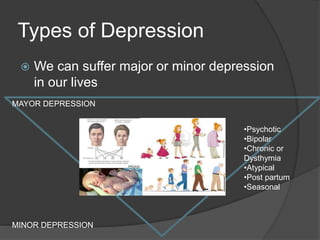
 We can suffer major or minor depression 
in our lives 
MAYOR DEPRESSION 
MINOR DEPRESSION 
•Psychotic 
•Bipolar 
•Chronic or 
Dysthymia 
•Atypical 
•Post partum 
•Seasonal
Causes of Depression 
 Genetic. 
 Genes that we inherit from our parents 
determine many things about us such as our 
gender and the color of our eyes and hair. Our 
genes also determine which illnesses we may 
be vulnerable to at some point in our lives. 
 Research on the heredity of depression within 
families shows that some individuals are more 
likely to develop the illness than others. If you 
have a parent or sibling that has had major 
depression, you may be 1.5 to 3 times more 
likely to develop the condition than those who 
do not have a close relative with the condition.
Causes of Depression 
 Biochemical 
 The neurotransmitters — chemical 
messengers that help the brain and 
other parts of the body communicate 
— appear to be out of balance. These 
chemicals help regulate many 
physiological functions. Lower levels of 
these neurotransmitters may play a 
role in why some people are more 
susceptible to depression. 
 Untreated depression leads to the 
atrophy of neurons in the pre-frontal 
cortex, an area associated with 
planning, reasoning and decision-making, 
and socially appropriate 
manner.
Causes of Depression 
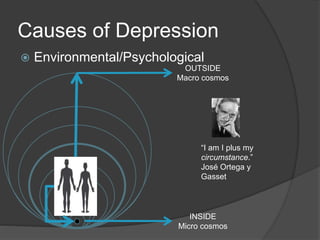
 Environmental/Psychological 
 The brain is highly malleable and constantly changing in 
response to its experiences. That’s in part why scientists 
believe depression is a product of both our genes and our 
environment. Traumatic life events, such as the loss of a 
loved one, separation, distressing financial situations, or big 
changes like a move can all potentially trigger symptoms of 
depression. Also, include habits and other illness
Causes of Depression 
 Environmental/Psychological 
OUTSIDE 
Macro cosmos 
“I am I plus my 
circumstance.” 
José Ortega y 
Gasset 
INSIDE 
Micro cosmos
Symptoms 
Emotional 
 Crying easily or for no reason 
 Feeling guilty or worthless 
 Feeling restless, irritated, and easily 
annoyed 
 Feeling sad, numb, or hopeless 
 Thinking about death or suicide
Symptoms 
Physical symptoms, most of them are extremes 
 Changes in appetite (eating more than usual, 
or eating less than usual) 
 Unintended weight loss or gain 
 Sleeping too much or insomnia 
 Losing interest for sex or sexual anxiety 
 Headaches, backaches, or digestive problems 
 Feeling very tired all the time 
 Having trouble paying attention, recalling 
things, concentrating, and making decisions
Treatment 
 Medicines 
 Antidepressants. They help increase the number of 
chemical messengers (serotonin, norepinephrine, 
dopamine) in your brain. 
 Antidepressants work differently for different people. 
They also have different side effects. So, even if one 
medicine bothers you or doesn't work for you, 
another may help. You may notice improvement as 
soon as 1 week after you start taking the medicine. 
But you probably won't see the full effects for about 
8 to 12 weeks. You may have side effects at first, but 
they tend to decrease after a couple of weeks. Don't 
stop taking the medicine without checking with your 
doctor first.
Treatment 
 Therapy 
 Guiding patients through a number of structured 
learning experiences. Patients are taught to monitor 
and write down their negative thoughts and mental 
images to recognize the association between their 
thoughts, feelings, physiology, and behavior 
 A brief check on mood and symptoms, agenda 
setting, bridging from the previous session, 
reviewing homework (self-help assignments that 
patient does between sessions), discussing issues 
on agenda, setting new homework, and summarizing 
and getting feedback form the patient about the 
session
Treatment 
 Exercise. Regular exercise can 
be as effective at treating 
depression as medication. Not 
only does exercise boost 
serotonin, endorphins, and other 
feel-good brain chemicals, it 
triggers the growth of new brain 
cells and connections, just like 
antidepressants do. A half-hour 
daily walk can make a big 
difference. For maximum results, 
aim for 30 to 60 minutes of 
aerobic activity on most days.
Treatment 
 Nutrition. Eating well is important for both 
your physical and mental health. Eating small, 
well-balanced meals throughout the day will 
help you keep your energy up and minimize 
mood swings. While you may be drawn to 
sugary foods for the quick boost they provide, 
complex carbohydrates are a better choice. 
They'll get you going without the all-too-soon 
sugar crash.
Treatment 
 Sleep. Sleep has a strong effect on mood. 
When you don't get enough sleep, your 
depression symptoms will be worse. Sleep 
deprivation exacerbates irritability, 
moodiness, sadness, and fatigue. Make 
sure you're getting enough sleep each 
night. Very few people do well on less than 
7 hours a night. Aim for somewhere 
between 7 to 9 hours each night.
Treatment 
 Social support. Strong social networks 
reduce isolation, a key risk factor for 
depression. Keep in regular contact with 
friends and family, or consider joining a 
class or group. Volunteering is a wonderful 
way to get social support and help others 
while also helping yourself. .

Depression

  • 1.
  • 2.
    I choose toresearch Depression because  In 1999, little by little, my mother had these symptoms:  She could not sleep.  She felt very bad either standing, sitting and lying.  She did no eat and lost too much weight.  She could not stand neither light nor darkness.  She could neither laugh nor cry.  She stopped to do activities she liked.
  • 3.
    I choose toresearch Depression because  She walked from here to there while her lips and hands were trembling.  Her responses did not make sense with our questions. We asked her about some issues and she responded others or, simply, said “yes” or “no”.
  • 4.
    I choose toresearch Depression because  We visited doctors and psychologists, but we had no solutions  …Until we knew doctor Rebecka Jones. Thanks to her we knew what Depression is. And…  I realized there are many myths and misinformation about this illness.
  • 5.
    What depression is Sadness Loss Anger Furstration  Depression is a disorder of the brain and it is more than just a feeling.  Is a mood disorder in which feelings of sadness, loss, anger, or frustration interfere with everyday life for a longer period of time.  Depression usually starts between the ages of 15 and 30, and is much more common in women (the double).
  • 6.
    Types of Depression  We can suffer major or minor depression in our lives MAYOR DEPRESSION MINOR DEPRESSION •Psychotic •Bipolar •Chronic or Dysthymia •Atypical •Post partum •Seasonal
  • 7.
    Causes of Depression  Genetic.  Genes that we inherit from our parents determine many things about us such as our gender and the color of our eyes and hair. Our genes also determine which illnesses we may be vulnerable to at some point in our lives.  Research on the heredity of depression within families shows that some individuals are more likely to develop the illness than others. If you have a parent or sibling that has had major depression, you may be 1.5 to 3 times more likely to develop the condition than those who do not have a close relative with the condition.
  • 8.
    Causes of Depression  Biochemical  The neurotransmitters — chemical messengers that help the brain and other parts of the body communicate — appear to be out of balance. These chemicals help regulate many physiological functions. Lower levels of these neurotransmitters may play a role in why some people are more susceptible to depression.  Untreated depression leads to the atrophy of neurons in the pre-frontal cortex, an area associated with planning, reasoning and decision-making, and socially appropriate manner.
  • 9.
    Causes of Depression  Environmental/Psychological  The brain is highly malleable and constantly changing in response to its experiences. That’s in part why scientists believe depression is a product of both our genes and our environment. Traumatic life events, such as the loss of a loved one, separation, distressing financial situations, or big changes like a move can all potentially trigger symptoms of depression. Also, include habits and other illness
  • 10.
    Causes of Depression  Environmental/Psychological OUTSIDE Macro cosmos “I am I plus my circumstance.” José Ortega y Gasset INSIDE Micro cosmos
  • 11.
    Symptoms Emotional Crying easily or for no reason  Feeling guilty or worthless  Feeling restless, irritated, and easily annoyed  Feeling sad, numb, or hopeless  Thinking about death or suicide
  • 12.
    Symptoms Physical symptoms,most of them are extremes  Changes in appetite (eating more than usual, or eating less than usual)  Unintended weight loss or gain  Sleeping too much or insomnia  Losing interest for sex or sexual anxiety  Headaches, backaches, or digestive problems  Feeling very tired all the time  Having trouble paying attention, recalling things, concentrating, and making decisions
  • 13.
    Treatment  Medicines  Antidepressants. They help increase the number of chemical messengers (serotonin, norepinephrine, dopamine) in your brain.  Antidepressants work differently for different people. They also have different side effects. So, even if one medicine bothers you or doesn't work for you, another may help. You may notice improvement as soon as 1 week after you start taking the medicine. But you probably won't see the full effects for about 8 to 12 weeks. You may have side effects at first, but they tend to decrease after a couple of weeks. Don't stop taking the medicine without checking with your doctor first.
  • 14.
    Treatment  Therapy  Guiding patients through a number of structured learning experiences. Patients are taught to monitor and write down their negative thoughts and mental images to recognize the association between their thoughts, feelings, physiology, and behavior  A brief check on mood and symptoms, agenda setting, bridging from the previous session, reviewing homework (self-help assignments that patient does between sessions), discussing issues on agenda, setting new homework, and summarizing and getting feedback form the patient about the session
  • 15.
    Treatment  Exercise.Regular exercise can be as effective at treating depression as medication. Not only does exercise boost serotonin, endorphins, and other feel-good brain chemicals, it triggers the growth of new brain cells and connections, just like antidepressants do. A half-hour daily walk can make a big difference. For maximum results, aim for 30 to 60 minutes of aerobic activity on most days.
  • 16.
    Treatment  Nutrition.Eating well is important for both your physical and mental health. Eating small, well-balanced meals throughout the day will help you keep your energy up and minimize mood swings. While you may be drawn to sugary foods for the quick boost they provide, complex carbohydrates are a better choice. They'll get you going without the all-too-soon sugar crash.
  • 17.
    Treatment  Sleep.Sleep has a strong effect on mood. When you don't get enough sleep, your depression symptoms will be worse. Sleep deprivation exacerbates irritability, moodiness, sadness, and fatigue. Make sure you're getting enough sleep each night. Very few people do well on less than 7 hours a night. Aim for somewhere between 7 to 9 hours each night.
  • 18.
    Treatment  Socialsupport. Strong social networks reduce isolation, a key risk factor for depression. Keep in regular contact with friends and family, or consider joining a class or group. Volunteering is a wonderful way to get social support and help others while also helping yourself. .