ARE YOU SUFFERING FROM DEPRESSION ?
Depression is classified as a mood disorder. It
may be described as feelings of sadness, loss, or
anger that interfere with a person’s everyday
activities.
HOWEVER, It’s important to realize that feeling down at
times is a normal part of life. Sad and upsetting events
happen to everyone. BUT, if you’re feeling down or
hopeless on a regular basis, you could be dealing with
depression.
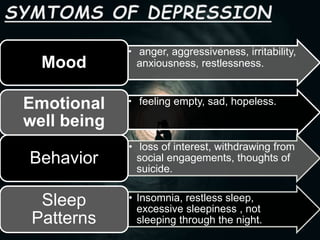
• anger, aggressiveness, irritability,
anxiousness, restlessness.Mood
• feeling empty, sad, hopeless.Emotional
well being
• loss of interest, withdrawing from
social engagements, thoughts of
suicide.
Behavior
• Insomnia, restless sleep,
excessive sleepiness , not
sleeping through the night.
Sleep
Patterns
Loss of Interest or pleasure in your
activities.
Weight Loss or Weight Gain
Feeling worthless or Guilty
Being Tired and without Energy
Trouble concentrating or making a decision
Suicidal thoughts
Change in appetite
Sleep too much or too little
Lack of Energy, or Fatigue
Low Self Esteem
Feel hopeless
Trouble in Making Decisions
Seroquel
Latuda
Olanzapin-
fluoxetine
Usually happens
during winter months.
TIME DURATION
Antidepressants can help.
MEDICATION
Light Therapy works
well.
THERAPY
Seasonal Affective Disorder
(SAD)
- •Hallucinations
- • Delusions
- • Paranoia
Peripartum (Postpartum) Depression
Women who have major depression
in the weeks and months after childbirth
may have peripartum depression.
Antidepressant drugs can help
similarly to treating major depression
that is unrelated to childbirth.
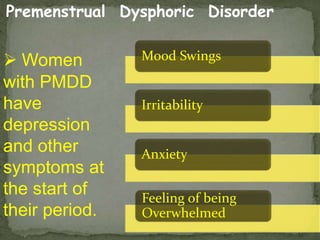
Premenstrual Dysphoric Disorder
 Women
with PMDD
have
depression
and other
symptoms at
the start of
their period.
Mood Swings
Irritability
Anxiety
Feeling of being
Overwhelmed
Situational Depression
You can have a depressed mood when you're
having trouble managing a stressful event in your
life, such as-
• a death in your family,
• a divorce, or
• losing your job.
Psychotherapy can often help you get through a
period of depression that's related to a stressful
situation.
Your doctor may call this "stress response
syndrome.”
Atypical Depression
SYMPTOMS
Increased
appetite
Sleeping
more than
usual
Feeling of
heaviness in
body
Oversensitive
to Criticism
CURE:-
T R E A T M E N
T
1.Exercise daily for at least
10-15 minutes daily.
2.Avoid Alcohol and Drugs.
3. Learn how to say NO to
things that you don’t like.
Vitamins
VITAMIN B
VITAMIN D
Supplements
OMEGA 3
FATTY
ACIDS
ESSENTIAL OILS
WILD GINGER
BERGAMOT
5- HTP
SOURCES-
POTATOES
PUMPKINS
o Depression can be temporary, or it can be a long-term
challenge. Treatment doesn’t always make your depression go
away completely.
o However, treatment often makes symptoms more manageable.
Managing symptoms of depression involves finding the right
combination of medications and therapies.
o If one treatment doesn’t work, talk with your healthcare
provider. They can help you create a different treatment plan
that may work better in helping you manage your condition.
Depression
Depression

Depression

  • 1.
    ARE YOU SUFFERINGFROM DEPRESSION ?
  • 2.
    Depression is classifiedas a mood disorder. It may be described as feelings of sadness, loss, or anger that interfere with a person’s everyday activities. HOWEVER, It’s important to realize that feeling down at times is a normal part of life. Sad and upsetting events happen to everyone. BUT, if you’re feeling down or hopeless on a regular basis, you could be dealing with depression.
  • 3.
    • anger, aggressiveness,irritability, anxiousness, restlessness.Mood • feeling empty, sad, hopeless.Emotional well being • loss of interest, withdrawing from social engagements, thoughts of suicide. Behavior • Insomnia, restless sleep, excessive sleepiness , not sleeping through the night. Sleep Patterns
  • 6.
    Loss of Interestor pleasure in your activities. Weight Loss or Weight Gain Feeling worthless or Guilty Being Tired and without Energy Trouble concentrating or making a decision Suicidal thoughts
  • 7.
    Change in appetite Sleeptoo much or too little Lack of Energy, or Fatigue Low Self Esteem Feel hopeless Trouble in Making Decisions
  • 8.
  • 9.
    Usually happens during wintermonths. TIME DURATION Antidepressants can help. MEDICATION Light Therapy works well. THERAPY Seasonal Affective Disorder (SAD)
  • 10.
    - •Hallucinations - •Delusions - • Paranoia
  • 11.
    Peripartum (Postpartum) Depression Womenwho have major depression in the weeks and months after childbirth may have peripartum depression. Antidepressant drugs can help similarly to treating major depression that is unrelated to childbirth.
  • 12.
    Premenstrual Dysphoric Disorder Women with PMDD have depression and other symptoms at the start of their period. Mood Swings Irritability Anxiety Feeling of being Overwhelmed
  • 13.
    Situational Depression You canhave a depressed mood when you're having trouble managing a stressful event in your life, such as- • a death in your family, • a divorce, or • losing your job. Psychotherapy can often help you get through a period of depression that's related to a stressful situation. Your doctor may call this "stress response syndrome.”
  • 14.
    Atypical Depression SYMPTOMS Increased appetite Sleeping more than usual Feelingof heaviness in body Oversensitive to Criticism CURE:-
  • 15.
    T R EA T M E N T
  • 16.
    1.Exercise daily forat least 10-15 minutes daily. 2.Avoid Alcohol and Drugs. 3. Learn how to say NO to things that you don’t like.
  • 17.
    Vitamins VITAMIN B VITAMIN D Supplements OMEGA3 FATTY ACIDS ESSENTIAL OILS WILD GINGER BERGAMOT 5- HTP SOURCES- POTATOES PUMPKINS
  • 18.
    o Depression canbe temporary, or it can be a long-term challenge. Treatment doesn’t always make your depression go away completely. o However, treatment often makes symptoms more manageable. Managing symptoms of depression involves finding the right combination of medications and therapies. o If one treatment doesn’t work, talk with your healthcare provider. They can help you create a different treatment plan that may work better in helping you manage your condition.