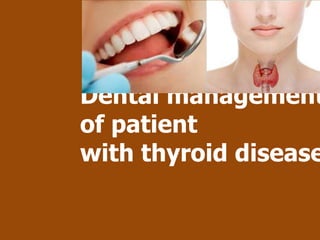
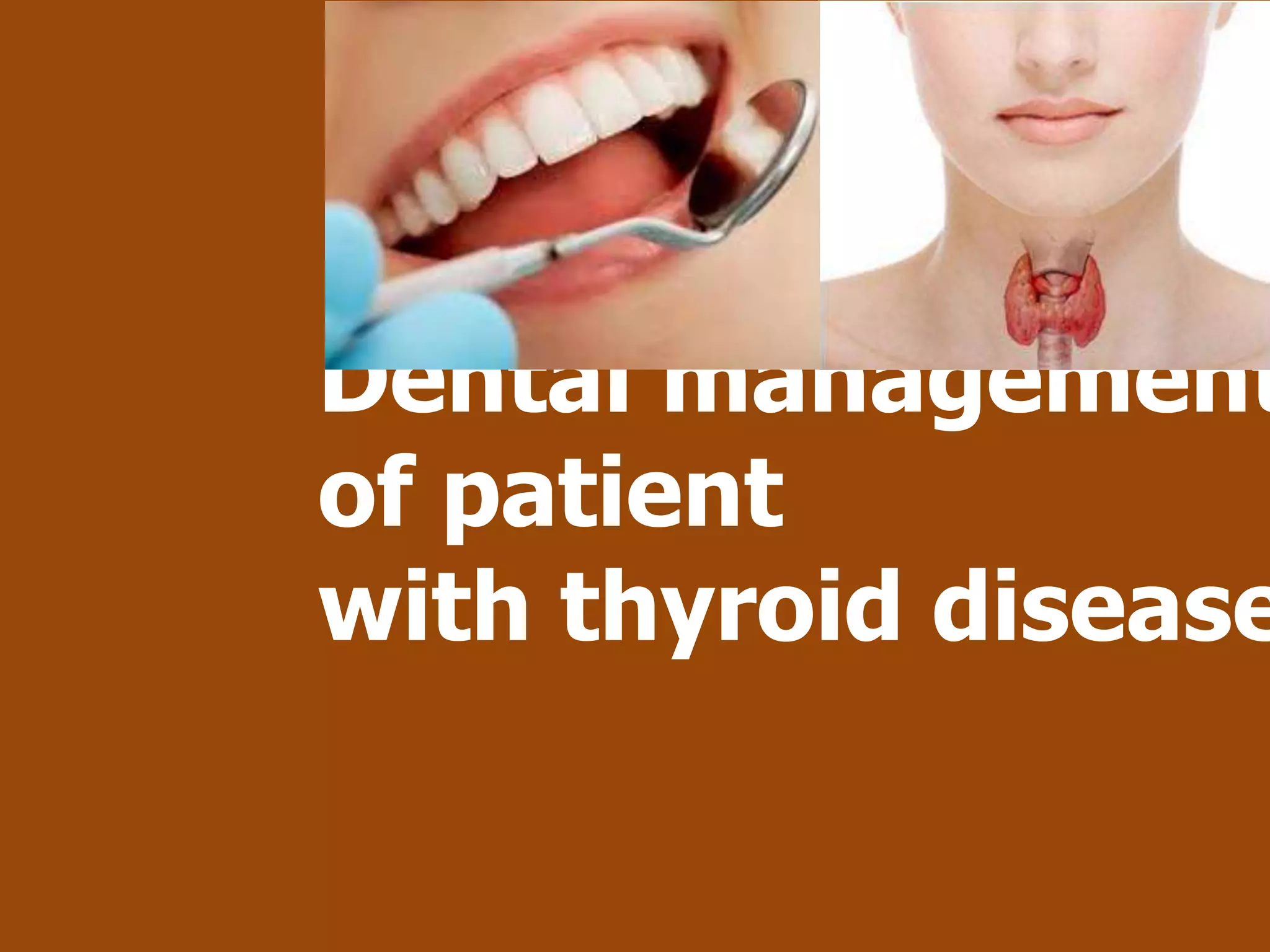
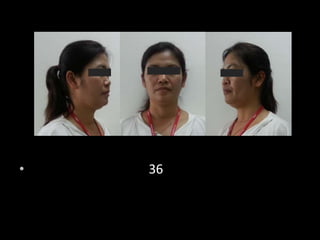
Dental management
of patient
with thyroid disease
.       .

        .   .

.   .
Outlines
•   History taking
•   Clinical examination
•   Treatment plans
•   Hyperthyroid disease review
•   Hypothyroid disease review
•   Dental management
•   36
History taking
Chief complaint :
Present illness :

                        1
Past medical history
 - Hyperthyroid treatment
     partial thyroidectomy
     completed thyroidectomy
 -

Current medicine : Thyroxine 50 mg
Extraoral examination
• General appraisal : normal
• Skull : normal
• Facial form and profile : normal
• Skin : normal
• Eyes : normal
• Neurologic deficit : normal
• Lymph nodes of head and neck :
  normal
• TMJ : normal
• Masticatory muscle: normal
Extraoral examination
(Cont.)
• Lymph nodes of head and neck :
  normal
• TMJ : normal
• Masticatory muscle: normal
• Opening pattern : straight
• Salivary glands : normal
• Muscles of head and neck : normal
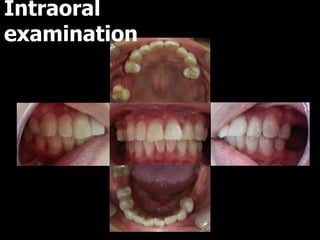
Intraoral
examination
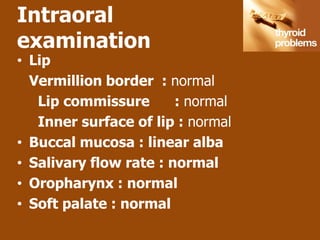
Intraoral
examination
• Lip
  Vermillion border : normal
   Lip commissure       : normal
   Inner surface of lip : normal
• Buccal mucosa : linear alba
• Salivary flow rate : normal
• Oropharynx : normal
• Soft palate : normal
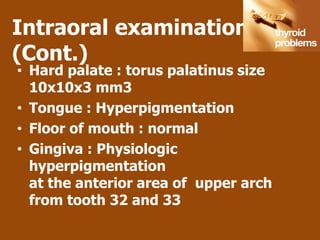
Intraoral examination
(Cont.)
• Hard palate : torus palatinus size
  10x10x3 mm3
• Tongue : Hyperpigmentation
• Floor of mouth : normal
• Gingiva : Physiologic
  hyperpigmentation
  at the anterior area of upper arch
  from tooth 32 and 33
Intraoral radiographic examination
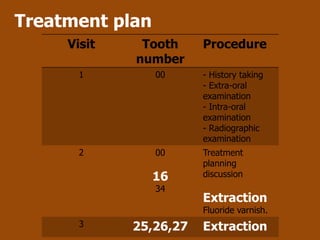
Treatment plan
     Visit    Tooth     Procedure
             number
       1         00     - History taking
                        - Extra-oral
                        examination
                        - Intra-oral
                        examination
                        - Radiographic
                        examination
       2         00     Treatment
                        planning
                 16     discussion
                 34
                        Extraction
                        Fluoride varnish.
       3     25,26,27   Extraction
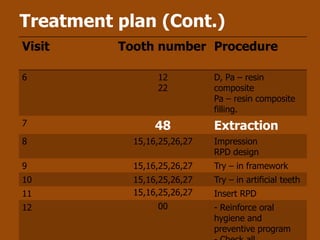
Treatment plan (Cont.)
Visit     Tooth number Procedure

6                12          D, Pa – resin
                 22          composite
                             Pa – resin composite
                             filling.
7                48          Extraction
8           15,16,25,26,27   Impression
                             RPD design
9           15,16,25,26,27   Try – in framework
10          15,16,25,26,27   Try – in artificial teeth
11          15,16,25,26,27   Insert RPD
12               00          - Reinforce oral
                             hygiene and
                             preventive program
Hyperthyroidism
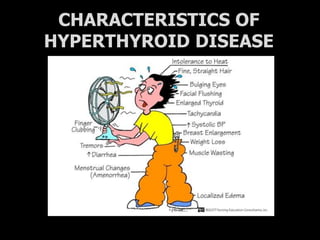
CHARACTERISTICS OF
HYPERTHYROID DISEASE
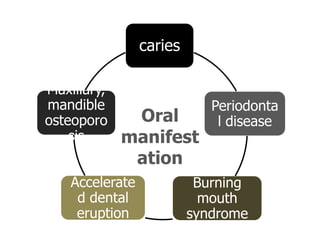
caries

Maxillary,
mandible                     Periodonta
osteoporo     Oral            l disease
    sis      manifest
              ation
    Accelerate             Burning
     d dental               mouth
     eruption             syndrome
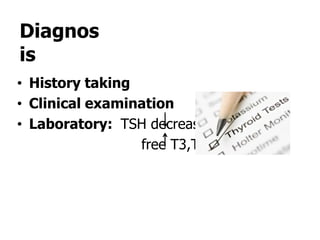
Diagnos
is
• History taking
• Clinical examination
• Laboratory: TSH decrease
                 free T3,T4 increase
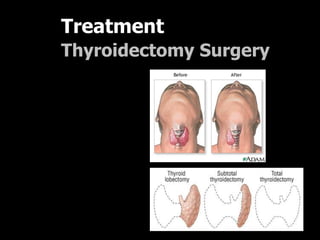
Treatment
Thyroidectomy Surgery
Hypothyroidism
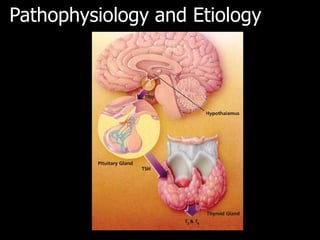
Pathophysiology and Etiology
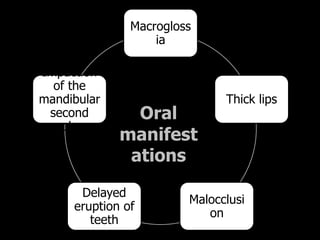
Macrogloss
                   ia

Impaction
  of the
mandibular                    Thick lips
 second        Oral
 molars
             manifest
              ations
      Delayed
                        Malocclusi
     eruption of
                           on
        teeth
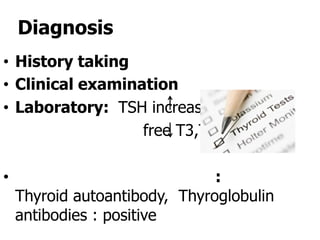
Diagnosis
• History taking
• Clinical examination
• Laboratory: TSH increase
                  free T3,T4 decrease

•                              :
    Thyroid autoantibody, Thyroglobulin
    antibodies : positive
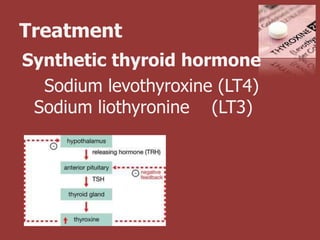
Treatment
Synthetic thyroid hormone
  Sodium levothyroxine (LT4)
 Sodium liothyronine (LT3)
Role of Dentist
• Suspect a serious thyroid disorder ,
  aid in early diagnosis
• Avoid possible dental complications
  resulting from treating patients with
  thyroid disorder
Dental management
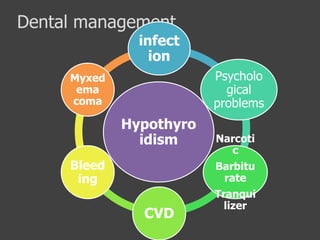
Dental management
               infect
                 ion
     Myxed               Psycholo
      ema                  gical
     coma                problems
             Hypothyro
               idism     Narcoti
                           c
     Bleed               Barbitu
      ing                 rate
                         Tranqui
                           lizer
               CVD
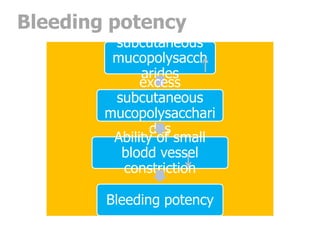
Bleeding potency
         subcutaneous
         mucopolysacch
              arides
              excess
         subcutaneous
        mucopolysacchari
                des
         Ability of small
          blodd vessel
          constriction

        Bleeding potency
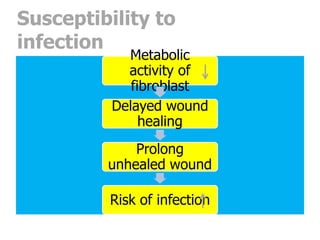
Susceptibility to
infection
            Metabolic
            activity of
             fibroblast
          Delayed wound
               healing
             Prolong
         unhealed wound

         Risk of infection
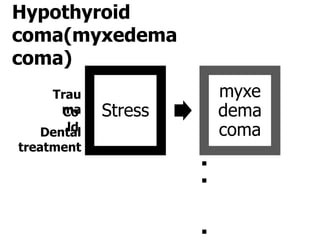
Hypothyroid
coma(myxedema
coma)
    Trau                 myxe
      ma
      Co    Stress       dema
       ld
   Dental                coma
treatment
                     
                     


                     
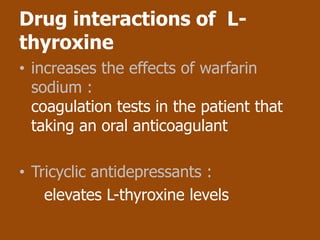
Drug interactions of L-
thyroxine
• increases the effects of warfarin
  sodium :
  coagulation tests in the patient that
  taking an oral anticoagulant

• Tricyclic antidepressants :
    elevates L-thyroxine levels
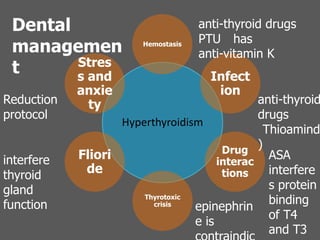
Dental                               anti-thyroid drugs
                                      PTU has
 managemen              Hemostasis
                                      anti-vitamin K
        Stres
 t      s and                           Infect
            anxie                        ion
Reduction    ty                                    anti-thyroid
protocol                                           drugs
                     Hyperthyroidism
                                                     Thioamind
                                          Drug     )
interfere   Fliori                       interac
                                                      ASA
thyroid      de                           tions       interfere
gland                                                 s protein
function
                         Thyrotoxic
                                                      binding
                           crisis
                                      epinephrin
                                                      of T4
                                      e is
                                                      and T3
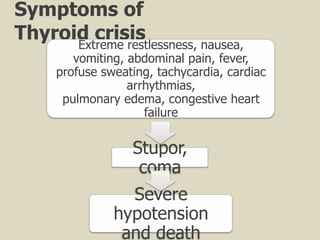
Symptoms of
Thyroid crisis
      Extreme restlessness, nausea,
         vomiting, abdominal pain, fever,
      profuse sweating, tachycardia, cardiac
                   arrhythmias,
       pulmonary edema, congestive heart
                      failure

                   Stupor,
                    coma
                  Severe
                hypotension
                 and death
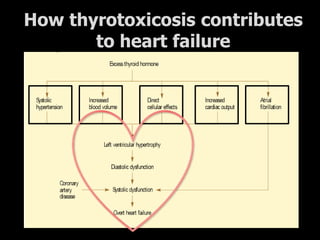
How thyrotoxicosis contributes
       to heart failure
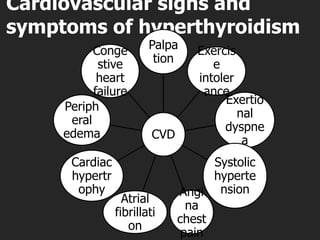
Cardiovascular signs and
symptoms of hyperthyroidism
           Conge        Palpa     Exercis
            stive        tion        e
            heart                 intoler
           failure                 ance
                                       Exertio
     Periph
                                          nal
      eral
                                       dyspne
     edema               CVD               a
      Cardiac                        Systolic
      hypertr                        hyperte
       ophy                    Angi nsion
                  Atrial
                                 na
                fibrillati
                               chest
                   on
                                pain
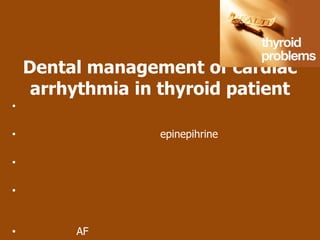
Dental management of cardiac
     arrhythmia in thyroid patient
•

•                  epinepihrine

•

•


•        AF
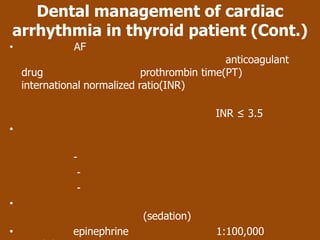
Dental management of cardiac
arrhythmia in thyroid patient (Cont.)
•             AF
                                               anticoagulant
    drug                      prothrombin time(PT)
    international normalized ratio(INR)

                                            INR ≤ 3.5
•

              -
               -
               -
•
                             (sedation)
•             epinephrine                   1:100,000
Before treatment
dental treatment
 • presence of cardiovascular disease, assess
   cardiovascular status.
 • symptoms of thyroid disease, defer
   elective treatment and consult a physician.
 • Give attention to drug-induced leukopenia
   and anemia.
 • Make proper treatment modifications if the
   patient is receiving anticoagulation
   therapy.
During dental
treatment
• Monitor vital sign during procedure
  – Euthyroid no contraindication to local
    anesthesia with epinephrine
  – Use caution with epinephrine if patient
    take nonselective beta blocker
  – Hyperthyrodism not controlled should
    avoid epinephrine
• Minimize stress
• Discontinue treatment if there are
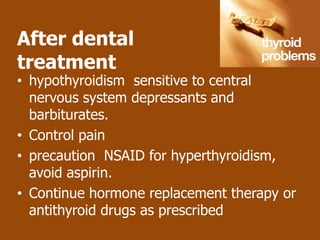
After dental
treatment
• hypothyroidism sensitive to central
  nervous system depressants and
  barbiturates.
• Control pain
• precaution NSAID for hyperthyroidism,
  avoid aspirin.
• Continue hormone replacement therapy or
  antithyroid drugs as prescribed
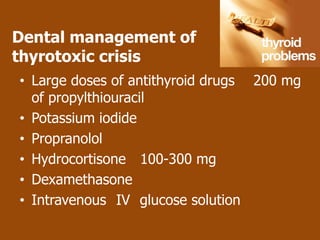
Dental management of
thyrotoxic crisis
• Large doses of antithyroid drugs 200 mg
  of propylthiouracil
• Potassium iodide
• Propranolol
• Hydrocortisone 100-300 mg
• Dexamethasone
• Intravenous IV glucose solution
Management of
myxedema coma
 Hydrocortisone 300 mg,
• - x-ray
• Mechanism 

Dental management in thyroid patient

  • 1.
  • 2.
    . . . . . .
  • 3.
    Outlines • History taking • Clinical examination • Treatment plans • Hyperthyroid disease review • Hypothyroid disease review • Dental management
  • 4.
    36
  • 5.
    History taking Chief complaint: Present illness : 1 Past medical history - Hyperthyroid treatment partial thyroidectomy completed thyroidectomy - Current medicine : Thyroxine 50 mg
  • 6.
    Extraoral examination • Generalappraisal : normal • Skull : normal • Facial form and profile : normal • Skin : normal • Eyes : normal • Neurologic deficit : normal • Lymph nodes of head and neck : normal • TMJ : normal • Masticatory muscle: normal
  • 7.
    Extraoral examination (Cont.) • Lymphnodes of head and neck : normal • TMJ : normal • Masticatory muscle: normal • Opening pattern : straight • Salivary glands : normal • Muscles of head and neck : normal
  • 8.
  • 9.
    Intraoral examination • Lip Vermillion border : normal Lip commissure : normal Inner surface of lip : normal • Buccal mucosa : linear alba • Salivary flow rate : normal • Oropharynx : normal • Soft palate : normal
  • 10.
    Intraoral examination (Cont.) • Hardpalate : torus palatinus size 10x10x3 mm3 • Tongue : Hyperpigmentation • Floor of mouth : normal • Gingiva : Physiologic hyperpigmentation at the anterior area of upper arch from tooth 32 and 33
  • 11.
  • 12.
    Treatment plan Visit Tooth Procedure number 1 00 - History taking - Extra-oral examination - Intra-oral examination - Radiographic examination 2 00 Treatment planning 16 discussion 34 Extraction Fluoride varnish. 3 25,26,27 Extraction
  • 13.
    Treatment plan (Cont.) Visit Tooth number Procedure 6 12 D, Pa – resin 22 composite Pa – resin composite filling. 7 48 Extraction 8 15,16,25,26,27 Impression RPD design 9 15,16,25,26,27 Try – in framework 10 15,16,25,26,27 Try – in artificial teeth 11 15,16,25,26,27 Insert RPD 12 00 - Reinforce oral hygiene and preventive program
  • 14.
  • 15.
  • 16.
    caries Maxillary, mandible Periodonta osteoporo Oral l disease sis manifest ation Accelerate Burning d dental mouth eruption syndrome
  • 17.
    Diagnos is • History taking •Clinical examination • Laboratory: TSH decrease free T3,T4 increase
  • 18.
  • 19.
  • 20.
  • 21.
    Macrogloss ia Impaction of the mandibular Thick lips second Oral molars manifest ations Delayed Malocclusi eruption of on teeth
  • 22.
    Diagnosis • History taking •Clinical examination • Laboratory: TSH increase free T3,T4 decrease • : Thyroid autoantibody, Thyroglobulin antibodies : positive
  • 23.
    Treatment Synthetic thyroid hormone Sodium levothyroxine (LT4) Sodium liothyronine (LT3)
  • 24.
    Role of Dentist •Suspect a serious thyroid disorder , aid in early diagnosis • Avoid possible dental complications resulting from treating patients with thyroid disorder
  • 25.
  • 26.
    Dental management infect ion Myxed Psycholo ema gical coma problems Hypothyro idism Narcoti c Bleed Barbitu ing rate Tranqui lizer CVD
  • 27.
    Bleeding potency subcutaneous mucopolysacch arides excess subcutaneous mucopolysacchari des Ability of small blodd vessel constriction Bleeding potency
  • 28.
    Susceptibility to infection Metabolic activity of fibroblast Delayed wound healing Prolong unhealed wound Risk of infection
  • 29.
    Hypothyroid coma(myxedema coma) Trau myxe ma Co Stress dema ld Dental coma treatment   
  • 30.
    Drug interactions ofL- thyroxine • increases the effects of warfarin sodium : coagulation tests in the patient that taking an oral anticoagulant • Tricyclic antidepressants : elevates L-thyroxine levels
  • 31.
    Dental anti-thyroid drugs PTU has managemen Hemostasis anti-vitamin K Stres t s and Infect anxie ion Reduction ty anti-thyroid protocol drugs Hyperthyroidism Thioamind Drug ) interfere Fliori interac ASA thyroid de tions interfere gland s protein function Thyrotoxic binding crisis epinephrin of T4 e is and T3
  • 32.
    Symptoms of Thyroid crisis Extreme restlessness, nausea, vomiting, abdominal pain, fever, profuse sweating, tachycardia, cardiac arrhythmias, pulmonary edema, congestive heart failure Stupor, coma Severe hypotension and death
  • 33.
  • 34.
    Cardiovascular signs and symptomsof hyperthyroidism Conge Palpa Exercis stive tion e heart intoler failure ance Exertio Periph nal eral dyspne edema CVD a Cardiac Systolic hypertr hyperte ophy Angi nsion Atrial na fibrillati chest on pain
  • 35.
    Dental management ofcardiac arrhythmia in thyroid patient • • epinepihrine • • • AF
  • 36.
    Dental management ofcardiac arrhythmia in thyroid patient (Cont.) • AF anticoagulant drug prothrombin time(PT) international normalized ratio(INR) INR ≤ 3.5 • - - - • (sedation) • epinephrine 1:100,000
  • 37.
    Before treatment dental treatment • presence of cardiovascular disease, assess cardiovascular status. • symptoms of thyroid disease, defer elective treatment and consult a physician. • Give attention to drug-induced leukopenia and anemia. • Make proper treatment modifications if the patient is receiving anticoagulation therapy.
  • 38.
    During dental treatment • Monitorvital sign during procedure – Euthyroid no contraindication to local anesthesia with epinephrine – Use caution with epinephrine if patient take nonselective beta blocker – Hyperthyrodism not controlled should avoid epinephrine • Minimize stress • Discontinue treatment if there are
  • 39.
    After dental treatment • hypothyroidismsensitive to central nervous system depressants and barbiturates. • Control pain • precaution NSAID for hyperthyroidism, avoid aspirin. • Continue hormone replacement therapy or antithyroid drugs as prescribed
  • 40.
    Dental management of thyrotoxiccrisis • Large doses of antithyroid drugs 200 mg of propylthiouracil • Potassium iodide • Propranolol • Hydrocortisone 100-300 mg • Dexamethasone • Intravenous IV glucose solution
  • 41.
    Management of myxedema coma Hydrocortisone 300 mg,
  • 42.
    • - x-ray •Mechanism 