+
Richard Chalme
Demonstrating Knowledge of Resources
+
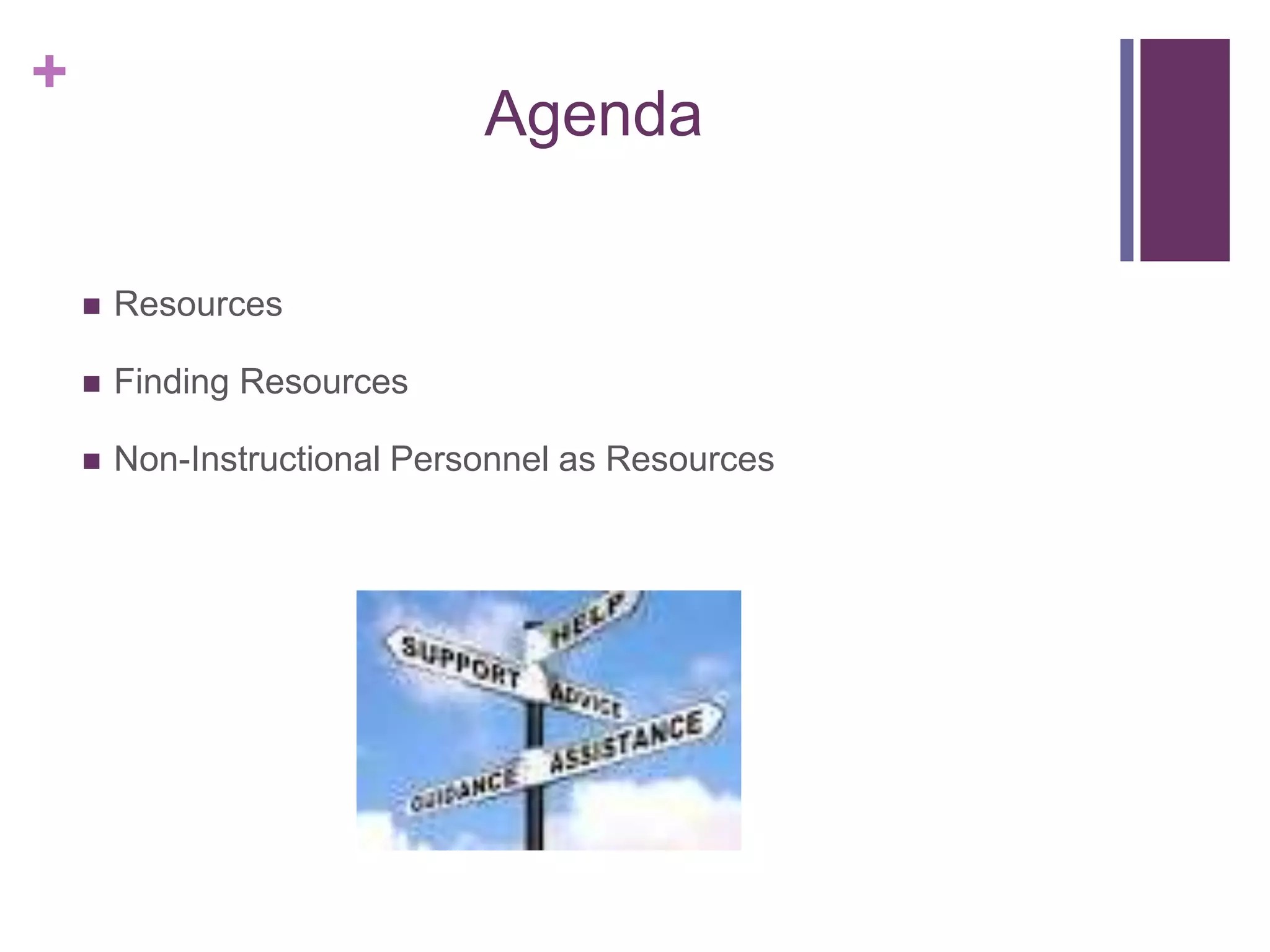
Agenda
 Resources
 Finding Resources
 Non-Instructional Personnel as Resources
+
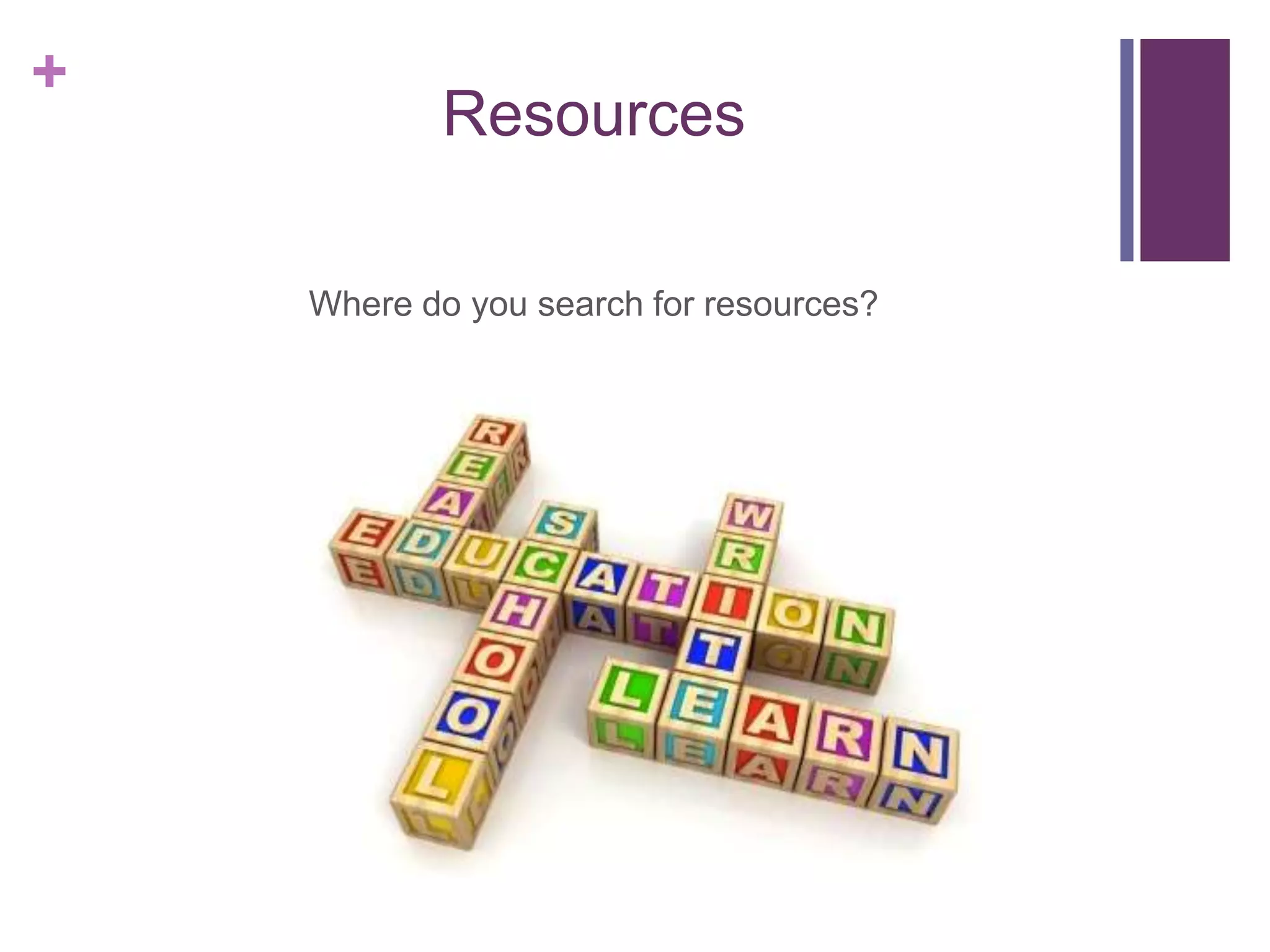
Resources
Where do you search for resources?
+
Resources
 Where can you search for resources?
 Internet
 School Resource Room
 Human Capital
 Community
 Museums
 Libraries
 Textbooks
+
Finding a Resource
 Remember that personnel from school can help you find a
resource. Communicate with:
 Professional Learning Communities
 Principals
 Lead Teachers
 Curriculum Designers
 Mentor Teachers
 Trusted Teachers
+
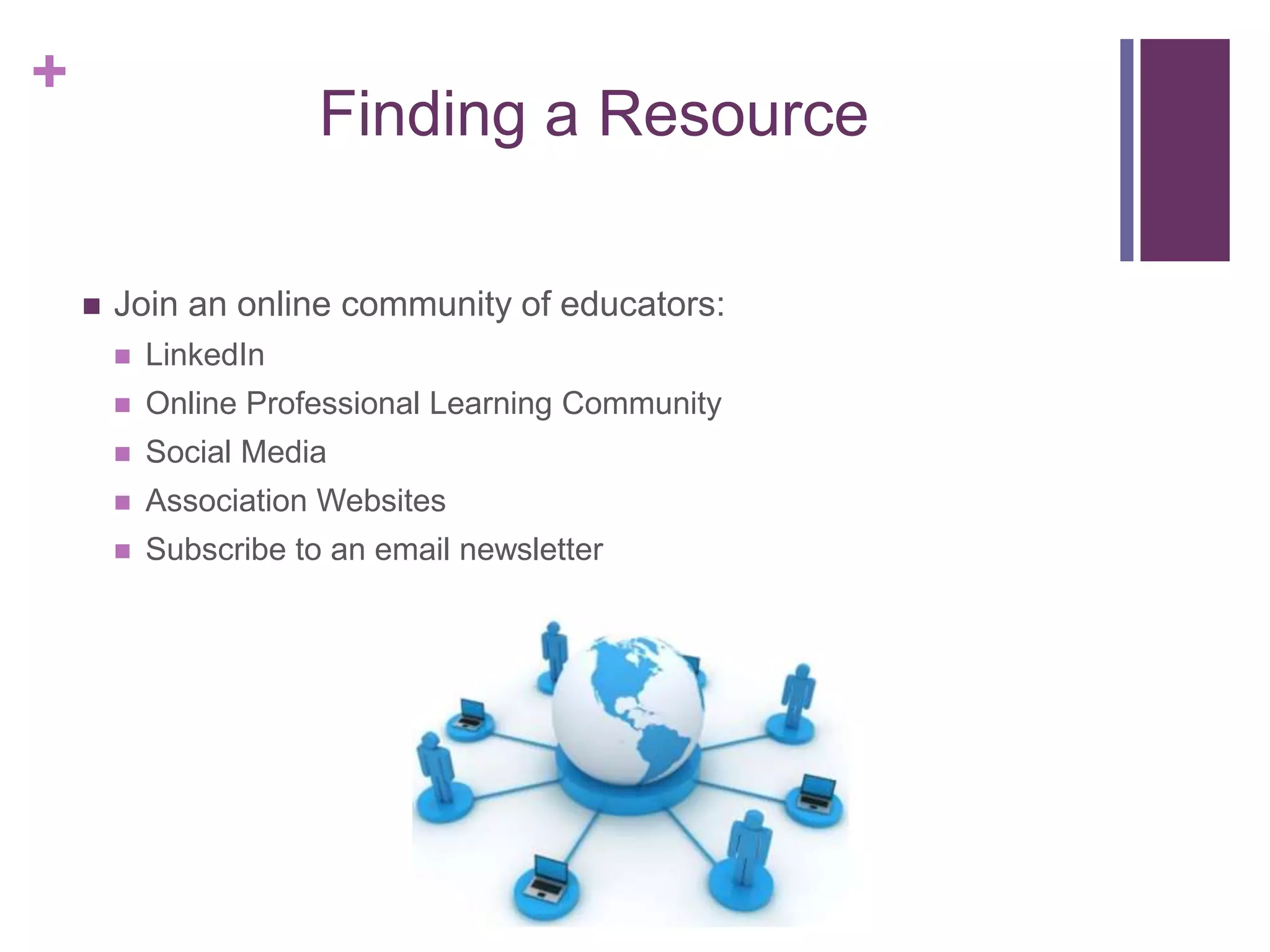
Finding a Resource
 Join an online community of educators:
 LinkedIn
 Online Professional Learning Community
 Social Media
 Association Websites
 Subscribe to an email newsletter
+
Finding a Resource
 Network with individuals from your past. Talk to individuals such
as:
 College professors
 Old classmates
 Previous colleagues
+
Non-instructional Personnel as a
Resource
 A teacher has a greater responsibility then just classroom
pedagogy.
 The learning ecosystem is only healthy when a team based
approach is taken.
 Teachers cannot be experts at everything so look to others,
even non-teachers, for help
+
Non-instructional Personnel as a
Resource
 Teachers should receive resources from:
 Psychologists
 Counselors
 Occupational/Physical Therapists
 Nurses
 Behavior Analysts
 Parents
 Faculty Handbooks
 School Newsletters
+
Evaluate Resources
 Find resources that are:
 Peer-Reviewed
 Research Based
 Have Positive Reviews
 Trustworthy Websites

Demonstrating knowledge of resources

  • 1.
  • 2.
    + Agenda  Resources  FindingResources  Non-Instructional Personnel as Resources
  • 3.
    + Resources Where do yousearch for resources?
  • 4.
    + Resources  Where canyou search for resources?  Internet  School Resource Room  Human Capital  Community  Museums  Libraries  Textbooks
  • 5.
    + Finding a Resource Remember that personnel from school can help you find a resource. Communicate with:  Professional Learning Communities  Principals  Lead Teachers  Curriculum Designers  Mentor Teachers  Trusted Teachers
  • 6.
    + Finding a Resource Join an online community of educators:  LinkedIn  Online Professional Learning Community  Social Media  Association Websites  Subscribe to an email newsletter
  • 7.
    + Finding a Resource Network with individuals from your past. Talk to individuals such as:  College professors  Old classmates  Previous colleagues
  • 8.
    + Non-instructional Personnel asa Resource  A teacher has a greater responsibility then just classroom pedagogy.  The learning ecosystem is only healthy when a team based approach is taken.  Teachers cannot be experts at everything so look to others, even non-teachers, for help
  • 9.
    + Non-instructional Personnel asa Resource  Teachers should receive resources from:  Psychologists  Counselors  Occupational/Physical Therapists  Nurses  Behavior Analysts  Parents  Faculty Handbooks  School Newsletters
  • 10.
    + Evaluate Resources  Findresources that are:  Peer-Reviewed  Research Based  Have Positive Reviews  Trustworthy Websites