SYNOPSIS
Introduction
AcademicResources
Financial and Institutional Support
Emotional and social Support
Technological and Cultural Resources
Barriers and Solutions (Comparison & Recommendations)
Conclusion
4.
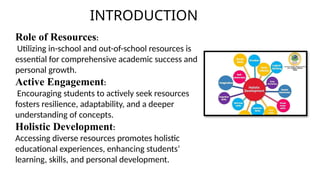
Role of Resources:
Utilizingin-school and out-of-school resources is
essential for comprehensive academic success and
personal growth.
Active Engagement:
Encouraging students to actively seek resources
fosters resilience, adaptability, and a deeper
understanding of concepts.
Holistic Development:
Accessing diverse resources promotes holistic
educational experiences, enhancing students’
learning, skills, and personal development.
INTRODUCTION
5.
Introduction to AcademicResources
Definition of Academic Resources:
Academic resources encompass tools,
facilities, and support systems enhancing
student engagement and success.
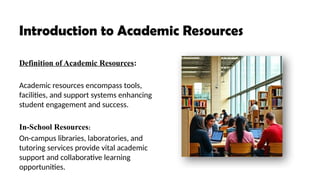
In-School Resources:
On-campus libraries, laboratories, and
tutoring services provide vital academic
support and collaborative learning
opportunities.
In-School Academic Resources
LibraryServices:
Libraries offer vast collections, study spaces, and research assistance, critical for
academic success and learning.
Laboratories and Equipment:
Access to laboratories encourages practical application of concepts, fostering deep
understanding through hands-on experiences.
Technology Centers:
Technology centers provide computers and specialized software, enhancing research
capabilities and enriching educational experiences.
8.
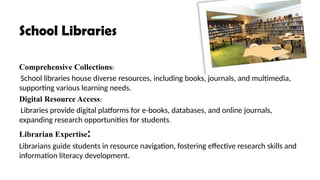
School Libraries
Comprehensive Collections:
Schoollibraries house diverse resources, including books, journals, and multimedia,
supporting various learning needs.
Digital Resource Access:
Libraries provide digital platforms for e-books, databases, and online journals,
expanding research opportunities for students.
Librarian Expertise:
Librarians guide students in resource navigation, fostering effective research skills and
information literacy development.
9.
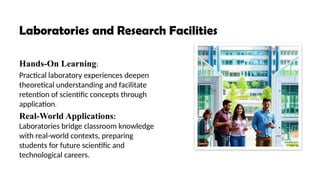
Laboratories and ResearchFacilities
Hands-On Learning:
Practical laboratory experiences deepen
theoretical understanding and facilitate
retention of scientific concepts through
application.
Real-World Applications:
Laboratories bridge classroom knowledge
with real-world contexts, preparing
students for future scientific and
technological careers.
10.
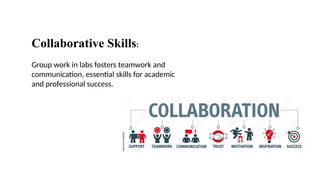
Collaborative Skills:
Group workin labs fosters teamwork and
communication, essential skills for academic
and professional success.
11.
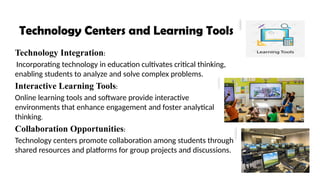
Technology Centers andLearning Tools
Technology Integration:
Incorporating technology in education cultivates critical thinking,
enabling students to analyze and solve complex problems.
Interactive Learning Tools:
Online learning tools and software provide interactive
environments that enhance engagement and foster analytical
thinking.
Collaboration Opportunities:
Technology centers promote collaboration among students through
shared resources and platforms for group projects and discussions.
12.
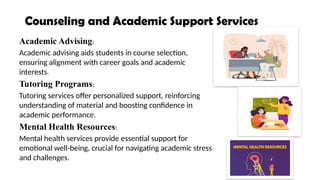
Counseling and AcademicSupport Services
Academic Advising:
Academic advising aids students in course selection,
ensuring alignment with career goals and academic
interests.
Tutoring Programs:
Tutoring services offer personalized support, reinforcing
understanding of material and boosting confidence in
academic performance.
Mental Health Resources:
Mental health services provide essential support for
emotional well-being, crucial for navigating academic stress
and challenges.
13.
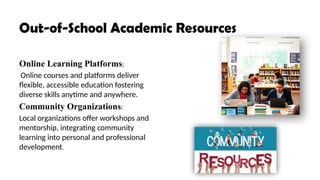
Out-of-School Academic Resources
OnlineLearning Platforms:
Online courses and platforms deliver
flexible, accessible education fostering
diverse skills anytime and anywhere.
Community Organizations:
Local organizations offer workshops and
mentorship, integrating community
learning into personal and professional
development.
14.
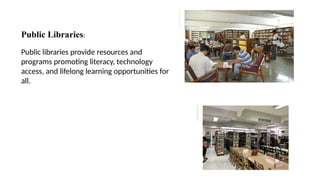
Public Libraries:
Public librariesprovide resources and
programs promoting literacy, technology
access, and lifelong learning opportunities for
all.
15.
Online Learning Platforms
DiverseCourse Offerings:
Online platforms host extensive subject matter,
accommodating various interests and professional skills
development.
Self-Paced Learning:
Flexible study schedules empower learners to adapt
coursework to their individual pace and lifestyle preferences.
Global Community Interaction:
Online platforms facilitate networking with diverse learners,
enriching perspectives through collaborative global
discussions.
16.
Public Libraries andCommunity Resources
Public Library Resources:
Public libraries offer extensive book collections, study
areas, and resources essential for academic enrichment.
Workshops and Programs:
Many libraries host workshops on study skills, research
methods, and career development for students.
Community Mentorship Initiatives:
Community organizations provide tutoring and
mentorship, fostering personalized support and
enhancing academic achievement.
17.
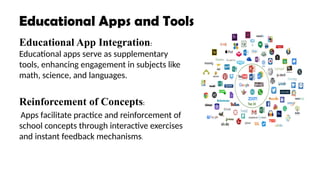
Educational Apps andTools
Educational App Integration:
Educational apps serve as supplementary
tools, enhancing engagement in subjects like
math, science, and languages.
Reinforcement of Concepts:
Apps facilitate practice and reinforcement of
school concepts through interactive exercises
and instant feedback mechanisms.
18.
Examples of EffectiveApps:
Notable apps include Khan Academy,
Duolingo, and Quizlet, each catering
to diverse academic needs and
subjects.
19.
Collaboration Between Institutions
CollaborativePartnerships:
Schools, universities, and businesses partnership create
resource networks enhancing academic experiences through
varied opportunities.
Internship Programs:
Student internships provide hands-on experience, bridging
classroom knowledge with practical application in
professional environments.
Access to Advanced Resources:
Collaboration offers students access to specialized equipment
and expert guidance beyond traditional educational settings.
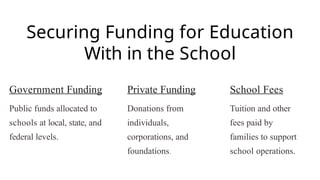
Securing Funding forEducation
With in the School
Government Funding
Public funds allocated to
schools at local, state, and
federal levels.
Private Funding
Donations from
individuals,
corporations, and
foundations.
School Fees
Tuition and other
fees paid by
families to support
school operations.
22.
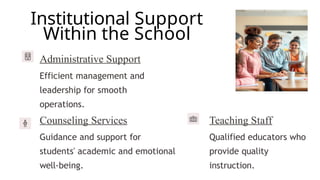
Institutional Support
Within theSchool
Administrative Support
Efficient management and
leadership for smooth
operations.
Teaching Staff
Qualified educators who
provide quality
instruction.
Counseling Services
Guidance and support for
students' academic and emotional
well-being.
23.
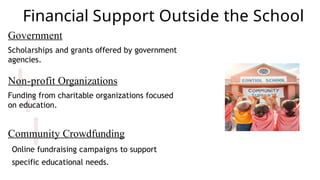
Financial Support Outsidethe School
Government
Scholarships and grants offered by government
agencies.
Non-profit Organizations
Funding from charitable organizations focused
on education.
Community Crowdfunding
Online fundraising campaigns to support
specific educational needs.
24.
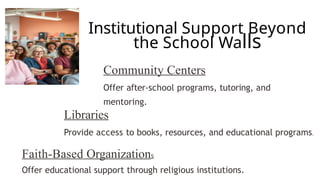
Institutional Support Beyond
theSchool Walls
Community Centers
Offer after-school programs, tutoring, and
mentoring.
Libraries
Provide access to books, resources, and educational programs.
Faith-Based Organizations
Offer educational support through religious institutions.
25.
Emotional and socialsupport within
and outside the school
Emotional and social support plays a vital role in the
personal and academic development of students. Schools
provide structured support systems, while external
resources extend guidance beyond the school
environment.
26.
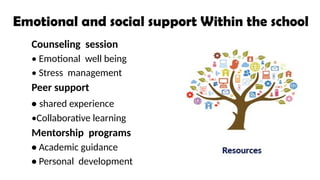
Emotional and socialsupport Within the school
Counseling session
• Emotional well being
• Stress management
Peer support
• shared experience
•Collaborative learning
Mentorship programs
• Academic guidance
• Personal development
Emotional and socialsupport outside the school
Family support
•Emotional nurturing
• Guidance and care
Community organizations
•Resource accessibility
•Skill development
Online communities
•Peer networking
•Emotional support
Technological and CulturalResources Within and Outside the
School
Both technological and cultural resources play a crucial role in
education, influencing students’ learning experiences,
opportunities, and overall development. These resources exist
both within the school environment and outside the school,
shaping formal and informal learning.
31.
1. Technological Resources
Withinthe School
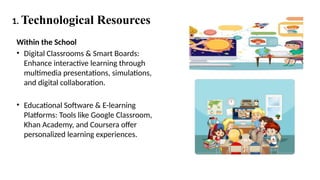
• Digital Classrooms & Smart Boards:
Enhance interactive learning through
multimedia presentations, simulations,
and digital collaboration.
• Educational Software & E-learning
Platforms: Tools like Google Classroom,
Khan Academy, and Coursera offer
personalized learning experiences.
32.
Outside the School
•Home Access to Technology: Students
with computers, tablets, and internet
access at home can continue learning
through online resources.
• Online Educational Platforms: Websites
like YouTube, Udemy, and Duolingo
provide supplementary learning
materials.
33.
Cultural Resources
Within theSchool
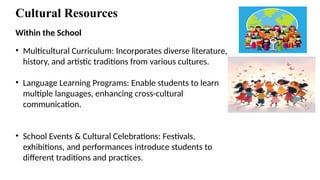
• Multicultural Curriculum: Incorporates diverse literature,
history, and artistic traditions from various cultures.
• Language Learning Programs: Enable students to learn
multiple languages, enhancing cross-cultural
communication.
• School Events & Cultural Celebrations: Festivals,
exhibitions, and performances introduce students to
different traditions and practices.
34.
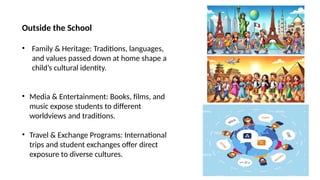
Outside the School
•Family & Heritage: Traditions, languages,
and values passed down at home shape a
child’s cultural identity.
• Media & Entertainment: Books, films, and
music expose students to different
worldviews and traditions.
• Travel & Exchange Programs: International
trips and student exchanges offer direct
exposure to diverse cultures.
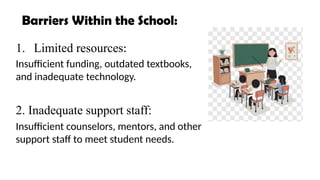
1. Limited resources:
Insufficientfunding, outdated textbooks,
and inadequate technology.
2. Inadequate support staff:
Insufficient counselors, mentors, and other
support staff to meet student needs.
Barriers Within the School:
37.
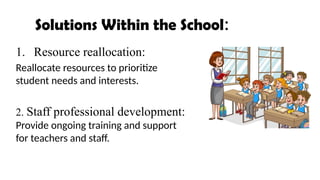
Solutions Within theSchool:
1. Resource reallocation:
Reallocate resources to prioritize
student needs and interests.
2. Staff professional development:
Provide ongoing training and support
for teachers and staff.
38.
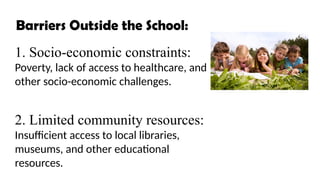
Barriers Outside theSchool:
1. Socio-economic constraints:
Poverty, lack of access to healthcare, and
other socio-economic challenges.
2. Limited community resources:
Insufficient access to local libraries,
museums, and other educational
resources.
39.
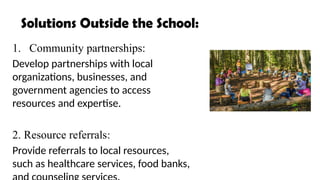
Solutions Outside theSchool:
1. Community partnerships:
Develop partnerships with local
organizations, businesses, and
government agencies to access
resources and expertise.
2. Resource referrals:
Provide referrals to local resources,
such as healthcare services, food banks,
40.
CONCLUSION
Resources within andoutside school are key to
students growth. Emotional,social and academic
support help build confidence, skills, and inclusion.
When used well, these resources ensure equal
opportunities and help every student succeed.