Democratization in Libya 
Pastrana, Mary Grace B. 
IV-BSITE
HISTORY 
• How and when it 
started? • When Muammar Gaddafi’s 
Administration (1969 to 2011) 
brought down. 
• Died on October 20, 2011 
during the Battle at Sirte
HISTORY 
ANTI-GADAFFI FORCES 
• National Transitional Council 
- Feb. 27, 2011 
• NATO forces intervened 
- March 21, 2011
HISTORY 
• In July 2012, Libyans voted in 
its first national election 
• Turnout at 62% of registered voters 
• 2.8 million registered voters from around 
3-3.5 million eligible 
• 374 party lists 
• 559 women registered for party seats 
(44%) 
(source: The UN and the Libyan Electoral High Commission)
HISTORY 
Most powerful 
forces: 
• National Forces Alliance, 
led by ex-interim Prime MinisterMahmoud Jibril 
Justice and Construction Party 
Libyan Muslim Brotherhood of Mohamed Sawan 
National Front Party 
a liberal group led by an intellectual Mohamed el-Magariaf
HISTORY 
• Ali Zeidan, Prime Minister of Libya 
( a former diplomat who abandoned Gaddafi’s forces in the 
1980s) 
• Mohammed Magarief, Libya's head of state
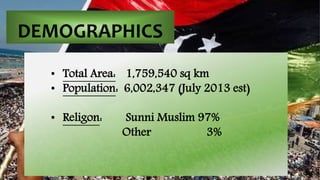
DEMOGRAPHICS 
• Total Area: 1,759,540 sq km 
• Population: 6,002,347 (July 2013 est) 
• Religon: Sunni Muslim 97% 
Other 3%
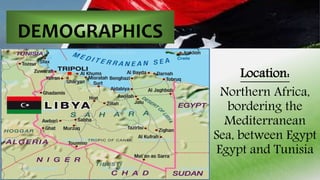
Location: 
Northern Africa, 
bordering the 
Mediterranean 
Sea, between Egypt 
Egypt and Tunisia 
DEMOGRAPHICS
DEMOGRAPHICS 
Who are the 
parties 
involved? 
 Muammar Guaddafi 
 Anti-Gaddafi Forces 
 NATO Forces 
 International Criminal 
Court
ECONOMIC FACTORS
ECONOMIC FACTORS 
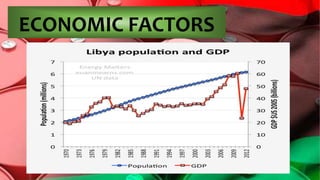
• Libya sits on the biggest reserves of oil in 
Africa. 
• Oil and gas production account for: 
 65 % of the country’s GDP, 
 96 % of exports, and 
 98 % of government revenues
ECONOMIC FACTORS 
• Current Unemployment Rate: 30% 
• Majority of those employed are working in 
the public sector and the government 
hopes to reduce this by relocating workers 
into the private sector.
POLITICAL GROUPS 
• National Forces Alliance 
• Justice and Construction Party (Libyan Muslim 
Brotherhood) 
• National Front Party
POLITICAL FACTORS 
• (Election was held ) 
General National Congress 
to replace NTC. 
• NTC officially dissolved. 
• July 7, 2012 
• August 8, 2012
POLITICAL FACTORS 
• National Transitional Council 
issued a Constitutional Declaration. 
• August 3, 2011 (37 articles) 
• A 01-06 : Libya as a State 
• A 07-15: Civil rights and Public Freedom 
• A 16-29: Operation of the Government 
• A 30-32: Judiciary 
• A 33-37: Conclusive Provisions
PSYCHOCULTURAL FACTORS 
 Relationship between Libya 
and 
UK Higher Education 
• TVET UK signed an Memorandum of 
Understanding (MoU) with Libyan Board. 
“to help build the necessary and appropriate 
industrial trades and technical skills 
capability and capacity for current and future 
of Libya”
PSYCHOCULTURAL FACTORS 
 Relationship between Libya 
and 
UK Higher Education 
• Training for Libya’s 
young population. (70 
percent are under the 
age of 30)
PSYCHOCULTURAL FACTORS 
 Rewriting of Curriculum 
• Includes 160 Libyan experts 
o Get rid of subjects like Al-Mujtama Al 
Jamahariya (studying of “green book”) 
o Changes in geography subject 
o Add Islamic Consciosness Subject
PSYCHOCULTURAL FACTORS 
• Language Training 
• Libyans Studying Abroad 
 7,009 Libyans studying overseas at the 
tertiary level in 2010 (UK, Malaysia, US, 
France, Canada)
PSYCHOCULTURAL FACTORS 
Scholarship 
Programs 
 Overseas scholarship program (Libyan 
Committee for Higher Education) 
 Libyan-North American Scholarship 
Program (Canadian Bureau for 
International Education )
PSYCHOCULTURAL FACTORS 
• Libya is also developing information 
technology infrastructures: 
o to better connect universities, and 
o provide access to academic research 
databases.
RELIGION 
• Religious Freedom 
• Islam 
• Christians 
• Catholics 
• Anglicans
Thank you  
Pastrana, Mary Grace B. 
IV-BSITE

Democratization in Libya

  • 1.
    Democratization in Libya Pastrana, Mary Grace B. IV-BSITE
  • 2.
    HISTORY • Howand when it started? • When Muammar Gaddafi’s Administration (1969 to 2011) brought down. • Died on October 20, 2011 during the Battle at Sirte
  • 3.
    HISTORY ANTI-GADAFFI FORCES • National Transitional Council - Feb. 27, 2011 • NATO forces intervened - March 21, 2011
  • 4.
    HISTORY • InJuly 2012, Libyans voted in its first national election • Turnout at 62% of registered voters • 2.8 million registered voters from around 3-3.5 million eligible • 374 party lists • 559 women registered for party seats (44%) (source: The UN and the Libyan Electoral High Commission)
  • 5.
    HISTORY Most powerful forces: • National Forces Alliance, led by ex-interim Prime MinisterMahmoud Jibril Justice and Construction Party Libyan Muslim Brotherhood of Mohamed Sawan National Front Party a liberal group led by an intellectual Mohamed el-Magariaf
  • 6.
    HISTORY • AliZeidan, Prime Minister of Libya ( a former diplomat who abandoned Gaddafi’s forces in the 1980s) • Mohammed Magarief, Libya's head of state
  • 7.
    DEMOGRAPHICS • TotalArea: 1,759,540 sq km • Population: 6,002,347 (July 2013 est) • Religon: Sunni Muslim 97% Other 3%
  • 8.
    Location: Northern Africa, bordering the Mediterranean Sea, between Egypt Egypt and Tunisia DEMOGRAPHICS
  • 9.
    DEMOGRAPHICS Who arethe parties involved?  Muammar Guaddafi  Anti-Gaddafi Forces  NATO Forces  International Criminal Court
  • 10.
  • 11.
    ECONOMIC FACTORS •Libya sits on the biggest reserves of oil in Africa. • Oil and gas production account for:  65 % of the country’s GDP,  96 % of exports, and  98 % of government revenues
  • 12.
    ECONOMIC FACTORS •Current Unemployment Rate: 30% • Majority of those employed are working in the public sector and the government hopes to reduce this by relocating workers into the private sector.
  • 13.
    POLITICAL GROUPS •National Forces Alliance • Justice and Construction Party (Libyan Muslim Brotherhood) • National Front Party
  • 14.
    POLITICAL FACTORS •(Election was held ) General National Congress to replace NTC. • NTC officially dissolved. • July 7, 2012 • August 8, 2012
  • 15.
    POLITICAL FACTORS •National Transitional Council issued a Constitutional Declaration. • August 3, 2011 (37 articles) • A 01-06 : Libya as a State • A 07-15: Civil rights and Public Freedom • A 16-29: Operation of the Government • A 30-32: Judiciary • A 33-37: Conclusive Provisions
  • 16.
    PSYCHOCULTURAL FACTORS Relationship between Libya and UK Higher Education • TVET UK signed an Memorandum of Understanding (MoU) with Libyan Board. “to help build the necessary and appropriate industrial trades and technical skills capability and capacity for current and future of Libya”
  • 17.
    PSYCHOCULTURAL FACTORS Relationship between Libya and UK Higher Education • Training for Libya’s young population. (70 percent are under the age of 30)
  • 18.
    PSYCHOCULTURAL FACTORS Rewriting of Curriculum • Includes 160 Libyan experts o Get rid of subjects like Al-Mujtama Al Jamahariya (studying of “green book”) o Changes in geography subject o Add Islamic Consciosness Subject
  • 19.
    PSYCHOCULTURAL FACTORS •Language Training • Libyans Studying Abroad  7,009 Libyans studying overseas at the tertiary level in 2010 (UK, Malaysia, US, France, Canada)
  • 20.
    PSYCHOCULTURAL FACTORS Scholarship Programs  Overseas scholarship program (Libyan Committee for Higher Education)  Libyan-North American Scholarship Program (Canadian Bureau for International Education )
  • 21.
    PSYCHOCULTURAL FACTORS •Libya is also developing information technology infrastructures: o to better connect universities, and o provide access to academic research databases.
  • 22.
    RELIGION • ReligiousFreedom • Islam • Christians • Catholics • Anglicans
  • 23.
    Thank you  Pastrana, Mary Grace B. IV-BSITE