Demand Reduction, Energy
Efficiency and Policy
Effectiveness: What Works?
Nick Eyre, Edinburgh 13th
December 2013
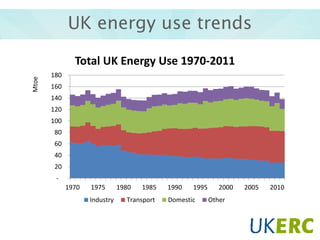
UK energy use trends
Mtoe

Total UK Energy Use 1970-2011
180
160

140
120
100
80
60
40
20
1970

1975
Industry

1980

1985

Transport

1990

1995

Domestic

2000
Other

2005

2010
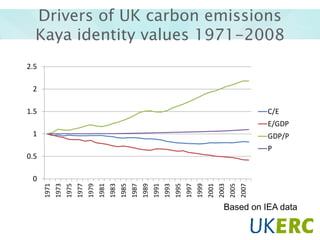
Drivers of UK carbon emissions
Kaya identity values 1971-2008
2.5
2
1.5

C/E
E/GDP

1

GDP/P

P

0.5

2007

2005

2003

2001

1999

1997

1995

1993

1991

1989

1987

1985

1983

1981

1979

1977

1975

1973

1971

0

Based on IEA data
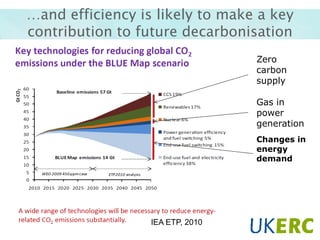
…and efficiency is likely to make a key
contribution to future decarbonisation
Zero
carbon
supply
Gas in
power
generation
Changes in
energy
demand

IEA ETP, 2010
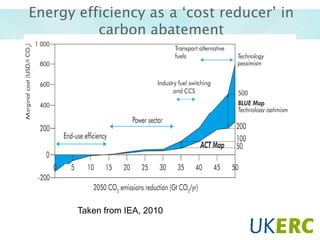
Energy efficiency as a ‘cost reducer’ in
carbon abatement

Taken from IEA, 2010
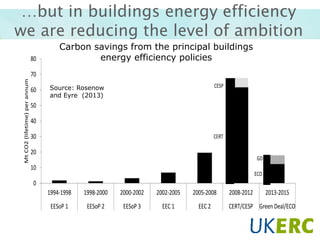
…but in buildings energy efficiency
we are reducing the level of ambition
80

Carbon savings from the principal buildings
energy efficiency policies

Mt CO2 (lifetime) per annum

70
60

CESP

Source: Rosenow
and Eyre (2013)

50
40
30

CERT

20

GD

10

ECO

0
1994-1998

1998-2000

2000-2002

2002-2005

2005-2008

EESoP 1

EESoP 2

EESoP 3

EEC 1

EEC 2

2008-2012

2013-2015

CERT/CESP Green Deal/ECO
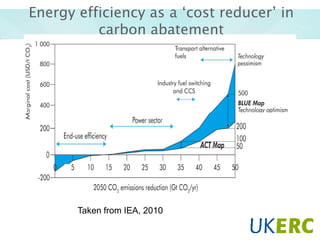
Energy efficiency as a ‘cost reducer’ in
carbon abatement

Taken from IEA, 2010
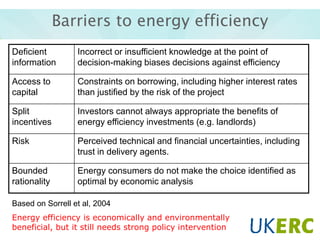
Barriers to energy efficiency
Deficient
information

Incorrect or insufficient knowledge at the point of
decision-making biases decisions against efficiency

Access to
capital

Constraints on borrowing, including higher interest rates
than justified by the risk of the project

Split
incentives

Investors cannot always appropriate the benefits of
energy efficiency investments (e.g. landlords)

Risk

Perceived technical and financial uncertainties, including
trust in delivery agents.

Bounded
rationality

Energy consumers do not make the choice identified as
optimal by economic analysis

Based on Sorrell et al, 2004
Energy efficiency is economically and environmentally
beneficial, but it still needs strong policy intervention
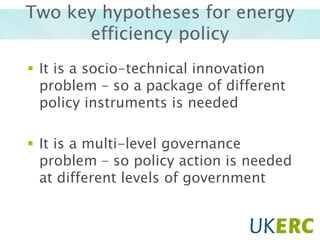
Two key hypotheses for energy
efficiency policy
 It is a socio-technical innovation
problem – so a package of different
policy instruments is needed
 It is a multi-level governance
problem – so policy action is needed
at different levels of government
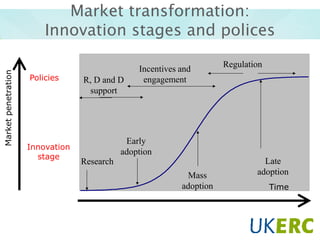
Market penetration

Market transformation:
Innovation stages and polices
Policies

Innovation
stage

R, D and D
support

Research

Incentives and
engagement

Early
adoption
Mass
adoption

Regulation

Late
adoption
Time
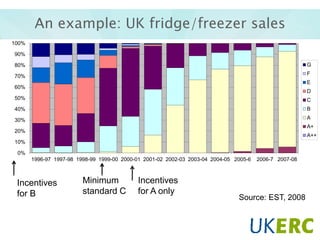
An example: UK fridge/freezer sales
100%
90%

80%

G

70%

F
E

60%

D

50%

C

40%

B

30%

A
A+

20%

A++

10%
0%
1996-97 1997-98 1998-99 1999-00 2000-01 2001-02 2002-03 2003-04 2004-05 2005-6

Incentives
for B

Minimum
standard C

Incentives
for A only

2006-7 2007-08

Source: EST, 2008
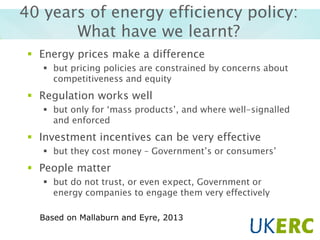
40 years of energy efficiency policy:
What have we learnt?
 Energy prices make a difference
 but pricing policies are constrained by concerns about
competitiveness and equity

 Regulation works well
 but only for ‘mass products’, and where well-signalled
and enforced

 Investment incentives can be very effective
 but they cost money – Government’s or consumers’

 People matter
 but do not trust, or even expect, Government or
energy companies to engage them very effectively
Based on Mallaburn and Eyre, 2013
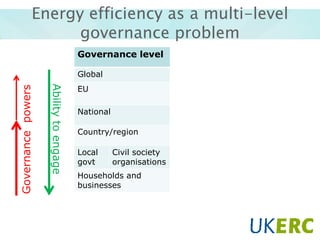
Energy efficiency as a multi-level
governance problem
Governance level

Ability to engage

Governance powers

Global
EU
National
Country/region
Local
govt

Civil society
organisations

Households and
businesses
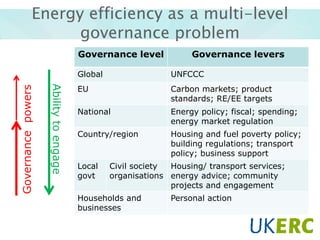
Energy efficiency as a multi-level
governance problem
Governance level

Governance levers

Governance powers

Ability to engage

Global

UNFCCC

EU

Carbon markets; product
standards; RE/EE targets

National

Energy policy; fiscal; spending;
energy market regulation

Country/region

Housing and fuel poverty policy;
building regulations; transport
policy; business support

Local
govt

Civil society
Housing/ transport services;
organisations energy advice; community
projects and engagement

Households and
businesses

Personal action
UKERC Contact Details
UK Energy Research Centre
+44 (0)20 7594 1574
www.ukerc.ac.uk

Nick Eyre
+44 (0)1865 285129
http://www.eci.ox.ac.uk/people/eyrenick.php

Demand reduction, energy efficiency and policy effectiveness - what works?

  • 1.
    Demand Reduction, Energy Efficiencyand Policy Effectiveness: What Works? Nick Eyre, Edinburgh 13th December 2013
  • 2.
    UK energy usetrends Mtoe Total UK Energy Use 1970-2011 180 160 140 120 100 80 60 40 20 1970 1975 Industry 1980 1985 Transport 1990 1995 Domestic 2000 Other 2005 2010
  • 3.
    Drivers of UKcarbon emissions Kaya identity values 1971-2008 2.5 2 1.5 C/E E/GDP 1 GDP/P P 0.5 2007 2005 2003 2001 1999 1997 1995 1993 1991 1989 1987 1985 1983 1981 1979 1977 1975 1973 1971 0 Based on IEA data
  • 4.
    …and efficiency islikely to make a key contribution to future decarbonisation Zero carbon supply Gas in power generation Changes in energy demand IEA ETP, 2010
  • 5.
    Energy efficiency asa ‘cost reducer’ in carbon abatement Taken from IEA, 2010
  • 6.
    …but in buildingsenergy efficiency we are reducing the level of ambition 80 Carbon savings from the principal buildings energy efficiency policies Mt CO2 (lifetime) per annum 70 60 CESP Source: Rosenow and Eyre (2013) 50 40 30 CERT 20 GD 10 ECO 0 1994-1998 1998-2000 2000-2002 2002-2005 2005-2008 EESoP 1 EESoP 2 EESoP 3 EEC 1 EEC 2 2008-2012 2013-2015 CERT/CESP Green Deal/ECO
  • 7.
    Energy efficiency asa ‘cost reducer’ in carbon abatement Taken from IEA, 2010
  • 8.
    Barriers to energyefficiency Deficient information Incorrect or insufficient knowledge at the point of decision-making biases decisions against efficiency Access to capital Constraints on borrowing, including higher interest rates than justified by the risk of the project Split incentives Investors cannot always appropriate the benefits of energy efficiency investments (e.g. landlords) Risk Perceived technical and financial uncertainties, including trust in delivery agents. Bounded rationality Energy consumers do not make the choice identified as optimal by economic analysis Based on Sorrell et al, 2004 Energy efficiency is economically and environmentally beneficial, but it still needs strong policy intervention
  • 9.
    Two key hypothesesfor energy efficiency policy  It is a socio-technical innovation problem – so a package of different policy instruments is needed  It is a multi-level governance problem – so policy action is needed at different levels of government
  • 10.
    Market penetration Market transformation: Innovationstages and polices Policies Innovation stage R, D and D support Research Incentives and engagement Early adoption Mass adoption Regulation Late adoption Time
  • 11.
    An example: UKfridge/freezer sales 100% 90% 80% G 70% F E 60% D 50% C 40% B 30% A A+ 20% A++ 10% 0% 1996-97 1997-98 1998-99 1999-00 2000-01 2001-02 2002-03 2003-04 2004-05 2005-6 Incentives for B Minimum standard C Incentives for A only 2006-7 2007-08 Source: EST, 2008
  • 12.
    40 years ofenergy efficiency policy: What have we learnt?  Energy prices make a difference  but pricing policies are constrained by concerns about competitiveness and equity  Regulation works well  but only for ‘mass products’, and where well-signalled and enforced  Investment incentives can be very effective  but they cost money – Government’s or consumers’  People matter  but do not trust, or even expect, Government or energy companies to engage them very effectively Based on Mallaburn and Eyre, 2013
  • 13.
    Energy efficiency asa multi-level governance problem Governance level Ability to engage Governance powers Global EU National Country/region Local govt Civil society organisations Households and businesses
  • 14.
    Energy efficiency asa multi-level governance problem Governance level Governance levers Governance powers Ability to engage Global UNFCCC EU Carbon markets; product standards; RE/EE targets National Energy policy; fiscal; spending; energy market regulation Country/region Housing and fuel poverty policy; building regulations; transport policy; business support Local govt Civil society Housing/ transport services; organisations energy advice; community projects and engagement Households and businesses Personal action
  • 15.
    UKERC Contact Details UKEnergy Research Centre +44 (0)20 7594 1574 www.ukerc.ac.uk Nick Eyre +44 (0)1865 285129 http://www.eci.ox.ac.uk/people/eyrenick.php