The New Structure for
PSO Activities in Denmark
- Goals and Overall set-up
Nicolai Zarganis
Head of Division
Danish Energy Authority
Seminar
19 April 2006
Copenhagen
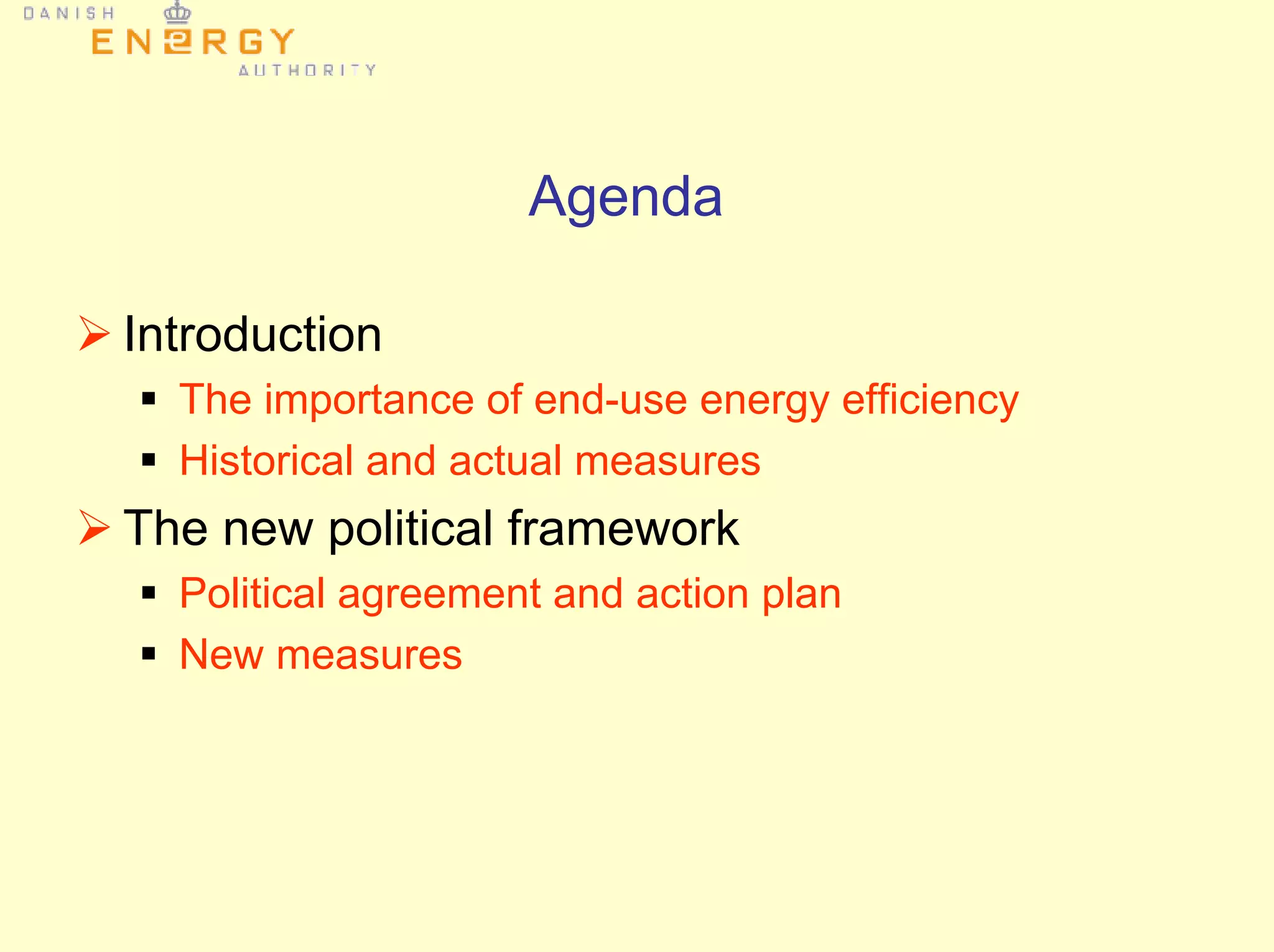
Agenda
Introduction
The importance of end-use energy efficiency
Historical and actual measures
The new political framework
Political agreement and action plan
New measures
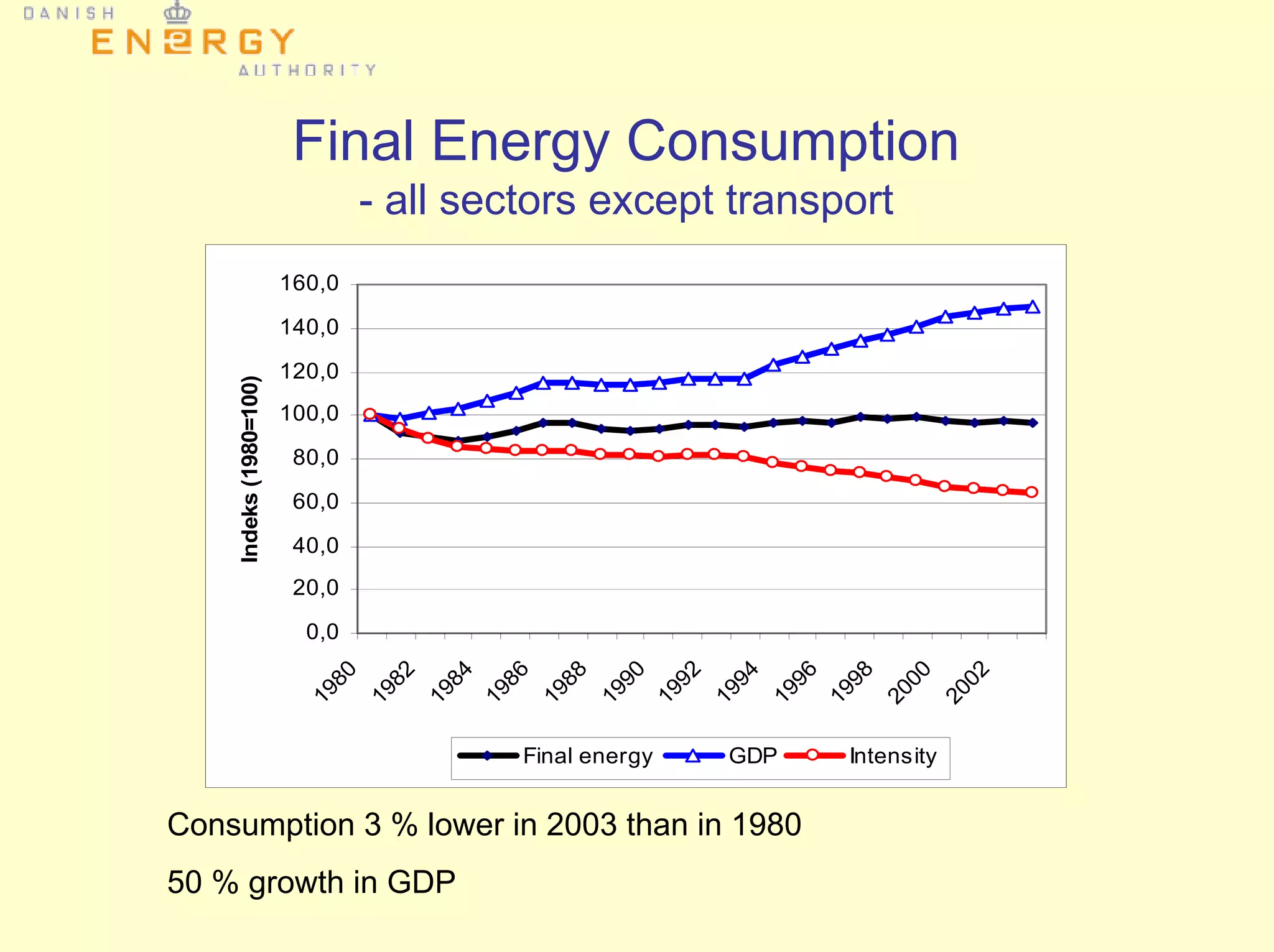
Final Energy Consumption
- all sectors except transport
0,0
20,0
40,0
60,0
80,0
100,0
120,0
140,0
160,0
1980
1982
1984
1986
1988
1990
1992
1994
1996
1998
2000
2002
Indeks(1980=100)
Final energy GDP Intensity
Consumption 3 % lower in 2003 than in 1980
50 % growth in GDP
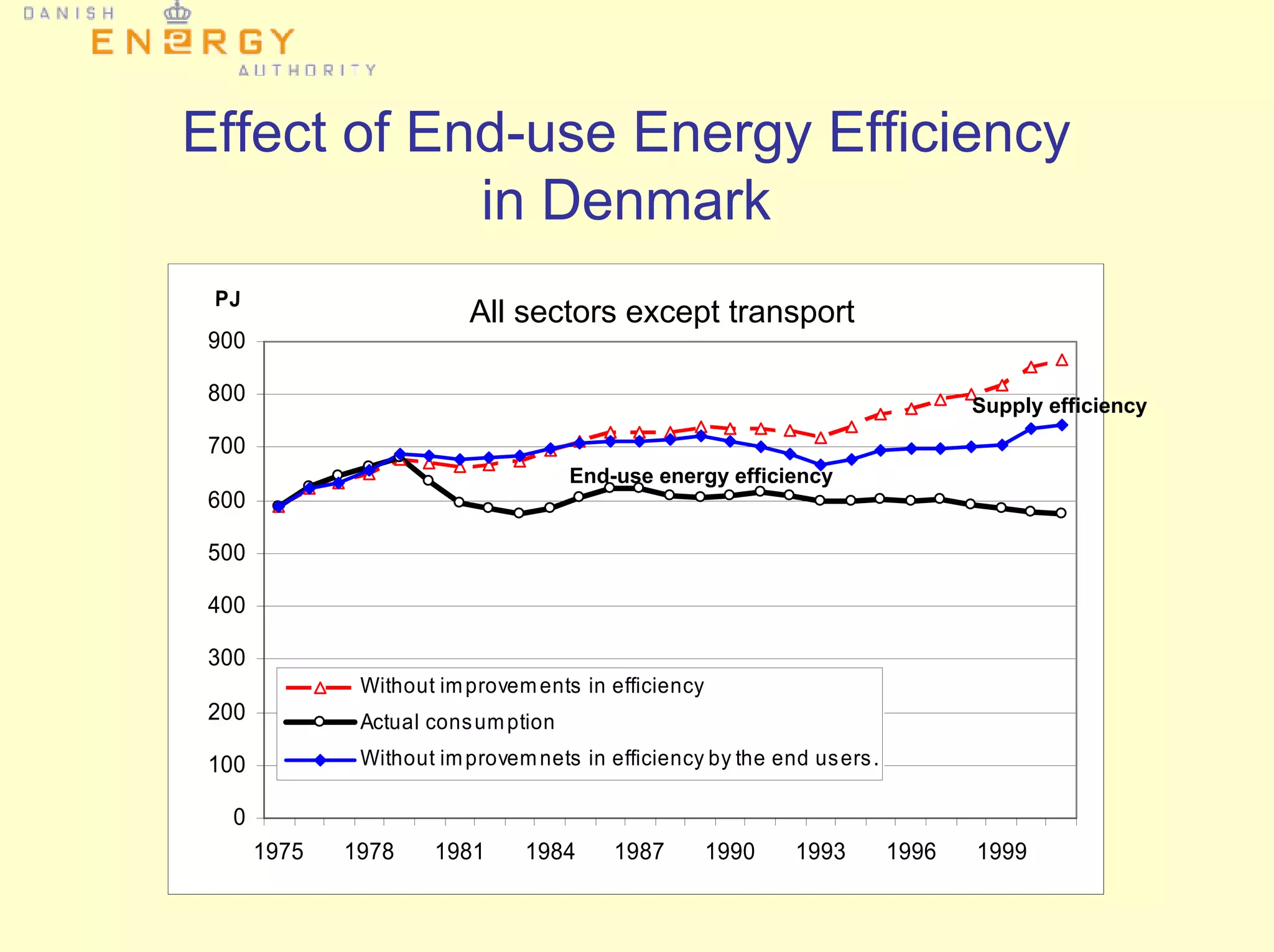
Effect of End-use Energy Efficiency
in Denmark
0
100
200
300
400
500
600
700
800
900
1975 1978 1981 1984 1987 1990 1993 1996 1999
PJ
Without improvements in efficiency
Actual consumption
Without improvemnets in efficiency by the end users.
End-use energy efficiency
Supply efficiency
All sectors except transport
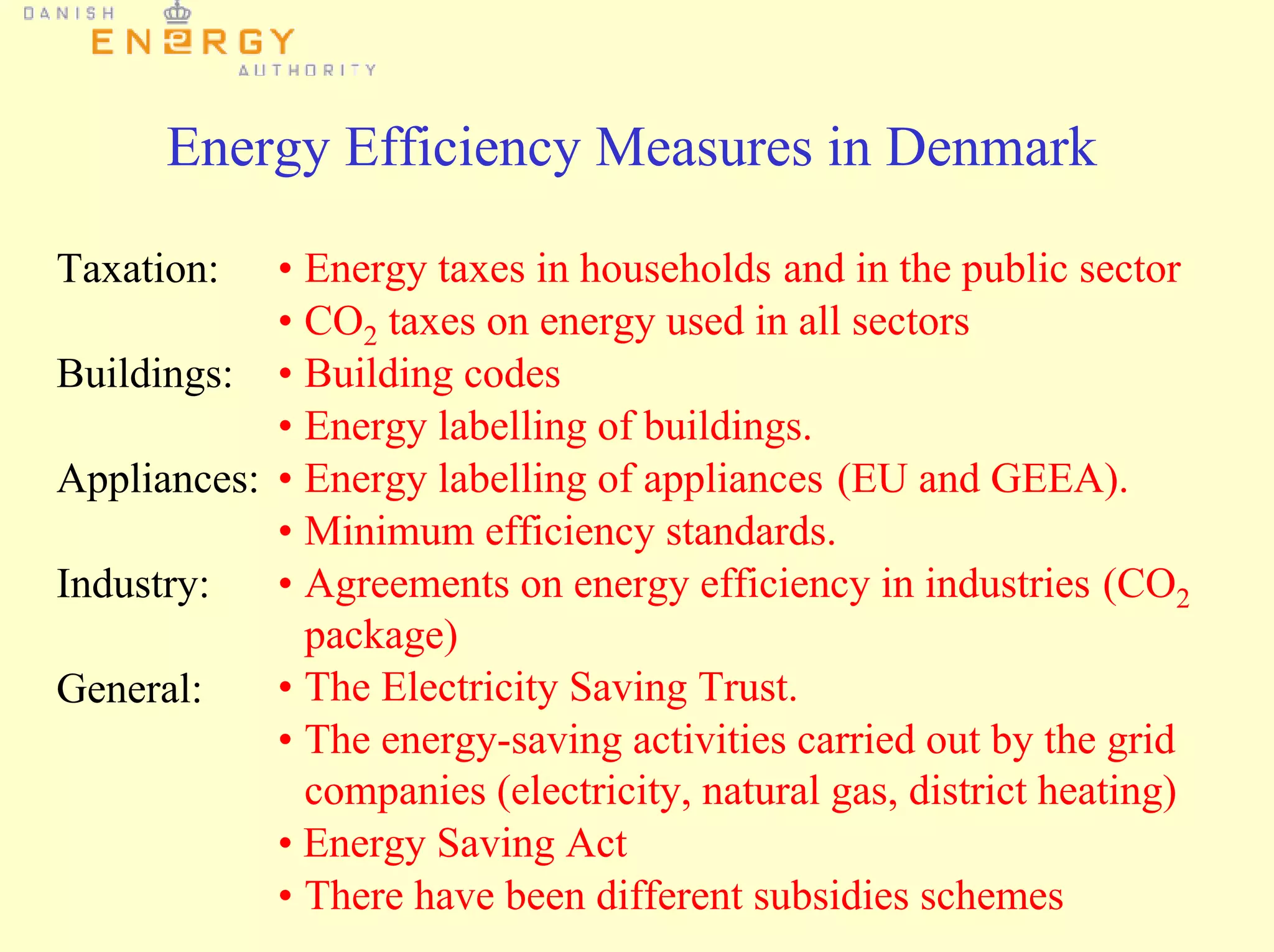
Energy Efficiency Measures in Denmark
• Energy taxes in households and in the public sector
• CO2 taxes on energy used in all sectors
• Building codes
• Energy labelling of buildings.
• Energy labelling of appliances (EU and GEEA).
• Minimum efficiency standards.
• Agreements on energy efficiency in industries (CO2
package)
• The Electricity Saving Trust.
• The energy-saving activities carried out by the grid
companies (electricity, natural gas, district heating)
• Energy Saving Act
• There have been different subsidies schemes
Taxation:
Buildings:
Appliances:
Industry:
General:
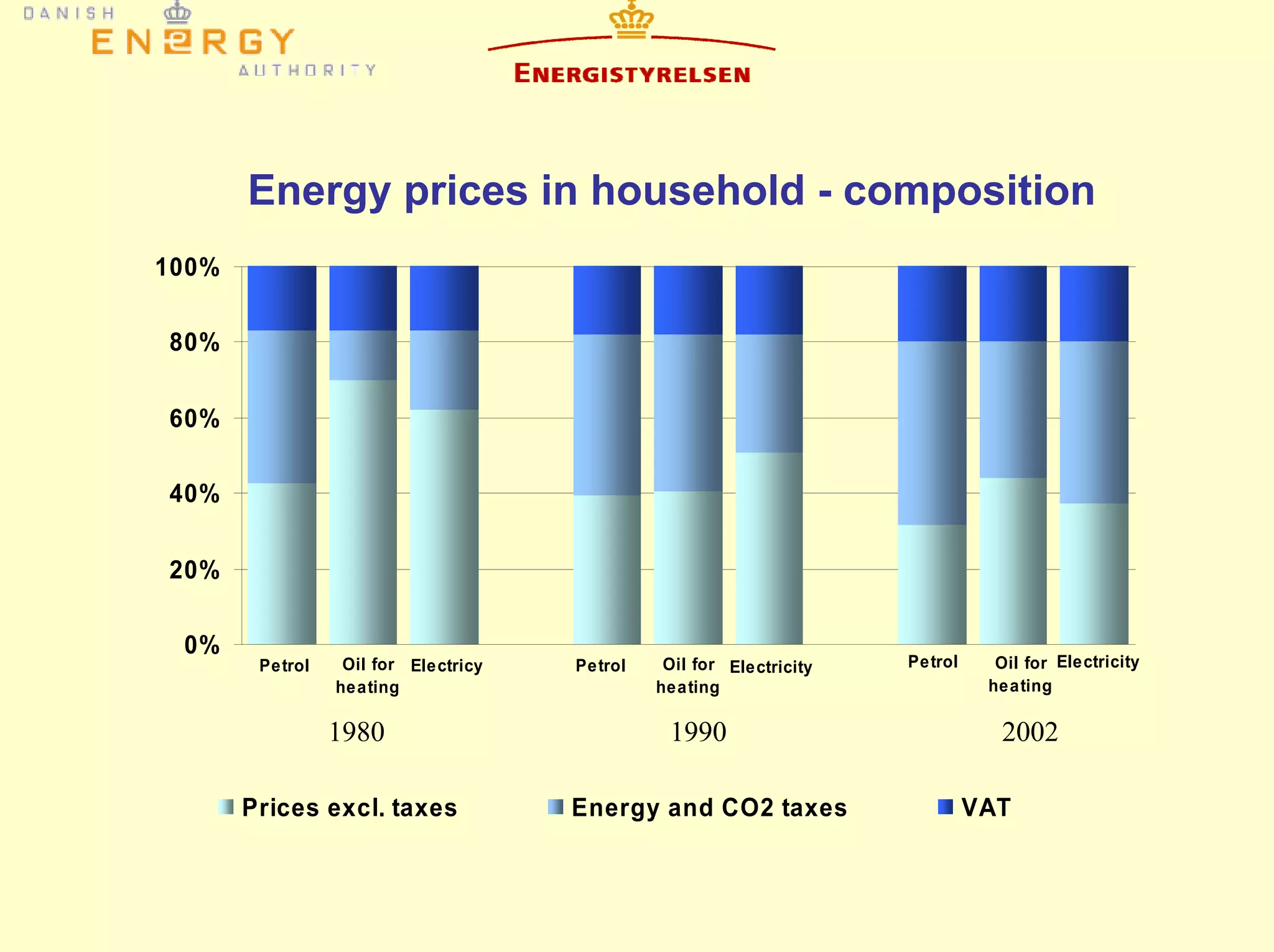
Energy prices in household - composition
ElectricityPetrol Oil for
heating
ElectricityOil for
heating
ElectricyOil for
heating
Petrol Petrol
0%
20%
40%
60%
80%
100%
Prices excl. taxes Energy and CO2 taxes VAT
1980 1990 2002
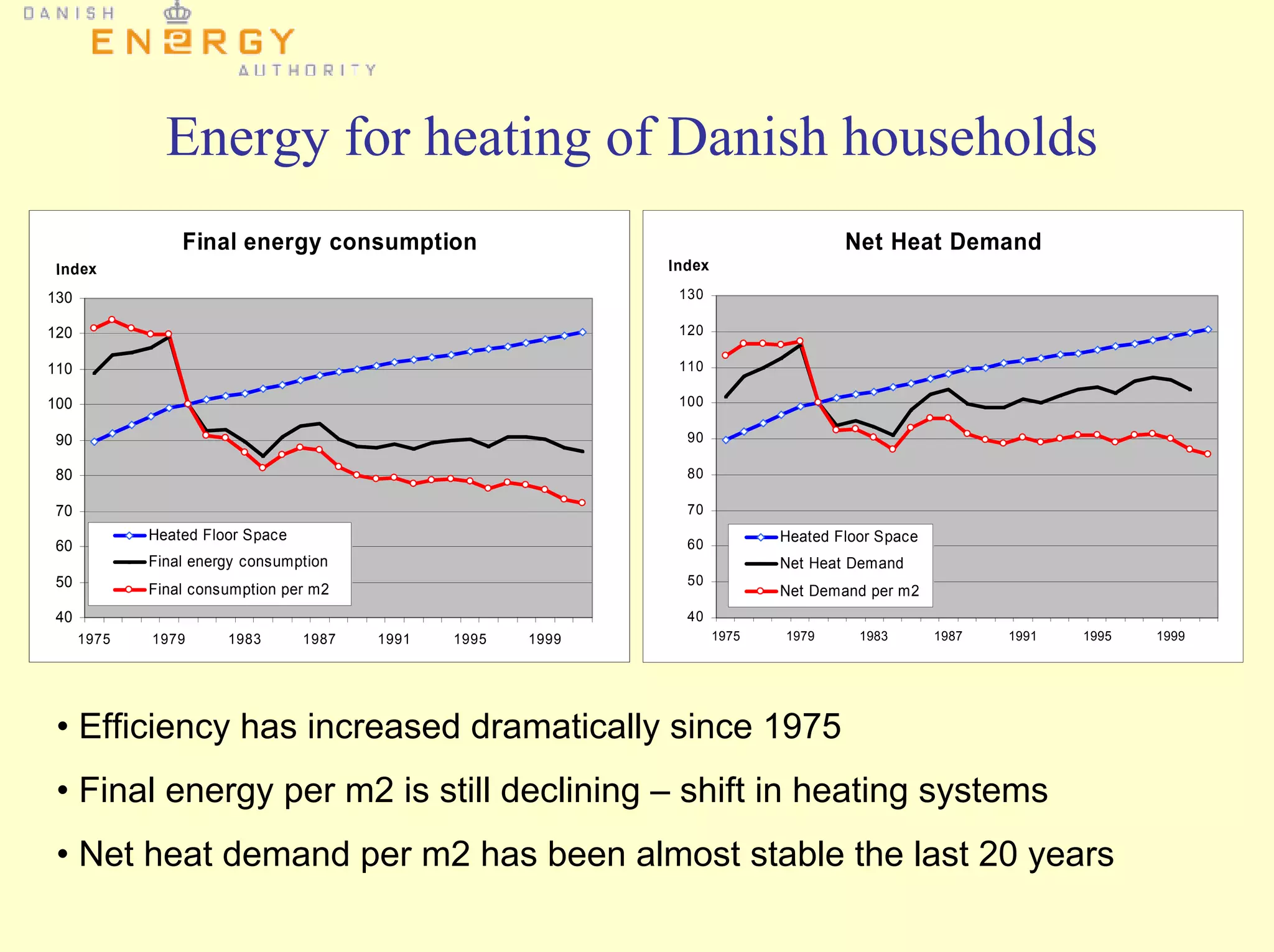
Energy for heating of Danish households
Final energy consumption
40
50
60
70
80
90
100
110
120
130
1975 1979 1983 1987 1991 1995 1999
Index
Heated Floor Space
Final energy consumption
Final consumption per m2
Net Heat Demand
40
50
60
70
80
90
100
110
120
130
1975 1979 1983 1987 1991 1995 1999
Index
Heated Floor Space
Net Heat Demand
Net Demand per m2
• Efficiency has increased dramatically since 1975
• Final energy per m2 is still declining – shift in heating systems
• Net heat demand per m2 has been almost stable the last 20 years
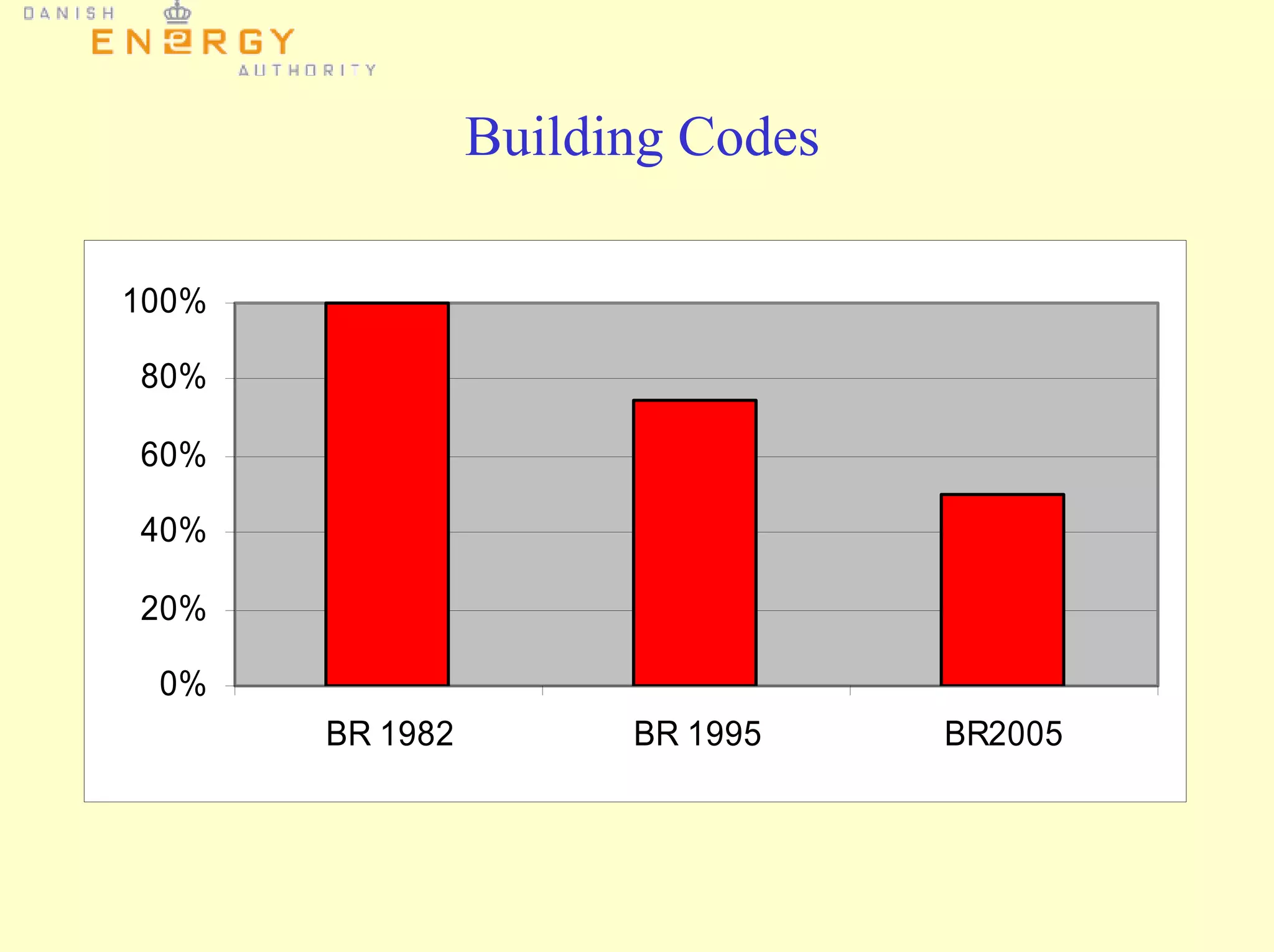
Building Codes
0%
20%
40%
60%
80%
100%
BR 1982 BR 1995 BR2005
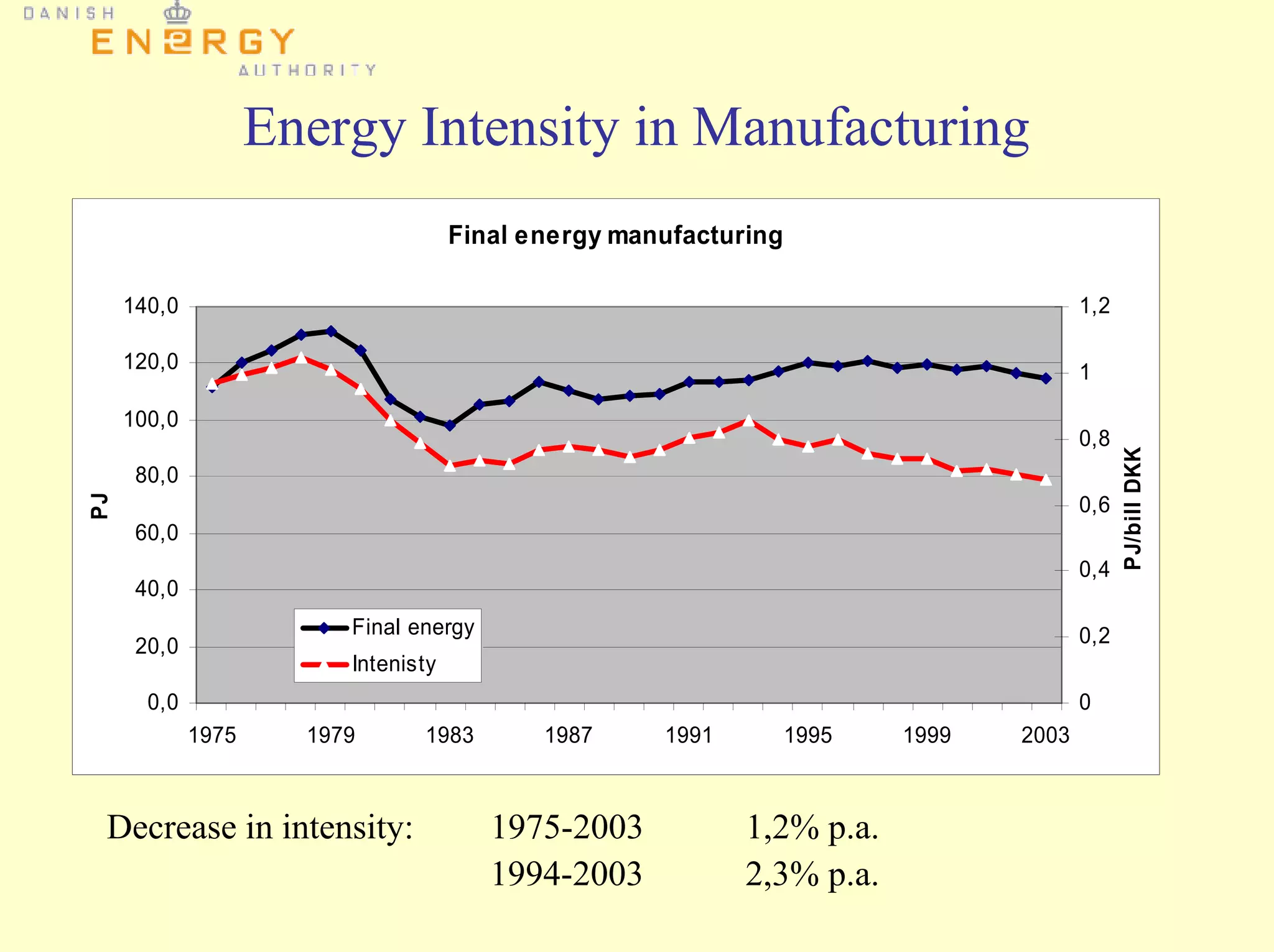
Energy Intensity in Manufacturing
Final energy manufacturing
0,0
20,0
40,0
60,0
80,0
100,0
120,0
140,0
1975 1979 1983 1987 1991 1995 1999 2003
PJ
0
0,2
0,4
0,6
0,8
1
1,2
PJ/billDKK
Final energy
Intenisty
Decrease in intensity: 1975-2003 1,2% p.a.
1994-2003 2,3% p.a.
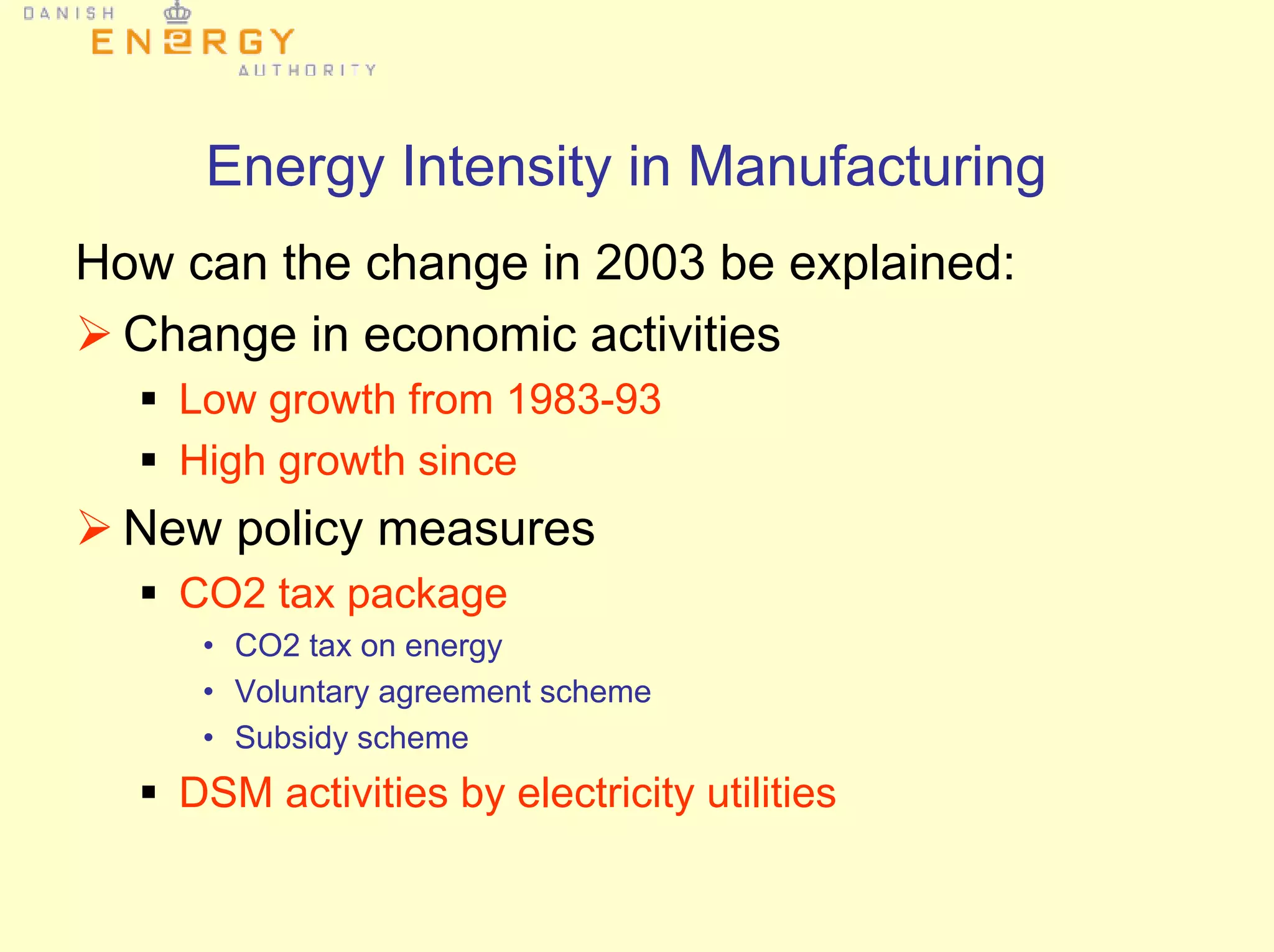
Energy Intensity in Manufacturing
How can the change in 2003 be explained:
Change in economic activities
Low growth from 1983-93
High growth since
New policy measures
CO2 tax package
• CO2 tax on energy
• Voluntary agreement scheme
• Subsidy scheme
DSM activities by electricity utilities
DSM by Grid Companies
Electricity grid/distribution companies has
worked with energy efficiency for more than 10
years
The activities are based on a running process of
annual planning and reporting
The costs are included in the tariffs
Energy consulting/audits, campaigns,
information, etc.
The new political framework
for energy efficiency
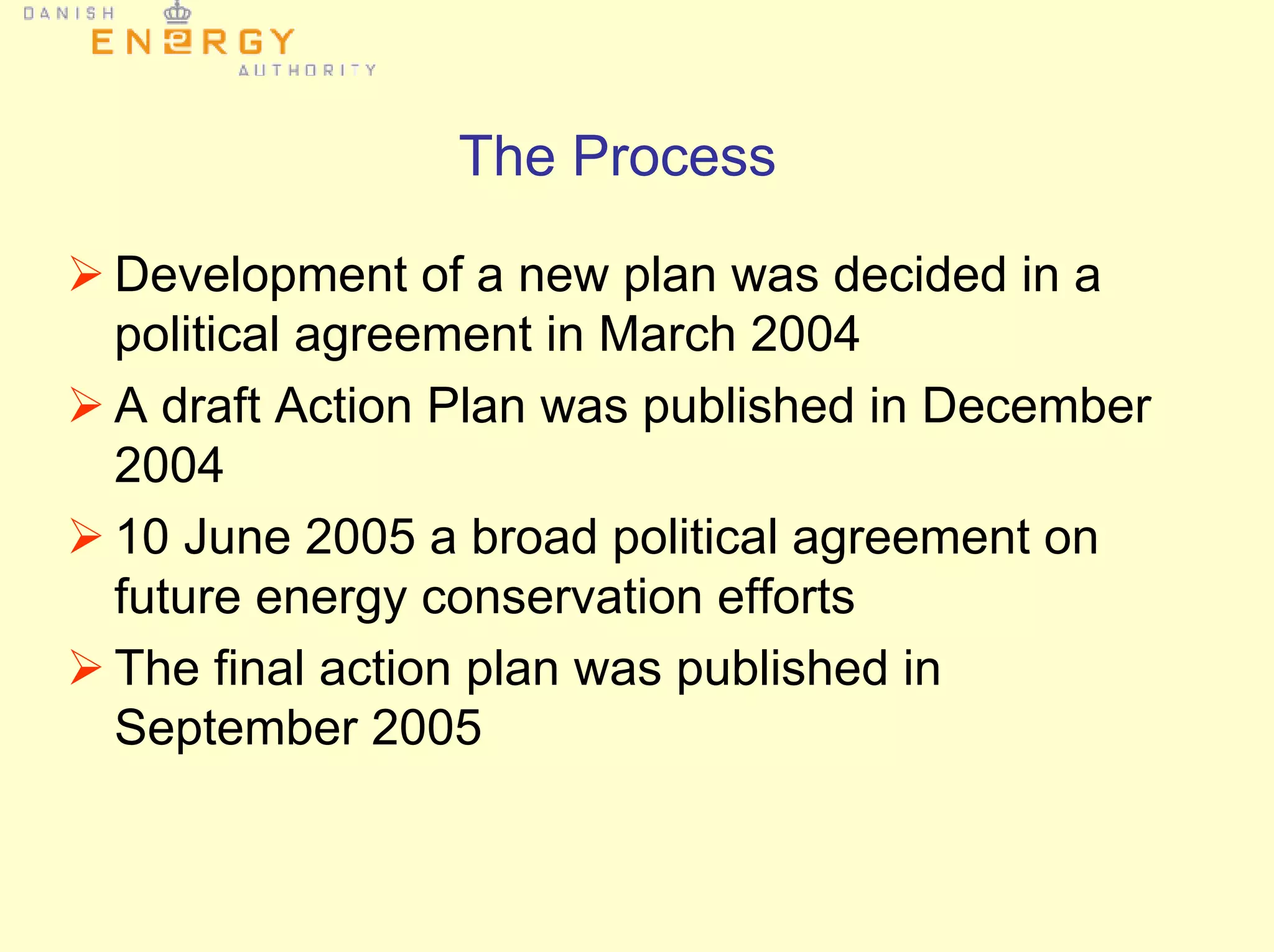
The Process
Development of a new plan was decided in a
political agreement in March 2004
A draft Action Plan was published in December
2004
10 June 2005 a broad political agreement on
future energy conservation efforts
The final action plan was published in
September 2005
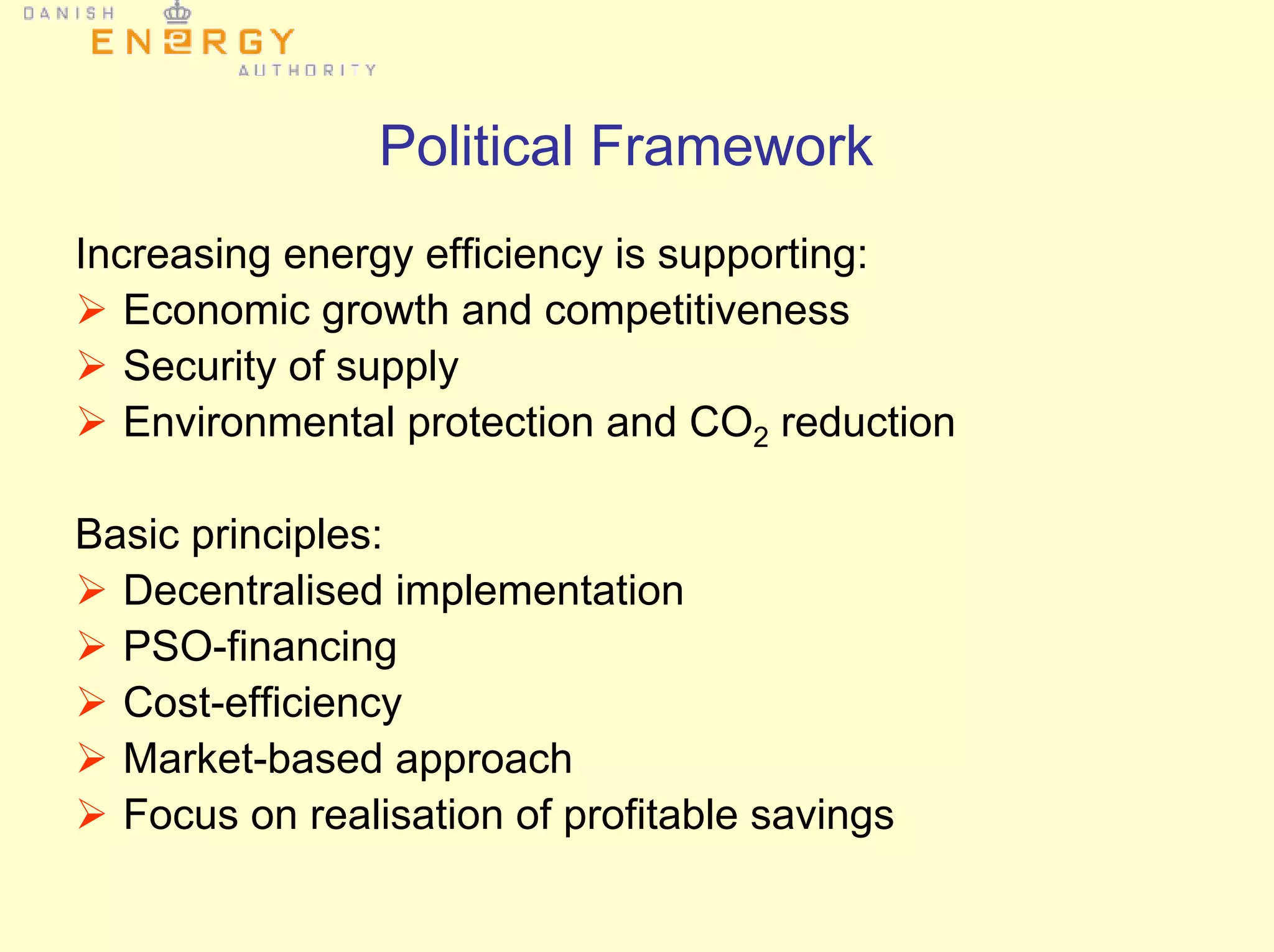
Political Framework
Increasing energy efficiency is supporting:
Economic growth and competitiveness
Security of supply
Environmental protection and CO2 reduction
Basic principles:
Decentralised implementation
PSO-financing
Cost-efficiency
Market-based approach
Focus on realisation of profitable savings
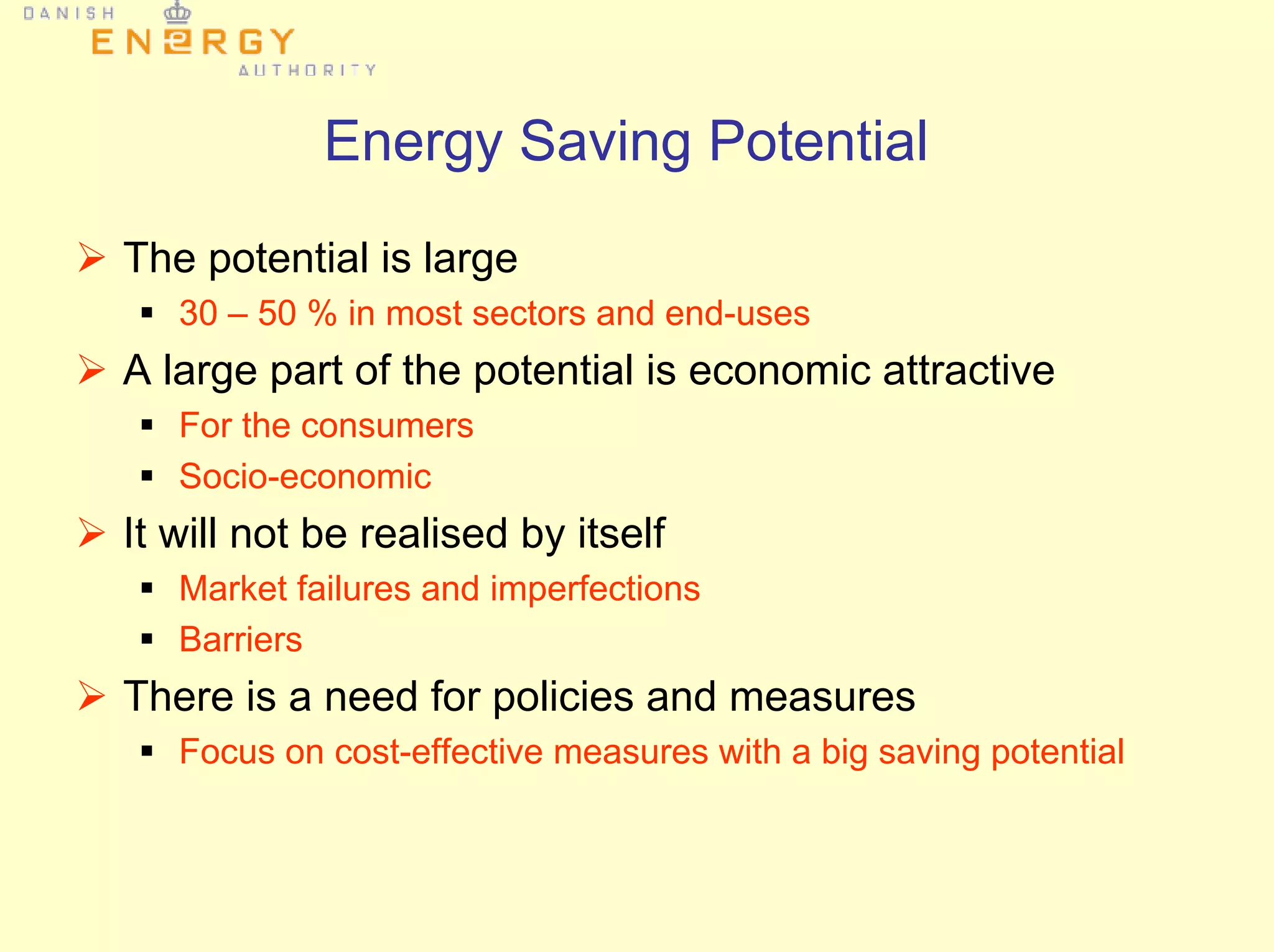
Energy Saving Potential
The potential is large
30 – 50 % in most sectors and end-uses
A large part of the potential is economic attractive
For the consumers
Socio-economic
It will not be realised by itself
Market failures and imperfections
Barriers
There is a need for policies and measures
Focus on cost-effective measures with a big saving potential
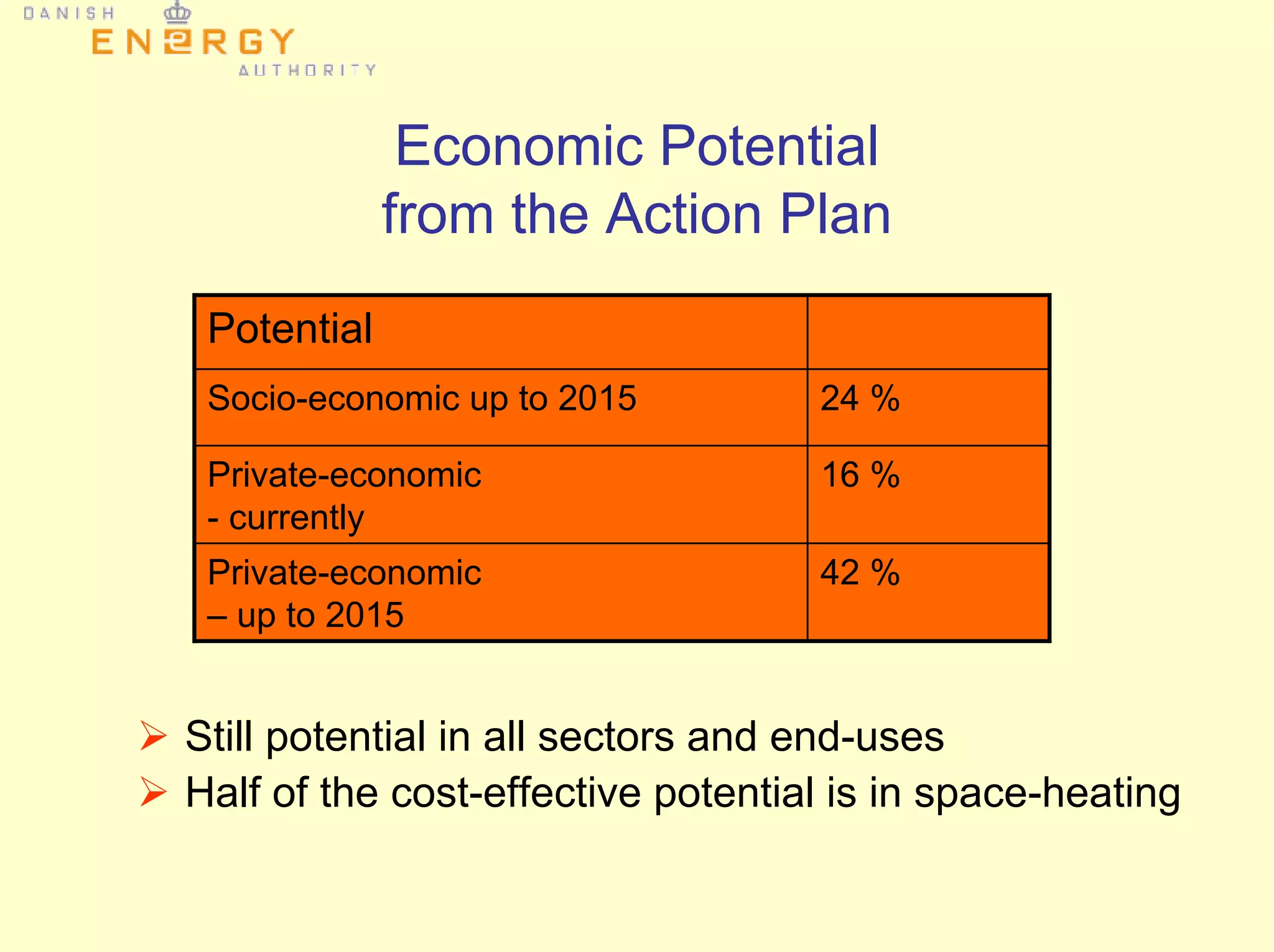
Economic Potential
from the Action Plan
Potential
Socio-economic up to 2015 24 %
Private-economic
- currently
16 %
Private-economic
– up to 2015
42 %
Still potential in all sectors and end-uses
Half of the cost-effective potential is in space-heating
Objectives and Targets
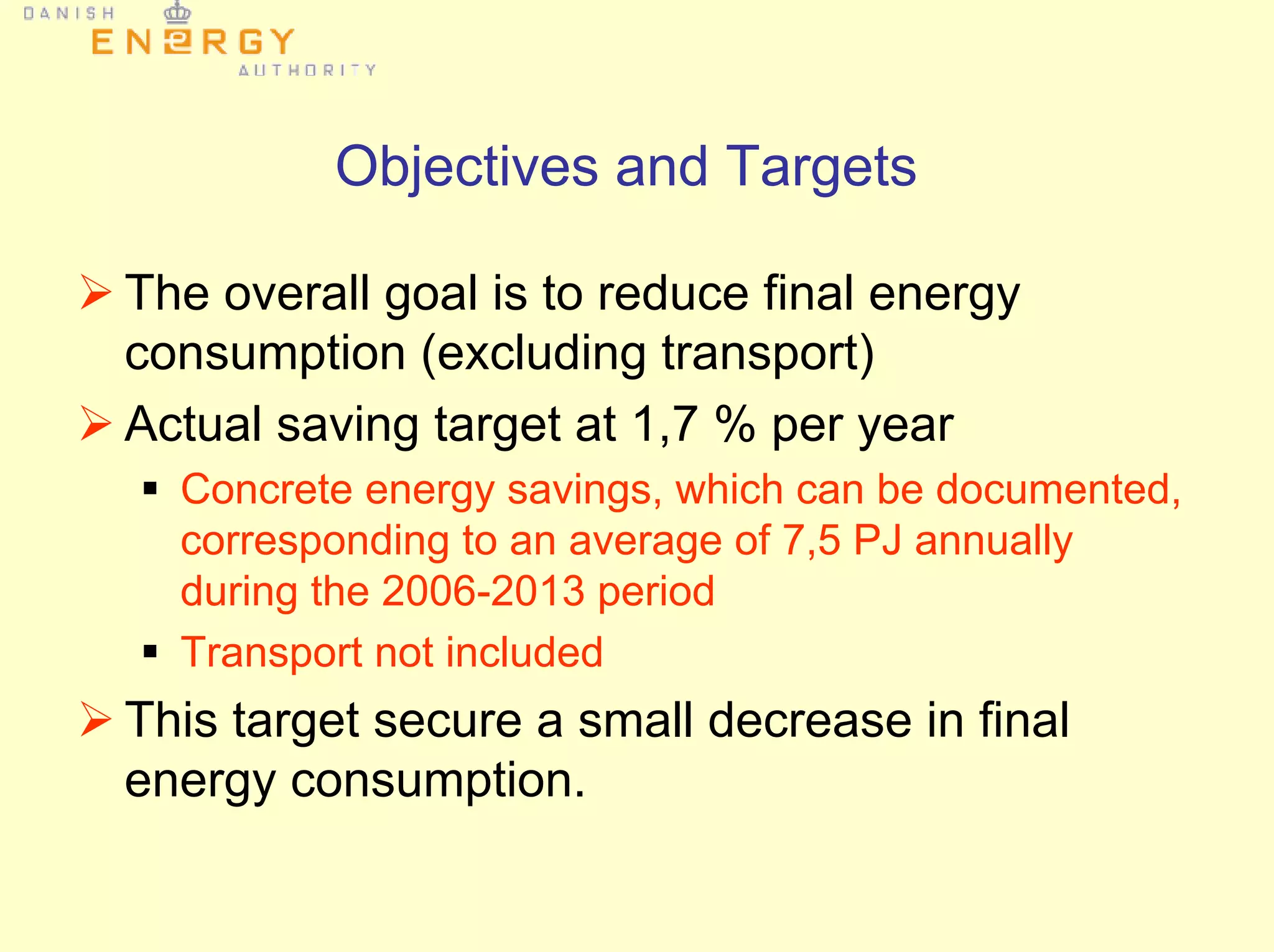
The overall goal is to reduce final energy
consumption (excluding transport)
Actual saving target at 1,7 % per year
Concrete energy savings, which can be documented,
corresponding to an average of 7,5 PJ annually
during the 2006-2013 period
Transport not included
This target secure a small decrease in final
energy consumption.
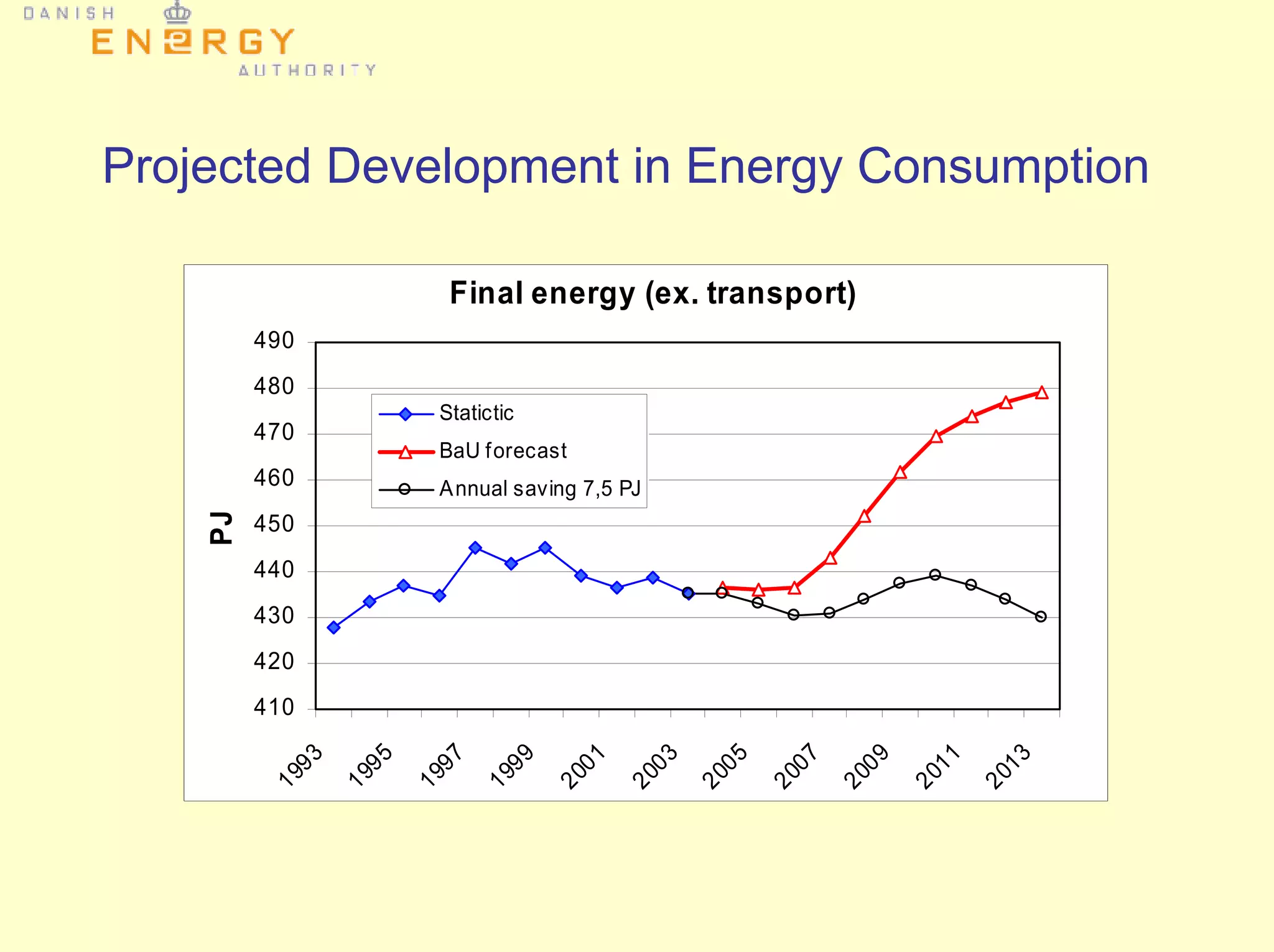
Projected Development in Energy Consumption
Final energy (ex. transport)
410
420
430
440
450
460
470
480
4901993
1995
1997
1999
2001
2003
2005
2007
2009
2011
2013
PJ
Statictic
BaU forecast
Annual saving 7,5 PJ
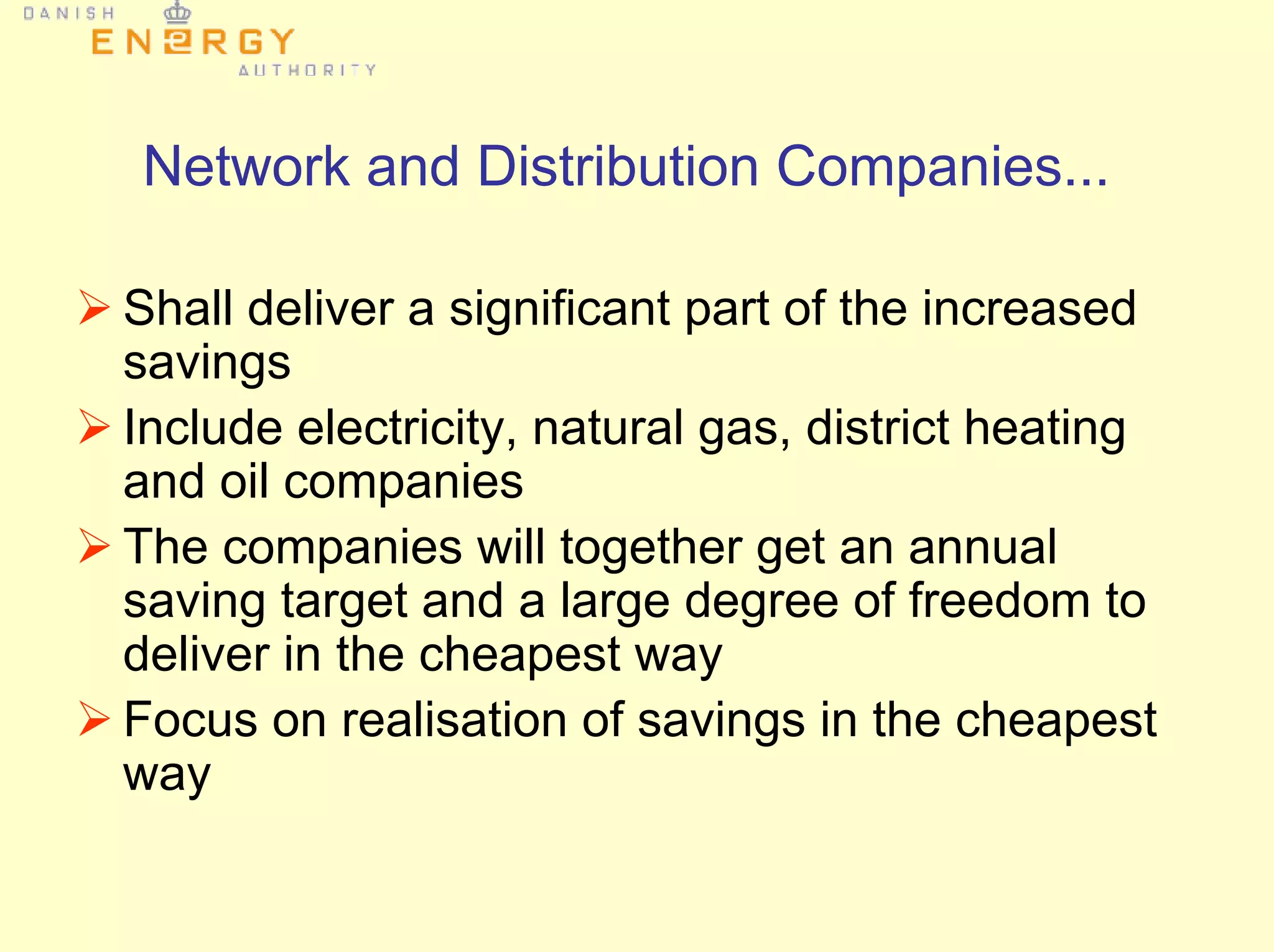
Network and Distribution Companies...
Shall deliver a significant part of the increased
savings
Include electricity, natural gas, district heating
and oil companies
The companies will together get an annual
saving target and a large degree of freedom to
deliver in the cheapest way
Focus on realisation of savings in the cheapest
way
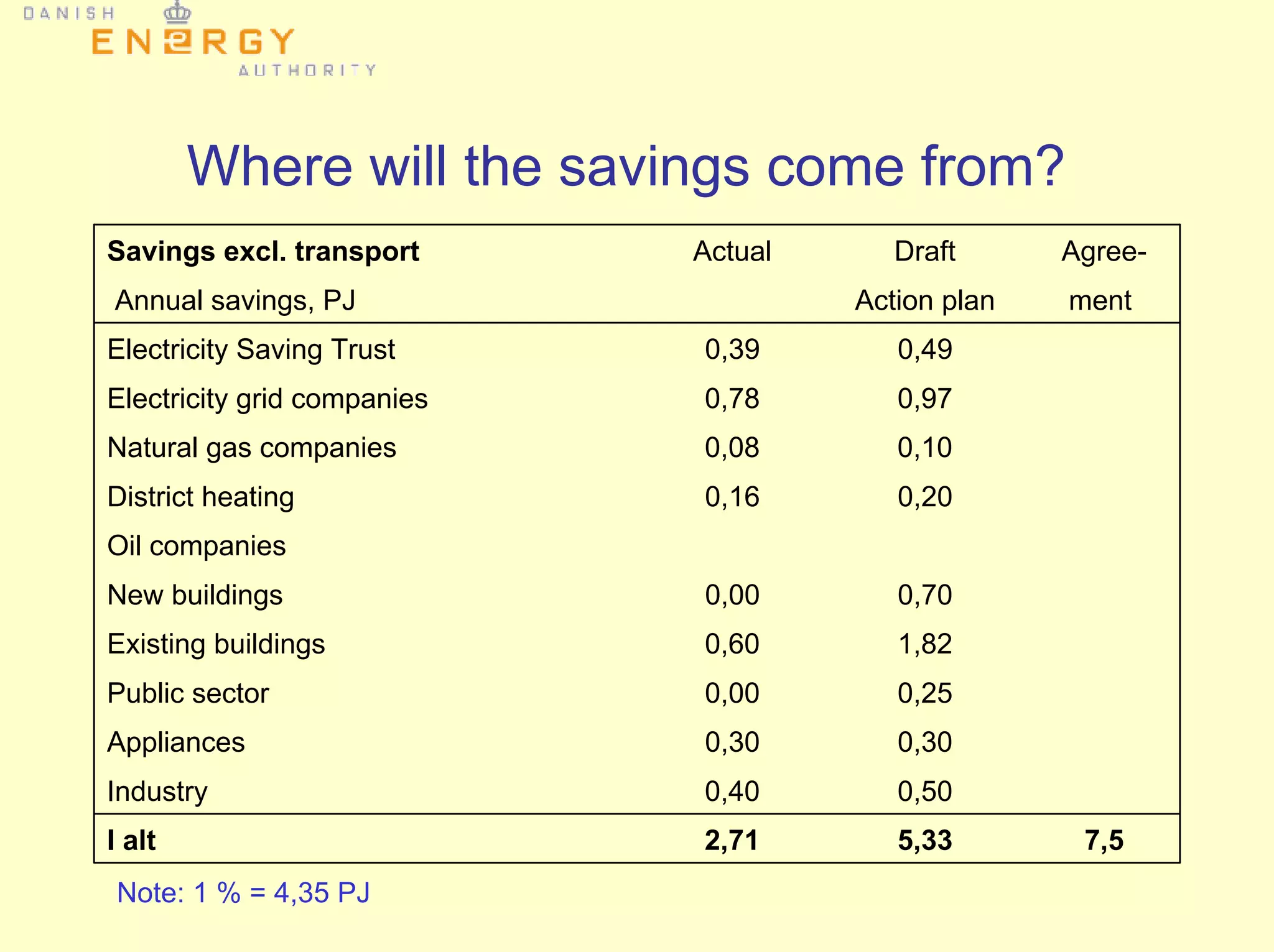
Where will the savings come from?
Savings excl. transport Actual Draft Agree-
Annual savings, PJ Action plan ment
Electricity Saving Trust 0,39 0,49
Electricity grid companies 0,78 0,97
Natural gas companies 0,08 0,10
District heating 0,16 0,20
Oil companies
New buildings 0,00 0,70
Existing buildings 0,60 1,82
Public sector 0,00 0,25
Appliances 0,30 0,30
Industry 0,40 0,50
I alt 2,71 5,33 7,5
Note: 1 % = 4,35 PJ
Conclusion
Strong political support on energy efficiency
Focus on market based initiatives
Main measures:
EU initiatives
Regulation
Obligation to grid and distribution companies
Measurement of effect will be important

The New Structure for PSO Activities in Denmark – Goals and Overall Set-up

  • 1.
    The New Structurefor PSO Activities in Denmark - Goals and Overall set-up Nicolai Zarganis Head of Division Danish Energy Authority Seminar 19 April 2006 Copenhagen
  • 2.
    Agenda Introduction The importance ofend-use energy efficiency Historical and actual measures The new political framework Political agreement and action plan New measures
  • 3.
    Final Energy Consumption -all sectors except transport 0,0 20,0 40,0 60,0 80,0 100,0 120,0 140,0 160,0 1980 1982 1984 1986 1988 1990 1992 1994 1996 1998 2000 2002 Indeks(1980=100) Final energy GDP Intensity Consumption 3 % lower in 2003 than in 1980 50 % growth in GDP
  • 4.
    Effect of End-useEnergy Efficiency in Denmark 0 100 200 300 400 500 600 700 800 900 1975 1978 1981 1984 1987 1990 1993 1996 1999 PJ Without improvements in efficiency Actual consumption Without improvemnets in efficiency by the end users. End-use energy efficiency Supply efficiency All sectors except transport
  • 5.
    Energy Efficiency Measuresin Denmark • Energy taxes in households and in the public sector • CO2 taxes on energy used in all sectors • Building codes • Energy labelling of buildings. • Energy labelling of appliances (EU and GEEA). • Minimum efficiency standards. • Agreements on energy efficiency in industries (CO2 package) • The Electricity Saving Trust. • The energy-saving activities carried out by the grid companies (electricity, natural gas, district heating) • Energy Saving Act • There have been different subsidies schemes Taxation: Buildings: Appliances: Industry: General:
  • 6.
    Energy prices inhousehold - composition ElectricityPetrol Oil for heating ElectricityOil for heating ElectricyOil for heating Petrol Petrol 0% 20% 40% 60% 80% 100% Prices excl. taxes Energy and CO2 taxes VAT 1980 1990 2002
  • 7.
    Energy for heatingof Danish households Final energy consumption 40 50 60 70 80 90 100 110 120 130 1975 1979 1983 1987 1991 1995 1999 Index Heated Floor Space Final energy consumption Final consumption per m2 Net Heat Demand 40 50 60 70 80 90 100 110 120 130 1975 1979 1983 1987 1991 1995 1999 Index Heated Floor Space Net Heat Demand Net Demand per m2 • Efficiency has increased dramatically since 1975 • Final energy per m2 is still declining – shift in heating systems • Net heat demand per m2 has been almost stable the last 20 years
  • 8.
  • 9.
    Energy Intensity inManufacturing Final energy manufacturing 0,0 20,0 40,0 60,0 80,0 100,0 120,0 140,0 1975 1979 1983 1987 1991 1995 1999 2003 PJ 0 0,2 0,4 0,6 0,8 1 1,2 PJ/billDKK Final energy Intenisty Decrease in intensity: 1975-2003 1,2% p.a. 1994-2003 2,3% p.a.
  • 10.
    Energy Intensity inManufacturing How can the change in 2003 be explained: Change in economic activities Low growth from 1983-93 High growth since New policy measures CO2 tax package • CO2 tax on energy • Voluntary agreement scheme • Subsidy scheme DSM activities by electricity utilities
  • 11.
    DSM by GridCompanies Electricity grid/distribution companies has worked with energy efficiency for more than 10 years The activities are based on a running process of annual planning and reporting The costs are included in the tariffs Energy consulting/audits, campaigns, information, etc.
  • 12.
    The new politicalframework for energy efficiency
  • 13.
    The Process Development ofa new plan was decided in a political agreement in March 2004 A draft Action Plan was published in December 2004 10 June 2005 a broad political agreement on future energy conservation efforts The final action plan was published in September 2005
  • 14.
    Political Framework Increasing energyefficiency is supporting: Economic growth and competitiveness Security of supply Environmental protection and CO2 reduction Basic principles: Decentralised implementation PSO-financing Cost-efficiency Market-based approach Focus on realisation of profitable savings
  • 15.
    Energy Saving Potential Thepotential is large 30 – 50 % in most sectors and end-uses A large part of the potential is economic attractive For the consumers Socio-economic It will not be realised by itself Market failures and imperfections Barriers There is a need for policies and measures Focus on cost-effective measures with a big saving potential
  • 16.
    Economic Potential from theAction Plan Potential Socio-economic up to 2015 24 % Private-economic - currently 16 % Private-economic – up to 2015 42 % Still potential in all sectors and end-uses Half of the cost-effective potential is in space-heating
  • 17.
    Objectives and Targets Theoverall goal is to reduce final energy consumption (excluding transport) Actual saving target at 1,7 % per year Concrete energy savings, which can be documented, corresponding to an average of 7,5 PJ annually during the 2006-2013 period Transport not included This target secure a small decrease in final energy consumption.
  • 18.
    Projected Development inEnergy Consumption Final energy (ex. transport) 410 420 430 440 450 460 470 480 4901993 1995 1997 1999 2001 2003 2005 2007 2009 2011 2013 PJ Statictic BaU forecast Annual saving 7,5 PJ
  • 19.
    Network and DistributionCompanies... Shall deliver a significant part of the increased savings Include electricity, natural gas, district heating and oil companies The companies will together get an annual saving target and a large degree of freedom to deliver in the cheapest way Focus on realisation of savings in the cheapest way
  • 20.
    Where will thesavings come from? Savings excl. transport Actual Draft Agree- Annual savings, PJ Action plan ment Electricity Saving Trust 0,39 0,49 Electricity grid companies 0,78 0,97 Natural gas companies 0,08 0,10 District heating 0,16 0,20 Oil companies New buildings 0,00 0,70 Existing buildings 0,60 1,82 Public sector 0,00 0,25 Appliances 0,30 0,30 Industry 0,40 0,50 I alt 2,71 5,33 7,5 Note: 1 % = 4,35 PJ
  • 21.
    Conclusion Strong political supporton energy efficiency Focus on market based initiatives Main measures: EU initiatives Regulation Obligation to grid and distribution companies Measurement of effect will be important