Demand Paging
Demand Paging
 Could bring entire process into memory at load time
 Or bring a page into memory only when it is needed
 Less I/O needed, no unnecessary I/O
 Less memory needed
 Faster response
 More users
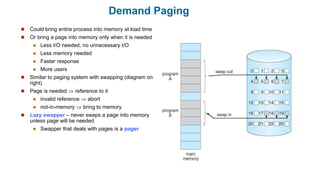
 Similar to paging system with swapping (diagram on
right)
 Page is needed  reference to it
 invalid reference  abort
 not-in-memory  bring to memory
 Lazy swapper – never swaps a page into memory
unless page will be needed
 Swapper that deals with pages is a pager
Basic Concepts
 With swapping, pager guesses which pages will be used before swapping out again
 Instead, pager brings in only those pages into memory
 How to determine that set of pages?
 Need new MMU functionality to implement demand paging
 If pages needed are already memory resident
 No difference from non demand-paging
 If page needed and not memory resident
 Need to detect and load the page into memory from storage
 Without changing program behavior
 Without programmer needing to change code
Valid-Invalid Bit
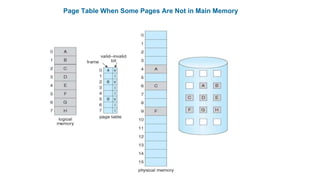
 With each page table entry a valid–invalid bit is associated
(v  in-memory – memory resident, i  not-in-memory)
 Initially valid–invalid bit is set to i on all entries
 Example of a page table snapshot:
 During MMU address translation, if valid–invalid bit in page table entry is i  page fault
Page Table When Some Pages Are Not in Main Memory
Page Fault
 If there is a reference to a page, first reference to that page will trap to operating system:
page fault
1. Operating system looks at another table to decide:
 Invalid reference  abort
 Just not in memory
2. Find free frame
3. Swap page into frame via scheduled disk operation
4. Reset tables to indicate page now in memory
Set validation bit = v
5. Restart the instruction that caused the page fault
Page Fault

Demand Paging.pptx

  • 1.
  • 2.
    Demand Paging  Couldbring entire process into memory at load time  Or bring a page into memory only when it is needed  Less I/O needed, no unnecessary I/O  Less memory needed  Faster response  More users  Similar to paging system with swapping (diagram on right)  Page is needed  reference to it  invalid reference  abort  not-in-memory  bring to memory  Lazy swapper – never swaps a page into memory unless page will be needed  Swapper that deals with pages is a pager
  • 3.
    Basic Concepts  Withswapping, pager guesses which pages will be used before swapping out again  Instead, pager brings in only those pages into memory  How to determine that set of pages?  Need new MMU functionality to implement demand paging  If pages needed are already memory resident  No difference from non demand-paging  If page needed and not memory resident  Need to detect and load the page into memory from storage  Without changing program behavior  Without programmer needing to change code
  • 4.
    Valid-Invalid Bit  Witheach page table entry a valid–invalid bit is associated (v  in-memory – memory resident, i  not-in-memory)  Initially valid–invalid bit is set to i on all entries  Example of a page table snapshot:  During MMU address translation, if valid–invalid bit in page table entry is i  page fault
  • 5.
    Page Table WhenSome Pages Are Not in Main Memory
  • 6.
    Page Fault  Ifthere is a reference to a page, first reference to that page will trap to operating system: page fault 1. Operating system looks at another table to decide:  Invalid reference  abort  Just not in memory 2. Find free frame 3. Swap page into frame via scheduled disk operation 4. Reset tables to indicate page now in memory Set validation bit = v 5. Restart the instruction that caused the page fault
  • 7.