Dehydration
These slides address the
problems of dehydration and math
exercises related to dehydration.
Dehydration
Dehydration can be defined as
when the loss of water and salts
is more than is replenished.
The average person loses about
2.5 liters of water every day. So to
stay properly hydrated you must
replenish this water in order to
keep from being dehydrated.
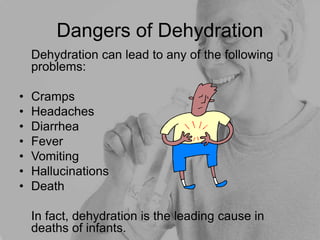
Dehydration can lead to any of the following
problems:
• Cramps
• Headaches
• Diarrhea
• Fever
• Vomiting
• Hallucinations
• Death
In fact, dehydration is the leading cause in
deaths of infants.
Dangers of Dehydration
Water in the Body
Water makes up approximately 60% of the
male body mass, and 50% of the female
body mass.
Water makes up 75% of muscle mass, but
only 25% of fat mass. So the lower a
person’s body fat percent is, the higher
their water percent will be.
Body Mass
Water makes up 60% of a man’s body mass.
How much water is in a man who weighs
215 lbs?
Assume that the previous man has 24 lbs of
fat and the water in his body due to fat and
muscle is 100 lbs. Using the fact that fat is
25% weight by mass and muscle is 75%
weight by mass, how much muscle mass
does the man have?
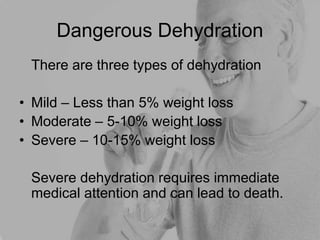
Dangerous Dehydration
There are three types of dehydration
• Mild – Less than 5% weight loss
• Moderate – 5-10% weight loss
• Severe – 10-15% weight loss
Severe dehydration requires immediate
medical attention and can lead to death.
Dehydration Problems
Now we are going
to do some math
problems related to
dehydration.
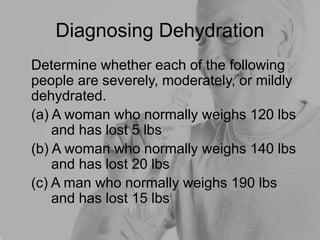
Diagnosing Dehydration
Determine whether each of the following
people are severely, moderately, or mildly
dehydrated.
(a) A woman who normally weighs 120 lbs
and has lost 5 lbs
(b) A woman who normally weighs 140 lbs
and has lost 20 lbs
(c) A man who normally weighs 190 lbs
and has lost 15 lbs
Loss of Water
If a woman weighs 125 lbs, how much
water would she have to lose to become
(a) mildly dehydrated (0-5%)
(b) moderately dehydrated (5-10%)
(c) severely dehydrated (10-15%)
How many gallons would that be?
(1 gal = 8.3370 lbs of water)
How about you?
Kids between 10-12 need about half their
body weight in ounces of water to remain
adequately hydrated. Use a scale to
determine how much you weigh, and how
many ounces of water you would need.
Glasses of Water
Every glass contains 8 fluid ounces.
Calculate how many glasses of water you
need each day based on the number of
ounces you previously calculated.
Measuring Water
Now measure out the water you calculated
in the last step. Use different size
measuring cups to add up to the amount
of water you need each day. Does the
amount you calculated seem like too
much? Too little?

Dehydration.ppt

  • 1.
    Dehydration These slides addressthe problems of dehydration and math exercises related to dehydration.
  • 2.
    Dehydration Dehydration can bedefined as when the loss of water and salts is more than is replenished. The average person loses about 2.5 liters of water every day. So to stay properly hydrated you must replenish this water in order to keep from being dehydrated.
  • 3.
    Dehydration can leadto any of the following problems: • Cramps • Headaches • Diarrhea • Fever • Vomiting • Hallucinations • Death In fact, dehydration is the leading cause in deaths of infants. Dangers of Dehydration
  • 4.
    Water in theBody Water makes up approximately 60% of the male body mass, and 50% of the female body mass. Water makes up 75% of muscle mass, but only 25% of fat mass. So the lower a person’s body fat percent is, the higher their water percent will be.
  • 5.
    Body Mass Water makesup 60% of a man’s body mass. How much water is in a man who weighs 215 lbs? Assume that the previous man has 24 lbs of fat and the water in his body due to fat and muscle is 100 lbs. Using the fact that fat is 25% weight by mass and muscle is 75% weight by mass, how much muscle mass does the man have?
  • 6.
    Dangerous Dehydration There arethree types of dehydration • Mild – Less than 5% weight loss • Moderate – 5-10% weight loss • Severe – 10-15% weight loss Severe dehydration requires immediate medical attention and can lead to death.
  • 7.
    Dehydration Problems Now weare going to do some math problems related to dehydration.
  • 8.
    Diagnosing Dehydration Determine whethereach of the following people are severely, moderately, or mildly dehydrated. (a) A woman who normally weighs 120 lbs and has lost 5 lbs (b) A woman who normally weighs 140 lbs and has lost 20 lbs (c) A man who normally weighs 190 lbs and has lost 15 lbs
  • 9.
    Loss of Water Ifa woman weighs 125 lbs, how much water would she have to lose to become (a) mildly dehydrated (0-5%) (b) moderately dehydrated (5-10%) (c) severely dehydrated (10-15%) How many gallons would that be? (1 gal = 8.3370 lbs of water)
  • 10.
    How about you? Kidsbetween 10-12 need about half their body weight in ounces of water to remain adequately hydrated. Use a scale to determine how much you weigh, and how many ounces of water you would need.
  • 11.
    Glasses of Water Everyglass contains 8 fluid ounces. Calculate how many glasses of water you need each day based on the number of ounces you previously calculated.
  • 12.
    Measuring Water Now measureout the water you calculated in the last step. Use different size measuring cups to add up to the amount of water you need each day. Does the amount you calculated seem like too much? Too little?