DEFINITION ESSAY

       ENGL 1301
  Professor J.Bouchard
Defining a “Definition” Essay:
 def-i-ni-tion (def' e-nish' en) n. 1. The act of
  defining a word, phrase, or term. 2. The act of
  making clear and distinct. 3. A determining of
  outline, extent, or limits.

 When one is defining anything, the goal is to
  define what a term means and how it differs from
  other terms in its class.

 Some terms have definite, concrete meanings,
  such as glass, book, or tree. Terms such as
  honesty, honor, or love are abstract and depend
 Remember, the nice thing about this type of
 essay is that no one has the same opinions. We
 all have our own way of viewing or understanding
 something.
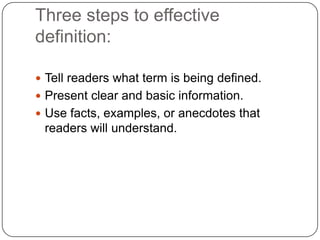
Three steps to effective
definition:

 Tell readers what term is being defined.
 Present clear and basic information.
 Use facts, examples, or anecdotes that
 readers will understand.
Planning a Thesis statement
 Then the writer must present information that will clearly
  show what the writer intends as a definition.

 The thesis should do more than simply identify the term;
  your thesis needs to make a larger statement. It should
  have a complex meaning.

 Should be disputable, i.e. could mean different things to
  different people. No one wants to read a paper on
  something overly obvious.

 It wouldn't be wise to choose a word like "cat" for a
  definition essay. The word, "cat" has a pretty simple
  meaning, so we'll have trouble writing an entire essay
  about it. Similarly, not many people disagree over the
  definition of the word "cat," which means our definition will
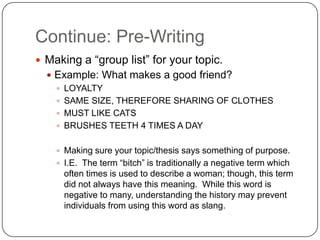
Continue: Pre-Writing
 Making a “group list” for your topic.
   Example: What makes a good friend?
     LOYALTY
     SAME SIZE, THEREFORE SHARING OF CLOTHES
     MUST LIKE CATS
     BRUSHES TEETH 4 TIMES A DAY


     Making sure your topic/thesis says something of purpose.
     I.E. The term “bitch” is traditionally a negative term which
      often times is used to describe a woman; though, this term
      did not always have this meaning. While this word is
      negative to many, understanding the history may prevent
      individuals from using this word as slang.
System Check:

 Ask yourself these questions; our topic is “family.”


 Does it have a complex meaning?
 Is the word disputable?
 Could I discuss the word's origin in a
 meaningful way?
Style choices:
 Analysis or Exemplification: Divide the subject into parts
    and define each part separately.
   Classification: According to dictionary definitions, what
    classes does the subject belong to?
   Comparison: The unfamiliar may be defined by showing
    its likeness to the familiar or its difference from it. It’s easy
    to make things relate.
   Description: What are the physical characteristics,
    traditional thoughts, and other distinguishing attributes that
    describe the subject of the paper?
   Origins and Causes: Where did the subject come from?
    What is the background information? What is the history of
    the subject?
   Results, Effects, and Uses: Discuss the consequences
    and uses of the subject.
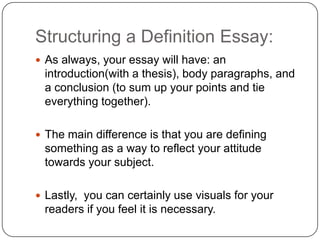
Structuring a Definition Essay:
 As always, your essay will have: an
 introduction(with a thesis), body paragraphs, and
 a conclusion (to sum up your points and tie
 everything together).

 The main difference is that you are defining
 something as a way to reflect your attitude
 towards your subject.

 Lastly, you can certainly use visuals for your
 readers if you feel it is necessary.

Definition%20 essay[1]

  • 1.
    DEFINITION ESSAY ENGL 1301 Professor J.Bouchard
  • 2.
    Defining a “Definition”Essay:  def-i-ni-tion (def' e-nish' en) n. 1. The act of defining a word, phrase, or term. 2. The act of making clear and distinct. 3. A determining of outline, extent, or limits.  When one is defining anything, the goal is to define what a term means and how it differs from other terms in its class.  Some terms have definite, concrete meanings, such as glass, book, or tree. Terms such as honesty, honor, or love are abstract and depend
  • 3.
     Remember, thenice thing about this type of essay is that no one has the same opinions. We all have our own way of viewing or understanding something.
  • 4.
    Three steps toeffective definition:  Tell readers what term is being defined.  Present clear and basic information.  Use facts, examples, or anecdotes that readers will understand.
  • 5.
    Planning a Thesisstatement  Then the writer must present information that will clearly show what the writer intends as a definition.  The thesis should do more than simply identify the term; your thesis needs to make a larger statement. It should have a complex meaning.  Should be disputable, i.e. could mean different things to different people. No one wants to read a paper on something overly obvious.  It wouldn't be wise to choose a word like "cat" for a definition essay. The word, "cat" has a pretty simple meaning, so we'll have trouble writing an entire essay about it. Similarly, not many people disagree over the definition of the word "cat," which means our definition will
  • 6.
    Continue: Pre-Writing  Makinga “group list” for your topic.  Example: What makes a good friend?  LOYALTY  SAME SIZE, THEREFORE SHARING OF CLOTHES  MUST LIKE CATS  BRUSHES TEETH 4 TIMES A DAY  Making sure your topic/thesis says something of purpose.  I.E. The term “bitch” is traditionally a negative term which often times is used to describe a woman; though, this term did not always have this meaning. While this word is negative to many, understanding the history may prevent individuals from using this word as slang.
  • 7.
    System Check:  Askyourself these questions; our topic is “family.”  Does it have a complex meaning?  Is the word disputable?  Could I discuss the word's origin in a meaningful way?
  • 8.
    Style choices:  Analysisor Exemplification: Divide the subject into parts and define each part separately.  Classification: According to dictionary definitions, what classes does the subject belong to?  Comparison: The unfamiliar may be defined by showing its likeness to the familiar or its difference from it. It’s easy to make things relate.  Description: What are the physical characteristics, traditional thoughts, and other distinguishing attributes that describe the subject of the paper?  Origins and Causes: Where did the subject come from? What is the background information? What is the history of the subject?  Results, Effects, and Uses: Discuss the consequences and uses of the subject.
  • 9.
    Structuring a DefinitionEssay:  As always, your essay will have: an introduction(with a thesis), body paragraphs, and a conclusion (to sum up your points and tie everything together).  The main difference is that you are defining something as a way to reflect your attitude towards your subject.  Lastly, you can certainly use visuals for your readers if you feel it is necessary.