Evolution is define as the process by which
new types of organisms develop from other
existing organisms, for example amphibians
                           evolved from fish.
 Main  sources of evolution are the following
 Fossil records
 Structural similarities
 Development of embryo
 Biochemical similarities
 Plants  and animals that lived million years
  ago are no longer exist today. These plants
  and animals are extinct, fossils of this plant
  and animals are recorded, fossils are
  preserved remaining's of living organisms
  found in rocks.
 Fossils can also tell us about ancient climate
  and environment, for example if
  paleontogist-scientists who study fossils-find
  fossil of animals such as fish and amphibians
  that live in or near water, they know that
  that area was covered with water
 Fossils are formed in sedimentary rocks,
  these rocks form as a result layers of sands
  and clay pilling up on the seabed or the
  bottoms of inland lakes and seas, sediments
  builds over the dead plants and animals.
 All fossils forms when dead plants and
  animals become covered with a substance
  that exclude oxygen. The particles of
  minerals in the bones or shell move into the
  surrounding rock, and the particles of silica
  in the rocks move into the bones, causing the
  bones to change into crystalline substance.
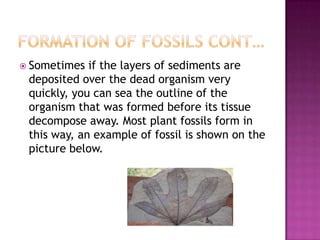
 Sometimes  if the layers of sediments are
 deposited over the dead organism very
 quickly, you can sea the outline of the
 organism that was formed before its tissue
 decompose away. Most plant fossils form in
 this way, an example of fossil is shown on the
 picture below.
 According to calculations of scientists the
 earth is about 4 500 million years old. From
 fossil evidence it seems that the first life on
 earth is 3 800 million years ago and the first
 living things were very small and simple.
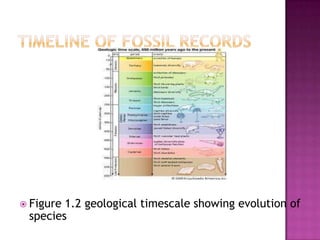
 Figure1.2 geological timescale showing evolution of
 species
 Fossilrecords also show us how living
  organisms have changed and developed over
  time. When scientists study the fossil record
  they look for similarities and differences in
  the type, origin and functions of body
  structures. This is one way in which they get
  clues as to relationships that exist between
  extinct fossil species and living species.
 Some body structures are analogous
  structures, which means same function in
  different species but developed
  independently.
   Lamarck’s theory of evolution
•   According to Lamarck, evolution occurs when the
    characteristics an organism acquire during its
    lifetime are passed on its offspring. In this way
    organisms were able to change from generation
    to generation. Lamarck believe that if certain
    organs were used more often they would become
    more developed and if organs were not used
    more often they would eventually disappear.
    Lamarck’s best known example is giraffe’s neck.
    He argued that giraffes have long neck because,
    for many generations, they stretched their necks
    to reach leaves on high branches of tree, its
    neck would get longer.
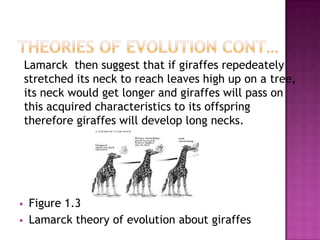
Lamarck then suggest that if giraffes repedeately
    stretched its neck to reach leaves high up on a tree,
    its neck would get longer and giraffes will pass on
    this acquired characteristics to its offspring
    therefore giraffes will develop long necks.


   Figure 1.3
   Lamarck theory of evolution about giraffes
 Darwin’s theory of evolution
 According to Charles Darwin organisms are
  competing for resources, any variation in an
  organism faivour survival in a particular
  environment, this will increase a chances of
  reproducing and leaving fertile offspring,
  organisms with less favourable variation are less
  likely to and leave offspring. This means more
  favourable variations are transferred to future
  generation and as time goes, variation within
  individual species increase, it result to a new
  species. The theory of natural selection is
  referred to as survival of the fittest.
 Biological  evolution is the evolution which
  result in a change in frequency of some
  alleles in a population over time, allele is
  two or more different forms of a gene. New
  allele can be formed by means of mutation.
 The proportion of a particular allele in a
  population is called the allelic frequency,
  and it is a measure of genetic diversity.
 Evolutionis divided into two types which is
 microevolution and macroevolution. The
 difference between the two is that
 microevolution involve evolutionary change
 within individual members of the same
 species, while macroevolution involve change
 on a large scale, such as within families or
 organisms.
 Small changes in populations of organisms lead
  to the development of new species. For example
  two wild flower populations that grow on two
  separate side of the mountain. Population will
  be different, it can be on pollination.
 The formation of new species is called
  speciation, there are two types of speciation
  which is allopatric speciation-occurs when a new
  species forms when the populations are
  physically or geographical separated from one
  another. Sympatric speciation occurs when a new
  species forms when populations are not
  physically or geographically separated from one
  another.

Definition of evolution

  • 1.
    Evolution is defineas the process by which new types of organisms develop from other existing organisms, for example amphibians evolved from fish.
  • 2.
     Main sources of evolution are the following  Fossil records  Structural similarities  Development of embryo  Biochemical similarities
  • 3.
     Plants and animals that lived million years ago are no longer exist today. These plants and animals are extinct, fossils of this plant and animals are recorded, fossils are preserved remaining's of living organisms found in rocks.  Fossils can also tell us about ancient climate and environment, for example if paleontogist-scientists who study fossils-find fossil of animals such as fish and amphibians that live in or near water, they know that that area was covered with water
  • 4.
     Fossils areformed in sedimentary rocks, these rocks form as a result layers of sands and clay pilling up on the seabed or the bottoms of inland lakes and seas, sediments builds over the dead plants and animals.  All fossils forms when dead plants and animals become covered with a substance that exclude oxygen. The particles of minerals in the bones or shell move into the surrounding rock, and the particles of silica in the rocks move into the bones, causing the bones to change into crystalline substance.
  • 5.
     Sometimes if the layers of sediments are deposited over the dead organism very quickly, you can sea the outline of the organism that was formed before its tissue decompose away. Most plant fossils form in this way, an example of fossil is shown on the picture below.
  • 6.
     According tocalculations of scientists the earth is about 4 500 million years old. From fossil evidence it seems that the first life on earth is 3 800 million years ago and the first living things were very small and simple.
  • 7.
     Figure1.2 geologicaltimescale showing evolution of species
  • 8.
     Fossilrecords alsoshow us how living organisms have changed and developed over time. When scientists study the fossil record they look for similarities and differences in the type, origin and functions of body structures. This is one way in which they get clues as to relationships that exist between extinct fossil species and living species.  Some body structures are analogous structures, which means same function in different species but developed independently.
  • 9.
    Lamarck’s theory of evolution • According to Lamarck, evolution occurs when the characteristics an organism acquire during its lifetime are passed on its offspring. In this way organisms were able to change from generation to generation. Lamarck believe that if certain organs were used more often they would become more developed and if organs were not used more often they would eventually disappear. Lamarck’s best known example is giraffe’s neck. He argued that giraffes have long neck because, for many generations, they stretched their necks to reach leaves on high branches of tree, its neck would get longer.
  • 10.
    Lamarck then suggestthat if giraffes repedeately stretched its neck to reach leaves high up on a tree, its neck would get longer and giraffes will pass on this acquired characteristics to its offspring therefore giraffes will develop long necks.  Figure 1.3  Lamarck theory of evolution about giraffes
  • 11.
     Darwin’s theoryof evolution  According to Charles Darwin organisms are competing for resources, any variation in an organism faivour survival in a particular environment, this will increase a chances of reproducing and leaving fertile offspring, organisms with less favourable variation are less likely to and leave offspring. This means more favourable variations are transferred to future generation and as time goes, variation within individual species increase, it result to a new species. The theory of natural selection is referred to as survival of the fittest.
  • 12.
     Biological evolution is the evolution which result in a change in frequency of some alleles in a population over time, allele is two or more different forms of a gene. New allele can be formed by means of mutation.  The proportion of a particular allele in a population is called the allelic frequency, and it is a measure of genetic diversity.
  • 13.
     Evolutionis dividedinto two types which is microevolution and macroevolution. The difference between the two is that microevolution involve evolutionary change within individual members of the same species, while macroevolution involve change on a large scale, such as within families or organisms.
  • 14.
     Small changesin populations of organisms lead to the development of new species. For example two wild flower populations that grow on two separate side of the mountain. Population will be different, it can be on pollination.  The formation of new species is called speciation, there are two types of speciation which is allopatric speciation-occurs when a new species forms when the populations are physically or geographical separated from one another. Sympatric speciation occurs when a new species forms when populations are not physically or geographically separated from one another.